Given limited tongue mobility, what parts of the feeding process did the beak and dental batteries primarily accomplish?
Answer
Positioning and processing the forage
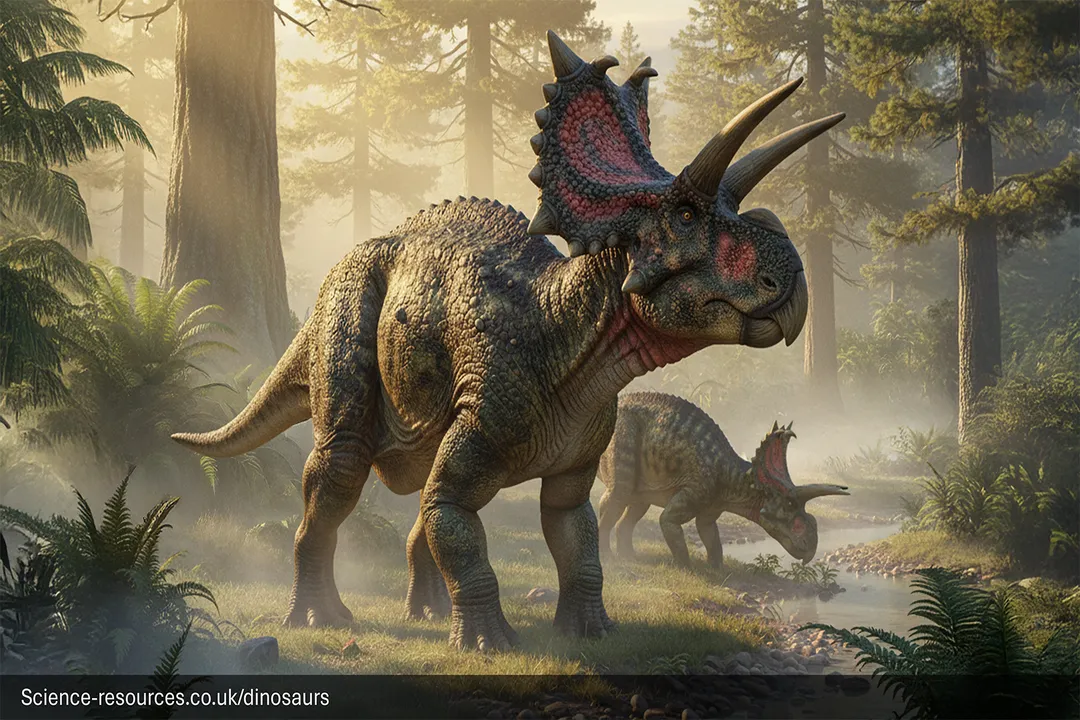
The limited mobility of the ceratopsian tongue suggests that the beak and the grinding action of the dental batteries did the majority of the work in positioning and processing the plant material within the mouth.
Related Questions
What was the dietary classification of *Xenoceratops*?During which geological epoch did *Xenoceratops* live?What does the name *Xenoceratops* translate to?What anatomical feature acted as the heavy-duty clipper at the front of the jaws?What characterized the main chewing apparatus, or dental battery, of *Xenoceratops*?Which types of jaw motions were utilized by *Xenoceratops* when processing food?Why was continuous tooth eruption and replacement a necessity for *Xenoceratops* survival?Which food category was highly probable as a core component of the *Xenoceratops* diet?What is suggested to correlate with the sheer size of the *Xenoceratops* frill, beyond display?Given limited tongue mobility, what parts of the feeding process did the beak and dental batteries primarily accomplish?