During which time period are large flocks of Emperor Geese most often seen moving south through coastal British Columbia and down to Washington and Oregon?
Answer
Early to mid-fall
Birders along the Pacific Flyway have the best chances of seeing large moving flocks during early to mid-fall as they travel south toward their wintering grounds.
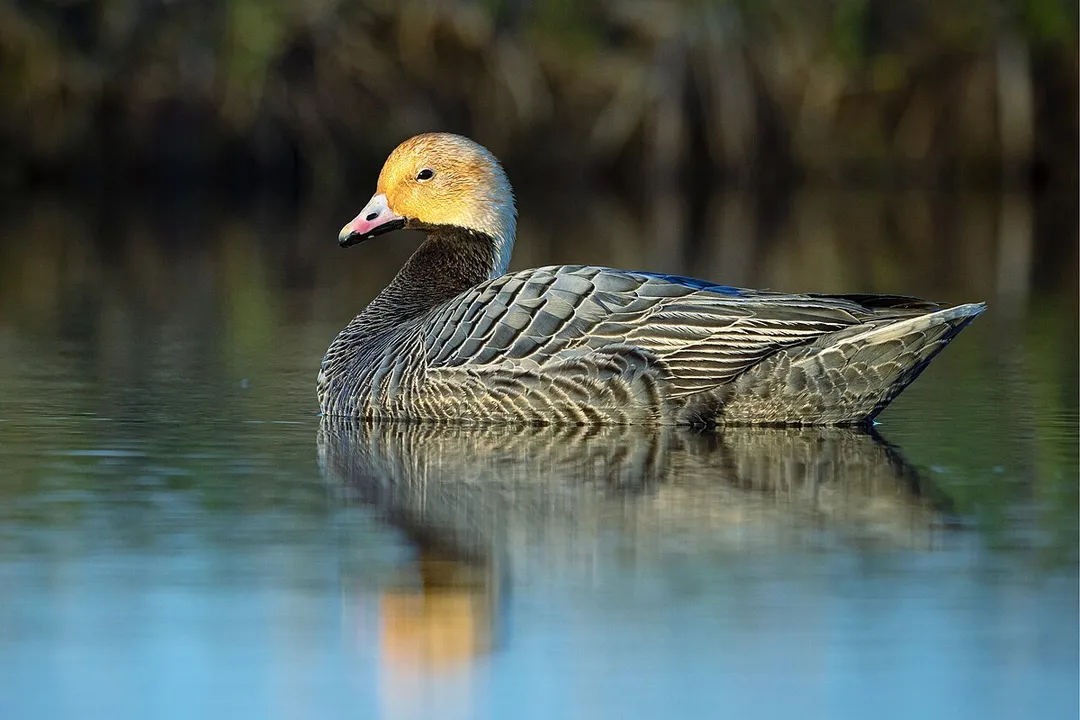
Related Questions
What feature provides a sharp visual contrast against the dark, gray, smoky appearance of the Emperor Goose body?Where is the breeding distribution of the Emperor Goose almost exclusively concentrated?Which US states and Canadian province are specifically mentioned as containing parts of the Emperor Goose's wintering grounds?What major migratory pathway do the majority of Emperor Geese utilize when traveling south after the nesting season?What primary ecological areas do Emperor Geese utilize for foraging along their preferred coastal habitat?During which time period are large flocks of Emperor Geese most often seen moving south through coastal British Columbia and down to Washington and Oregon?What factor is most responsible for giving the Emperor Goose an 'endemic specialist' designation despite current population numbers?During the breeding cycle, what is the division of labor regarding incubation between the sexes?Historically, during periods of significant decline, what was the lowest estimate the Emperor Goose population dropped below?Considering recent population recovery in the main cohort, what is a more accurate conservation classification for the Emperor Goose today?