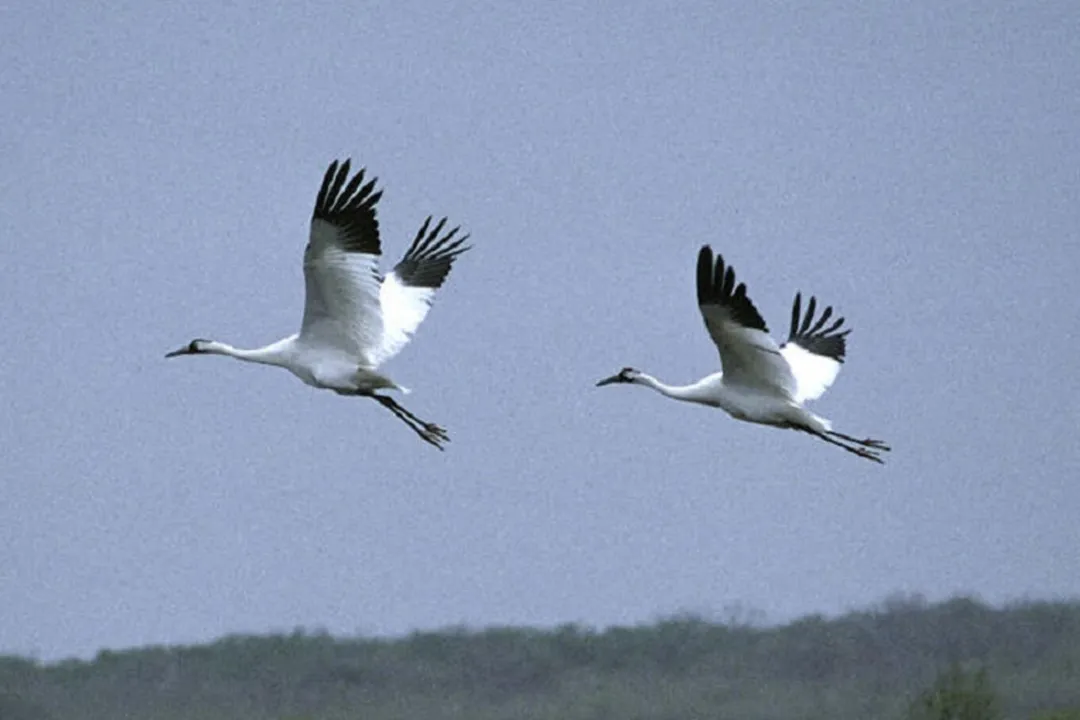
During flight, how is the long neck of the Whooping Crane characteristically held relative to its body?
Fully extended forward
The silhouette of the Whooping Crane in flight is distinct due to how it manages its long neck and legs. When airborne, the neck is held straight out, fully extended in front of the body, projecting a streamlined shape. This posture is a key structural clue used to differentiate it from other large wading birds like herons, which typically retract their necks into an S-shape during flight, and storks, which have different overall structural configurations. When combined with the expansive wingspan, which can exceed seven feet, this forward extension contributes to the majestic impression the bird makes in the air. Furthermore, it is during this airborne phase that the black primary feathers on the wing tips become highly visible against the white body, serving as a crucial identification marker.