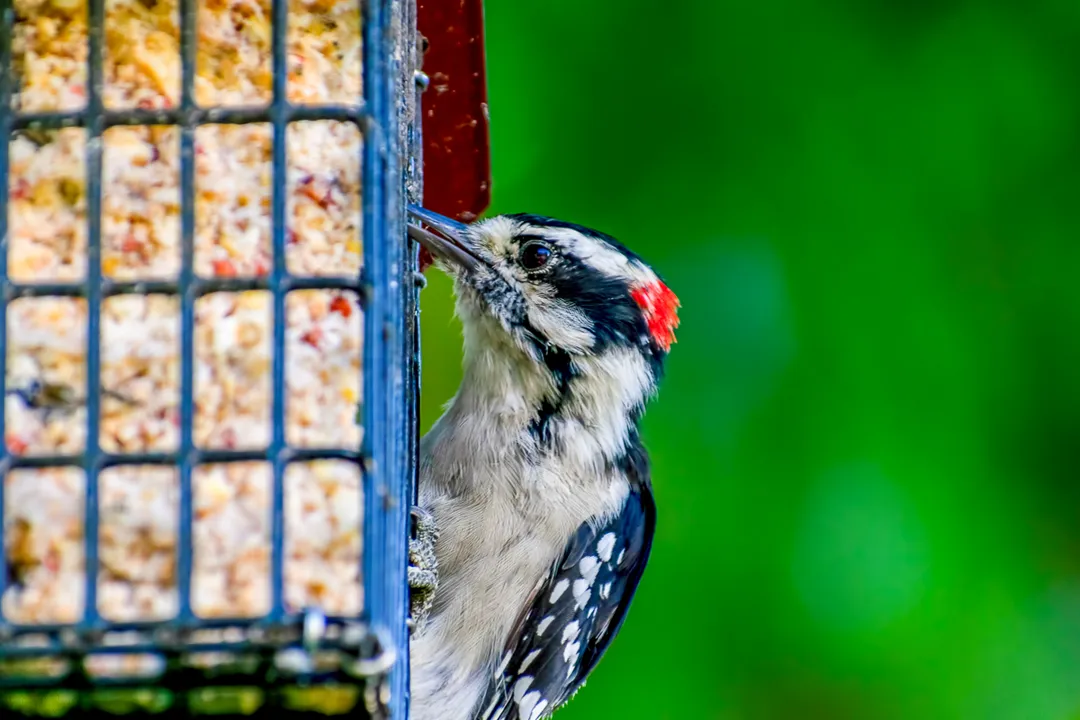
Besides territorial communication or attracting a mate, what secondary purpose can drumming serve for woodpeckers?
Locating food by detecting subtle vibrations that reveal hollow spots or insect movement
Drumming, characterized by light tapping against wood surfaces, is widely recognized as a crucial element of woodpecker social behavior, utilized extensively for declaring territory boundaries and attracting potential mates. However, this percussive action also serves a vital foraging function. By lightly tapping the wood, the bird can effectively use auditory feedback to sense the integrity of the wood structure. Subtle differences in vibration transmission can betray the presence of hollow areas, dead wood, or, most importantly, the movement of insects hidden just beneath the surface, allowing the woodpecker to pinpoint prey location before committing to energy-intensive drilling.