Woodpecker Diet
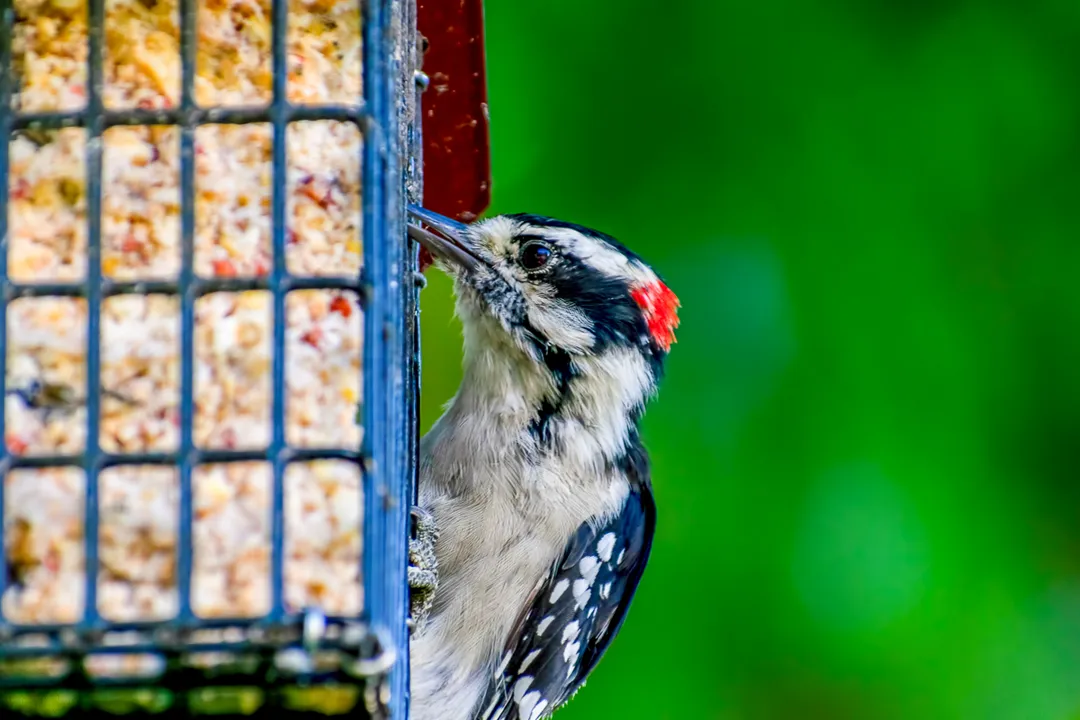
The diet of the woodpecker family, Picidae, is far more nuanced than the simple image of a bird incessantly hammering wood suggests. While their primary sustenance comes from the insects they excavate, their menu adapts significantly based on species, season, and local availability. Understanding what draws them to a tree, or even to a backyard feeder, reveals fascinating adaptations in avian survival strategies.
# Insect Focus

The foundation of almost every woodpecker's diet revolves around insects and their larvae. This focus on arthropods provides the dense protein and fat necessary for high energy demands, especially during breeding seasons or cold weather. They are essentially specialized entomologists of the forest floor and tree bark.
Woodpeckers actively seek out creatures hidden beneath the surface of wood or in the soil. This includes a wide range of larval forms, such as beetle grubs, which are often found tunneling within decaying wood. Adult insects, too, are consumed, providing quick, easily accessible meals.
Specific insect groups are highly favored depending on the bird. For instance, the Pileated Woodpecker shows a pronounced preference for carpenter ants. These large ants build their nests within wood, and the woodpecker's ability to strip away large sections of bark and wood allows it access to the main galleries where the queen and larvae reside. Other common insect prey includes termites, spiders, wasps, and various caterpillars. The sound of an insect moving beneath the surface is often the trigger for the bird to begin its drilling, allowing it to pinpoint prey with remarkable accuracy. The specialized, barbed tongue that woodpeckers employ is perfectly designed to spear, adhere to, and draw out these hidden tunnel-dwellers.
The sheer metabolic requirement for a bird that spends so much energy pecking means that exploiting this high-caloric, hidden insect population is non-negotiable for survival. A bird that simply forages on surface leaves misses out on the energy-dense pupae inside a rotting log; the woodpecker's entire morphology is dedicated to exploiting this niche resource that remains unavailable to most other avian species.
# Plant Matter
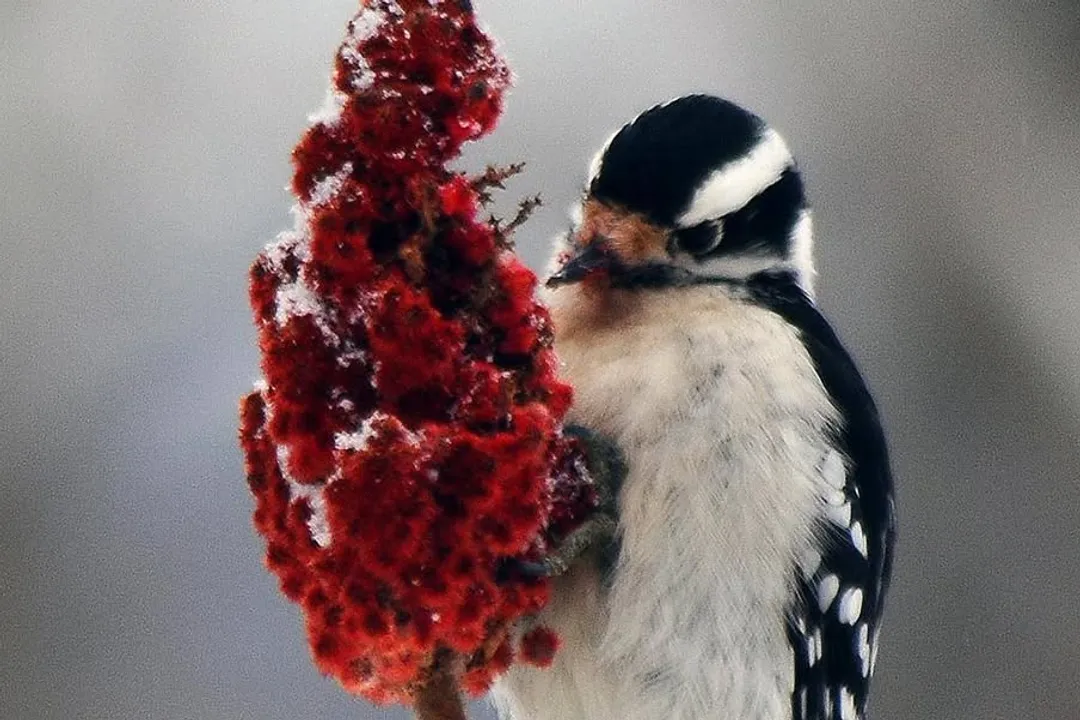
While insects dominate the intake for many species, the menu broadens considerably when preferred invertebrate sources become scarce or when certain plant foods are in peak season. This flexibility is key to their wide distribution across various habitats.
Sap often plays a distinct role in the diet, especially for certain groups like sapsuckers (a specialized type of woodpecker) or during times when insects are less abundant. Birds will drill a series of small, shallow holes, often in neat rows, to encourage sap flow, which they then consume along with any small insects or ants attracted to the sweet liquid.
Beyond sap, fruits, nuts, and seeds are regularly incorporated. The diet of the Golden-fronted Woodpecker, for example, is noted to be quite generalized, including seeds and fruit alongside its insect prey. For the Pileated Woodpecker, while ants are central, they are also known to consume wild fruits, notably the fruit of poison ivy. This ability to process toxins or fruits that other birds might avoid demonstrates a level of dietary tolerance. The presence of these harder items, like nuts and seeds, necessitates stronger beaks capable of breaking them open, adding another layer to their foraging diversity.
# Pecking Methods

The way a woodpecker obtains its food is intrinsically linked to its diet. The primary methods involve drilling, drumming, and probing.
Drilling is the most recognizable action, involving the creation of deeper, often larger holes intended to reach established insect galleries or larval chambers within the wood. This takes considerable time and energy, suggesting the payoff—a cluster of nutrient-rich grubs—is substantial.
In contrast, probing involves inserting the tongue or bill into existing crevices or small holes to search for insects, requiring less commitment than full-scale drilling. Drumming, while often associated with territorial communication or attracting a mate, can also serve a purpose in locating food. The subtle vibrations transmitted through the wood as the bird taps lightly can reveal hollow spots or insect movement inside.
It is interesting to compare the surface feeding of other birds to this behavior. A robin quickly spots a worm on the soil surface; a woodpecker must find the resource by listening and testing the wood's integrity before committing to the heavy work of excavation.
# Species Diets
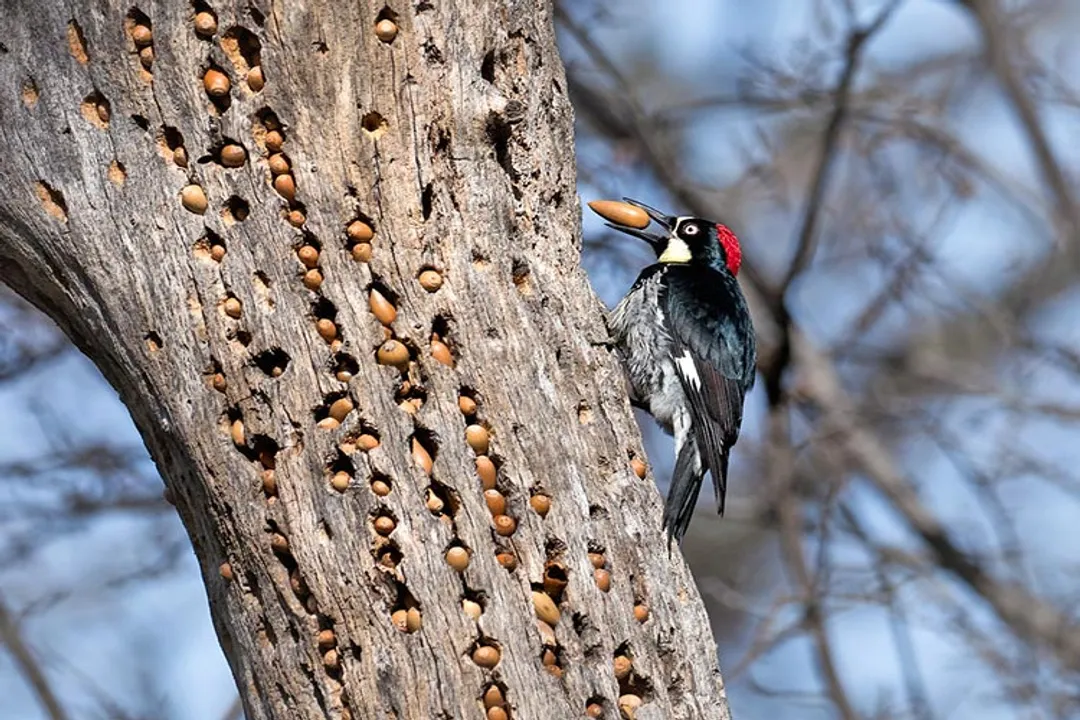
Dietary specialization creates distinct ecological roles for different woodpecker species, even within the same local environment.
The Downy Woodpecker, being the smallest North American species, often feeds on smaller prey and may exhibit slightly different foraging habits than its larger cousins. Their diet includes ants, beetles, wasps, caterpillars, and spiders.
Contrast this with the Pileated Woodpecker, one of the largest species. As mentioned, its survival is closely tied to the presence of large insects like carpenter ants and termites, which require the bird to create large, rectangular holes in trees, often leaving behind substantial evidence of its work.
This variation means that in a mixed woodland, different woodpeckers are likely targeting different depths, sizes, and types of prey, minimizing direct competition for the exact same food source. If you were monitoring a section of forest, you might observe a Downy picking small spiders off the surface of a branch while a larger Flicker excavates ant nests in a nearby stump.
# Feeder Visits
For backyard bird enthusiasts, attracting woodpeckers often means providing supplements, especially when natural food sources are depleted during winter. Woodpeckers readily visit feeders when the right provisions are offered.
The most successful items are high-fat, high-energy offerings that mimic the density of their natural insect diet. Suet—a rendered fat block often mixed with seeds or nuts—is highly attractive to many species, including Downy Woodpeckers. Similarly, chunky peanut butter, sometimes mixed with cornmeal or birdseed, is an effective attractant. Sunflower seeds are also consumed, although perhaps less essential than fatty supplements.
While offering suet is an excellent way to support these birds through tough weather, it is worth noting that an exclusively suet diet, while high in fat, lacks the calcium and specific micronutrients found in various insect exoskeletons and the diverse array of wild fruits and nuts they consume naturally. Therefore, these feeders serve as an important energy boost during lean times but cannot perfectly replicate the nutritional profile of a year-round foraging regime. Observing which species visits which feeder can be telling; smaller birds like the Downy might cling easily to a suet cage, whereas larger birds like the Pileated might prefer to hammer at a piece of suet secured to a tree trunk.
Related Questions
#Citations
What Do Woodpeckers Eat? | Lyric Wild Bird Food
What do Woodpeckers Eat and how do they find their food?
Woodpecker - Wikipedia
The golden-fronted woodpecker's diet is adult and larval arthropods ...
Allegany State Park - Facebook
What does the woodpecker eat? How does the Woodpecker ... - Quora
Pileated Woodpecker | Audubon Field Guide
What Woodpeckers Eat | Mon@rch's Nature Blog
Out My Backdoor: How Downies Feed Away from Feeders
Downy Woodpecker Life History - All About Birds