Are Eastern Bluebirds friendly to humans?
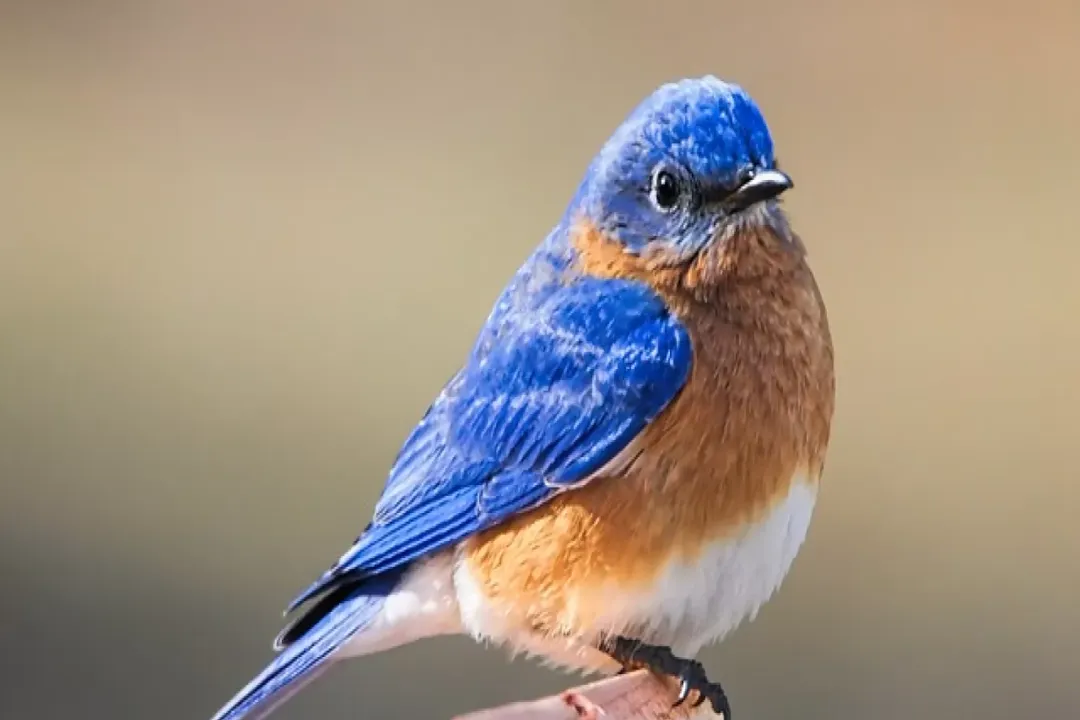
The Eastern Bluebird is undeniably one of North America’s most beloved songbirds, frequently sought out by birdwatchers and backyard enthusiasts for its brilliant azure plumage. This popularity naturally leads to a common question among those who put up nest boxes or maintain feeding stations: Are these small, striking birds actually friendly toward people? The answer, as with most wild animals, is layered, moving far beyond a simple yes or no. While bluebirds are not pets, their relationship with humans, particularly those dedicated to conservation, can appear surprisingly close, though this proximity is often conditional and context-dependent. [6][8]
# Box Proximity
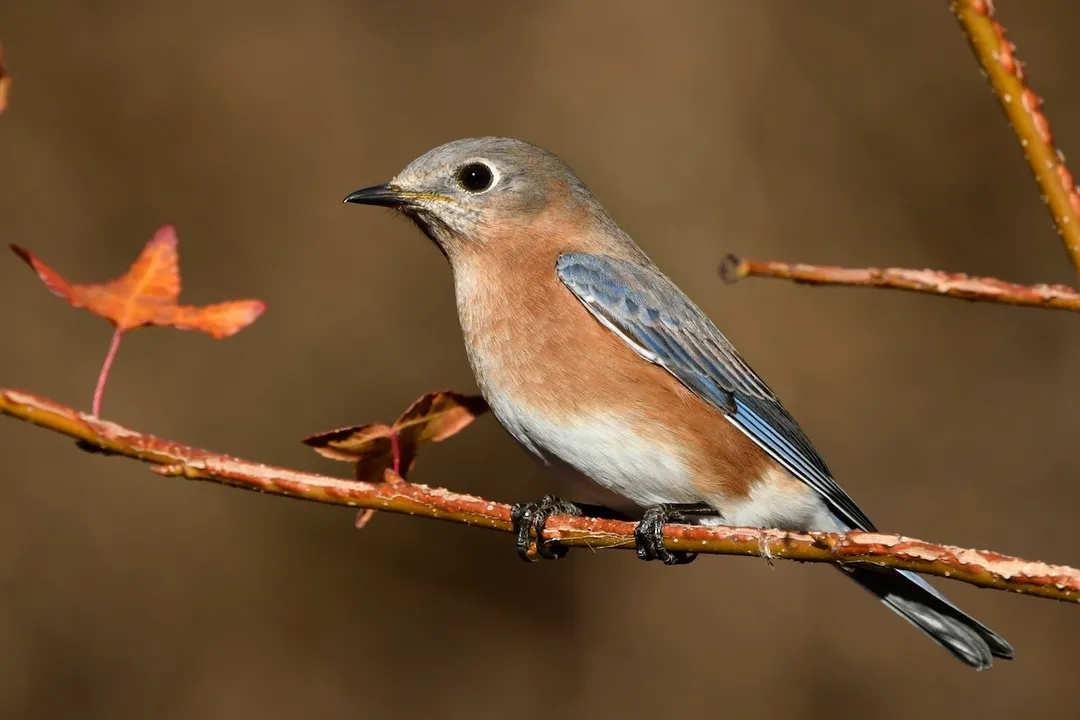
The greatest evidence for bluebird approachability often comes from participants in established bluebird trail programs. These programs rely on humans monitoring, cleaning, and maintaining nest boxes, requiring the birds to nest in close association with human activity. [9] Long-term observers have reported that bluebirds will readily use these artificial cavities, sometimes for over two decades of residency in the same area. [6] This ongoing presence suggests a high degree of tolerance for human movement nearby, especially if the humans are predictable and non-threatening.
Some anecdotal reports suggest that bluebirds can become quite bold, even associating specific people with food or safety near a feeder or nest site. [7] This habituation allows observers to get relatively close to watch fledglings leave the nest or observe the adults bringing meals. However, it is critical to understand that this behavior stems from learned association—humans are tied to a resource or safe nesting spot—rather than an innate desire for companionship. [8] They are comfortable in our presence because we have proven ourselves reliable or harmless stewards of their immediate environment.
# Territorial Defense
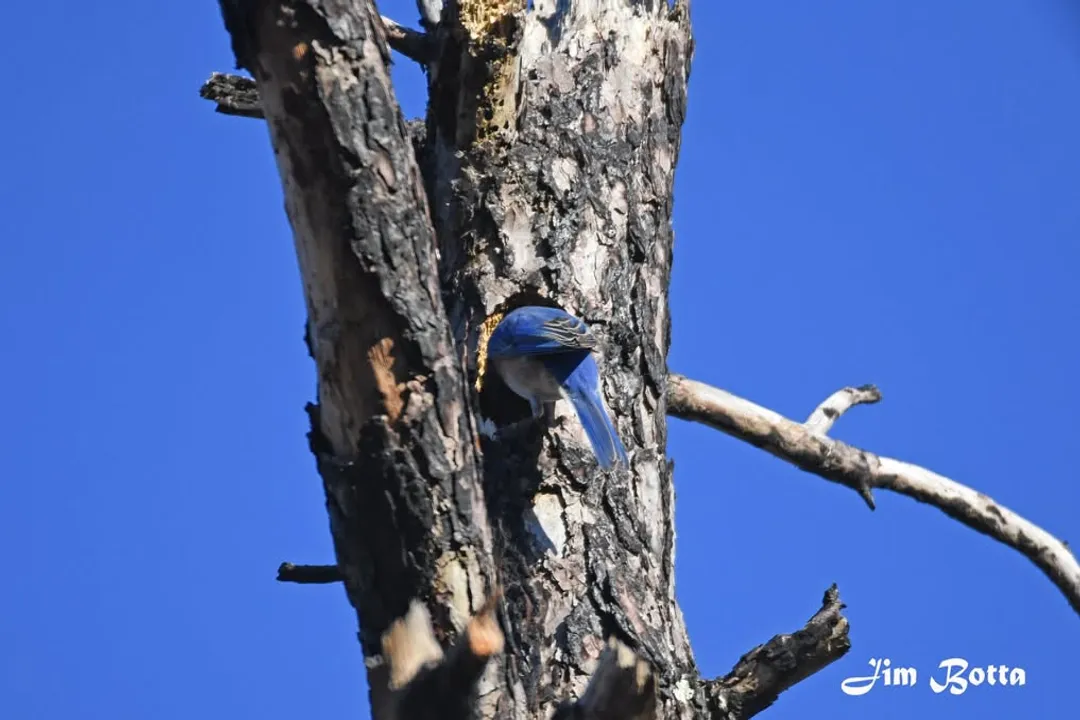
While they may tolerate you near their house, the moment the perceived boundary is crossed, bluebirds can shift from passive residents to staunch defenders. A key factor determining their reaction to humans is the breeding season. During nesting, territoriality is extremely high, and any perceived threat to the nest or young will elicit a strong response. [8]
Documentation exists showing that Eastern Bluebirds can display direct aggression toward people who approach nesting cavities too closely or too frequently. [5] This isn't a malicious act; it is instinctual protection. If you are monitoring a box, the parents might dive-bomb, chatter loudly, or even feign injury to draw you away from their clutches. It is a sign that the bird views you as a potential danger in that specific context. The same bird that might ignore you while foraging in a field might become quite vocal and aggressive if you linger near the entrance slot of their box when the nestlings are a week old. [5] This contrast shows their friendliness is situational; their primary drive remains survival and reproduction.
# Bird Personality
One fascinating aspect that complicates the 'friendliness' assessment is that not all bluebirds behave identically. Research into avian behavior suggests that individual birds possess distinct personalities that influence how they react to novel situations, including the presence of humans. [3] Some individuals are inherently bolder, more exploratory, and less prone to stress when faced with new stimuli, whereas others are naturally shy and easily alarmed. [1]
These inherent personality traits, which can even be linked to fitness outcomes, mean that one pair of bluebirds might tolerate a person checking their nest box weekly with minimal fuss, while a neighboring pair might react with immediate alarm to the same activity. [3] This variation is important for anyone hoping to foster a close viewing relationship. If a bluebird seems particularly skittish, it might just be its inherent nature, not a reflection of your presence being inherently unwelcome in general bird terms. [1] Understanding that behavior is not monolithic helps manage expectations when interacting with the species.
# Reading Signals
When observing Eastern Bluebirds, interpreting their body language is the best way to gauge their current feeling about your presence. This requires paying attention to when they are close, not just that they are close.
For instance, an individual foraging quietly ten feet from you in October might be exhibiting true, low-stress tolerance for a human presence in their winter feeding territory. [6] Conversely, a bird puffing up, spreading its wings slightly, and making sharp alarm calls while you are near a cavity in May is issuing a clear warning that you have violated their nesting space. [5] A helpful distinction to make is between boldness and tolerance. Boldness is the innate willingness to approach something new; tolerance is the learned acceptance of something established, like a familiar caretaker approaching a nest box after weeks of routine checks. [9] True friendliness, in the human sense, does not apply here, but a functional, low-conflict cohabitation certainly does.
When setting up your viewing area near a known nest site, try to keep your actions highly predictable. If you must approach the box for monitoring, do so slowly, perhaps tapping the pole lightly before touching the box so the parent birds have a chance to recognize the sound as your sound, rather than a predator's sound. [7]

# Conservation Context
It is worth noting that the bluebird’s success in many areas is directly attributed to human intervention through habitat management and nest box installation. [9] This necessary management inherently creates situations where humans and bluebirds interact frequently. The very act of supporting their population growth through housing initiatives ensures that their comfort level with us rises over time compared to species that rely purely on natural cavities in increasingly fragmented woodlands. [4]
This management role, however, requires responsibility. Knowing that they can be aggressive when defending young [5] should temper enthusiasm with respect for their wild boundaries. An experienced bluebird landlord knows when to back off, often recognizing signs of stress such as excessive tail-flicking or continued agitated calling, even if the bird hasn't physically attacked. [8] Successfully coexisting with Eastern Bluebirds is less about making them "friendly" and more about becoming a trusted, predictable, and non-threatening fixture in their local landscape, respecting their cycles of breeding and rest.
Related Questions
#Citations
Researchers learn what it takes to make the bluebird of happiness ...
Why we get goopy over bluebirds - Sialis.org
Personality, Stress Profiles & Fitness in Eastern Bluebirds & Tree ...
A Passion for Bluebirds | Psychology Today
Bluebird aggression toward people? - Bluebirdnut
Eastern Bluebird. 20 years i have lived here and this is the first time i ...
Eastern Bluebird Nesting in Human-Modified Habitats - Facebook
Behavior - Eastern Bluebird - Sialia sialis - Birds of the World
Tyler's Blue Bird Box Program