Are Kiko goats friendly?
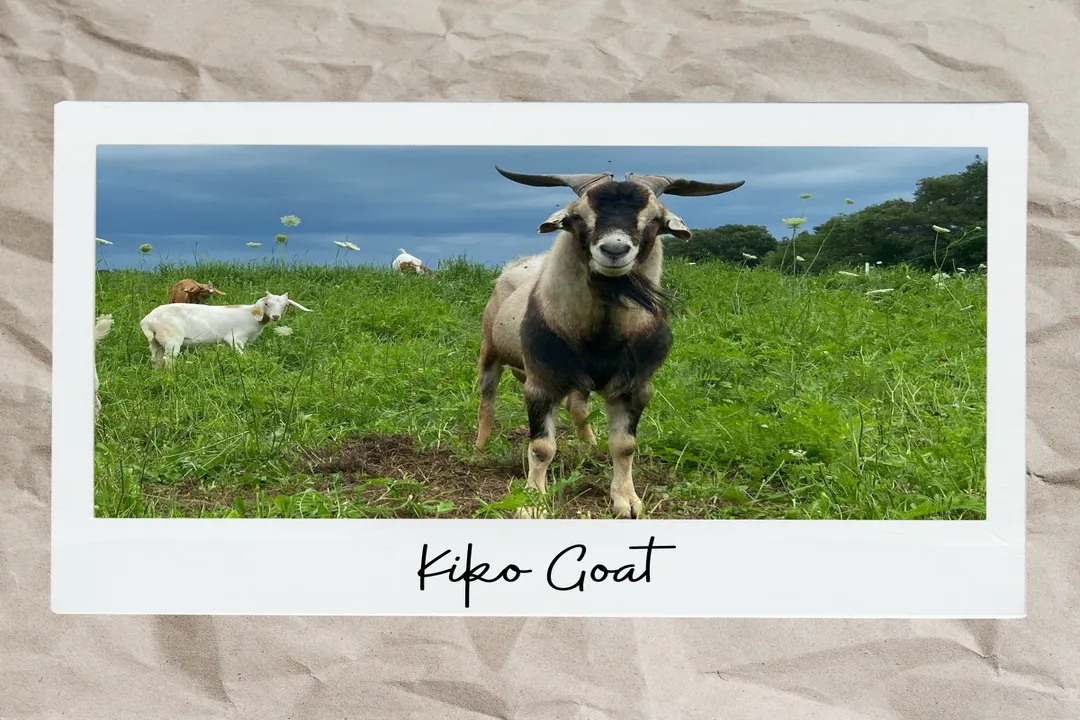
The arrival of the Kiko goat on the American agricultural scene has brought a renewed focus on hardiness and performance, but often, the first question potential new owners have isn't about carcass yield or parasite resistance—it's about their day-to-day demeanor: Are Kiko goats friendly? This is a complex question, as the answer seems to swing wildly depending on the specific animal and, perhaps more importantly, its background. To understand the temperament of the Kiko, one must first appreciate where they came from.
# Hardiness Heritage
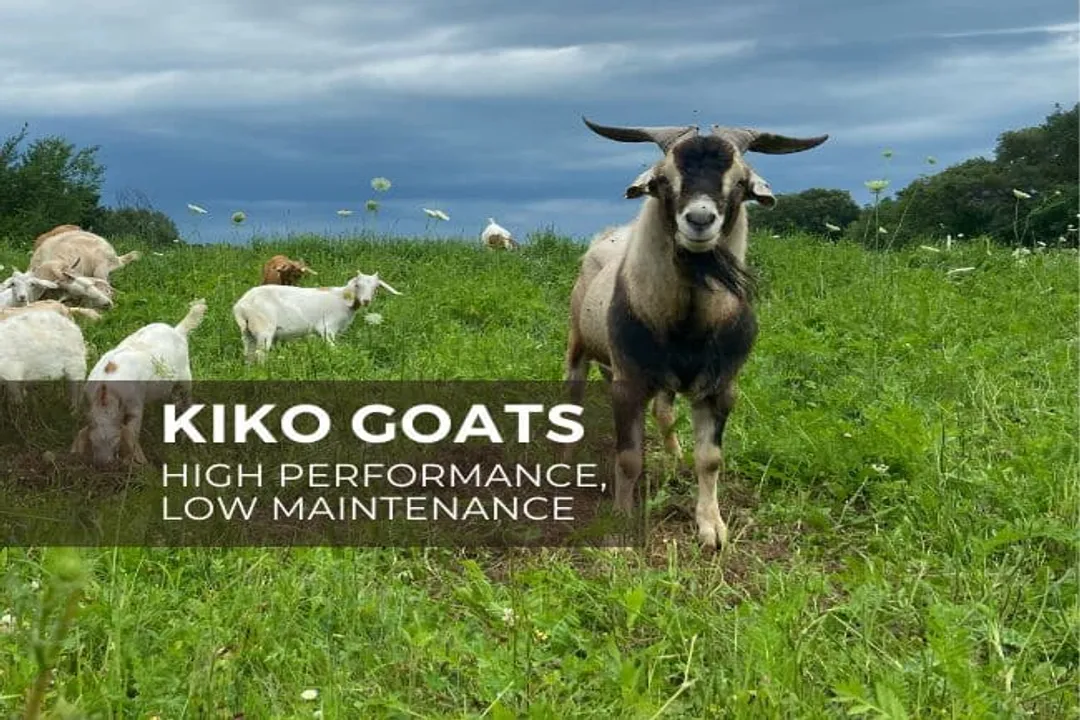
The Kiko breed traces its roots back to New Zealand in the 1980s, where they were developed by crossing hardy, locally adapted feral does with bucks from dairy breeds such as the Saanen, Nubian, and British Toggenburg. The name "Kiko" itself comes from the Māori word for "meat". Crucially, the selection process was intensely focused on survivability in challenging environments: low-grade pasture, high stocking rates, and minimal husbandry. Only the goats that needed no hoof care, no supplemental feeding, and minimal parasite control were allowed to breed.
This history is the foundation of the modern Kiko’s reputation. They are celebrated for being exceptionally hardy, resilient, and parasite tolerant. They are built to thrive with minimal inputs, often requiring less veterinary intervention and rarely suffering from foot or respiratory issues compared to some other breeds. This dedication to low maintenance and robust performance has made them increasingly popular in the U.S., particularly in subtropical southeastern states where they outperform other meat breeds in humidity.
However, the very traits that make them excellent production animals—independence and self-sufficiency in a pasture setting—are what lead some observers to categorize them as less inherently friendly than breeds developed solely for dairy or companionship.
# Temperament Variance
When reviewing owner experiences, a clear division emerges regarding the Kiko’s disposition. On one side are accounts describing animals that are exceptionally pleasant and eager to interact. Breeders who emphasize performance selection under low-input systems still report a generally docile breed with a wonderful temperament. These goats are said to enjoy the company of humans and are very friendly. Specific praise highlights them as active, alert but calm, and easy-going when accustomed to human contact, making them trainable and amenable. Owners working with Kikos specifically for trail use note they are mellow, perk up at noise, but wait for direction rather than panicking, possessing a "can do" attitude. One breeder described their Kikos as curious and eager to engage, but always in a respectful manner, noting a confidence that translates into docility.
On the other side of the ledger are reports that characterize the breed as significantly wilder. Some forum participants noted that Kikos tend to be much more wild than their Boer counterparts. Another frequent observation is that they are flighty and difficult to catch when running on pasture. This lack of ease in handling led one commenter to advise against Kikos for a hobby farm focused on regular handling, suggesting they would personally avoid even a Kiko cross in that scenario. A stark example of this difference in perception was a newcomer who, within five minutes of unloading a new Kiko doe, found themselves chasing the goat for half a mile across the countryside—a clear illustration of a high flight response in unfamiliar surroundings.
It is essential to reconcile these two perspectives. The difference often appears to be rooted in the animal’s prior management and whether it was bred for performance in isolation or for interaction on a family farm.
# The Role of Management and Acclimation
The divergence in temperament suggests that the Kiko's inherent friendliness is heavily contingent upon the Experience they have had with humans. The foundational breeding goal was survival on pasture with minimal intervention, which naturally selects for animals that do not require constant human proximity. If a Kiko is raised primarily on large acreage with infrequent, distanced handling, it will logically become more independent and flighty than a breed selected for dairy companionship or one that is bottle-raised.
This observation leads to a critical piece of actionable advice for those considering the breed: Never turn a new Kiko goat directly out onto the main pasture or into an unfamiliar setting immediately upon arrival. One experienced owner rightly noted that the immediate, frantic escape attempt by a new animal is not a breed-specific trait but a universal reaction to strange surroundings and fear. To mitigate the risk of losing a new acquisition—as happened in the anecdotal chase—a mandatory holding period of at least two weeks in a secure, familiar-enough enclosure is crucial for acclimation. During this period, the new owner can begin establishing positive, non-threatening interactions, often involving treats, which can rapidly transform a skittish animal into an affectionate one.
Furthermore, some anecdotal reports suggest that aggression is not tied strictly to breed but can appear unpredictably. One user recounted a terrible experience with an aggressive Boer buck, while another reported a Kiko cross doe who, despite being very sweet with humans, became the boss and could be mean to other goats. Another comparison showed that a Boer/Nubian cross might be easier keepers with nice personalities than some Kikos. In the broader context of goat ownership, any breed can produce an animal with a challenging disposition, suggesting that individual selection is as important as breed selection.
# Kiko Compared
To fully assess the Kiko's friendliness, it is useful to compare them to other popular breeds, particularly the Boer, which is often viewed as the standard for meat goats. Boers are generally characterized as docile and easygoing. In areas where Boers dominate the market, they are often perceived as the "sweeter, easier to handle" option compared to Kikos, which some regional breeders described as "always wild".
However, this comparison is not absolute. Breeders noted that Kikos are generally finer-boned than Boers and do not possess the same "beefy" look, yet they can produce just as much meat, especially when factoring in feed efficiency on grass. If an owner's primary goal is a highly handleable, show-oriented animal, a purebred Boer, or perhaps a cross involving dairy genetics, might offer a more predictable starting point regarding docility. The Kiko’s strength lies in its low-input performance, not necessarily in its inclination to be a lap goat.
# Crossbreeding and Dairy Potential
The versatility of the Kiko, stemming from its dairy ancestry, means it is often used as a crossbreeding sire to inject hardiness and parasite resistance into other herds. When crossed with dairy lines like the Nubian, the resulting offspring have been described as as gentle as can be. Even in these crosses, the mothers showed exceptional attentiveness to their kids. This suggests that if a breeder needs the low-maintenance hardiness of the Kiko but requires a decidedly more personable animal, selecting a Kiko buck from a background with established dairy influence (like a Kiko/Nubian cross) might be the best route.
It is worth noting that Kiko does can be good dairy producers if that is what is selected for, though the breed’s main focus remains meat production [5 - Facebook post title]. If a farmer is seeking a dairy goat for value-added products like soap, the higher production of a pure dairy breed like the Alpine or Saanen is usually preferred, as soap production doesn't strictly require the higher butterfat content favored in cheese.
When looking for a Kiko to be an active part of family life, especially around children, the crucial determinant is not the breed name on the tag, but the selection criteria used by the breeder. Kikos bred for high-contact farm life are fundamentally different from those selected solely for their ability to thrive untouched on remote, rough terrain. A good breeder focused on maintaining the integrity of the breed for performance will still select for animals that settle quickly and allow necessary husbandry procedures like hoof trimming and vaccination.
# Final Assessment
To answer the core question: Kiko goats can absolutely be friendly, peaceful, and compliant companions. However, their genetic foundation leans toward independence and self-reliance. This means that a Kiko arriving from a large, low-input ranch is far more likely to be initially skittish than a Pygmy or Nigerian Dwarf, breeds often selected primarily for small-scale handling and interaction.
For the owner prioritizing hardiness, economic efficiency through low inputs, and superior parasite resistance, the Kiko is an excellent choice, provided they commit to early and consistent socialization. If the goal is a goat that readily seeks out affection, the owner must be prepared to actively create that relationship, especially by implementing a gentle acclimation phase when bringing new animals home. If you are looking for an animal that will not require you to constantly manage its environment but will be a capable producer, the Kiko’s friendly disposition is an earned trait rather than an automatic given. Conversely, if the operation needs animals that are readily calmed for vet checks and handling without specialized facilities, a Boer or a cross with stronger dairy lineage might offer a slightly more passive baseline temperament. The successful Kiko owner understands this balance: they gain incredible resilience but must invest the time to secure the trust and friendliness of their herd.
Related Questions
#Citations
Kiko Goats: high performance, low maintenance breed
Breed Profile: Kiko Goat
The 10 Best Goat Breeds for Beginners - Wilco Farm Stores
Kiko goat experience : r/goats - Reddit
Kiko vs Boer | The Goat Spot Forum
Kiko Opinions? | BackYardHerds - Goats, Horses, Sheep, Pigs & more
Kiko Goats | Kesabe Farm
Choosing the Right Goat Breed for Your Homestead