How rare are eastern kingbirds?
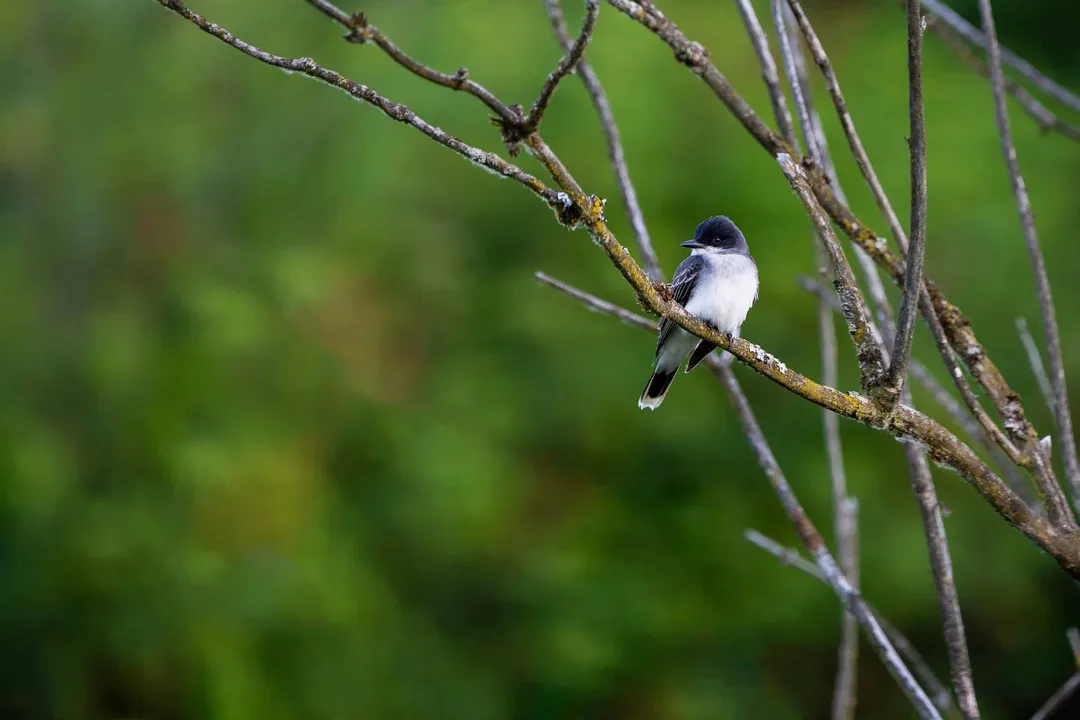
The question of how uncommon the Eastern Kingbird truly is requires looking beyond just a single sighting and delving into continental estimates, range shifts, and regional reports. While not classified as endangered, its status has seen notable shifts over the past decades, making its presence a subject of ongoing interest for birders across its range. [1][9] This striking, black-and-white flycatcher, known for its bold, assertive behavior, is generally considered a relatively common breeding species across much of North America during the summer months, yet its apparent abundance can vary significantly depending on location and time of year. [3][7]
# Continental Status
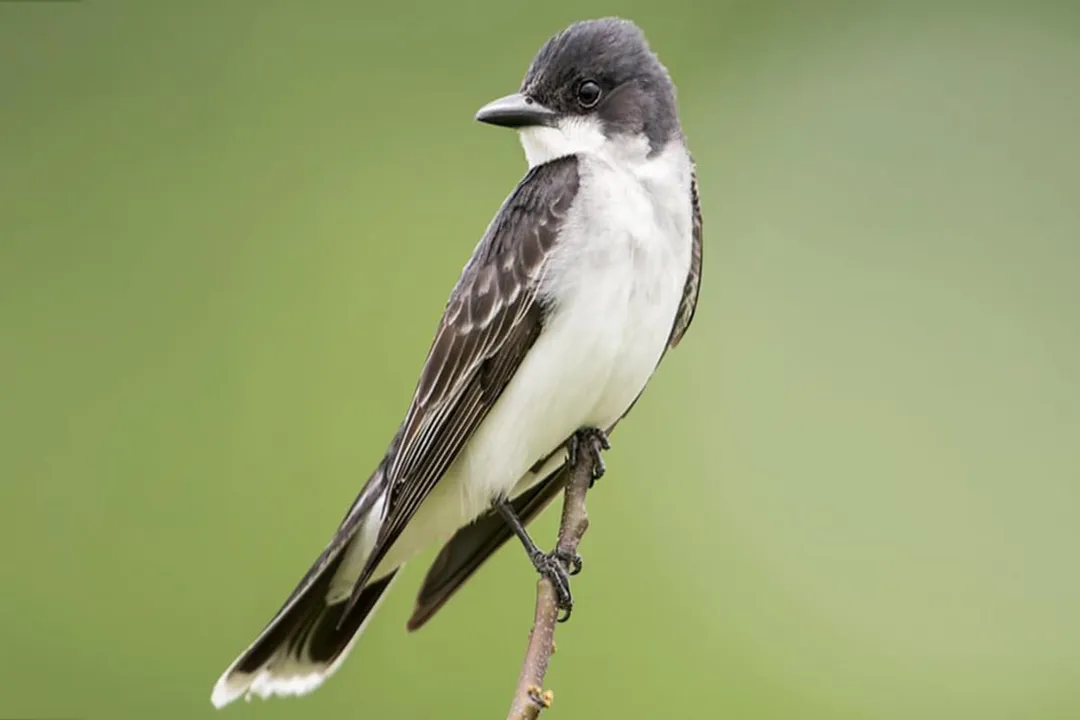
The Eastern Kingbird's conservation status, as assessed by major organizations, tends to place it in a non-critical category, suggesting it is not globally rare in the sense of imminent threat. [9] For instance, the IUCN Red List categorization generally views the species as Least Concern. [9] However, a deeper look into demographic data reveals a more nuanced picture regarding its population stability.
Population estimates suggest a substantial number of individuals exist across the breeding range, although getting an exact, current count is complex. [4] Data compiled from various sources, including the Breeding Bird Survey, have indicated population trends that are often described as relatively stable or showing a modest decline in certain areas over the longer term, though short-term fluctuations are common. [4][9] One analysis noted a long-term decline in the continental population, though not at a rate severe enough to warrant a higher threat level. [4] Comparing this to birds known for massive, recent declines, the Eastern Kingbird occupies a middle ground: present in large numbers but perhaps losing ground slowly across its vast territory. [1]
# Range Dynamics
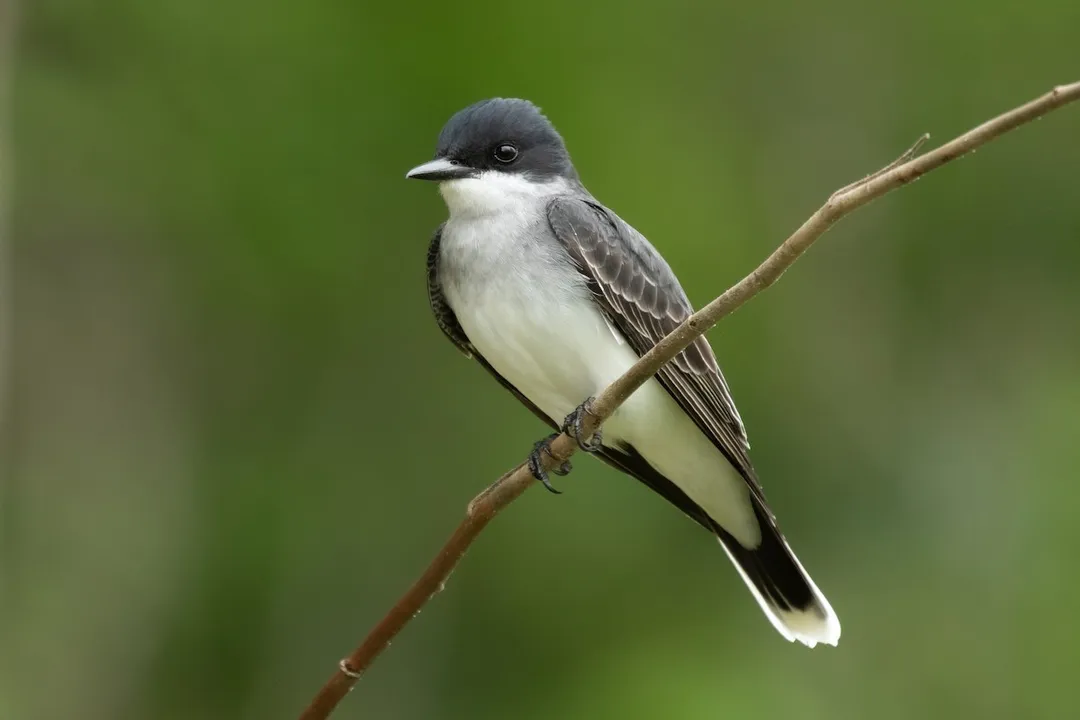
The geographical spread of the Eastern Kingbird helps define where it is not rare. It is primarily a summer resident, breeding from Alaska and central Canada south through most of the United States, although its distribution is patchy in the far west. [1][3] Its presence is strongly tied to open country, often near water, which dictates where birders should focus their attention. [7][8]
In the Midwest, for example, its presence is well-documented. In Nebraska, it is listed as a common spring and fall migrant, and it breeds in the state, favoring areas near ponds, reservoirs, and rivers, typically in open country with scattered trees. [6] Similarly, in Texas, the Eastern Kingbird has documented breeding occurrences, though its distribution across the state can vary depending on local habitat availability. [5] Observers in the eastern United States, like those in Indiana, frequently encounter them near agricultural areas, pastures, and open wetlands during the breeding season. [8] If you are looking for one in the deep south or the arid Southwest outside of migration, you are far more likely to consider it rare or absent during the summer months. [1]
A fascinating element of their distribution is the contrast between their expected presence and local reports. While the species is widespread, an individual sighting in a specific location, such as Connecticut in early spring or late fall, might be noted by local birders as noteworthy, prompting discussions online about whether that specific bird is early, late, or simply a stray. [2] This highlights that while the species is common continentally, any single location only hosts them for a few months of the year, making them seasonally rare everywhere but their core breeding grounds.

# Local Versus Continental Abundance
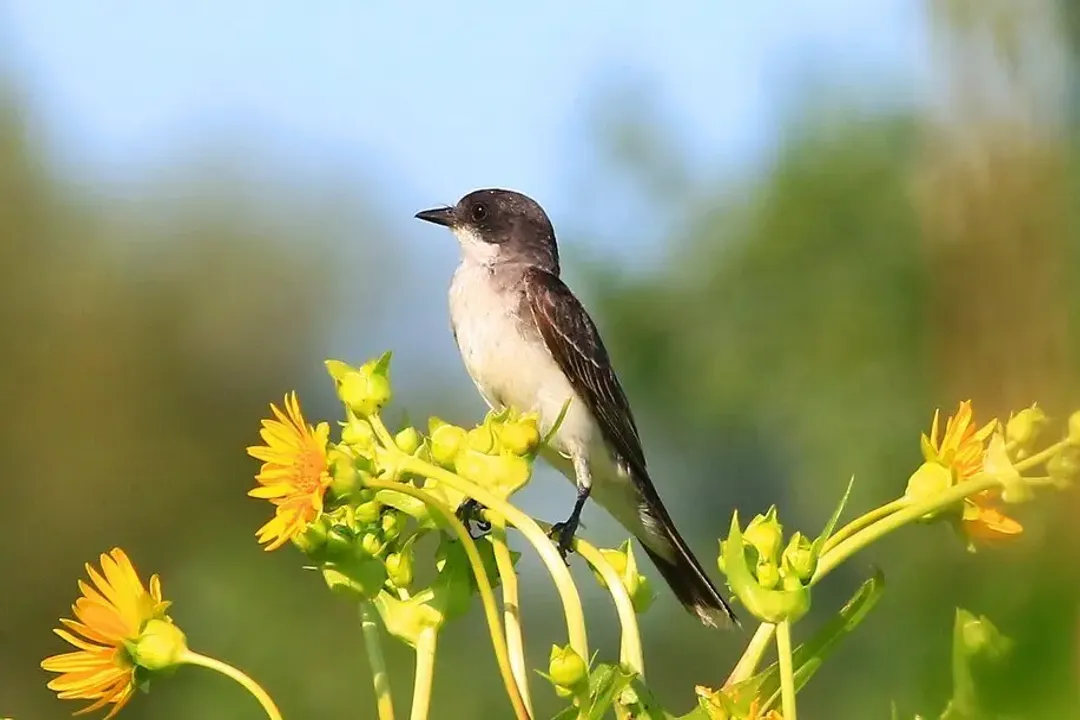
To an experienced birder in upstate New York or southern Ontario during July, the Eastern Kingbird is common—sometimes aggressively so. They establish large territories and are famous for loudly scolding any passing bird, including much larger raptors like Red-tailed Hawks, often necessitating a sharp look at the birder's own presence as the actual source of agitation. [1][3] If a habitat niche fits their needs—open space, perches, and water—they can be locally dense.
This high local visibility can sometimes obscure the overall population trend. A birder accustomed to seeing dozens of them in a county might be surprised to learn that aggregated continental data suggests a slow decline. [4] This difference often comes down to habitat loss. As agricultural practices change, or as more areas become heavily forested or densely suburbanized, the specific open-country niche required by the kingbird shrinks, meaning fewer territories can be supported even if the birds themselves are perfectly healthy within those remaining areas.
One way to contextualize their seeming abundance is to consider their territorial defense. Because they are so fiercely territorial, you rarely find two breeding pairs happily nesting within a few hundred yards of each other. [1] If you are surveying a small pond and only count one, that single bird is likely the sole representative of the species in that immediate vicinity, regardless of how many other species are present. This aggressive spacing effect naturally makes them locally less numerous than a flocking species, even when the overall continental population is healthy.
# Identifying Seasonal Rarity
Understanding the Eastern Kingbird's schedule is key to assessing its rarity. They are neotropical migrants, spending winters in Central and northern South America. [1][9]
This means that for the vast majority of the United States and Canada, the bird is truly rare or entirely absent for roughly six months of the year.
| Season | Typical Status in Northern Range (e.g., NY, ON) | Primary Activity |
|---|---|---|
| Winter (Dec–Feb) | Absent / Extremely Rare Vagrant | South America |
| Spring (Mar–May) | Migrant, arriving late April/May | Traveling North |
| Summer (Jun–Jul) | Common Breeding Resident | Nesting and Rearing Young |
| Fall (Aug–Oct) | Migrant, departing late Aug/Sep | Traveling South |
If you are birding in a northern state in November, finding an Eastern Kingbird is indeed a rare event, usually representing a bird lingering too long before its long flight south. [6] Conversely, if you are in your local park in June and don't see one near the riparian edge, that might be the unusual event, suggesting a local factor like a lost nest or depleted insect food source.
A specific strategy for finding them when they should be present involves looking away from dense woodlands, which are prime territory for many other songbirds. Instead, target agricultural fence lines, scattered dead snags along the edge of a field bordering a slow-moving river, or lakeside docks. They prefer an unobstructed view of their aerial domain, often choosing the highest, most exposed perch available to survey for flying insect prey—a behavior that sets them apart from shyer songbirds like warblers or thrushes. [1][7] Paying attention to these specific habitat cues can transform the bird from "uncommon" to "expected" during the summer months in appropriate regions.

# Population Trends and Future Outlook
While not critically rare, the Eastern Kingbird's status warrants observation because regional population trends are not uniform. Some studies have indicated slight regional declines, possibly linked to changes in land use that reduce their preferred open-country nesting and foraging habitats. [4][5] This highlights that rarity is often a mosaic, not a blanket statement. A bird common in the prairies might be genuinely struggling in the eastern deciduous forests due to habitat fragmentation.
The reliability of sightings across decades in places like Texas and Nebraska shows that while fluctuations occur, the species maintains a solid foothold where suitable open landscapes persist. [5][6] For the dedicated observer, tracking their local appearance dates year over year offers a personal barometer for this species' success, providing a ground-level perspective that complements the larger continental surveys. The continued, if occasionally debated, presence of these bold sentinels of the open fields suggests that for now, the Eastern Kingbird remains a familiar, if sometimes feisty, component of the North American summer avifauna. [3][8]
Related Questions
#Citations
Eastern Kingbird Overview, All About Birds, Cornell Lab of Ornithology
Seen in Connecticut today. On a scale of 1 to 10, how unusual is it ...
Eastern Kingbird | Audubon Field Guide
Demography and Populations - Eastern Kingbird - Birds of the World
EASTERN KINGBIRD | The Texas Breeding Bird Atlas
EASTERN KINGBIRD - Birds of Nebraska – Online
Eastern Kingbird » HF&G - Cleveland Botanical Garden
Spotlight on the Eastern Kingbird - Iowa Natural Heritage Foundation
Eastern kingbird - Wikipedia