Are Eastern Phoebes friendly to humans?
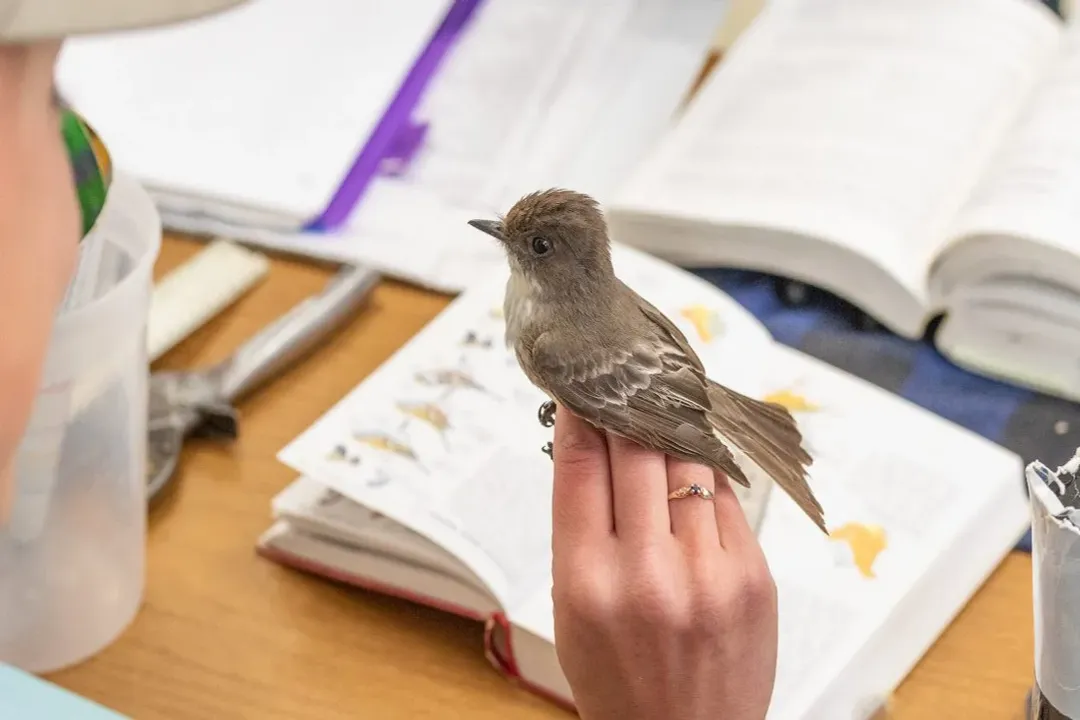
The Eastern Phoebe often surprises people accustomed to shyer backyard visitors. Instead of remaining distant, this small, brownish-gray flycatcher seems to actively choose the corners of our human world for its home, leading many to wonder if these birds are genuinely friendly. The answer lies not in traditional pet affection, but in a remarkable level of tolerance and a highly specialized adaptation to human structures that makes them appear remarkably bold, if not sociable.
When you first encounter a Phoebe, you notice its signature mannerisms: a gentle, metronomic tail-wag when perched, and its soft, clear song, which sounds exactly like its name: fee-bee. Belonging to the flycatcher family (Tyrannidae), the Eastern Phoebe is one of the most familiar of its kind in regions like New Hampshire precisely because it nests where we build—under bridges, beneath eaves, on shed beams, and sometimes even on light fixtures.
# Architectural Coexistence
The relationship between the Eastern Phoebe and humans predates even modern ornithology. In 1804, John James Audubon chose an Eastern Phoebe as the very first bird he ever banded, tracking it with a piece of silver thread. This early study foreshadowed the bird's incredible adaptability.
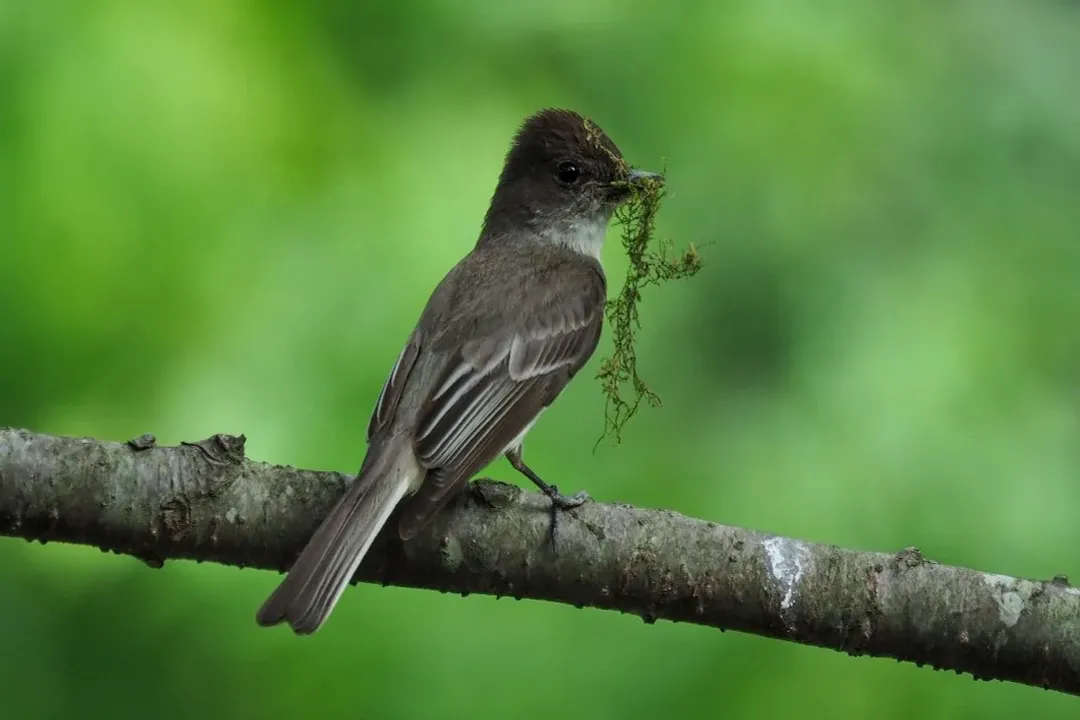
Phoebes are considered "niche nesters," preferring small, enclosed spaces that offer overhead protection and firm support. Before human structures proliferated, they likely used natural sites like rock outcrops, cliffs, and caves. However, the availability of barns, covered porches, and bridges allowed the species to expand its range, demonstrating a very high tolerance for human activity. They often construct their nests from green moss, mud, and plant material, often recycling or rebuilding in the same spot across multiple seasons. This willingness to nest inches from our daily lives is the foundation of any perceived "friendliness." Their populations remain stable, classified as a species of least concern, a success story partly credited to this coexistence.
# Encounters Beyond Tolerance

While nesting close by demonstrates tolerance, many observers report interactions that go well beyond mere acceptance—they describe active engagement. Accounts shared among birders and enthusiasts frequently recount Phoebes following people around their yards, sometimes sitting just feet away.
One common scenario involves activity that disturbs the soil or leaf litter, such as gardening or mowing. As the human moves, the Phoebe darts down to snatch up the exposed insects, spiders, or grasshoppers that struggle to fly back up, returning to a nearby perch to survey the area again. The bird, being a flycatcher, capitalizes on the free pest control service provided by its human companion.
Some experiences are startlingly intimate. There are reports of Phoebes grazing a person's ear or hair, and even one juvenile that landed on an observer’s hand, potentially having misidentified eyelashes as insect legs. The most extreme account involves a bird allegedly snatching a contact lens right out of a birder's eye before swallowing it. Another report mentioned a bird exhibiting jealousy, actively intervening when its human friend spoke to a neighbor over a fence. A person using a wheelchair noted a persistent Phoebe attempting to land on their head and their dog, even recovering after being shaken off the dog’s back.
# Motivation Behind the Boldness
It is important to distinguish between learned habituation and actual friendliness in the human sense. While the bird is certainly not domesticated, its behavior often stems from a combination of instinct and environment.
Biologists suggest that some of the more aggressive, close-contact behavior, particularly outside the core breeding season, may be related to establishing or defending a winter feeding territory. The bird may view a consistent human presence in its preferred hunting area as a constant resource marker worth defending, or simply as a reliable hunting aid.
When a bird like a Phoebe follows you while you garden, it’s not showing affection; it’s engaging in an efficient foraging strategy. Your movement provides the primary hunting stimulus, and your proximity is irrelevant as long as the food source (insects) is accessible. The confusion, such as the juvenile mistaking an eyelash for prey, highlights a key point: these birds are driven by visual cues related to tiny, moving objects. The dramatic contact lens incident was likely a highly motivated attempt to capture a small, reflective object it perceived as a potential meal or target. The behavior observed in the user who was nipped when holding out a thumb suggests the bird may have momentarily mistaken a finger tip for a grub. This boldness is driven by an acute awareness of food opportunities near a trusted structure, not a desire for physical companionship.
The intensity of these interactions—like the bird following someone inside to the screen door or displaying possessiveness over a human companion—is fascinating because the Eastern Phoebe is naturally a solitary species. Mated pairs spend little time together outside of nesting duties. When one becomes intensely focused on a single human, it is almost certainly overriding its typical solitary nature due to an incredibly reliable, perhaps unique, resource associated with that individual.
# Encouraging Presence
If you wish to cultivate a close, if detached, relationship with your local Phoebes, the key is to cater to their specific needs, which are centered around insect control and secure nesting spots.
- Structure First: Provide sheltered, sturdy locations. A simple, high shelf or a designated nest box installed under an overhang or eave is often enough to secure a breeding pair. Remember that they are likely to reuse that nest year after year, which is convenient for you but might mean relocating your porch furniture if the nest is directly above a frequently used spot.
- Create a Hunting Zone: Since they are aerial insectivores—catching prey mid-flight—the immediate area around their preferred perch matters more than seed feeders.
Here is a subtle way to invite closer viewing: because Phoebes like to fly from perch to perch to spot insects, consider placing a single, bare branch or pole near your nesting structure or favorite patio area. Then, rather than offering inappropriate food like seeds, focus on maintaining a small, open patch of lawn or garden nearby where low-flying insects are routinely disturbed by your presence or activity. The bird will use the dedicated perch as its observation deck, sallying out to intercept the bugs you inadvertently flush into the air. This setup caters directly to their hunting style, making your presence synonymous with a successful hunt.
# Temperament Snapshot
Are they friendly? They are not pets, and reports of near-aggression—like flying toward a face—serve as a reminder that they are wild animals motivated by instinct, not companionship. They are, however, uniquely tame and highly tolerant. They are creatures of habit, often returning to the same territory year after year, and they possess the quiet patience often noted by those who observe them closely.
The Eastern Phoebe offers a unique window into avian behavior near human settlements. Their "friendliness" is a byproduct of their choice of architecture and their opportunistic feeding habits. They aren't looking for a pet owner; they are looking for the best real estate and the most reliable bug patrol—and sometimes, that just happens to be you. You are welcomed into their orbit because you inadvertently provide shelter and stir the insects they need to survive.
Related Questions
#Citations
Meet the Eastern Phoebe, the Flycatcher that Coexists with Humans
Ask-a-Birder: “Friendly” Phoebes - Travis Audubon
Eastern Phoebe backyard friend ..follows me and jealous - BirdForum
A juvenile Eastern Phoebe decided that I was a cool friend. More fun ...
Teacher Bird: or Meditations on Phoebe
Eastern Phoebe - NH Audubon
Eastern Phoebe Bird Facts - A-Z Animals