Where do eastern kingbirds winter?
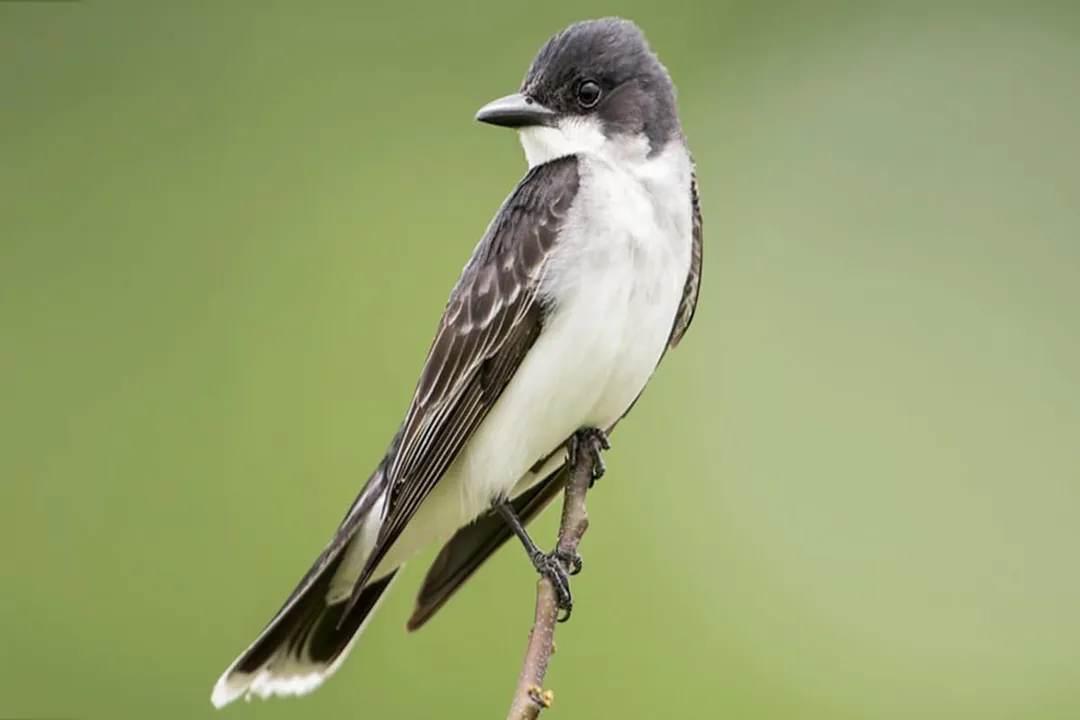
The Eastern Kingbird, that assertive, black-and-white flycatcher known for loudly defending its territory against everything from crows to raptors throughout the North American summer, makes a profound disappearance as autumn approaches. [1][5] The same birds that harass intruders near a nesting site in, say, Ontario or Ohio, vanish completely from those northern latitudes once the season shifts. [8] Their destination is not merely a southern retreat within the United States, but an extensive migration into the tropics, marking them as Neotropical migrants. [6]
# The Long Flight
The transition from summer resident to winter sojourner is a rapid, purposeful movement. As the days shorten, signaling the inevitable decline in flying insect prey across the temperate zone, the kingbirds prepare for the arduous trek south. [7] While their breeding territory is expansive, covering most of the contiguous United States and extending into southern Canada, [2][5] this entire summer domain is abandoned for the winter period. [8] This complete withdrawal from temperate North America underscores their reliance on year-round, high-density insect populations, which only the tropics can reliably provide. [1]
# Southward Range
The key to understanding where they winter lies firmly in the tropical belt of the Americas. The primary non-breeding range for the Eastern Kingbird stretches across Mexico, Central America, and northern South America. [1][6] More specifically, sources point to sustained populations overwintering in countries extending down to the northern Andes region, including areas near Colombia and potentially the Amazonian lowlands. [2][6] This means a bird that spent June loudly challenging hawks over a Wisconsin meadow might be spending January foraging along a riverbank in Panama or Ecuador. [2][4] The range isn't a single point but a broad area of concentration, favoring humid, open woodlands, forest edges, and agricultural interfaces within these tropical zones. [1]

# Timing Migration
The timing of this massive annual relocation follows a predictable schedule dictated by resource availability. The southward migration generally kicks off in earnest by late August, meaning the last vestiges of the breeding season are quickly packed away. [8] The journey south is often completed with relative speed; these birds do not linger but move with efficiency toward warmer feeding grounds. [7] By the close of September or early October, most Eastern Kingbirds have arrived and settled into their wintering habitats. [7]
The return journey in the spring, however, tends to be more drawn out. Birds begin moving north around March, with the bulk of the population arriving back on their breeding grounds spanning from April through May. [8] This observed difference in migratory pacing—swift departure versus a slower return—is common among species that must carefully track the progression of spring insect hatches as they move north, ensuring they arrive when food is peaking for nesting activities. [2]
# Winter Habits
Life in the tropics necessitates a behavioral shift. During the breeding season, the Eastern Kingbird is famously aggressive and fiercely territorial, defending a specific space adequate for raising young. [1][4] In the wintering grounds, where insect abundance is often higher and the pressure to reproduce is absent, this intense territoriality often dissolves. While they remain aerial insectivores, relying on catching insects on the wing, they tend to associate in looser groups or small foraging parties rather than maintaining the strict, solitary defense seen in summer. [1][6] Their primary focus shifts entirely from defense and reproduction to fuel acquisition and survival until the impulse to migrate north returns. [4]
Considering the sheer distance—some individuals travel thousands of miles one way—the energy stores required for the initial, often non-stop, leg of the migration across major geographical barriers like the Gulf of Mexico must be immense. [7] This means the success of the entire year often hinges on the bird’s ability to hyperphagically build up fat reserves immediately following nesting, allowing it to power through the first, most dangerous segment of the journey before settling into the relatively safer, resource-rich tropics. [6]
# Range Contrast
Visualizing the breeding range against the winter range offers a stark look at this species' adaptability. In the summer, the Eastern Kingbird is a widespread inhabitant of the temperate zone, occupying nearly every state east of the Rockies, save for the driest southwestern deserts. [5][2] In winter, this broad distribution contracts sharply into a much smaller, more concentrated geographic band centered squarely on the Neotropics. [2] This transition highlights the dependency on a specific microclimate and insect community that only exists south of the Tropic of Cancer for survival during the Northern Hemisphere's cold months. [7]
Because the Kingbird's long-term viability depends on habitat health across two distinct global regions—the temperate forests and fields of North America and the humid tropical lowlands of Central and South America—conservation strategy must reflect this dual geography. [7] A decline noted in breeding populations in the US might actually be rooted in subtle but significant habitat shifts occurring in their primary wintering areas, perhaps due to local agricultural changes or deforestation. Therefore, birding organizations and researchers focused on the Kingbird's future must actively compile and cross-reference data from both sides of the equator to paint a complete picture of population trends and threats. [7]
Related Questions
#Citations
Eastern Kingbird | Audubon Field Guide
Eastern Kingbird Range Map - All About Birds
Eastern Kingbird (NPS Manassas National Battlefield Park Birds)
Eastern Kingbird | Outdoor Alabama
EASTERN KINGBIRD | The Texas Breeding Bird Atlas
Tyrannus tyrannus (eastern kingbird) - Animal Diversity Web
Eastern Kingbird - NH Audubon
Eastern Kingbird - Wisconsin All-Bird Conservation Plan
[PDF] Eastern Kingbird