How to attract eastern kingbirds?
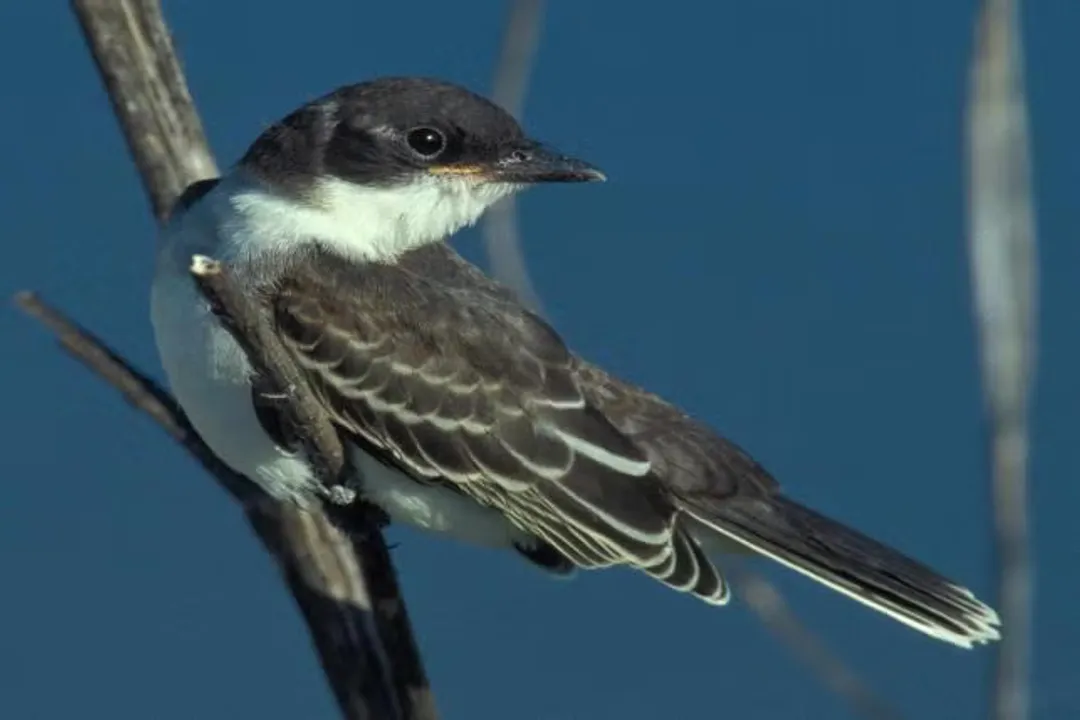
Attracting the Eastern Kingbird to your property requires understanding its very specific lifestyle, which heavily favors open skies and high perches over traditional feeders. These striking, black-and-white birds are hard to miss, often recognized by the bright white tip on their dark tail feathers, a feature that gives them their nickname, "the flycatcher with the white-tipped tail". [4] Their presence is usually confirmed long before you see them clearly, thanks to their loud, sputtering calls and their dramatic aerial displays. [5] Successfully encouraging them to linger, especially during their breeding season in North America, hinges on matching the open-country environment they require for survival. [3][4]
# Bird Look
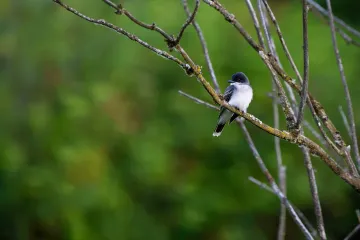
The Eastern Kingbird presents a sharp, clean silhouette against the sky. [5] They are medium-sized flycatchers, characterized by their dark gray to black upperparts, which contrast starkly with their pure white undersides. [4][3] The most distinctive field mark, especially when they fan their tails in flight or while perching, is that bright white terminal band. [4] While their back is dark, a closer look reveals a slight dusky gray wash on the head and chest, which is usually less intense than the darker back. [3] Males and females look nearly identical, showing little sexual dimorphism, which can make pairing identification tricky unless observing specific behaviors. [5] Their bill is relatively stout for a flycatcher, suited for catching large insects, and their legs are short, suggesting they prefer perching to walking on the ground. [3]
# Open Spaces
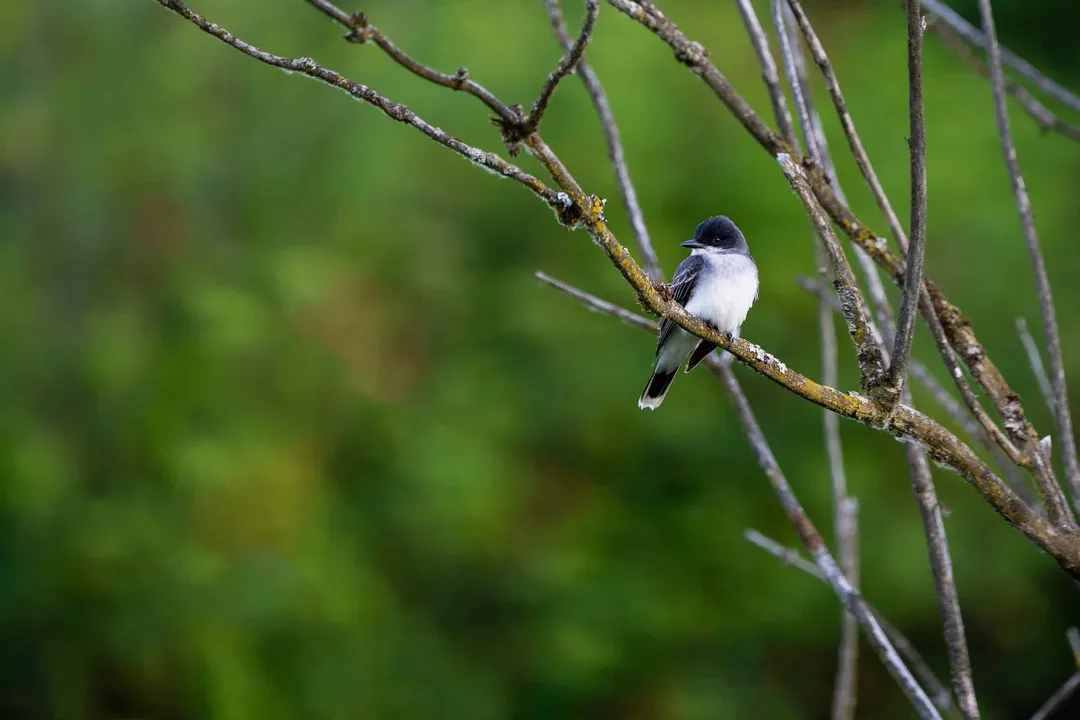
The primary requirement for attracting Eastern Kingbirds is habitat structure, or more accurately, the lack of dense obstruction. [9] These birds are true birds of open country. [3][5] Think fields, meadows, pastures, agricultural areas, open woodland edges, and the shores of lakes or rivers. [3] They need clear lines of sight, not just for hunting, but also for spotting potential threats, as they are known to be fiercely territorial. [4]
If you are managing land, consider the ratio of open hunting grounds to available perches. A dense, continuous forest canopy is a definite deterrent. [9] Instead, aim for a landscape dotted with isolated, high vantage points—utility wires, isolated tall trees, fence lines, or dead snags—that rise above the surrounding vegetation. [3][4] These perches serve as the bird’s lookout towers. From these spots, they can survey the open air for prey and monitor their territory. For landowners looking to optimize a property edge, deliberately leaving a few dead, sturdy snags standing near a large lawn or field offers immediate, high-value real estate for a passing kingbird pair. [9] This contrasts sharply with backyard setups designed for dense cover species like warblers or wrens, which prefer shrubbery and thickets. [5]
# Aerial Hunting
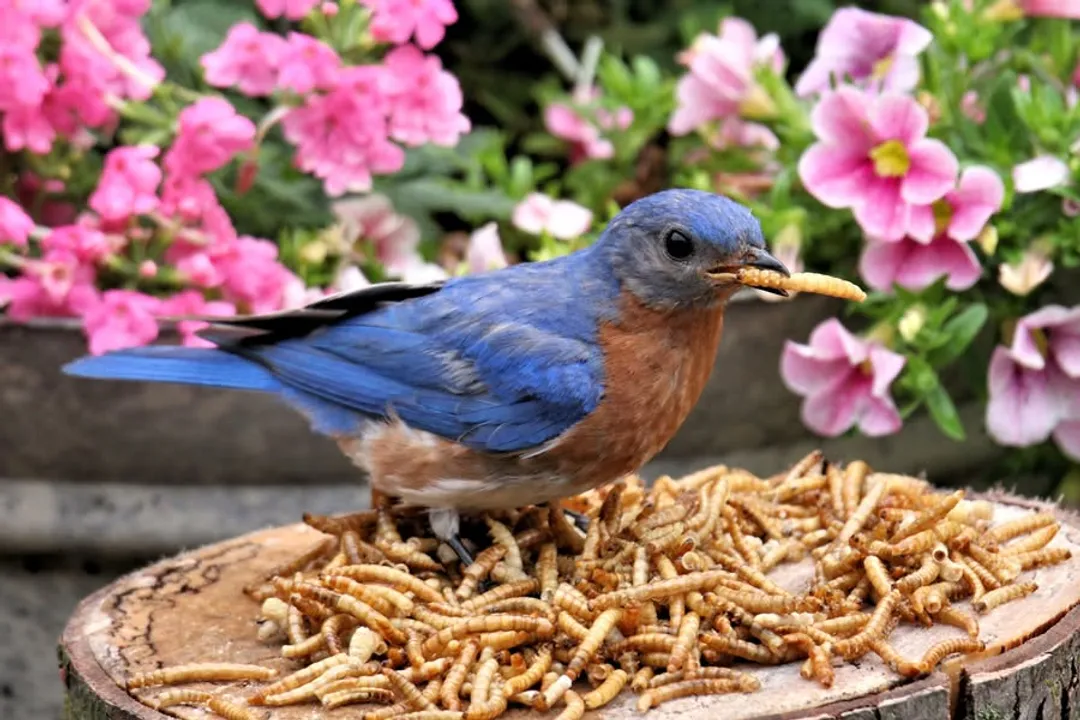
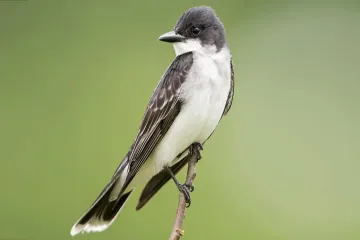
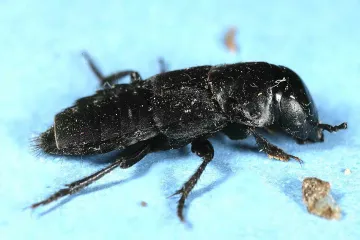
Once you have the right open space and perches, you provide the essential element: food. Eastern Kingbirds are insectivores, specializing almost entirely in insects caught in flight. [3][4] They are aerial feeders, sallying out from a perch to snatch prey midair before returning to the same or a nearby perch. [5] Their diet is substantial; an individual can consume hundreds of flying insects daily. [8]
What are they catching? They target large, noticeable insects like grasshoppers, dragonflies, wasps, bees, and beetles. [5][8] This feeding style means they are not interested in seed feeders or suet cages. [6] In fact, trying to attract them with standard feeder setups is generally a futile endeavor. [6]
A common mistake when trying to accommodate insectivorous birds is underestimating the scale of their needs. A single kingbird pair during the nesting season requires an enormous volume of food to raise chicks. [8] Therefore, if you want them to nest nearby, the surrounding open habitat needs to support a very dense population of large flying insects throughout the summer months. If you notice a significant presence of dragonflies buzzing over a pond or grasshoppers jumping in a field near suitable perches, you have the right pantry stocked for a kingbird.
# Fierce Defense
Understanding the Eastern Kingbird’s famous temperament is key to coexisting with them, especially if you are trying to attract songbirds near the same area. [5] Kingbirds are renowned for their aggressive and bold defense strategies. [4] They are famously unafraid of much larger predators, including hawks, crows, and even owls. [8] When they perceive a threat near their nest—which might be built on a dead snag or a sturdy horizontal branch near water [3]—they will engage in loud, conspicuous aerial harassment. This behavior is often seen as entertaining by birders but can be stressful for other nesting birds in the vicinity. [5]
This aggressive nature presents an interesting trade-off for the backyard habitat manager. While their presence indicates a healthy local insect population, their territorial vigilance might inadvertently keep smaller, more timid songbirds from using cover near their nest site. [4] If your primary goal is to maximize diversity with small songbirds, placing a potential kingbird perch directly over a dense thicket used by sparrows might result in fewer successful nests for the smaller species, as the kingbird pair effectively claims the airspace overhead as their defense zone. [9] They are, essentially, the neighborhood watch, and they take the job very seriously. [5]
# Nest Building
When Eastern Kingbirds arrive after migration, they seek out nesting sites that combine security with access to their preferred open foraging areas. [3] The nest itself is generally constructed in a semi-open area, often positioned on a horizontal limb, perhaps in a small, isolated tree, a snag, or even on a structure like a utility pole or fence post, usually situated over water or open ground. [3][5]
The nest material selection is pragmatic: they use grasses, weeds, and rootlets, often lined with softer materials like fine plant down or even human trash like string or plastic—which is a reminder to keep yards clear of materials that might be incorporated into their structures. [3] They may reuse old nests from other species, such as Robins or Mourning Doves, reinforcing them to suit their needs. [5] The key factor remains visibility and accessibility to open air, reinforcing that a dense, hidden location is less likely to be chosen than one with a clear flight path to nearby fields. [4]
# Seasonal Travel
The Eastern Kingbird is not a year-round resident for most of its range; it is a long-distance migrant. [4] They breed across much of North America, from Alaska down to the southern US states, but they travel south for the winter, often reaching Central and South America. [3][4] Because of this migratory pattern, the primary window for observing and attracting them is during the breeding season, generally from late spring through mid-summer. [3]
If you live in a northern climate, observing their arrival time can give you a cue for when to expect them back in your area. For instance, in places like Connecticut, sightings begin ramping up as spring transitions into early summer. [7] Being prepared for their arrival by ensuring perches and insect populations are ready by late May or early June maximizes your chances of hosting a breeding pair rather than just transient migrants passing through. For those in southern regions, their presence might be brief, serving as a refueling stop before heading further north, though many do breed in the southern extent of their range. [3]
# Creating Habitat
To summarize the practical steps for attracting these conspicuous flycatchers, one must focus on land management over feeder installation.
Here is a checklist summarizing the necessary components for an Eastern Kingbird-friendly yard:
- Maintain Open Sightlines: Mow fields regularly or ensure large areas remain clear of tall, dense shrubs or young forest growth. [9]
- Provide Elevated Perches: Install or maintain a few prominent, isolated vertical structures—tall dead trees (snags), tall poles, or bare limbs extending outward—that offer a clear, unobstructed view over the open ground. [3] These should ideally be positioned near a water source if one is available on the property. [5]
- Support Insect Populations: Avoid heavy pesticide use, especially broad-spectrum sprays, as this directly removes the kingbird’s entire food supply. [8] A healthy population of flying insects is non-negotiable.
- Water Access: While they may not bathe as frequently as some other birds, access to open water for drinking or preening is beneficial, particularly in open areas. [5]
By focusing on creating a high-altitude hunting platform connected to abundant insect life in open surroundings, you provide the exact niche the Eastern Kingbird evolved to fill. [3][4] If you manage to host a nesting pair, be prepared for the accompanying aerial show as they aggressively defend their territory against anything they perceive as an intruder, from butterflies to much larger raptors. [5][8] This assertive nature is simply part of the package deal when you successfully invite a kingbird to stay for the summer.
#Videos
How Can I Attract Eastern Kingbirds? - Bird Watching Diaries
Related Questions
#Citations
How Can I Attract Eastern Kingbirds? - Bird Watching Diaries
Attracting Eastern Kingbirds with Mealworms in Central Wisconsin
Eastern Kingbird - Missouri Department of Conservation
Eastern Kingbird | Audubon Field Guide
Eastern Kingbird » HF&G - Cleveland Botanical Garden
An Eastern Kingbird..... - Purple Martin Forum
Seen in Connecticut today. On a scale of 1 to 10, how unusual is it ...
Fun Facts about the Eastern Kingbird! - iNaturalist
[PDF] Eastern Kingbird