Do sparrows remember humans?

The initial thought when watching a flock of common sparrows descend upon a feeder is often one of simple instinct—they are driven by hunger, and you happen to be the provider. Yet, many observers who spend consistent time outdoors begin to question the depth of that relationship: Do these small, busy birds truly register you as an individual, separate from the general landscape of potential threats or rewards? Understanding avian memory, especially in ubiquitous species like the house sparrow, shifts the perspective from casual wildlife observation to genuine interspecies interaction. The evidence, largely drawn from the experiences of dedicated watchers and supported by general avian cognitive studies, suggests a nuanced "yes," though perhaps not in the complex, narrative way humans remember events. [2][4]
# Visual Cues

The capacity for birds to recognize familiar human faces is a topic that sparks considerable interest among bird enthusiasts. While much popular focus centers on parrots or corvids, the humble sparrow is often overlooked in discussions of advanced cognition. [1][9] House sparrows, in particular, live in close proximity to humans, making recognition a valuable survival trait, whether that recognition means avoiding a predator or approaching a reliable food source. [7] Research into different species indicates that many birds possess the visual acuity and processing power to distinguish between different human faces. [1] Starlings, for instance, have shown the ability to recognize individual humans, suggesting that a related passerine like the house sparrow likely possesses similar, though perhaps less studied, capabilities. [1] This recognition isn't necessarily emotional; it’s a learned association tied to visual input—a specific face equals a specific outcome. [1][7]
# Distinguishing Forms
The key for a sparrow is often distinguishing between novel and familiar visual stimuli. When a new person approaches the feeding station, the birds’ behavior will likely change immediately—suspicion increases, and feeding may cease entirely. [7] This rapid shift indicates they process the visual input and compare it against a memory bank of previous encounters. [4] If the person is unfamiliar, the risk assessment defaults to caution. If the person is recognized as the regular feeder, the visual cue triggers an expectation of reward, overriding the generalized fear response that would greet a stranger. [7] This ability is a functional necessity in a world full of potential predators; if they couldn't differentiate between the neighbor's cat and the person who leaves out seed every morning, their foraging efficiency would plummet. [4]
# Feeder Bonding

The context surrounding the human interaction plays a critical role in cementing recognition in the sparrow's mind. Simply seeing a human is one thing; seeing a human associated with food is the conditioning event. [2] For wild birds that regularly visit a backyard feeder, the human provider becomes an integral part of their daily routine and resource acquisition strategy. [7] The consistent timing and location of feeding amplify this effect. A sparrow learns quickly that showing up at 8:00 AM when that specific person is present yields sunflower seeds, whereas showing up at 10:00 AM when a different person is present might yield nothing, or perhaps even result in being shooed away. [2]
It is worth considering how the presentation of the food aids memory encoding. When a consistent feeder, such as a hanging tray, is always filled by the same individual, the visual recognition of the human becomes tied to the location and the mechanism of the reward. [2] If you were to start feeding them from a different window, even if you stood in the exact same spot, the initial approach might be slightly more hesitant because the entire context of the reliable delivery system has been subtly altered. [2] This points toward a complex learning map where visual recognition (your face) is one coordinate, location is another, and time of day is a third, all required to activate the approach behavior. [4]

# Individual Identity

A deeper question emerges when discussing wild birds: are they merely recognizing "the feeder person," or are they recognizing you specifically? Many anecdotes from bird feeding communities lean heavily toward the latter, suggesting that individual sparrows or flocks develop preferences and negative associations based on specific handlers. [3][5] People who sit quietly near their feeders report that birds become visibly more relaxed around them over time, often landing closer than they would for visitors. [4][5] This implies a learned trust directed toward an individual identity, not just a generic role. [4]
Conversely, if someone unexpectedly shouts or makes a sudden movement near the feeding station, the resulting alarm may be linked to that specific individual who caused the disturbance, leading to temporary avoidance even if the shouter is the usual provider. [3] This level of specificity moves beyond simple stimulus-response conditioning (Human = Food) to a more refined assessment of individual human behavior and temperament. [4] In online discussions among bird enthusiasts, many report that birds will approach their favorite person but flee from another person in the same household, even if that second person is also a known feeder, provided the first person has established a stronger positive association. [3][5]
One interesting way to interpret this learned behavior is through the lens of risk budgeting. A sparrow doesn't have the cognitive space for deep friendship, but it absolutely must budget its energy and risk tolerance. If Person A has provided consistent, low-stress meals for six months, the perceived risk of approaching Person A drops to nearly zero. If Person B, who looks somewhat similar but behaved aggressively once six weeks ago, appears, the perceived risk budget for that encounter spikes, leading to immediate withdrawal until the bird can re-evaluate the situation. [4]
# Memory Duration
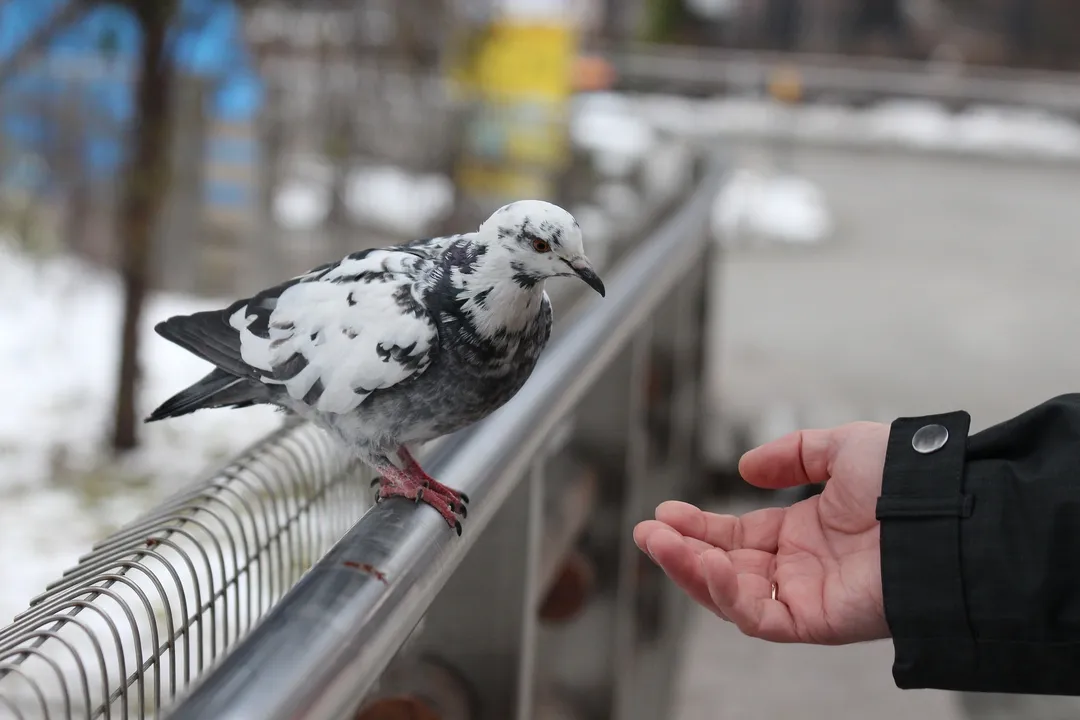
How long does a sparrow retain the memory of you once the feeding season ends or you leave for vacation? This is where the longevity of avian memory becomes a fascinating area of study. [6] For birds that rely on caching, like jays or nutcrackers, memory spans are well-documented to last months, sometimes years. [6] While sparrows are not primarily known for complex caching, their need to remember reliable seasonal food sources suggests a durable memory system for highly salient events, like regular feeding. [6]
Studies suggest that while short-term memories fade quickly, memories strongly associated with survival and consistent resource availability can persist for surprisingly long periods. [6] If you consistently feed sparrows throughout the breeding season and then stop for three months while you are away, it is highly probable that when you return and resume the routine, the birds will recognize you relatively quickly, perhaps within a few days, rather than needing to re-learn you from scratch. [6] The memory might become slightly fainter, requiring a stronger initial cue (like your specific call or silhouette), but the association remains etched in their survival memory. [6]
To gauge this persistence in your own environment, consider this: if you stop feeding for the winter, and then start again in the early spring, how fast do the familiar regulars reappear? If they are back within the first week, that is a strong indication that the individual recognition has been maintained across the gap in interaction. [6]
# Testing Recognition
For those dedicated to backyard observation, testing the birds’ recognition abilities can be a rewarding exercise. It moves beyond simply waiting to see if they come to the feeder when you appear. [3] A good way to test the individual recognition aspect, beyond just the feeder recognition, involves subtle changes to your appearance, which is an actionable step many birders take. [4]
For example, if you usually wear a blue jacket when feeding, try wearing a bright red one on a day when the birds are already out feeding. If the flock hesitates, stays further away, or ignores you until you make a known sound cue (like a specific whistle or tapping on the window), it suggests they recognized the visual difference in your appearance and defaulted to caution. [1][4] If they approach immediately, it might mean they rely more heavily on your posture, movement pattern, or sound than the color of your outerwear. [5]
Here is a small, structured way to approach this backyard experiment:
| Test Variable | Expected Sparrow Reaction (If Recognition is Strong) | Interpretation |
|---|---|---|
| Wearing a Hat | Approach normally | Memory tied to the face/body shape, less to head covering. [4] |
| Changing Shirt Color | Slight initial hesitation, then approach | Visual cue is present but not overriding the core memory. [1] |
| Remaining Motionless | Approach as usual | They associate stillness (waiting) with impending food. [2] |
| Changing Location by 10 Feet | Increased circling/caution | Location is a strong factor; individual identity is second. [2] |
This observation process requires patience. A single failed attempt doesn't mean they don't remember you; it might mean the conditions (wind, presence of a hawk, general nervousness) temporarily outweighed the positive memory cue. [3]
# Analyzing Sparrow Behavior
The key difference between observing a parrot and observing a sparrow is the scale of expected interaction. A parrot operates in a contained environment where you are the singular focus; a sparrow operates in a dynamic, public environment where you are one of dozens of variables. [1] Therefore, when a sparrow recognizes you, it is demonstrating a remarkably effective, localized survival skill rather than necessarily an affectionate bond. [7] Their recognition is focused on predictive modeling: Person X’s visual profile appears in proximity to known food source Y, therefore, initiate approach sequence Z. [2]
When you are consistently the provider, you become a predictable, safe landmark in their otherwise unpredictable world. This predictability is golden for a small bird facing high predation rates. [4] Furthermore, the auditory component should not be discounted. Many people who feed sparrows develop a specific, soft call or sound they make just before putting the food out. The birds quickly associate this sound with the reward, sometimes even before they see the person. [9] If you change the sound, their reaction will change, demonstrating that their memory system easily cross-references multiple sensory inputs to confirm identity and intent. [9] For instance, if you call to them in a loud, sharp voice, even if they recognize the cadence, they will likely flee because the tone indicates alarm or aggression, overriding the positive learned association. [3]
Developing this connection, even for a species as common as the house sparrow, offers a unique window into animal cognition. It shows that memory is pragmatic: it retains what is necessary for survival and successful foraging. If recognizing your distinct gait or the sound of your specific key ring rattling means a guaranteed meal, the sparrow’s brain is built to catalog that data with high priority. [2][6] The result is a fascinating, unstated contract between you and the birds—a relationship built on consistency, quiet observation, and the powerful, practical memory of the wild.
#Videos
Birds Remember Your Face: The Surprising Science of Backyard Birds
Related Questions
#Citations
Do house sparrows and starlings recognize human faces? - Quora
Do Birds Remember Us? - Chirp Nature Center
Do you think your birds remember you and get more comfortable ...
Can birds recognise individual people... - BirdForum
Ravens are intelligent birds with facial recognition - Facebook
How Long Can Birds Remember You? - BirdWatching Magazine
Do Wild Birds Recognize the People Who Feed Them?
Studies show sparrows can remember and recognize ... - Instagram
Birds Remember Your Face: The Surprising Science of Backyard Birds