Zonkey Scientific Classification
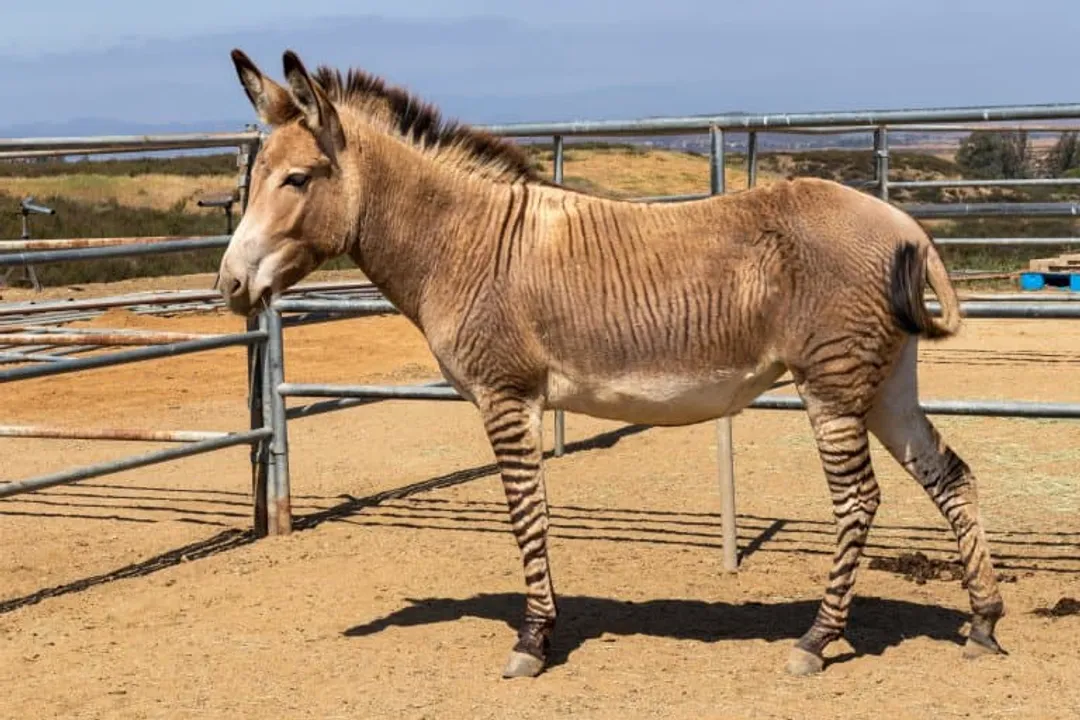
The creature resulting from the union of a zebra and a donkey carries a distinct name: the zonkey. This fascinating animal represents a type of hybrid, often sparking curiosity about where it fits within the established system of life classification. [1][3] Its existence underscores the close genetic ties within the Equus genus, even across what are traditionally classified as different species. [6] Besides zonkey, these hybrids are also known by other colloquial terms, such as zedonk or zebrass. [2][6]
# Parental Lineage
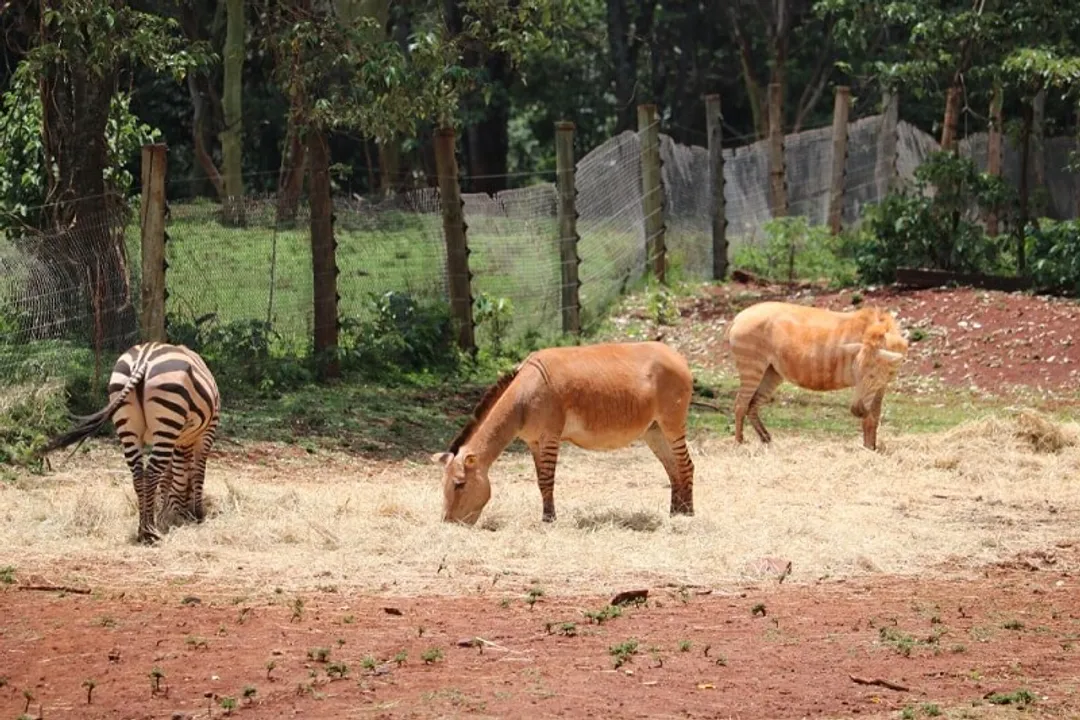
Understanding the zonkey begins with its parents. [8] It is the direct product of breeding a male zebra with a female donkey, or occasionally the reverse cross, although the terminology often defaults to the zebra component being the sire. [1] The zebra parent is typically a species such as the Plains zebra (Equus quagga) or the Mountain zebra (Equus zebra). [1][8] The donkey parent belongs to the species Equus asinus. [8] This specific cross distinguishes it from other related hybrids, such as the zorse (zebra-horse cross) or the zony (zebra-pony cross). [6]
# Taxonomic Rank
Scientifically classifying a hybrid requires looking at the classification of its parental stock, as the hybrid itself does not usually receive its own unique species designation. The zonkey, like its relatives, is classified within the established hierarchy for equids. [4] It sits comfortably within the Kingdom Animalia, followed by the Phylum Chordata, and then the Class Mammalia. [4] Moving down the ranks, it belongs to the Order Perissodactyla, which includes all odd-toed ungulates, and the Family Equidae. [4] Critically, both the donkey and the zebra belong to the same Genus, Equus. [4][8] This shared genus is what makes the cross biologically viable, categorizing the zonkey as an interspecific hybrid—a cross between two different species within the same genus. [6] For instance, if the parents are Equus zebra and Equus asinus, the zonkey is fundamentally an Equus hybrid that lacks a formal binomial nomenclature of its own, relying instead on descriptive parental names. [8]
| Taxonomic Level | Zebra Parent (Example) | Donkey Parent | Zonkey Hybrid |
|---|---|---|---|
| Kingdom | Animalia | Animalia | Animalia |
| Phylum | Chordata | Chordata | Chordata |
| Class | Mammalia | Mammalia | Mammalia |
| Order | Perissodactyla | Perissodactyla | Perissodactyla |
| Family | Equidae | Equidae | Equidae |
| Genus | Equus | Equus | Equus |
| Species | E. zebra (or E. quagga) | E. asinus | N/A (Hybrid) |
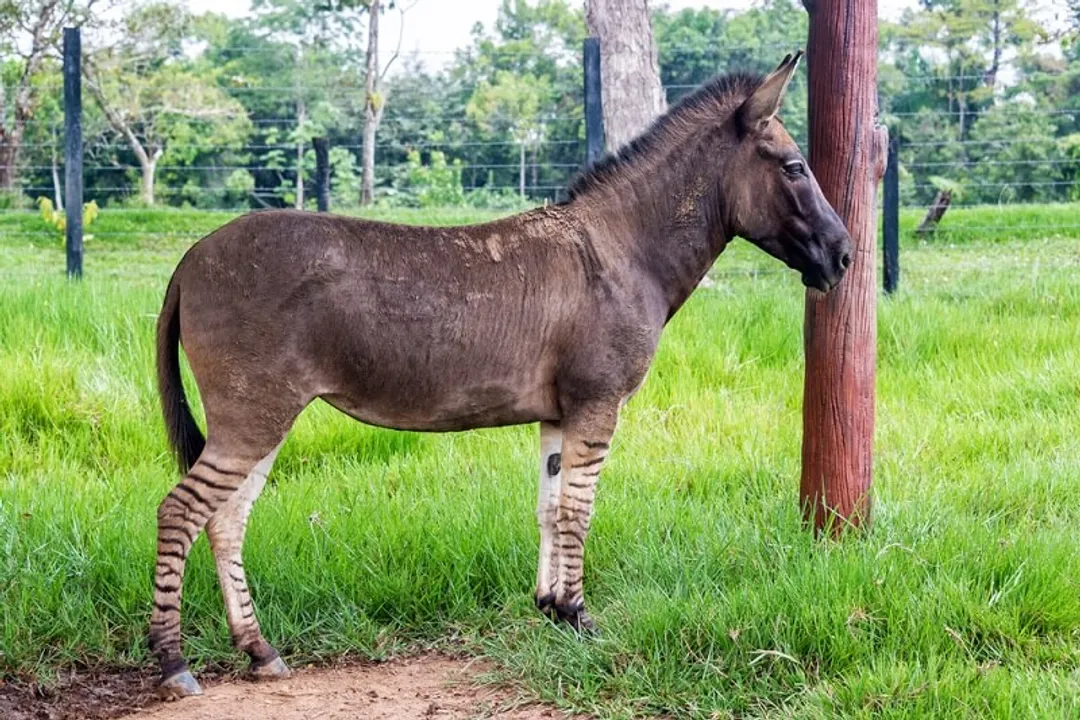
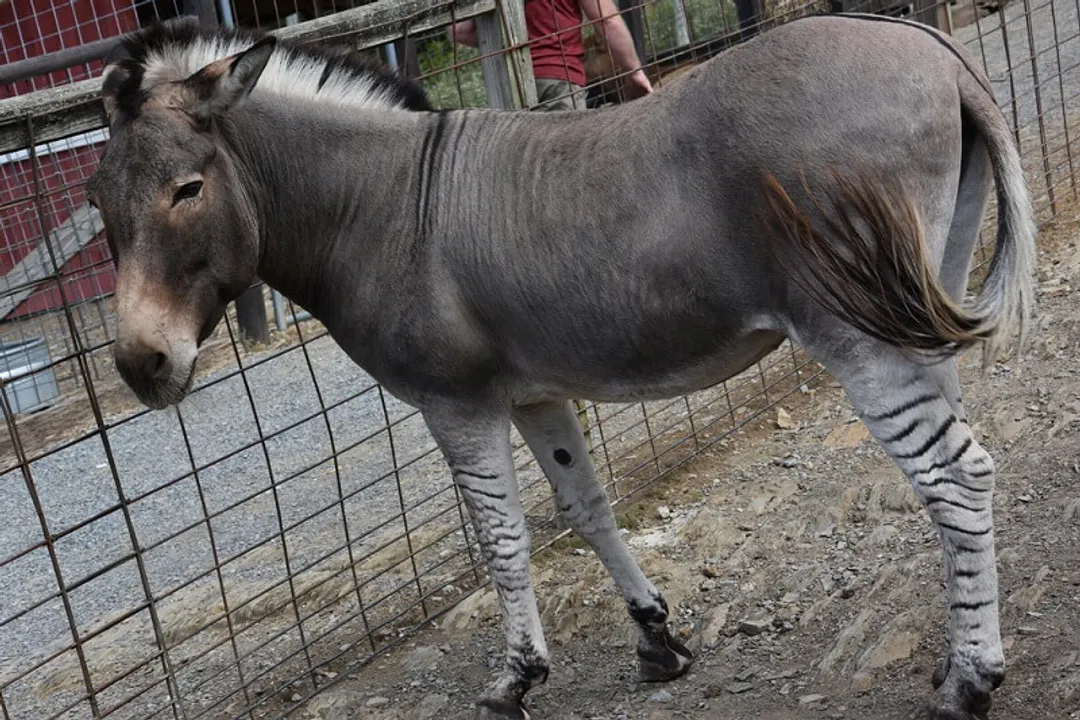
The table above illustrates that while the higher classifications are shared, the species level differentiates the parents, creating the hybrid offspring. [4][8] Observing the resulting animal’s characteristics often reveals which parent’s genetic blueprint was more overtly expressed in specific traits. For example, if a zonkey displays a solid, greyish-brown coat over most of its body but features distinct black and white stripes on its lower legs, this is a direct, visible manifestation of differential gene expression. [1][3]
# Physical Traits
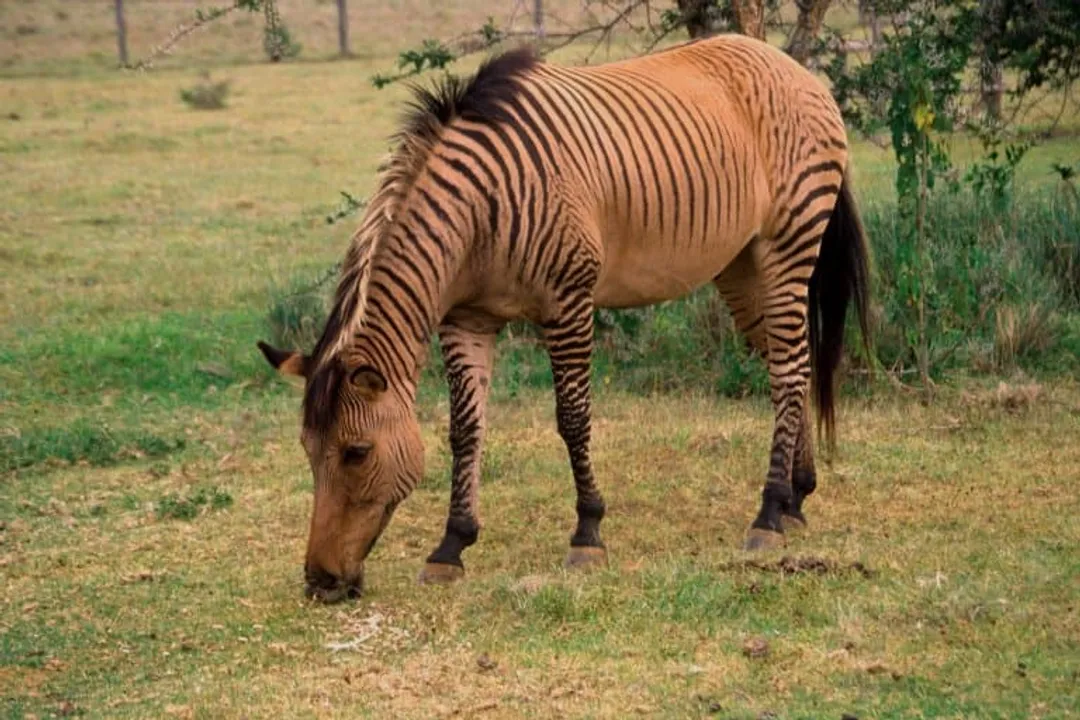
The appearance of a zonkey is perhaps its most defining characteristic, presenting a mosaic of its two progenitors. [3] Generally, the body structure tends to lean toward that of the donkey parent—sturdier, less refined than a horse, and lacking the strong musculature often associated with wild equids. [6] However, the striking zebra striping rarely fails to appear. [3] In many documented cases, the striping is most prominent and darkest on the legs, mirroring the zebra parent's pattern on that specific anatomy, while the torso remains primarily the solid color inherited from the donkey, often shades of dun or brown. [1][3]
The exact distribution and intensity of the stripes are not uniform across all zonkeys. This variability is quite interesting from a biological perspective. While a purebred zebra has coats designed for camouflage within its herd structure, the donkey’s coat is generally a solid color, likely evolved for protection against heat and sun in arid environments. [1] When these two coat patterns combine, the resulting stripe density can be quite sporadic. Sometimes only faint bands appear around the muzzle or shoulders, while in other instances, the striping covers the entire body with less contrast than a true zebra. [1] This visual spectrum suggests that the genes controlling stripe deposition and expression exhibit complex dominance patterns when paired with the solid color alleles from the donkey lineage. A zonkey bred from a single-colored donkey and a Plains zebra might display bolder, more extensive striping than one bred from a donkey and a Mountain zebra, pointing toward subtle, yet significant, genetic differences even between zebra species themselves.
# Reproductive Viability
A crucial aspect of understanding hybrids, including the zonkey, concerns their ability to reproduce. Like the mule (a donkey-horse hybrid), the zonkey is almost universally sterile. [1] This sterility stems from the mismatched number and structure of chromosomes inherited from the parents. [1] While both parent species reside in the Equus genus, they possess different diploid chromosome counts (the total number of chromosomes in a cell). [6]
When the parent sex cells—the sperm and the egg—combine, the resulting zonkey zygote has an uneven set of chromosomes that cannot pair correctly during meiosis, the cell division process required to create viable sperm or eggs for the next generation. [1] This chromosomal mismatch effectively halts the continuation of the zonkey lineage through natural means. Therefore, every zonkey in existence must be the result of a direct cross between a living zebra and a living donkey. [1] This inability to breed prevents the zonkey from ever becoming a stable, recognized species in the wild, keeping it firmly situated as a manufactured curiosity or rare accident of husbandry. [6]
# Zebroid Family
The classification of the zonkey is best understood in the context of its broader genetic relatives, the zebroids. [6] A zebroid is the umbrella term for any hybrid animal involving a zebra and any other equine species (horse, donkey, pony, ass, etc.). [6] The zonkey is simply the specific name given when the non-zebra parent is a donkey. [6]
This group highlights fascinating boundaries in genetics. The fact that zebras can crossbreed with domestic horses and donkeys—animals separated by millions of years of independent evolution from the zebra's ancestral line—speaks to the relatively recent divergence or the enduring similarity of the Equus genus chromosomes. [6]
| Hybrid Type | Parent 1 | Parent 2 | Citation Note |
|---|---|---|---|
| Zonkey | Zebra | Donkey (E. asinus) | Specific interspecies cross [3][8] |
| Zorse | Zebra | Horse (E. caballus) | Common hybrid example [6] |
| Zedonk/Zebrass | Zebra | Donkey | Synonyms for Zonkey [2][6] |
Examining these interspecies crosses offers insights into evolutionary bottlenecks. While the mule (donkey x horse) is common and productive enough to be used as a working animal for centuries, the zonkey remains rare, often due to the difficulty in handling and breeding the more unpredictable zebra parent. [1] The general expectation for temperament follows the parentage: they often exhibit the wilder disposition of the zebra mixed with the hardiness of the donkey. [1] If one were tracking the success rate of these captive breeding programs, a practical tip for anyone involved in exotic equid management would be to recognize that successful pairings often depend heavily on the individual temperament and early imprinting of the zebra sire, as its inherent wildness can override the docility of the female donkey. [1]
Related Questions
#Citations
Zonkey - Bionity
Zonkey – @issaashleyblog on Tumblr
8 Zany Zonkey Facts - Fact Animal
classification of a zonkey - Blaine Holloway - Prezi
Scientific name of donkey :#equus_asinus Kingdom - Facebook
Zebroid - Wikipedia
Zonkey - True Wild Life
Zonkey (Equus zebra x Equus asinus) Dimensions & Drawings
Zonkey - Facts and Beyond | Biology Dictionary