Zonkey Facts
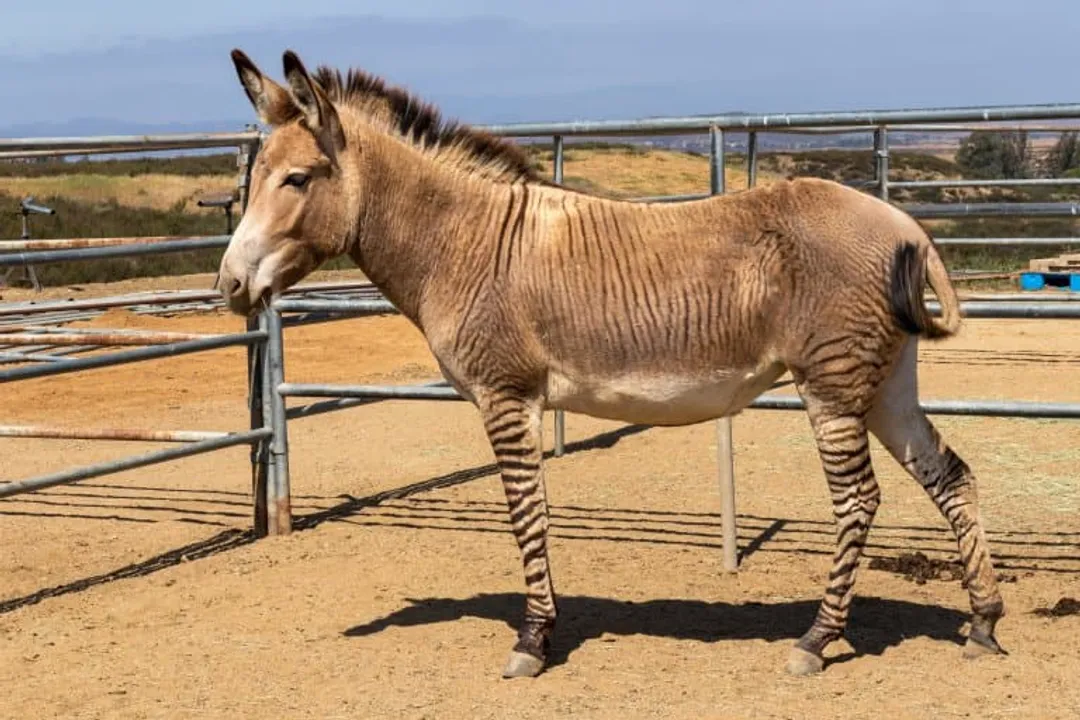
The hybrid animal known as the Zonkey immediately sparks curiosity, blending the iconic visual signature of the zebra with the stoic presence of the donkey. This distinctive equine mix is a prime example of what occurs when two closely related species within the Equus genus successfully breed, though their successful pairing is far from common. [2][5][8] It represents a fascinating, if unusual, intersection of genetics and natural history, often produced intentionally in managed settings today. [3][8]
# Parentage Defined
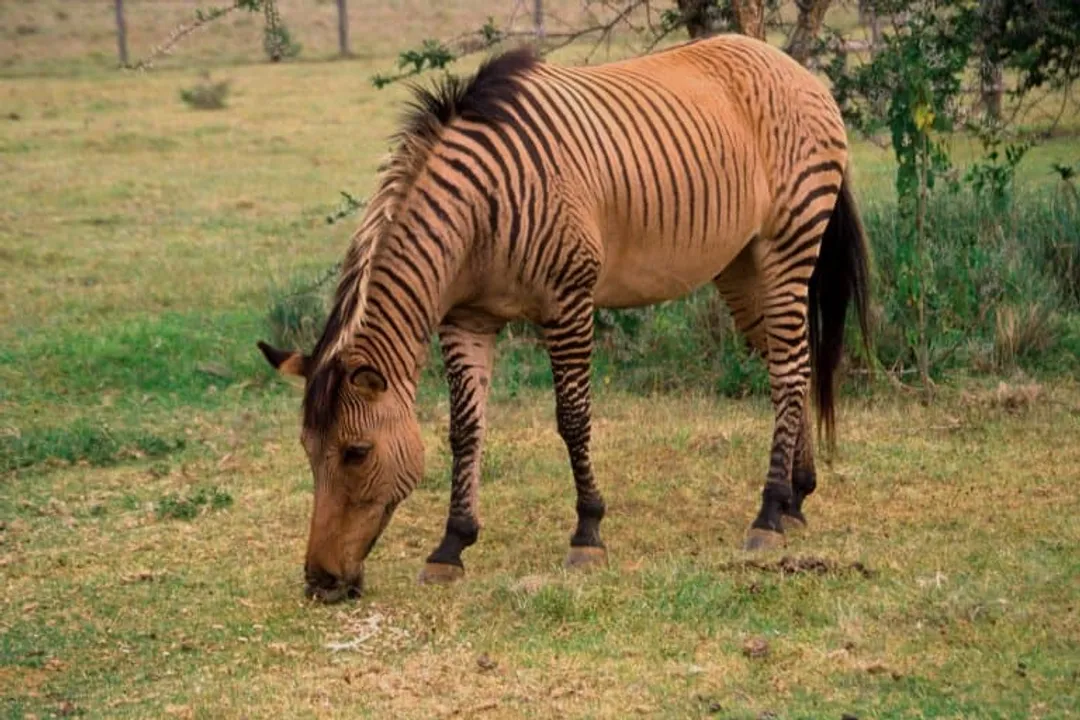
The naming convention for these stripe-and-solid hybrids is highly specific, which often leads to confusion. To be correctly identified as a Zonkey, the offspring must result from the mating of a male zebra (the sire) and a female donkey (the dam). [2][3] This specific pairing is generally more frequent because male zebras are often observed to be more inclined to mate with other equine species, including donkeys, whereas female zebras are less likely to initiate such cross-species pairings. [3]
When the parent roles are reversed—a male donkey mates with a female zebra—the resulting hybrid carries a different name, most commonly known as a Zedonk. [2][5] Other informal names for the zebra-donkey crossbreeds abound, including zebrass, zebonkey, zebrinny, and zebadonk. [4][5] This wide array of often whimsical names reflects the sporadic and non-standardized nature of their creation throughout history. [4]
# Zebroid Relatives
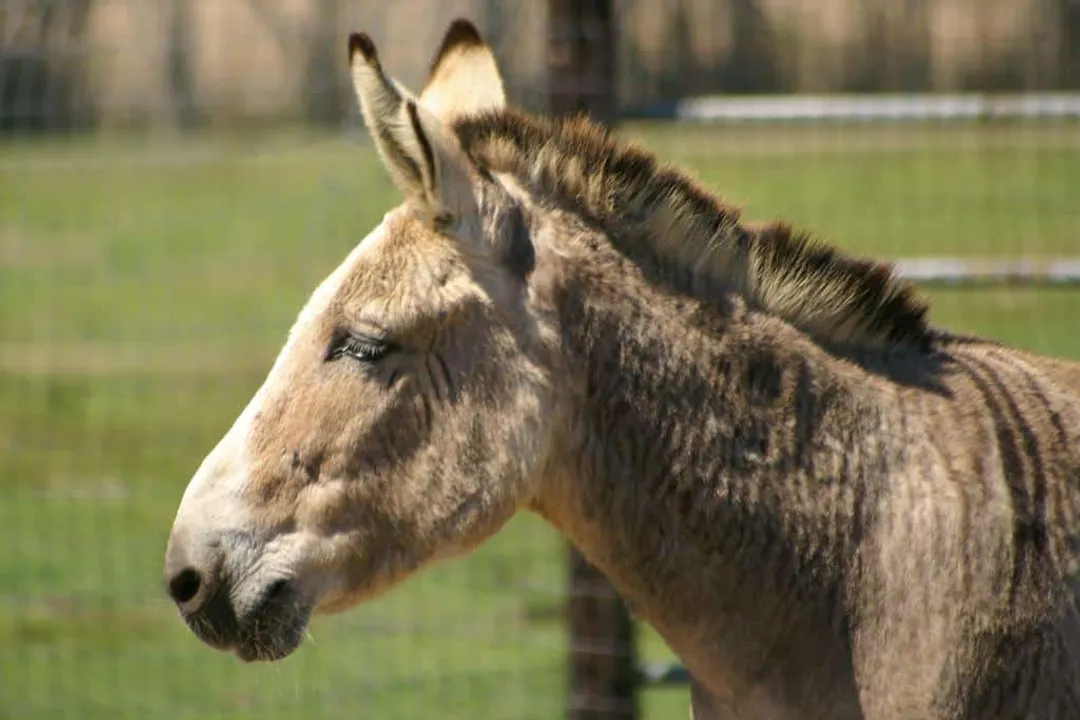
The Zonkey is not an isolated case of interspecies breeding within the Equus family. It falls under the broader umbrella term, Zebroid, which refers to any hybrid created by crossing a zebra with another member of the equid family, such as horses, ponies, or asses. [4][5] The genetic proximity of these animals—all belonging to the Equidae family—makes these crosses possible, unlike pairings between entirely unrelated animal groups. [5]
Other notable Zebroids include:
- Zorse: The offspring of a zebra and a horse (Equus caballus). [4][5] If the parents are a male zebra and a female horse, it's a Zorse; the reverse pairing (male horse, female zebra) is sometimes termed a Hebra. [3][4]
- Zony: Resulting from a cross between a zebra and a pony. [5]
- Zetland: A specific cross involving a male horse and a female Shetland pony. [4]
While these pairings can occur naturally where the habitats of the parent species overlap, the creation of most Zebroids, including the Zonkey, is now deliberately managed in captive environments. [2][3][6]
# Physical Traits
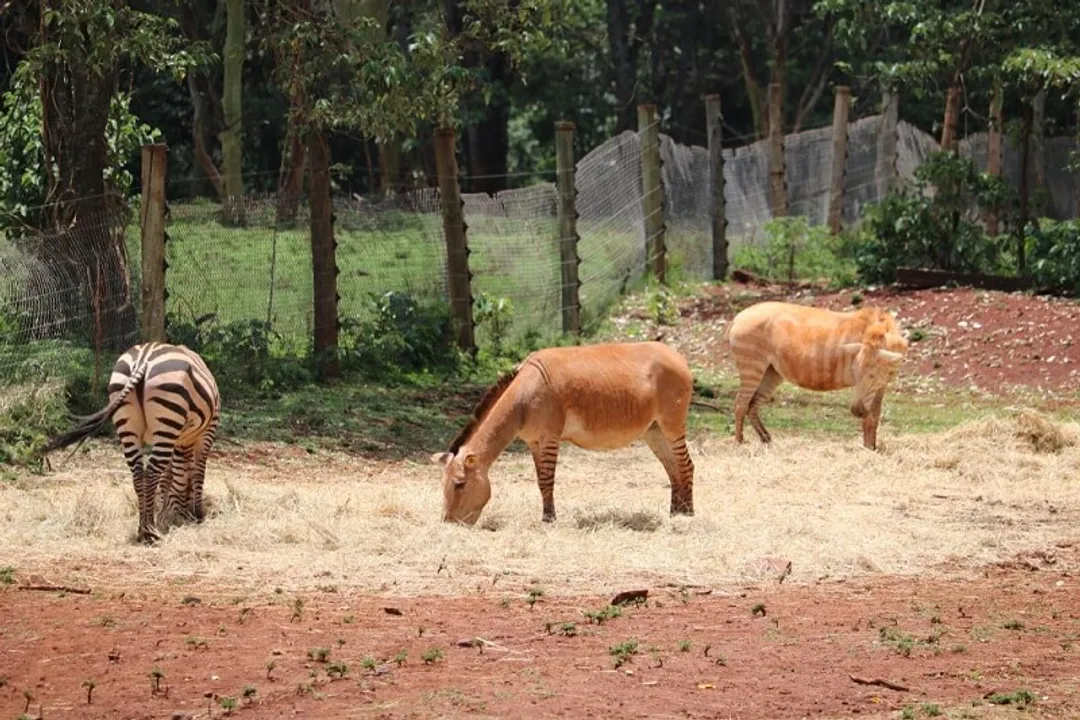
The physical appearance of the Zonkey is a striking mosaic of its parental traits. The general body structure, size, and overall sturdiness tend to lean toward the donkey parent. [2][3][5] A Zonkey typically stands between 3.5 to 5 feet tall and can weigh between 500 and 700 pounds, aligning closely with donkey stature. [5][6]
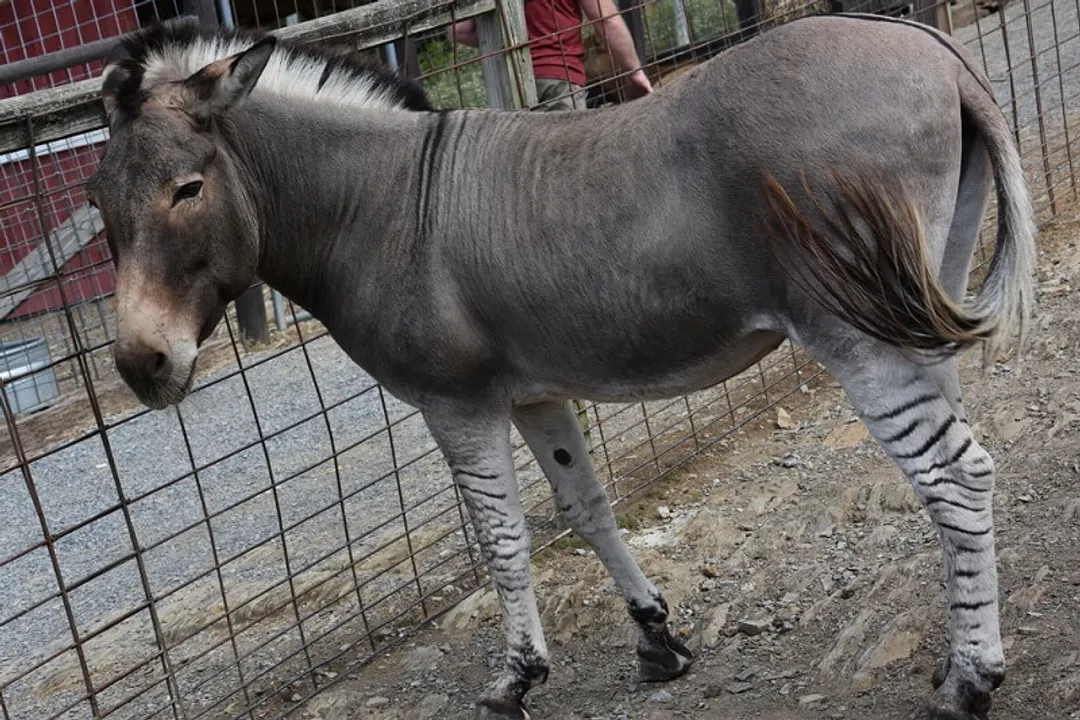
The most distinguishing feature, inherited from the zebra, is the pattern of stripes. [2] However, the coloration is often a mix: the base coat is usually a solid tan, brown, or gray, mirroring the donkey’s typical coloring. [2][3][5] The black stripes are most pronounced and concentrated on the lighter areas of the body, specifically the legs and the underside or belly. [2][4][5] Some individuals may exhibit stripes across the neck or torso, but the striping is rarely as comprehensive as that of a pure zebra. [3] Additional inherited features include a black mane running the length of the back to a black tail tip, and large ears that are characteristic of the donkey. [2][5]
# Chromosomes Sterility
The biological mechanism preventing Zonkeys, and most other equid hybrids, from establishing their own self-sustaining populations lies in the disparity of their chromosome counts. [4][5] Chromosomes, which carry the genetic blueprint, vary significantly even among the three zebra species, and substantially between zebras and donkeys. [4] A Plains zebra commonly possesses 44 chromosomes, whereas a domestic donkey carries 62. [4][5]
When these two combine, the resulting Zonkey inherits an odd number of chromosomes, often landing around 53. [4][5] This imbalance causes severe complications during meiosis—the cell division process required to produce viable reproductive cells (gametes). [5] Because 53 divides unevenly, the resulting cells are not balanced haploid cells, which renders the offspring infertile. [5]
Evolutionary biologist J.B.S. Haldane noted that in many hybrids, the heterogametic sex (the sex with differing sex chromosomes, which is male in mammals, carrying X and Y) is more severely affected. [5] For the Zonkey, this means that while male zonkeys are physically viable, they are almost always completely sterile. [4][5] While some sources suggest female zonkeys might occasionally possess some fertility, the chance of them producing viable offspring when bred back to a zebra or donkey is described as a "long shot" genetically speaking. [5]
This genetic hurdle contrasts sharply with hybrids like the mule, formed from a horse (typically 64 chromosomes) and a donkey (62 chromosomes), resulting in 63 chromosomes. Mules are notoriously sterile, yet the practice of breeding them has been successful for millennia due to their utility. [5] The Zonkey’s creation, while genetically interesting, does not provide the same clear, sustained benefit that outweighs the inherent genetic instability for the purpose of establishing a viable population. [5]
# Historical Presence
The fascination with crossing zebras and donkeys is not a recent phenomenon driven solely by modern zoos. Historical records confirm that these hybrids have been known for centuries. [4] Charles Darwin documented these crossbreeds in his seminal 1868 work, The Variation of Animals and Plants under Domestication, confirming their existence well before the 20th century. [3][4][6] Earlier experimentation with horse hybrids dates back to Lord Morton in 1815. [2]
The first recorded modern zebra-donkey hybrid at Colchester Zoo in Essex in 1971 brought informal attention to the pairing, where the term "zeedonk" was initially used broadly for any zebra-donkey cross. [3] Today, captive breeding occurs worldwide in zoos and specialized farms, often as a direct tourist attraction. [2][4][6] The existence of these animals has even inspired scientific nomenclature; for instance, 'Zonnkey' is the name given to an advanced DNA sequencing method used to identify equine F1-hybrids in archaeological remains, suggesting that ancient peoples may have also deliberately engaged in this type of crossbreeding. [4]
Thinking about these ancient efforts, one can infer that early breeders were likely not pursuing novelty alone. Given that zebras possess noted resilience against diseases common in Africa, such as those transmitted by the Tsetse fly, early, intentional breeding of Zonkey-like animals was likely aimed at developing a working animal that combined the domestication and endurance of the donkey with the natural hardiness and disease resistance inherited from the zebra sire. [4] This practical intent for creating a more robust pack animal differs significantly from the modern motivation, which is often driven by the spectacle they create in captivity. [4]
# Behavior Work
Despite their mixed parentage, Zonkeys inherit a temperament that mixes the characteristics of both the calm donkey and the spirited zebra. [3] A significant inheritance from the zebra is a wild streak, making Zonkeys known to be fairly aggressive toward humans and sometimes other animals. [2][5][6] They are generally considered diurnal, meaning they are active during daylight hours, and they exhibit social herd behavior, seeking out other Zonkeys or equids. [2][5]
The most advantageous characteristic inherited by the Zonkey is its combined physical capability. It is said to possess the sheer power derived from the donkey's stamina blended with the speed and strength of the zebra. [2][5] This combination makes them exceptionally strong and capable of high speeds, sometimes recorded up to 35 miles per hour. [5][6] Historically and in some regions today, this power translates into practical use as a work animal, valued for their ability to pull heavy loads and for riding, capitalizing on their hybrid vigor. [2][5][6]
# Conservation Ethics
The status of the Zonkey in the modern world is fraught with ethical considerations, particularly concerning their breeding in captivity. [4] Since they are sterile and cannot naturally propagate their lineage, they are not listed by conservation bodies like the IUCN. [4][6] While the three main species of zebra range from Least Concern to Endangered, the Zonkey itself is a genetic dead end. [4]
The rarity and visual uniqueness that draw crowds to zoos are often viewed critically by zoological advocates. [4] Critics, such as Anna Kachurovskaya from Moscow Zoo, have strongly condemned the deliberate breeding of hybrids as mere marketing schemes that are incompatible with the standards of "civilised zoos". [4] Furthermore, this type of genetic mixing, similar to what is seen in Ligers, often results in the hybrid being less healthy than either parent species. [4] Zonkeys are reported to have higher rates of genetic defects, including dwarfism, and potentially higher juvenile mortality rates. [4] Information regarding their long-term longevity and health is often sparse, as attention is usually focused on the novelty of their birth rather than their ongoing welfare. [4]
It is important to distinguish the true genetic Zonkey from an ethical misdirection: in certain tourist areas, such as Tijuana, the term "Zonkey" has been historically applied to donkeys painted with black stripes. [4] This practice emerged partly because white donkeys did not photograph well in early black-and-white photography, leading locals to artificially stripe them for tourist appeal, creating a visual substitute without genetic manipulation. [4] This difference highlights how human desire for novelty—whether genetic or superficial—has influenced the animal’s modern context. [4]
#Videos
What's A Baby 'Zonkey'?! | Love Nature Kids - YouTube
THE ZONKEY - HYBRID ANIMALS - YouTube
Related Questions
#Citations
8 Zany Zonkey Facts - Fact Animal
Zonkey - Facts and Beyond | Biology Dictionary
The Zonkey Has a Donkey Mom and Zebra Dad | HowStuffWorks
Zonkey Animal Facts - Equus zebra x Equus asinus - A-Z Animals
Zonkey Facts - Softschools.com
What's A Baby 'Zonkey'?! | Love Nature Kids - YouTube
Zonkey Facts, Worksheets, Evolution, Anatomy & Appearance For Kids
Zonkey