Yoranian Scientific Classification
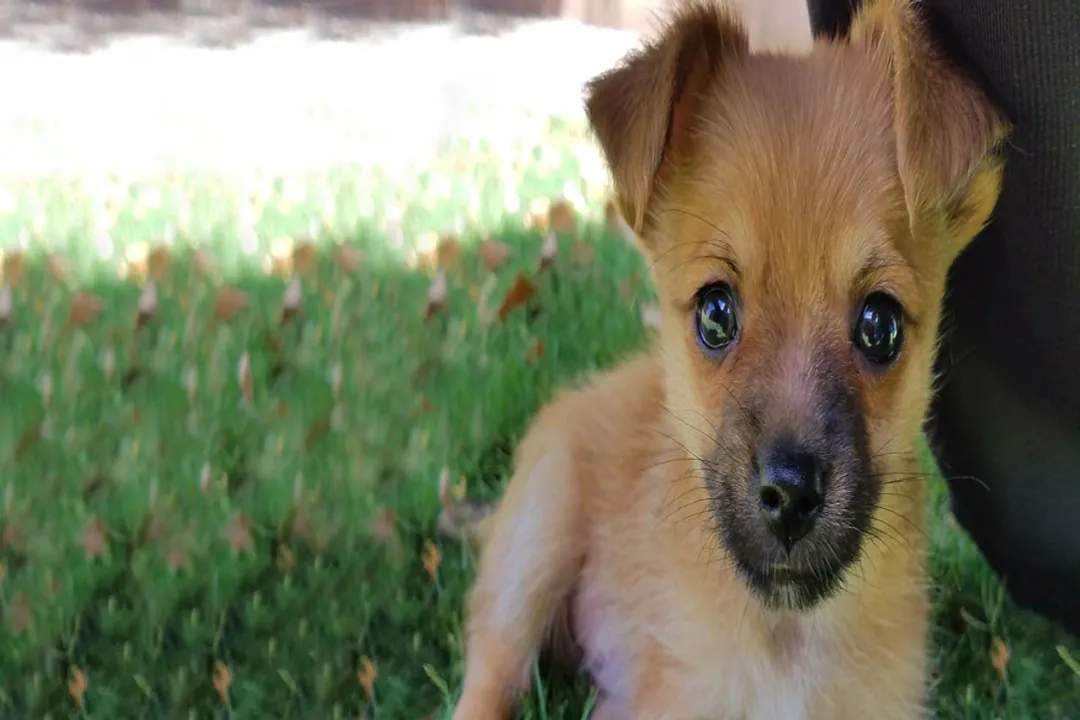
The query surrounding the "Yoranian Scientific Classification" touches upon one of the most interesting, albeit sometimes frustrating, areas in modern canine studies: the taxonomy of the hybrid dog. When seeking the scientific classification for a specific breed, one usually looks toward the Linnaean system—Kingdom, Phylum, Class, Order, Family, Genus, and Species. For the Yoranian, this exploration leads immediately to a clarifying realization: this delightful crossbreed does not possess a unique scientific designation separate from its parent species. The Yoranian, frequently referred to as the Yorkie Pom or Porkie, is a designer mix resulting from the deliberate cross between a purebred Yorkshire Terrier and a purebred Pomeranian. [1][3][5]
# Canine Taxonomy
At the highest levels of scientific organization, the Yoranian falls squarely into the established hierarchy for all domestic dogs. This means it belongs to the Family Canidae, the Order Carnivora, the Class Mammalia, and so forth. The crucial species designation for this animal, like all dogs selectively bred by humans, is Canis familiaris [implied by hybrid status]. Therefore, scientifically speaking, the Yoranian’s formal classification is identical to that of a Labrador Retriever, a Chihuahua, or even its own progenitor breeds: Canis familiaris.
This situation is typical for all crossbreeds, or "designer dogs." Scientific classification aims to define distinct species or subspecies that have evolved naturally or through sustained, dedicated breeding over many generations to establish predictable genetic markers and fixed traits. Because the Yoranian is a hybrid, usually a first-generation cross (F1), the resulting puppies carry a mix of genetic information from two established purebred lines, which prevents them from qualifying for a new, separate scientific nomenclature. [3] The charm and variability inherent in these designer breeds—where you might never know precisely which parental traits will surface in a litter—is precisely what precludes a single, stable scientific descriptor. [3]
# Parent Lineage
To better understand the Yoranian’s placement, it is helpful to examine the classifications of its ancestry, even if those classifications also resolve to Canis familiaris. Both the Yorkshire Terrier and the Pomeranian have deep roots within the canine family tree.
The Pomeranian traces its lineage back to much larger, Spitz-type dogs bred in Arctic conditions. [2][4] It is believed the breed acquired its name from Pomerania, a region spanning Northern Germany and Poland. [2][4] The breed was significantly downsized, gaining prominence after members of the British Royal Family took interest in the smaller dogs in the late 1700s. [2][4] The American Kennel Club (AKC) recognized the Pomeranian in 1900, placing it within the Toy Group. [2]
The Yorkshire Terrier, conversely, has a history tied to industrious labor rather than noble companionship. Originating in Yorkshire, England, over a century ago, these tenacious little dogs were utilized to hunt rodents within mines and later assisted in hunting foxes and badgers. [2][4] The breed name was established in 1874, having previously been known as the 'Broken Haired Scotch'. [2][4] Like the Pomeranian, the Yorkie achieved AKC recognition relatively early, in 1878. [2]
Both parents are firmly situated within the established purebred canine classification system, both belonging to C. familiaris and both currently placed in the AKC’s Toy Group, suggesting a shared category of general size and function in modern kennel clubs. [2] This lineage contributes to the Yoranian’s own characteristic placement as a small-sized dog, typically weighing between 3 and 7 pounds and standing 6 to 12 inches tall. [1]
# Organizational Status
While the Yoranian lacks a distinct scientific classification, its place in the world of organized dog breeding is defined by its status as a crossbreed. This is a key area where human organization diverges from natural scientific definition. Major, traditional registries, such as the American Kennel Club, do not recognize hybrids like the Yoranian because they are not considered standardized, multi-generational breeds. [3]
However, various smaller clubs dedicated to designer dogs do offer registry and recognition. For instance, the American Canine Hybrid Club recognizes the breed under the name Yoranian. [3] Other registries, like the Designer Dogs Kennel Club (DDKC) and the Designer Breed Registry (DBR), may list it as the Yoranian Terrier. [3] The International Designer Canine Registry (IDCR) recognizes it as the Yoranian or Porkie. [3] This patchwork recognition highlights that for the enthusiast community, a standardized organizational name is necessary for identification, even if the underlying scientific reality remains C. familiaris.
It is an interesting divergence that while a Pomeranian, a purebred, is classified by its consistent genetic history within the AKC’s Toy Group, the Yoranian—a direct cross—is simultaneously defined by its lack of genetic consistency by those same organizations, yet granted specific names by those who celebrate that very unpredictability. [3]
This difference between scientific categorization (based on species) and organizational categorization (based on standardization and pedigree history) is crucial for understanding designer breeds. The Yoranian’s identity rests not on a unique scientific niche, but on the combination of two recognized purebred niches.
# Genetic Variation Insight
One notable aspect stemming from the hybrid classification is the inherent unpredictability in trait inheritance. Since the Yoranian is often a first-generation cross, the puppies frequently exhibit a blend of characteristics from both parents, which can vary even within the same litter. [3] This means that while you can expect general Toy Group traits—small size, high intelligence, and affection—the specifics of coat texture (wiry or silky), color (cream, apricot, black, brown), and even temperament can tilt heavily toward the Pomeranian or the Yorkshire Terrier parent. [1][3] For instance, some owners report coats that are wiry and scruffy, while others note a fluffier appearance inherited from the Pomeranian side. [1][4] From a genetic perspective, this manifests as high heterozygosity, making it challenging to predict outcomes like one might with a true purebred that has been bred for generations to be genetically homozygous for desired traits.
# Behavioral Classification Note
While not strictly scientific classification, the behavioral grouping of the Yoranian is significantly influenced by its parentage, which speaks to an evolutionary context maintained through selective breeding. The Pomeranian contributes an energetic and sometimes willful personality, while the Yorkshire Terrier brings a fearless, terrier drive. [2][3] This combination often results in a dog that is affectionate and intelligent but can be suspicious of strangers and prone to occasional loud barking if not socialized early. [1][2] This behavioral expression—a mix of companion-seeking and alert territoriality—is a consistent observation among owners, suggesting that certain behavioral tendencies are strongly conserved across generations in this cross. [1][4] An owner considering this mix should prepare for the potential alertness of a terrier, despite the dog’s miniature stature.
The focus on maintaining the dual heritage—the cuddly nature of the lap dog combined with the feistiness of the working terrier—is the entire point of the Yoranian’s existence as a designer breed. Unlike established breeds where classification seeks to lock in uniformity, the organizational classification of the Yoranian celebrates the beautiful, living mixture of its two distinct, yet scientifically related, purebred parents. [3]
Related Questions
#Citations
Yoranian | Dog Breed Facts and Information - Wag! Dog Walking
Yorkie-Pom Dog Breed Health, Temperament, Training ... - PetGuide
Yoranian (Yorkie-Pomeranian Mix) Info, Training, and Pictures
Yoranian Dog Breed Information and Pictures
Yoranian -- Yorkshire Terrier X German Toy Spitz / Pomeranian