Yokohama Chicken Evolution
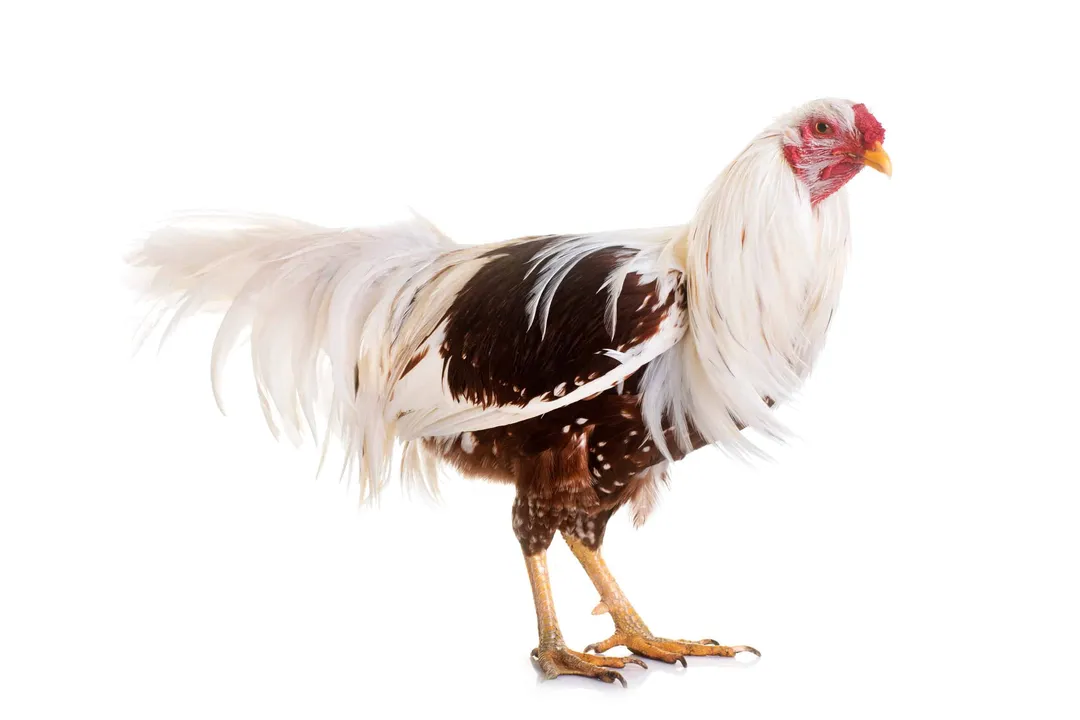
The story of the Yokohama chicken is one of adaptation and divergence, tracing back to the famed long-tailed fowl of Japan before establishing its own distinct identity in Western aviaries. These birds are instantly recognizable, particularly the males, due to their dramatic tail plumage and statuesque bearing, making them a favorite among those who value ornamental poultry. [1][4] Though their name ties them directly to the port city of Yokohama in Japan, where they were first exported, the breed as recognized today is a product of selective breeding that occurred primarily outside of their native land. [1][7]
# Japanese Roots
The foundation stock for the Yokohama chicken originates with the Onagadori, sometimes referred to generally as the Phoenix fowl, birds historically prized in Japan for tail feathers that could grow several feet long. [2][7] When these birds were first sent overseas in the late 19th century, often via the port of Yokohama, breeders in Europe and North America began working with them. [1][7] However, maintaining the extreme length and delicate nature of the true Onagadori proved difficult in different climates and under different breeding programs. [2] The resulting bird, the Yokohama, represents a slight step back from the singular focus on tail length, instead prioritizing a hardier bird with distinct color patterns while still retaining an impressive, though generally shorter, tail. [1] This divergence marks a key point in their evolution; they became a descendant breed rather than a direct continuation of the original, highly specialized Japanese stock. [2]
# Physical Traits
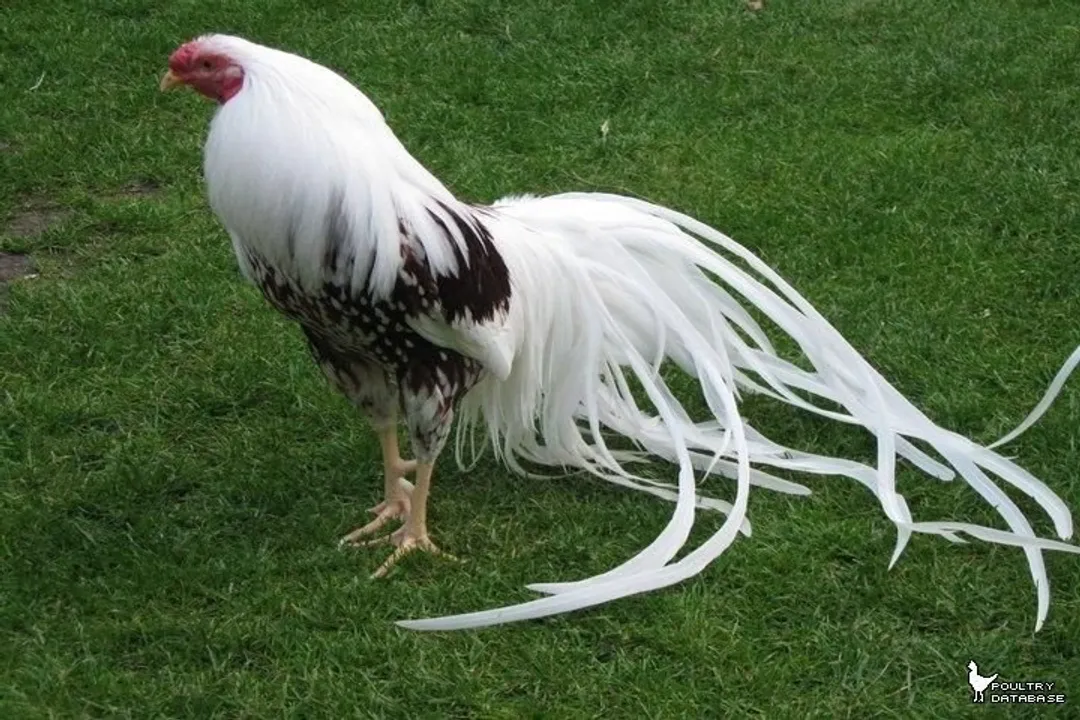
Yokohamas are medium-sized fowl, characterized by an upright stance and alert demeanor. [1][4] The males carry themselves with notable grace, possessing long, flowing saddle and tail feathers that contribute significantly to their ornamental appeal. [1] While they are admired for their tail, it is important to note that the tail feathers of the established Western Yokohama typically do not reach the truly prodigious lengths seen in the most dedicated Onagadori specimens. [1]
The breed standard calls for several physical characteristics beyond the plumage. They possess a single comb, a fairly standard feature, along with four toes on each foot. [4] They are relatively light-bodied birds, which aids in their natural tendency toward activity and sometimes, flight. [1]
# Recognized Colors
The visual appeal of the Yokohama is enhanced by the various color patterns that breeders have stabilized over the years. The Livestock Conservancy currently recognizes several distinct color varieties. [2] Among the most frequently seen are:
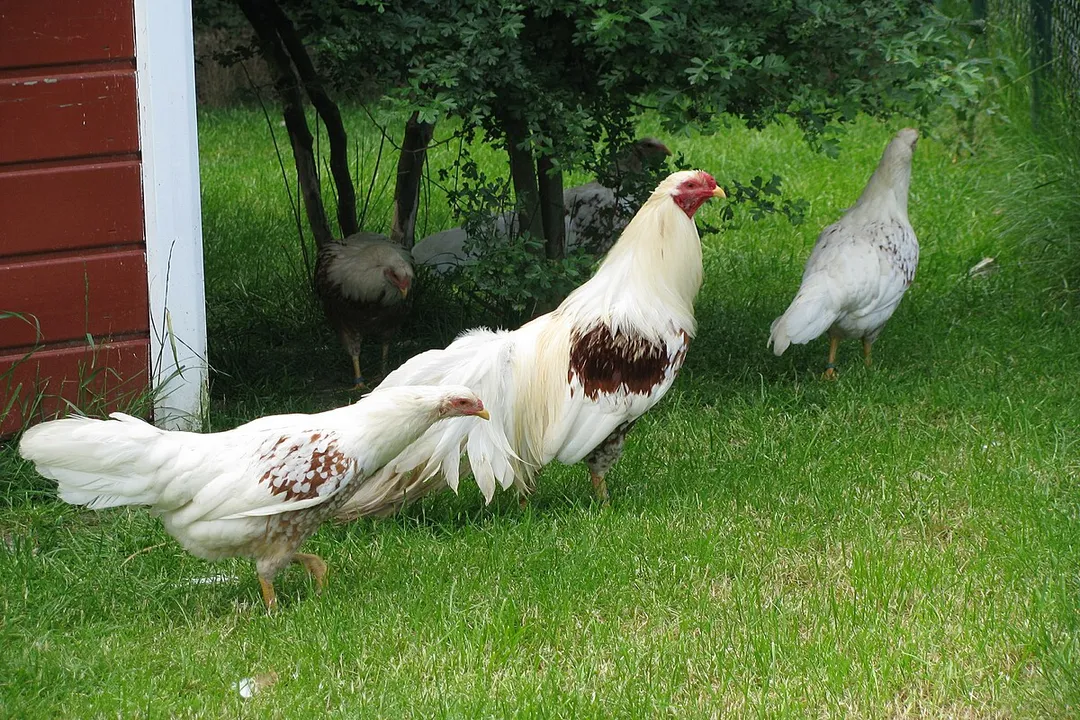
- Red Shoulder: This variety is perhaps the most commonly depicted, featuring bold coloring on the shoulders that contrasts beautifully with the rest of the body plumage. [5] The specific pattern in this variety often includes straw or white feathers on the lower body beneath the rich shoulder hues. [6]
- Silver Duckwing: Another popular exhibition pattern, known for its intricate lacing and soft grey and white tones contrasted with rich red/gold areas on the male. [9]
When one compares the common Western exhibition birds to historical photos of the original Japanese exports, the emphasis shifts. While the Japanese focus was singular—tail length—Western breeders broadened the scope to include color uniformity alongside manageable, yet beautiful, tail carriage. This suggests a successful evolutionary pathway where beauty became defined by a wider palette rather than just one extreme physical measurement. [2]
# Conservation Concerns
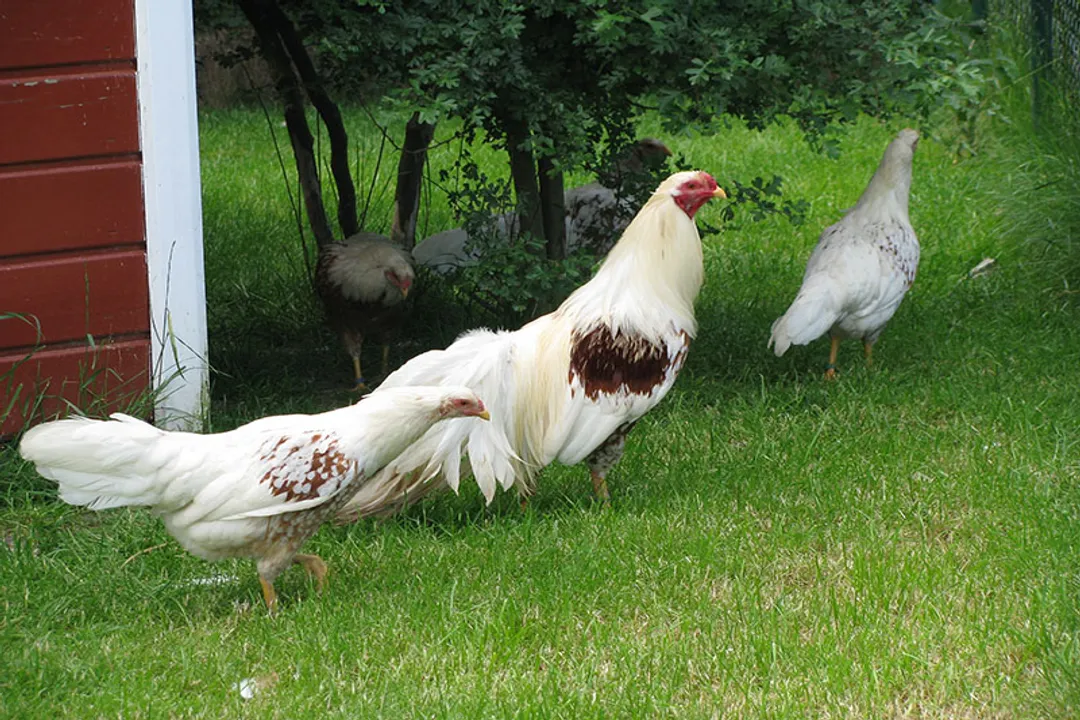
Despite their striking appearance, the Yokohama chicken population has faced challenges, leading to a designation of concern by conservation groups. [2] The Livestock Conservancy lists the Yokohama as Threatened. [2] This classification suggests that the total number of breeding birds remains low, and sustained effort is required to maintain genetic viability across the breed's recognized varieties. [2]
For breeders interested in keeping this heritage breed, understanding the conservation aspect is vital. If the primary motivation is purely exhibition of extremely long tails, a different, perhaps more specialized, lineage might be sought. However, for those interested in preserving the established color strains—like the Red Shoulder or Silver Duckwing—while contributing to the overall health of the recognized Yokohama breed in the US, the focus must be on responsible breeding practices that prioritize genetic health over exaggerated traits. [2] This subtle distinction in breeding goals—conservation versus extreme exhibition—is often a quiet driver in the modern evolution of heritage poultry breeds.
# Daily Life
Understanding the temperament and practical characteristics of the Yokohama helps owners decide if they fit well into a backyard setting. Generally, these birds are described as being somewhat reserved or cautious, though they can become quite docile with consistent, gentle handling. [1][4] They are active foragers, needing space to move around and express their natural behaviors. [4]
Because of their lightness and alertness, they can be prone to flying, meaning that an enclosure with sufficient vertical space or a secure top is necessary to keep them contained. [1] They are not typically kept as primary egg layers; the average production hovers around 60 to 100 eggs per year, usually white or lightly tinted, which is significantly lower than modern production breeds. [1][4] The roosters are generally regarded as better tempered than some other Asiatic long-tailed breeds, making them potentially better pets for enthusiasts comfortable with their occasional skittishness. [4]
# Breed Stability
The continued existence of the Yokohama as a distinct breed hinges on consistent adherence to established standards, even as its population remains small. The differentiation from the Onagadori occurred because Western breeders successfully stabilized traits that made the bird more adaptable to local climates and breeding goals, which included reducing the extreme annual molt that affects the tail growth cycle of the original Asian fowl. [7] This stabilization process effectively cemented the Yokohama's place as a separate entity in the poultry world, defined by its specific color varieties and a tail that is impressive but ultimately manageable, often shedding seasonally like a standard chicken. [1] They are a testament to how environmental pressures and different human selections can cause related breeds to diverge into unique, stable populations over the course of a century or more. [2]
This historical context shows that the "evolution" of the Yokohama was not a slow, natural process in the wild, but a relatively rapid one guided by intentional cross-breeding and selection in Europe and America based on a foundational exotic stock. [2] Their survival now rests on the dedication of keepers aiming to maintain the breed’s established standard and genetic diversity. [2]
#Videos
Ayam Yokohama Chicken Growth Time Lapse Day 1 to ... - YouTube
Related Questions
#Citations
Yokohama Chicken Bird Facts - A-Z Animals
Yokohama Chicken - The Livestock Conservancy
Ayam Yokohama Chicken Growth Time Lapse Day 1 to ... - YouTube
Yokohama Chickens | Oklahoma State University - Breeds of Livestock
Red Shouldered Yokohama - Murray McMurray Hatchery
Red Shoulder Yokohama Chicken
Yokohama chicken - Wikipedia
Yokohama Chickens - Hobby Farms
Silver Duckwing Yokohama Chickens | Cackle Hatchery®