Yellowthroat Scientific Classification
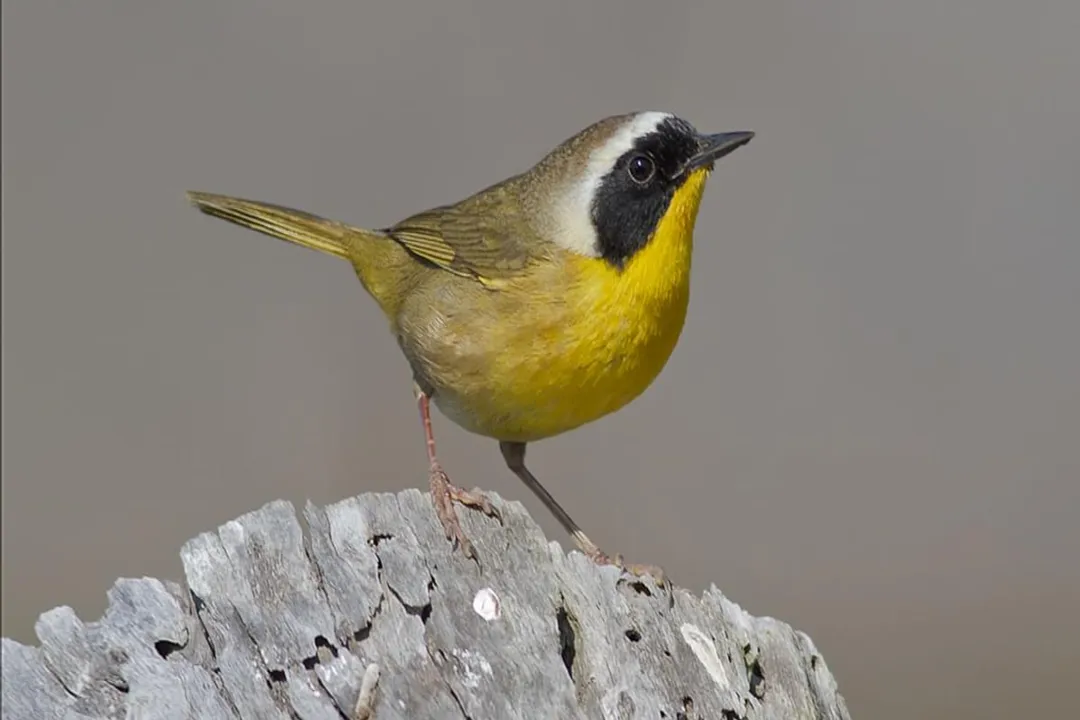
The Yellowthroat is more than just a flash of yellow in the reeds; it represents a fascinating case study in avian taxonomy, rooted firmly in the massive family of New World Warblers. To truly understand this small, secretive songbird, we must begin with its formal designation: Geothlypis trichas. This binomial name is the key that unlocks its evolutionary placement, tying it to a group known commonly as the wood-warblers, classified within the order Passeriformes.
# Taxonomic Placement
At the highest level, the yellowthroat belongs to the Kingdom Animalia, the Phylum Chordata, and the Class Aves—placing it squarely among birds. Its placement within the Order Passeriformes, the perching birds, is standard for nearly all songbirds known to North America. The real story begins with the Family and Genus. The yellowthroats are housed in Parulidae, the family comprising the New World Warblers, a group recognized for its small, often vividly colored insectivores.
The genus for the Common Yellowthroat is Geothlypis. This name, established by German ornithologist Jean Cabanis in 1847, is a direct nod to the bird’s habits. It is a compound derived from the Ancient Greek words geo- meaning "ground-" or "earth-" and thlupis, an ancient name applied to an unidentified small bird. The specific epithet, trichas, is also derived from Greek, trikhas, meaning a kind of thrush, itself stemming from trikhos ("hair"). This combination of terms suggests a small, ground-dwelling bird, which aligns perfectly with where observers find these warblers foraging.
If an observer finds themselves near a marsh, listening for the characteristic, almost harsh "wichety-wichety-wichety" song, they are likely listening for Geothlypis trichas. It is worth noting that the original description of this species by Linnaeus in 1766 assigned it the protonym Turdus Trichas, before it was formally situated within Geothlypis.
# Genus Dynamics
The genus Geothlypis is not a monolithic group; different taxonomic authorities recognize between 12 and 15 distinct species within it. The evolutionary relationships here are intricate, and geographic isolation has been a powerful driver of divergence, sometimes leading to confusion over species boundaries. For instance, the Common Yellowthroat (G. trichas) is sometimes grouped as conspecific with the Belding's, Altamira, and Bahama yellowthroats. Conversely, the Masked Yellowthroat (G. aequinoctialis) complex might be split into three or even four separate species depending on the authority consulted.
This instability at the species level is contrasted by significant consolidation at the genus level in recent years. Modern molecular studies have reshaped our understanding of the Parulidae family, resulting in the transfer of several species previously classified under Oporornis into Geothlypis. This list includes the Kentucky Warbler (G. formosa), the Mourning Warbler (G. philadelphia), and MacGillivray's Warbler (G. tolmiei). Recognizing the inclusion of these woodland-associated species alongside the marsh-loving yellowthroats demonstrates how genetic evidence, even across different habitats, solidifies the Geothlypis grouping as a cohesive evolutionary unit within the warblers.
# Subspecies Variation
For the Common Yellowthroat itself, G. trichas, the internal classification structure is notoriously confusing, relying heavily on subtle geographic variation in plumage and size. In many regions, the bird’s identity seems tied to its immediate environment; the specific designation for a bird can shift based on where it breeds or winters. For example, the San Francisco Yellowthroat, a specific subspecies, is endemic to the greater San Francisco Bay area and is a resident in its breeding range. Understanding these localized differences is crucial for bird identification outside of generalized field guides. If you are birding on the Texas coast versus in, say, the marshes of Maine, knowing that subspecies boundaries exist helps explain slight variations in the male's mask or the overall olive tone of the female, even if the core taxonomy (Geothlypis trichas) remains constant.
The differing statuses among these populations highlight a significant conservation divergence. While the global population of G. trichas is large enough—estimated at over 77 million mature individuals—to warrant a Least Concern listing from the IUCN, this masks threats to specific island or geographic races. The San Francisco Yellowthroat, for instance, has seen severe declines due to the alteration and loss of its freshwater and salt marsh habitat, placing it on the California Bird Species of Special Concern list. This is a classic example where a generalized classification status provides little insight into the true plight of localized forms dependent on fragile ecosystems.
# Ecological Niche and Classification Link
The descriptive component of the scientific name, geo- for ground, is an excellent guide for the observer. These warblers are typically found skulking in dense, low vegetation, such as cattails, reeds, and thickets at the edges of wetlands. They are not canopy birds. This habitat preference dictates their foraging style: they are foliage gleaners, picking insects and spiders off leaves, bark, and flowers near the ground.
If you are looking to connect with a Geothlypis bird, understanding this low-to-the-ground lifestyle informed by its taxonomy is the best first step. While their song is conspicuous, their movement is often secretive. A practical application of this etymological clue is recognizing their curiosity. When a male detects an unusual sound, such as the "pishing" noise often used by birders, its inherent tendency to investigate activity near its preferred low cover often draws it out of the brush for a better look.
# Family Context
To appreciate the Geothlypis genus, we must glance at the broader Parulidae family. This family includes a diverse array of warblers, from the high-canopy dwellers to the ground-hugging yellowthroats. Within the Parulidae, the yellowthroats share features like yellow-green upperparts and generally black bills. However, the distinctive black "mask" of the male G. trichas, often set off by a grey band, is a defining characteristic that separates it from many of its Geothlypis relatives and other warblers. Females, lacking this prominent mask, are much duller olive-brown, though the tell-tale wash of yellow on the throat remains.
The sheer number of species that have been recently transferred into Geothlypis from Oporornis suggests that while the Common Yellowthroat's specific ecological niche is tied to wetlands, its broader genetic relationship connects it to species that prefer scrub and forest undergrowth. This evolutionary sorting process, driven by ongoing genetic research, constantly refines where species sit relative to one another, demonstrating that classification is a dynamic field of study, not a fixed label.
# Reproduction and Threats
The reproductive strategy of the Common Yellowthroat further contextualizes its placement as a ground-level breeder. The female builds a concealed nest, typically a bulky, loosely constructed cup, low in grass or dense vegetation near the water's edge. This nesting style—close to the ground—makes them highly susceptible to certain predators and nest parasites. For instance, Brown-headed Cowbirds frequently lay eggs in their nests, a behavior known as brood parasitism, which can be detrimental to the yellowthroats' reproductive success. In response, G. trichas has developed defenses, sometimes abandoning a parasitized nest or even constructing a new nest atop the old one.
While the species has a high capacity for raising young—with clutches between two and six eggs, incubated for about 12 days—this reliance on low cover also exposes them to terrestrial threats and human disturbance like reed cutting or drainage for agriculture. The fate of the localized subspecies, such as the one in the San Francisco Bay area, often hinges on the protection of these specific, low-lying marsh habitats, a necessity often overlooked when viewing the species through the lens of its broad "Least Concern" status.
In summary, the scientific classification of the Yellowthroat, Geothlypis trichas, reveals a bird whose name reflects its preference for the ground, whose genus is expanding as taxonomy embraces new phylogenetic data, and whose conservation profile requires a nuanced look beyond simple abundance statistics to protect its diverse, localized forms. This small warbler serves as a perfect reminder that a species' formal scientific placement is deeply intertwined with its ecology, behavior, and the subtle variations across its wide geographical range.
Related Questions
#Citations
Yellowthroat - Wikipedia
Geothlypis trichas (Common Yellowthroat) - Avibase
Species Profile for Common Yellowthroat(Geothlypis trichas sinuosa)
COMMON YELLOWTHROAT - The Texas Breeding Bird Atlas
Common Yellowthroat Overview, All About Birds, Cornell Lab of ...