What are the physical characteristics of a penguin?
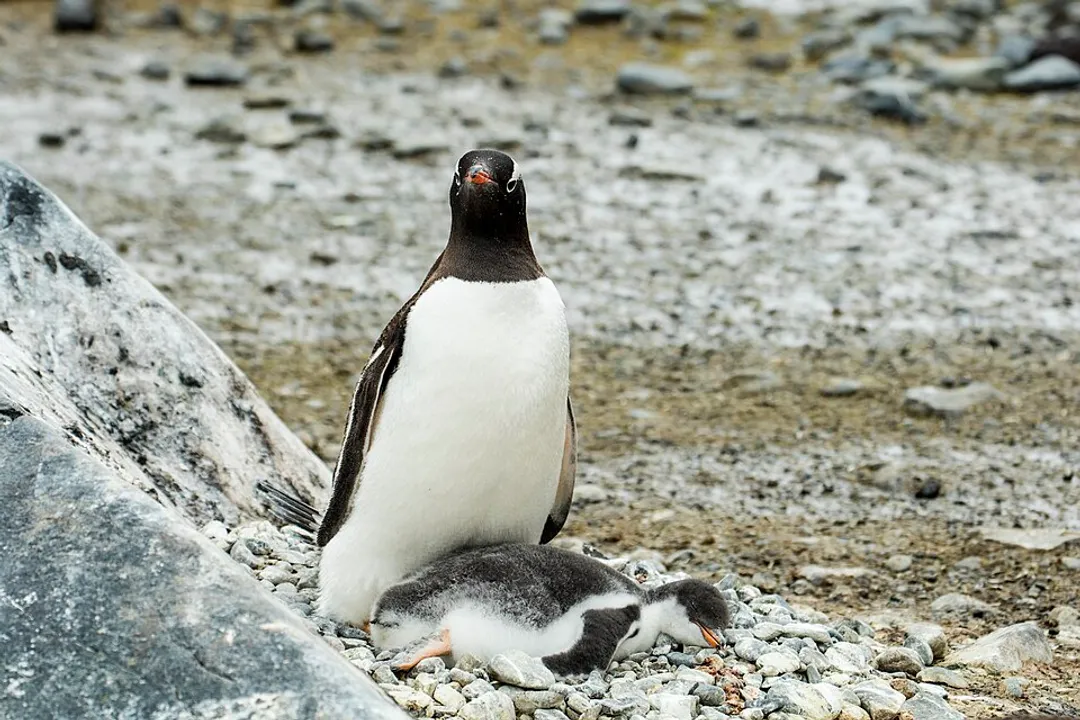
The penguin, that iconic, tuxedoed resident of the Southern Hemisphere, presents a unique study in avian adaptation. These birds look quite comical when moving about on land, characterized by an upright stance and an awkward waddle, yet that very physique is what transforms them into masters of the marine environment. [4][5] To understand the penguin, one must look closely at the features that allow them to thrive both in the frigid Antarctic waters and, surprisingly, in temperate and even equatorial regions. [1][5] They are not simply land birds that swim; they are fundamentally ocean birds whose anatomy is exquisitely tuned for life in the water, spending up to 75 percent of their lives at sea. [1]
# Size Range
The diversity in size across the roughly 17 to 19 recognized species is dramatic. [1][3] The largest species by a significant margin is the Emperor penguin (Aptenodytes forsteri), which can stand at about 4 feet 5 inches (1.35 meters) tall and weigh upwards of 88 pounds (40 kg) before a molt or breeding fast. [1][7] The sheer bulk of the Emperor provides a superior surface-area-to-volume ratio, a clear physical advantage for minimizing heat loss in the planet's coldest climate. [7]
Contrast this with the smallest member of the family, the Little penguin (Eudyptula minor), sometimes called the Fairy or Little Blue penguin. [1][5] These diminutive birds often stand only about a foot tall, measuring between 12 to 13 inches (30–33 cm) and weighing barely 2.6 to 2.9 pounds (1.2–1.3 kg). [1][3][5] It's a fascinating contrast to consider that the Emperor is over 14 times taller and nearly 30 times heavier than the Little penguin. [1] This size gradient generally follows a pattern, as larger penguins tend to inhabit colder regions while smaller species occupy more temperate or tropical zones. [3] Historically, ancient species were even larger; fossils suggest some prehistoric penguins approached the size of a small bear, weighing around 350 pounds. [1]
# Body Shape
The overall silhouette of a penguin is perfectly engineered for aquatic pursuit. Their body shape is described as fusiform, meaning it is tapered at both ends, creating a streamlined profile that moves smoothly through the water, minimizing drag. [4][5] They possess a relatively large head, a short neck, and an elongated body core, all contributing to this hydrodynamic design. [4][5]

# Flippers
The wings of their flying ancestors have been completely transformed into stiff, powerful swimming propellers—flippers. [1][3] In contrast to flying birds, penguin wings feature flattened, fused, and dense bones, lacking the air pockets necessary for aerial lift. [1][3] Propulsion underwater is achieved not just on the downstroke, as with flying birds, but from both the downstroke and the upstroke, demanding significant power from their strong chest and back muscles. [1] The shoulder structure reflects this adaptation; the penguin scapula is much broader, resembling a tapered tennis racket to provide a larger anchor for these powerful swimming muscles. [1] The flippers themselves are covered in short, scale-like feathers, which would be too flexible if they retained the long flight feathers typical of other birds. [4]
# Diving Depths
This wing power translates into impressive diving capabilities. [1] While smaller species often feed near the surface, larger penguins regularly plumb significant depths. [1] Emperor penguins are champions of the deep, having been recorded reaching depths near 1,700 feet (518 meters), [1] with other records noting dives to 565 meters. [7] Furthermore, an emperor penguin once recorded a dive lasting over 32 minutes, setting a record for avian dives at that time. [1] Mid-sized species generally swim around 5 mph, though the Emperor can hit a top speed of 9 mph when necessary. [1]

# Feather Coat
The plumage is arguably the most recognizable feature, giving rise to the common "tuxedo" comparison. [4][5] This stark black-and-white pattern is more than aesthetic; it's a vital form of camouflage called countershading. [1][4] The black back blends with the dark deep ocean when viewed from above, while the white belly merges with the bright, light-filled surface waters when seen from below, effectively breaking up the bird's outline for both predators and prey. [1][4]
The insulation provided by their feathers is critical, as most penguins maintain a core body temperature around 100 to 102°F, even when the ambient temperature is near freezing. [1] A fascinating update to older understandings concerns feather density; a 2015 study indicated that Emperor penguins actually average only about nine feathers per square centimeter, a much lower count than previously estimated for birds in such extreme cold. [1] Beyond contour feathers, penguins possess downy after-feathers, skin-attached plumules (which are nearly four times more numerous than contour feathers), and microscopic filoplumes. [1]
Penguins diligently maintain this protective layer, often spending up to three hours a day preening. [1] They spread oil from the uropygial gland at the base of their tail across their entire body, which provides waterproofing and deters microbes. [1][4]
# Thermoregulation
The physical methods for temperature regulation highlight the differences between polar and temperate dwellers. [1] In extreme cold, Antarctic penguins like the Adélie rely on strategies like countercurrent exchange in their extremities, a system where arteries and veins run closely together to transfer heat from outgoing warm blood to incoming cold blood, preventing freezing without excessive heat loss. [1][7] Emperor penguins, the largest, further conserve heat through their large mass and by tucking heads and pressing flippers tightly against their bodies when stationary. [7] They also have specialized nasal chambers to recapture heat lost during exhalation. [7]
For penguins in warmer climates, such as the banded penguins like the Humboldt or African species, overheating is a concern. [1] These birds have evolved to possess featherless patches on their faces and feet, allowing them to divert blood to these areas to radiate excess heat when necessary. [1][4] The ability of all penguins to drink seawater is facilitated by supraorbital glands, or salt glands, located above the eyes, which filter out excess salt, excreted through the beak via a quick "sneeze". [1][4]
It is striking how the physical structure allows for this thermal balancing act across such a vast temperature range. Consider the structural trade-off: the dense bone structure and heavy feathering that create an efficient thermal boundary layer in Antarctica might actually pose a minor overheating risk in the tropical waters where the Galapagos penguin lives, necessitating their increased reliance on behavioral cooling like panting and shading their feet. [1][3]
# Head Features Senses
A penguin's head carries several clues to its identity and feeding habits. [4] Bills vary in shape; species that primarily eat krill, like many crested penguins, often have shorter, stouter bills, whereas those focusing on fish, like the Emperor, tend to have longer, thinner bills. [1][4] To assist in catching slippery prey like fish and squid, the inside of the mouth, including the tongue and palate, is equipped with large, rear-directed, keratinized spines that grip the food. [4]
Vision is heavily biased toward the underwater environment. [1] Terrestrial vision relies on the cornea to bend light (refraction), but this mechanism fails underwater because the refractive index of water is too similar to the eye fluid. [1] Penguins compensate with a flattened cornea and a highly modified, spherical lens that bends light sufficiently for clear underwater focus. [1] King penguins exhibit a unique visual adaptation: their pupil can constrict to a tiny square in bright sunlight, expanding up to 300 times in low light to maximize photon capture, especially vital for their deep dives. [1][4]
Hearing is acute, allowing parents and chicks to recognize each other in noisy colonies. [1] African penguins’ peak hearing sensitivity is between 600 and 4,000 Hz, narrower than the human range. [1] Interestingly, taste is generally poor; penguins appear to lack the sweet, bitter, and umami taste receptor genes, retaining only salt and sour reception, possibly due to the cold temperatures of their evolutionary origins inhibiting these receptors. [1] Smell, long dismissed, is now believed to be important for some species, such as the Humboldt penguin, in detecting prey or recognizing individuals. [1]
# Terrestrial Motion
While perfectly adapted for swimming, their locomotion on land involves a characteristic waddle. [1][5] This gait is a direct consequence of their highly specialized swimming anatomy: their short, strong legs and webbed feet are set far back on the body, optimizing them as rudders for underwater steering rather than for terrestrial walking. [1][4]
On ice and snow, many Antarctic species conserve energy by tobogganing—sliding on their bellies while using their feet and flippers for propulsion and steering. [4][7] This method is remarkably efficient for covering flat, icy ground quickly. However, when navigating rugged, rocky nesting sites, they switch to walking in short steps or hopping, sometimes using their stiff, wedge-shaped tails as a prop for balance. [1][4] Rockhoppers are famous for hopping between rocks, a necessary skill for their rough terrain. [1]
# Distinct Markings
While the general black-and-white pattern is universal for countershading, species-specific head and chest markings are key identifiers. [3]
- Crested Group (Eudyptes): Distinguished by yellow or orange feather plumes above the eyes, which can look like crests. [1][4]
- Banded Group (Spheniscus): Characterized by distinct black-and-white striping patterns on the head and often one or two black bands across the chest. [1][4]
- Brush-Tailed Group (Pygoscelis): Often have longer tail feathers used as a prop, and may feature unique facial markings like the white eye rings of the Adélie or the red beak of the Gentoo. [1][4]
- Great Penguins (Aptenodytes): The Emperor and King penguins display large, vivid orange or yellow patches on the sides of their heads and necks that fade onto the chest. [4][7]
# Appendages and Extremities
The feet are webbed and equipped with claws, useful for gripping ice, which is especially important for the Emperor penguin on its breeding grounds. [4][7] The length and robustness of the bill often correlate with diet, as noted previously, but iris color also varies; for instance, Rockhopper and Macaroni penguins possess distinctive red eyes, while Little penguins have bluish-gray irises. [1][4]
Like all birds, penguins possess a nictitating membrane or clear third eyelid, which closes to protect the eye from injury, particularly when they surface rapidly after a deep dive. [1][4] These complex physical characteristics—from the density of their feathers to the unique shape of their pupils—are interconnected adaptations that define the penguin as a highly specialized avian marvel of the Southern Ocean. [1]
Related Questions
#Citations
All About Penguins - Physical Characteristics | United Parks & Resorts
Penguin Fact Sheet | Blog | Nature - PBS
Penguin - Wikipedia
10 Cool Facts About Penguins - City of Albuquerque
Habitat and physical characteristics of penguins | Britannica
Emperor penguin - Australian Antarctic Program
Penguins | Smithsonian Ocean
Aptenodytes forsteri (emperor penguin) - Animal Diversity Web
Penguins | Research Starters - EBSCO