Yarara Physical Characteristics
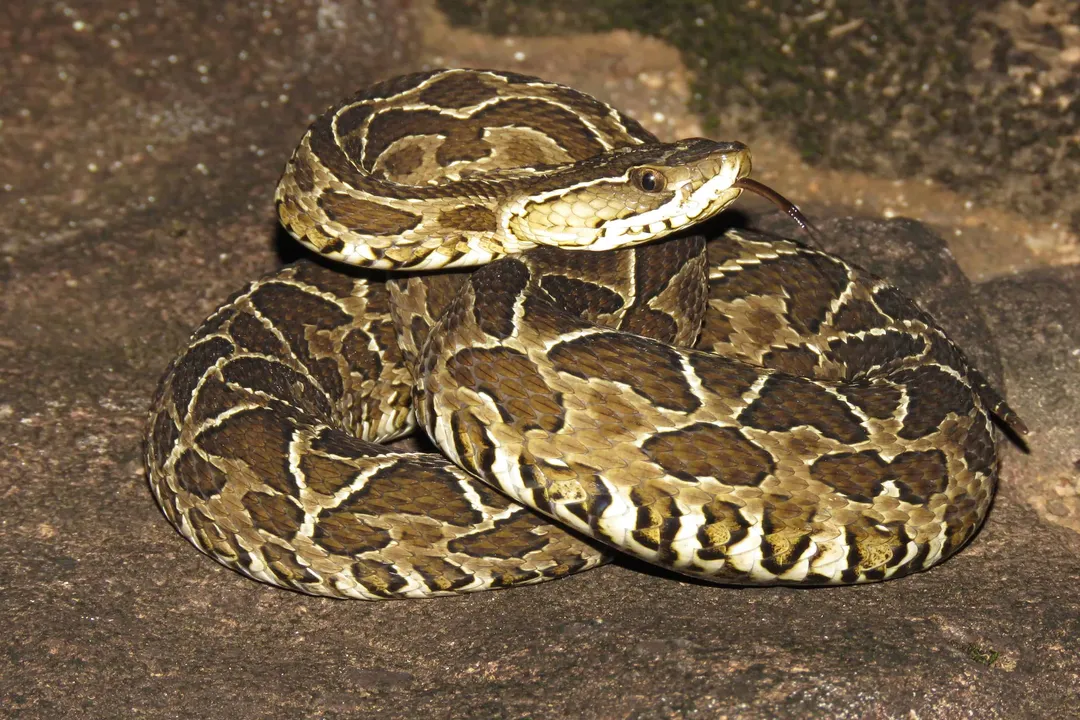
The snakes commonly grouped under the name Yarara belong to the Bothrops genus of pit vipers in South America, representing a complex group where similar names are applied across closely related species, most notably Bothrops jararaca (the Jararaca) and Bothrops alternatus (the Urutu or Yarará Grande). Distinguishing physical features are crucial for identification, as these vipers possess a combination of characteristics that define them as members of the Crotaline subfamily, most famously the presence of heat-sensing pits on their faces.
# Head Shape
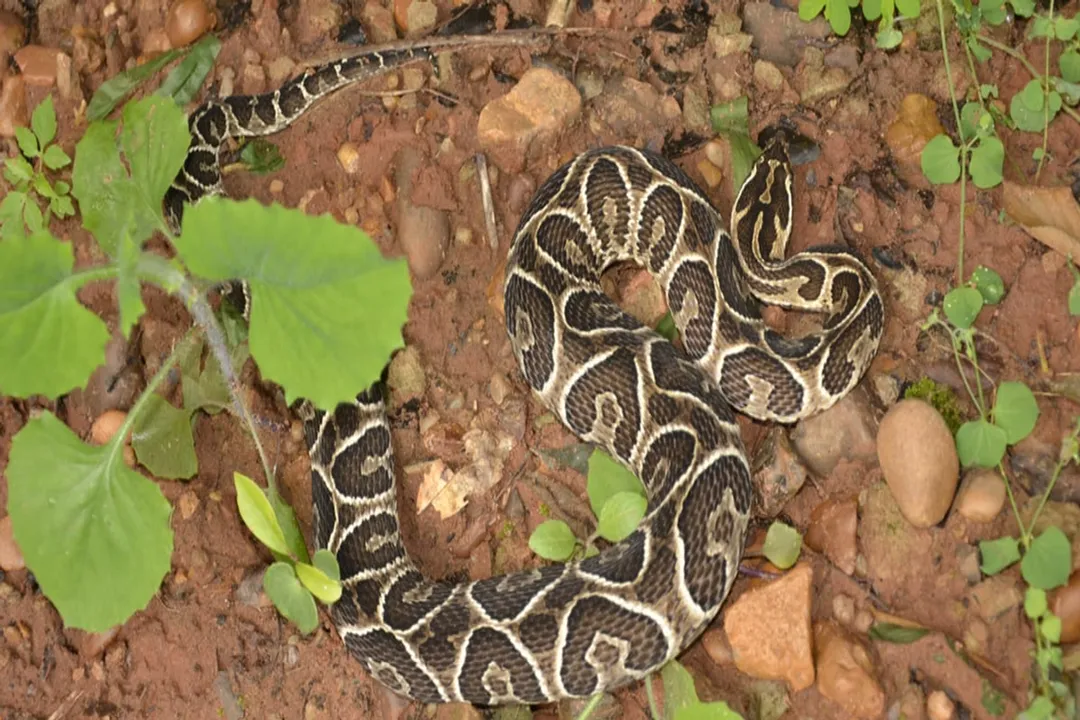
Like other pit vipers, the various Yarara species exhibit a distinctively triangular-shaped head. This shape accommodates the venom glands effectively. A defining trait across the genus is the presence of loreal pits, which are sensitive infrared-detecting organs located on each side of the head, situated between the eye and the nostril. These pits function as a "sixth sense," allowing the snake to perceive thermal radiation, which is vital for locating warm-blooded prey, especially during nocturnal activity. Beyond these pits, their visual acuity is also noteworthy, featuring refined binocular vision to aid in depth perception, complemented by pupils shaped as vertical slits.
Specific markings on the head also aid in distinguishing between the main species. For Bothrops jararaca, the head often features a prominent dark brown stripe running from behind the eye toward the angle of the mouth, which is characteristically outlined by a definite pale coloration dorsally. In contrast, Bothrops alternatus may present a head top that is chocolate brown to nearly black, overlaid with transverse and longitudinal markings in tan or white.
# Body Proportions
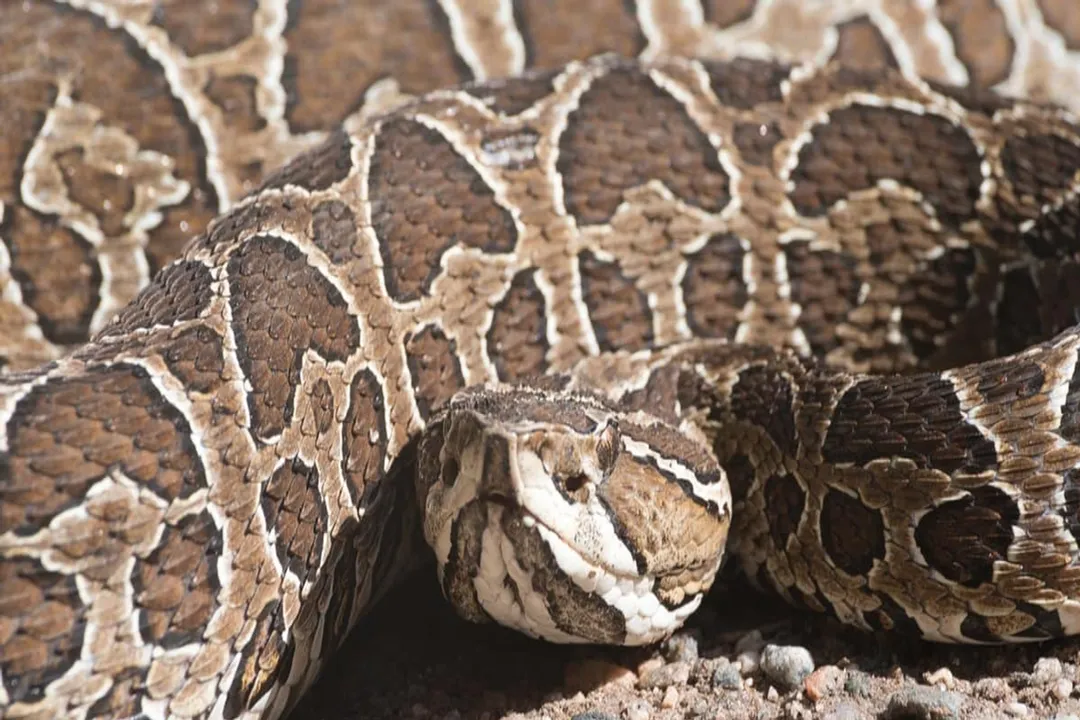
A significant point of differentiation lies in the overall body build. The species known as B. jararaca is generally described as slender. While it can reach a maximum total length of up to (or ), the average length is typically much less. Conversely, B. alternatus is characterized as being large and stout. Its average length is often cited between and (), although verified maximum lengths approach (), with other reports suggesting an average of $1.2$ to ($4$ to ). This difference in build—slender versus stout—suggests a potential relationship with habitat use; the more slender B. jararaca adults are predominantly terrestrial but juveniles are more arboreal, while the sturdier B. alternatus seems built for a more consistently terrestrial, perhaps more robust, existence across its preferred humid lowlands. Furthermore, the species exhibit sexual dimorphism, with females being larger and heavier than males in both B. jararaca and B. alternatus.
# Scale Detail
The arrangement of scales on the head provides a precise means of separating species within this genus, which is often beyond the scope of casual observation but critical for scientific accuracy. For instance, in Bothrops jararaca, the head scalation includes 5 to 12 weakly keeled intersupraoculars. A key anatomical marker noted is that the second supralabial scale is fused with the prelacunal scale to form what is termed a lacunolabial scale, a feature stated to be exclusive to crotaline snakes. This fusion is explicitly stated as absent in B. alternatus, which has 8 to 10 supralabial scales, none of which are fused with the prelacunal scale. Examining the body scales, B. jararaca typically has rows of dorsal scales at midbody, usually settling on . B. alternatus tends toward a higher count, showing rows, commonly for males and for females. Ventral scale counts also show variation, with B. jararaca having ventrals, while B. alternatus ranges from in males and in females.
# Ground Color
The overall dorsal coloration in these snakes serves as effective camouflage across their varied South American terrains, though the background hues differ slightly between the common types. B. jararaca exhibits an extremely variable ground color, ranging from tan, brown, or gray to yellow, olive, or almost maroon. In B. jararaca, the midbody ground color is often slightly lighter than the head, anterior, and posterior sections. For B. alternatus, the ground color is similarly variable, described as brown, tan, or gray, sometimes with an olive cast.
# Markings Pattern
The overlying dark markings are perhaps the most visually striking feature and are responsible for some of the common names applied to these snakes. The dark patterns on both species are typically bordered by a lighter edge, either cream or white.
On Bothrops jararaca, the markings are described as subtriangular or trapezoidal on either side of the body, with their tips reaching the vertebral line. These markings can be situated opposite one another, partially juxtaposed, or completely juxtaposed, with many specimens showing all three variations across the body length.
Bothrops alternatus possesses markings that give rise to its common name, the "crossed pit viper". It features a series of dorsolateral markings that are chocolate brown to black. These markings are widened and sometimes invaded from below by the paler ground color, resulting in patterns that look like a cross, enclose a darker blotch, or divide the marking into three segments, giving it a "headphone" shape. Furthermore, on the tail of B. alternatus, the pattern often fuses into a zigzag. The vertebral line markings in B. alternatus may alternate or oppose.
# Ventral and Juvenile Marks
The underside provides another contrast. For B. jararaca, the ventral side is generally described as pale green to pale yellow, featuring irregular gray pigment blotching. In B. alternatus, a distinct dark brown to black stripe runs from the neck area down to the very tip of the tail on the ventral surface. This single, long stripe feature on the belly of B. alternatus is a significant identifier when viewing the snake from below or when the dorsal pattern is obscured.
A notable physical difference appearing in the young of B. jararaca is that the tip of the tail is white. This pale tail tip is actively used by juveniles in a behavior known as caudal luring to attract prey, mimicking an insect larva. While the young of B. alternatus are also noted as being more brightly colored than adults, the specific detail of a contrasting tail tip being used for luring is noted for B. jararaca in the sources provided.

# Visual Summary of Key Physical Distinctions
To help organize these physical attributes, one can focus on the most observable differences between the two primary "Yarara" types mentioned:
| Feature | Bothrops jararaca (Jararaca) | Bothrops alternatus (Urutu/Yarará Grande) |
|---|---|---|
| Body Build | Slender | Large and stout |
| Head Top | Dark brown stripe behind eye, pale border | Chocolate brown to black with tan/white markings |
| Midbody Pattern Shape | Subtriangular or trapezoidal markings | Cross, headphone, or zigzag-fused markings |
| Midbody Scale Rows | Usually 23–25 | Usually 27–31 (male) / 29–33 (female) |
| Key Head Scale Feature | Second supralabial fused to form a lacunolabial | Supralabials not fused with the prelacunal |
| Ventral Appearance | Pale with irregular gray blotching | Single dark stripe running neck to tail tip |
| Juvenile Tail Tip | White tip, used for caudal luring | More brightly colored, but tail tip detail not specified for luring |
The presence of unique scale fusion patterns, like the lacunolabial formation in B. jararaca, represents more than just a minor counting difference; it reflects distinct morphological adaptations within the genus that may tie into feeding mechanics or head structure support, suggesting a deeper evolutionary separation than the coloration alone implies. Paying close attention to these microscopic physical details, such as whether the second upper lip scale joins the scale next to the nostril, can be a highly reliable way to identify the species correctly when field markers like pattern or color are ambiguous due to age or local variation.
In terms of general appearance, the B. jararaca can look more like a classic viper with distinct, separate diamond-like marks, whereas B. alternatus presents a more dramatic, interconnected pattern that often closes around the center line, forming those cross-like or blotched shapes that define its appearance across Uruguay and Argentina. This intensity in patterning on B. alternatus might explain its reputation, even when its statistical fatality rate is sometimes compared against other Bothrops species. The visual impact of the markings, regardless of exact species, is what makes them instantly recognizable as significant reptiles in their native environments.
Related Questions
#Citations
Bothrops jararaca - Wikipedia
Yarara - Bothrops alternatus - A-Z Animals
Yarara Facts & Photos - Wowzerful
Yarará | snake - Britannica
Jararaca - Facts, Diet, Habitat & Pictures on Animalia.bio
Bothrops jararaca - Grokipedia
Bothrops jararaca - Animal Diversity Web