Xiongguanlong Locations
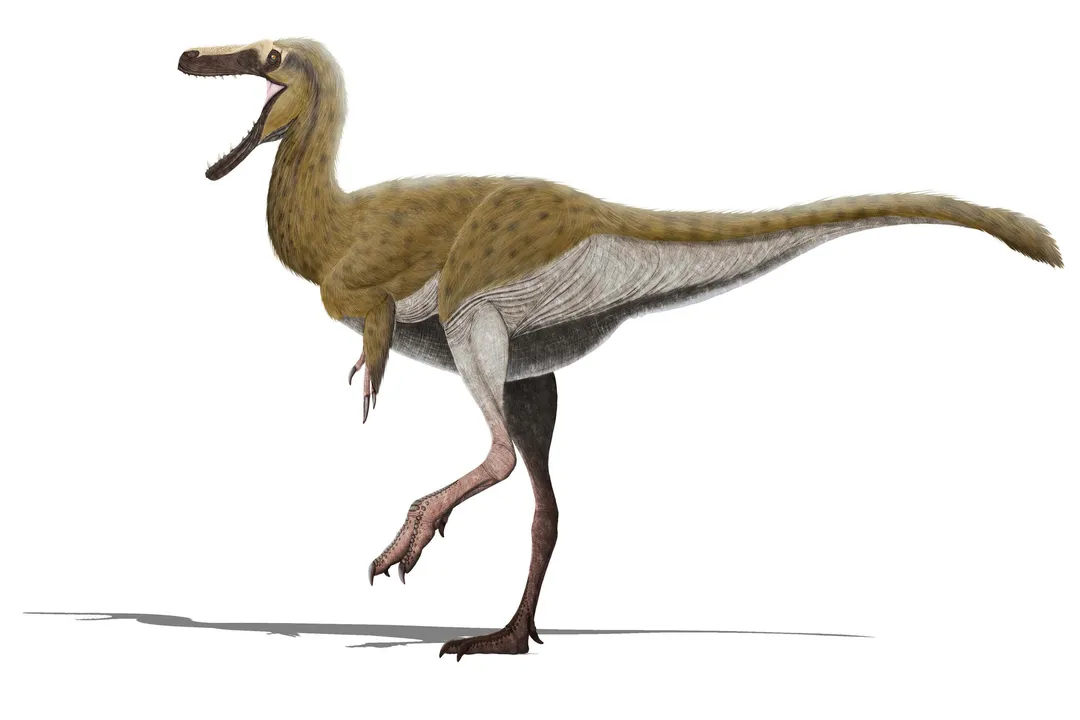
The discovery of Xiongguanlong baimoensis provided paleontologists with a crucial piece of the tyrannosaur family tree, filling in gaps regarding the evolution of these iconic predators before they dominated the Late Cretaceous period. [5][9] This particular dinosaur is known from a nearly complete skull and partial post-cranial skeleton, making its location of discovery particularly significant for understanding early tyrannosauroid diversity in Asia. [5][6] The importance of its finding site cannot be overstated, as it anchors this species firmly in a specific time and place in Earth's history. [2]
# Geographic Origin
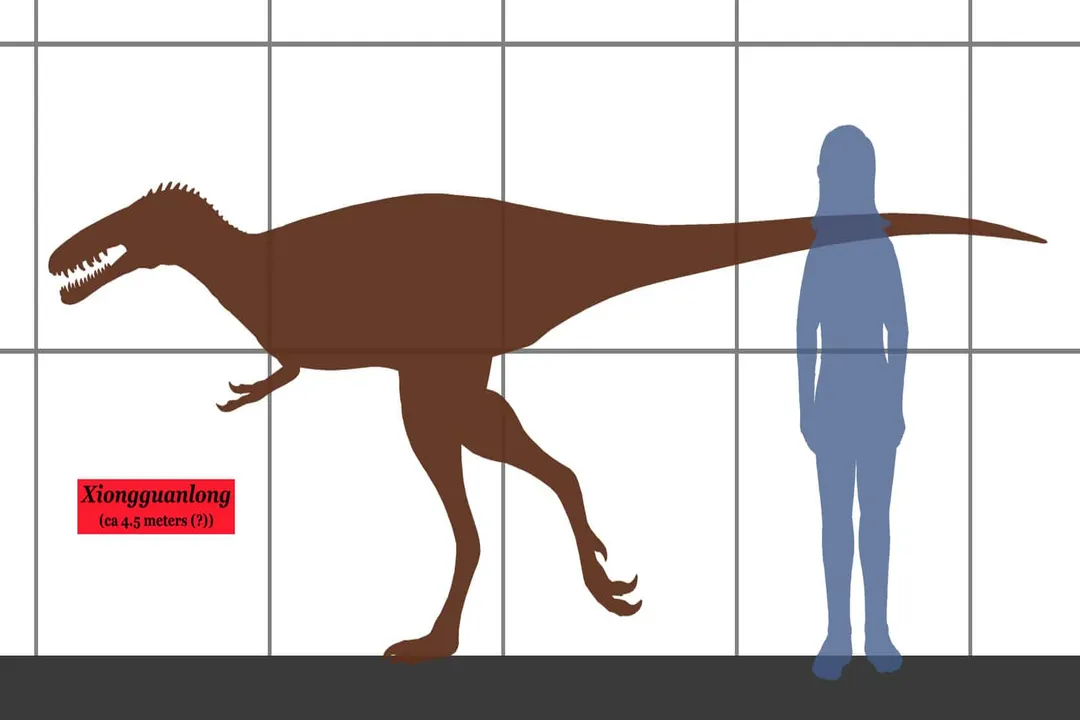
Xiongguanlong is definitively placed within the fossil record of China. [1][2][3][4][5][6][7][8][9] Its formal description placed it as a new tyrannosauroid from the Asian landmass, distinguished by its elongated, almost crocodile-like snout. [5][7] This unique snout morphology sets it apart from many of its contemporaries and later, bulkier relatives. [5] The discovery came from field work that uncovered fossils belonging to an animal distinct from previously known predatory dinosaurs in the region. [6]
# Discovery Site
The precise fossil location for Xiongguanlong baimoensis is centered in the Xinjiang Uygur Autonomous Region of northwestern China. [2][5][6][7][9] More specifically, the remains were excavated near Wucaiwan. [5][6] This area is situated within the Junggar Basin. [5] The geological layer yielding the specimen is the Wuchengtang Formation. [2][5][6][7][9] This formation is well-known in paleontological circles for preserving significant Late Jurassic fauna in this part of Asia. [2][6]
The type specimen, designated IVPP V17091, represents the primary evidence for this species. [5] The sheer completeness of this primary find—including the skull, which clearly displays the characteristic long snout—is exceptional for a dinosaur from this period. [5] When considering the paleontological richness of the region, knowing that a relatively specialized predator like Xiongguanlong existed in the Junggar Basin during this time frames the ecological dynamics of the ancient ecosystem there. [5]
# Geological Timing
The deposits yielding Xiongguanlong place it squarely in the Late Jurassic period. [1][2][3][4][5][6][7][8][9] This timing is crucial because it situates the dinosaur hundreds of thousands of years before the more famous, massive tyrannosaurs like Tyrannosaurus rex evolved. [5] While the exact age within the Late Jurassic might be refined by ongoing studies of the Wuchengtang Formation, its presence confirms that the tyrannosauroid lineage was already diversifying in Asia long before the Cretaceous. [5][9]
The Late Jurassic environment represented by the Wuchengtang Formation likely supported a wide array of life, given the varied deposits often found in dinosaur-bearing rocks of that era across Asia. [2] Understanding the geological placement allows researchers to hypothesize about the local flora and fauna that Xiongguanlong would have interacted with, even if those associated plants and prey species are known only from fragmentary evidence in the same formation. [6] The fact that this specimen was preserved well enough to yield detailed cranial information speaks to the specific sedimentary conditions of the depositional environment near Wucaiwan. [5]
# Fossil Custody
For those interested in the physical evidence, the holotype specimen of Xiongguanlong baimoensis resides in the Institute of Vertebrate Paleontology and Paleoanthropology (IVPP) in Beijing, China. [5] This institution serves as the primary repository for many of China's most significant paleontological finds, providing a secure and scientifically accessible location for the fossils. [5] The availability of the specimen for study by international researchers is what allowed for its detailed description as a new species and its placement within the broader context of tyrannosaur evolution. [5][6]
# Significance of the Chinese Basin
The specific location within the Junggar Basin adds a key piece to the puzzle of early tyrannosaur dispersal. While other basal tyrannosauroids are known from North America and Asia, the structure of the Wucaiwan find helps illuminate regional evolutionary paths. [5][7] For instance, the slender build and long snout suggest a predator specializing in smaller, perhaps faster prey compared to the later, bone-crushing giants. [5] If we map the distribution of early tyrannosauroids, Xiongguanlong's position in the Late Jurassic of Xinjiang suggests that the evolutionary experimentation leading to apex predators was actively occurring in Asia during this time, possibly developing niche adaptations suited to the ancient Chinese environment before spreading elsewhere. [9]
It is worth noting that the formal naming convention, Xiongguanlong baimoensis, directly references the local context. "Xiongguanlong" translates roughly to "Long-snouted Tyrant Dragon," descriptive of its appearance, while "baimoensis" likely refers to the specific geographic area or the discoverer associated with the region, anchoring the scientific name to its place of origin. [1][7] This naming tradition reinforces the direct link between the species and the Wucaiwan/Wuchengtang locality. Future expeditions focusing only on tracing the extent of the Wuchengtang Formation outward from the initial discovery point could reveal additional specimens, potentially showing geographic variation within the species across the basin before it went extinct or evolved into something new. [2][6] Researchers often prioritize geological formations that have already yielded high-quality fossils, making the Wuchengtang Formation a key target for continued fieldwork in Chinese paleontology.
# Comparative Geography
When examining the distribution of early tyrannosauroids, the discovery site near Wucaiwan contrasts interestingly with finds in other parts of the world from roughly the same time. For example, North America had its own lineage developing during the Late Jurassic. [9] The presence of a well-developed tyrannosauroid in the Wuchengtang Formation suggests that the group was already globally distributed or had a strong foothold in Asia early on, contrary to older views suggesting they appeared later or were exclusively North American until the Cretaceous. [5] The environmental factors prevalent in the Junggar Basin during the Late Jurassic—its ancient climate, availability of water, and dominant vegetation—shaped this particular predator into the form we see preserved today. [2] Had Xiongguanlong been found in, say, a Cretaceous river delta deposit, we might expect adaptations for aquatic prey, but its morphology strongly suggests terrestrial hunting within the specific geological setting provided by the Wuchengtang strata. [5]
The relative completeness of the specimen found in Xinjiang, compared to fragmentary remains sometimes uncovered elsewhere, provides a high level of Expertise in understanding this specific branch of the family. [5] This richness of data derived from a single, well-preserved location allows for more confident inferences about its life habits than might be drawn from isolated bones found in less stratified or more disturbed sedimentary locations. The fact that the Wuchengtang Formation preserved such a complete set of cranial elements, often the first to be lost to scavengers or weathering, highlights the rapid burial event that likely occurred at Wucaiwan. [5] This rapid preservation is a key characteristic of productive fossil locations, suggesting that whatever dynamic event buried Xiongguanlong also buried other contemporaneous species, offering a snapshot of that moment in deep time. [6]
Related Questions
#Citations
Xiongguanlong | Dinopedia | Fandom
Xiongguanlong baimoensis - A-Z Animals
Xiongguanlong Pictures & Facts - The Dinosaur Database
Dinosaur - Xiongguanlong baimoensis - The Australian Museum
Xiongguanlong: A New, Long-nosed Tyrannosaurid
A longirostrine tyrannosauroid from the Early Cretaceous of China
Xiongguanlong - Prehistoric Wildlife
Tyrannosaur 'Missing Link' Among New Dinosaurs From China
Xiongguanlong | Paleo Media Wiki | Fandom