Xiaosaurus Scientific Classification
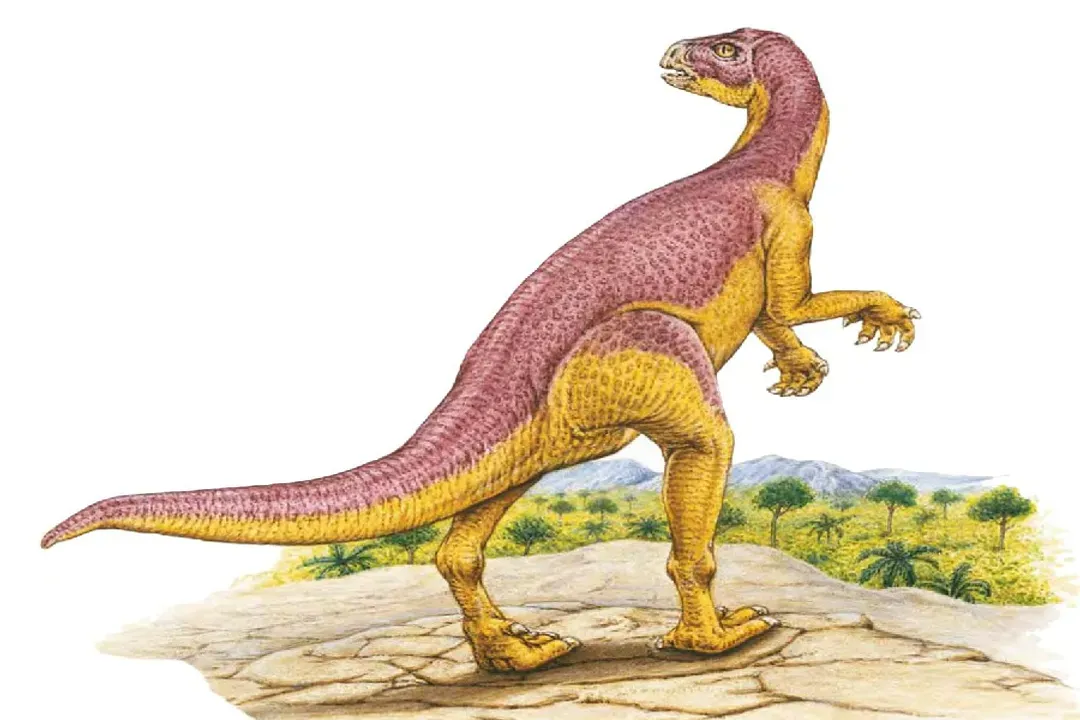
The classification of Xiaosaurus offers a fascinating glimpse into the earliest branches of the ornithischian dinosaurs, the group characterized by their bird-like hips. This small herbivore, whose name translates fittingly to "dawn lizard," represents an early snapshot of dinosaur evolution during the Middle Jurassic period. [2][3][5] Unpacking its scientific placement reveals much about its relationship to later, more famous plant-eaters.
# Naming and Discovery

The genus Xiaosaurus was formally named by Z. Dong and Z. Tang in 1983. [5][6] The name itself is derived from the Chinese word Xiao, meaning "dawn," combined with the Greek word sauros, meaning "lizard". [2][6] Scientists chose "dawn lizard" because the fossils represented some of the most ancient dinosaur remains found in that region of China. [2] While the name suggests an early origin, one source notes that considering the dawn of the dinosaur age was in the Late Triassic, a "noon lizard" might have been more accurate for a Middle Jurassic inhabitant. [2]
The type species is Xiaosaurus dashanpensis. [2][3] The specific epithet dashanpensis honors the location where the fossils were unearthed: Dashanpu. [6] Excavations in 1979 and 1980 near Dashanpu in the Sichuan area of China yielded the initial, partial remains. [2] The known fossil material is relatively limited, consisting of jaw fragments, vertebrae (cervical, sacral, and caudal), a humerus, a femur, a tibia, a fibula, and various foot bones. [6] This meager representation is one reason why some paleontologists have categorized the name as a nomen dubium, or a dubious name, because so little is known for certain about the animal. Despite the incompleteness, the find is significant as it comes from the well-fossiliferous Xiashaximiao Formation within the Sichuan Basin. [5][6]
# Geologic Context
Xiaosaurus inhabited what is now China during the Middle Jurassic Period. [2][3][5] The temporal range for its existence is generally placed between 169 and 163 million years ago (mya). [2][3] Paleofile.com specifies the age more precisely within the Bathonian-Callovian Stage of the Dogger Epoch within the Middle Jurassic. [6] Other sources confirm this Middle Jurassic assignment, referencing the Bajocian stage as well. [1][2] This places Xiaosaurus chronologically alongside other notable Asian fauna, though not necessarily direct contemporaries of all listed species. [2]
The environment was characterized by the Sichuan Basin, an intracratonic basin in southwestern China known for preserving fluvial-lacustrine (river and lake) deposits. [2] The specific geological layer yielding the fossils is the Xiashaximiao Formation. [5][6]
If we think about the broader context of dinosaurian evolution, Xiaosaurus dates from a time when ornithischians were still establishing their diversity, before the massive armored dinosaurs and elaborate ceratopsians of the Cretaceous evolved. Its presence in the Middle Jurassic shows the early diversification of the "bird-hipped" lineage in Asia. [5]
# Hierarchical Classification
The scientific classification places Xiaosaurus firmly within the major dinosaurian groups, primarily based on its hip structure. [2]
Here is a summary of its taxonomic placement, consolidating information from multiple sources:
| Taxonomic Rank | Classification | Source Notes |
|---|---|---|
| Kingdom | Animalia | Universal [2][3][5] |
| Phylum | Chordata | Universal [2][3][5] |
| Class | Reptilia / Sauropsida | Reptilia, [2][5] Sauropsida [3] |
| Superorder | Dinosauria | Mentioned by Prehistoric Wildlife [5] |
| Order | Ornithischia | Bird-hipped dinosaurs [2][3] |
| Suborder/Clade | Neornithischia | Mentioned by Prehistoric Wildlife [5] |
| Genus | Xiaosaurus | Named by Dong & Tang, 1983 [5][6] |
| Species | X. dashanpensis | The type species [3] |
The most defining placement is within the Ornithischia order. [2][3][5] This group contrasts with the Saurischia (lizard-hipped dinosaurs) like the giant sauropods and theropods. Ornithischians, including Xiaosaurus, possessed a pelvis where the pubis bone pointed backward, similar to modern birds, though birds themselves evolved from the Saurischian lineage.
# Placement within Ornithischia
Within the Ornithischia, Xiaosaurus is typically identified as an Ornithopod. [2][5] Ornithopods are generally characterized as bipedal, herbivorous dinosaurs with beaked mouths suited for clipping vegetation. [2]
A key piece of information provided by the Enchanted Learning source places Xiaosaurus specifically within the family Fabrosauridae. This family is described as encompassing some of the earliest ornithischians. Other genera listed as belonging to Fabrosauridae include Alocodon, Gongbusaurus, Lufengocephalus, Nanosaurus, and Technosaurus. Furthermore, this family grouping suggests that the Fabrosaurids might be the ancestral group from which all later ornithischian dinosaurs evolved.
This specific family placement is important because it highlights Xiaosaurus as a very basal (early diverging) member of the ornithischian tree, rather than a member of a more derived group like the Iguanodontia or Hadrosauridae.
Considering the known material, Xiaosaurus seems to share traits that place it near the base of the ornithischian radiation. For instance, unlike some later ornithischians, fabrosaurids, according to this classification, did not possess cheek pouches for food storage. This simple dental and oral structure suggests a specialized, perhaps less efficient, method of processing tough Jurassic vegetation compared to their later, more derived relatives. [2]
# Anatomical Correlates to Classification
The physical description of Xiaosaurus supports its role as a primitive ornithopod. [2][3]
It was a small, lightly built dinosaur, estimated to be around 1 meter (3.3 feet) in length and weighing approximately 7 kg (15 lbs). [2][5] The posture was bipedal, relying on long, muscular hind limbs for locomotion. [2] The forelimbs were short, featuring five-fingered hands, while the longer hindlimbs terminated in four-toed feet. [2] Its tail was long and pointed, and the neck was flexible, supporting a small head equipped with large eyes. [2][3] As an herbivore, its teeth were leaf-shaped cheek teeth, suitable for shearing plants rather than tearing flesh. [2]
This combination of features—small size, obligate bipedalism with relatively long hind limbs, and primitive dental morphology—is characteristic of the basal ornithischians often grouped as fabrosaurids.
# Comparative Analysis of Information
While most sources agree on the broad classification (Kingdom Animalia, Order Ornithischia, Genus Xiaosaurus) and its Middle Jurassic age in China, there are minor discrepancies in the recorded size estimates and the specific tribal placement. [1][2]
For instance, one source states a length of $3-4$ feet ($1-2$ meters) and a weight around $15$ lbs ($7$ kg), [2] while another lists the length as about 5 feet (1.5 m). The length of about 1 meter seems to be a common consensus for a conservative estimate. [5][2] These variations likely stem from different extrapolations based on the partial fossil material available. [6]
The placement within Fabrosauridae is a specific detail offered by one reliable source that adds significant context to its scientific classification. If accurate, this places Xiaosaurus near the base of the entire ornithischian radiation, suggesting it represents a very early successful adaptation to herbivory in this lineage.
If we examine its contemporaries mentioned—Agilisaurus, Omeisaurus, Huayangosaurus—we see a mix of other early Jurassic forms. [1] Agilisaurus is another early ornithopod, often considered close to Xiaosaurus in evolutionary terms, reinforcing the environment's role as a nursery for this group. [1]
It is interesting to consider the naming context again. If we were to try and place Xiaosaurus on a timeline relative to the first true ornithischian, the name dashanpensis refers to the location, but the name Xiao (dawn) is more evocative than strictly accurate for the Middle Jurassic period. [2] This type of naming convention, while honoring the discovery circumstances, sometimes requires subsequent paleontological analysis to adjust the perceived evolutionary position—which is exactly why the family Fabrosauridae is proposed to contain this early divergence.
# Insight into Early Ornithischian Feeding Strategy
The dental anatomy of Xiaosaurus, being described as leaf-shaped cheek teeth without the benefit of cheek pouches, offers a tangible point of comparison for understanding early herbivore adaptation. [2] Imagine a small, fast-moving browser, perhaps similar in niche to a modern agouti or small deer, needing to process tough, fibrous Jurassic foliage. [2] Without complex food processing mechanisms like extensive dental batteries or muscular cheek pouches (which would develop later in groups like the hadrosaurs), Xiaosaurus must have relied on sheer speed to graze quickly and perhaps a very simple digestive tract to ferment the low-quality bulk. [2] This contrasts sharply with the highly specialized chewing mechanisms seen in later ornithischians, suggesting that Xiaosaurus represents an evolutionary strategy that was effective enough for the Middle Jurassic but required refinement for subsequent eras.
# Initial Classification Uncertainty
The fact that the genus's placement is sometimes debated, as implied by the nomen dubium note and the general statement that its family assignment is "unknown" in one source, [1] highlights a common issue in paleontology with fragmentary specimens. [1][6] When only partial remains, like jaw fragments and a few limb bones, are available, assigning a definitive, fine-grained classification is inherently difficult. [6] A single diagnostic feature—like a unique structure on the pubis or the ischium—can be missing, leaving the animal lodged generally within a larger group (Ornithischia) but fuzzy on the details of its immediate family membership. Therefore, while the Fabrosauridae designation is present, readers should recognize that Xiaosaurus occupies a position near the base of the ornithischian tree, a region characterized by evolutionary experimentation.
# Summary of Key Taxonomic Markers
To summarize the essential classification markers that define Xiaosaurus:
- Ornithischia: Defined by the backward-pointing pubis bone.
- Ornithopoda: Defined by its bipedal stance, beak, and leaf-shaped teeth. [2]
- Fabrosauridae: A proposed early family within Ornithischia, characterized by the absence of cheek pouches.
- Geographic Provenance: Exclusively known from the Xiashaximiao Formation of China. [5][6]
This lineage suggests that Xiaosaurus belongs to the group that first established the vegetarian trend within the Dinosauria, long before the massive herbivorous clades took over the landscape. Its small stature suggests it occupied a lower stratum of the food chain compared to contemporary sauropods like Omeisaurus. [1][2]
# Further Research Implications
For researchers interested in this early divergence, the best path forward hinges on finding more complete material. [6] The current skeleton fragments are insufficient to definitively confirm or deny its placement within Fabrosauridae against competing basal ornithischian groupings that might exist in the Middle Jurassic record. Analyzing the microstructure of the known tooth fragment, if possible, could reveal growth rates that might further align it with other basal forms or set it apart, providing a more solid foundation than morphology alone when dealing with such ancient and sparse remains. [6] This small "dawn lizard" remains a crucial anchor point for understanding how the "bird-hipped" dinosaurs began their spectacular diversification across the globe. [2][3]
Related Questions
#Citations
Xiaosaurus - Simple English Wikipedia, the free encyclopedia
Xiaosaurus dashanpensis - A-Z Animals
Xiaosaurus - Jurassic Park Wiki - Fandom
Xiaosaurus - Enchanted Learning Software
Xiaosaurus - Paleofile.com
Xiaosaurus - Prehistoric Wildlife