Xenoposeidon Facts
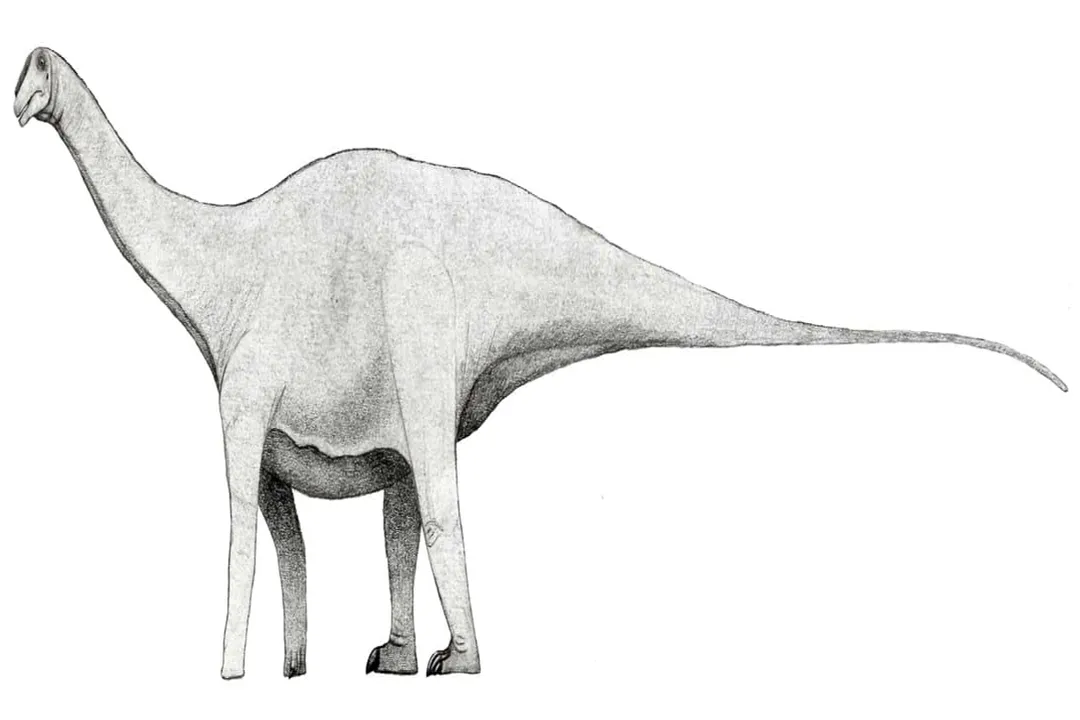
The story of Xenoposeidon is one steeped in mystery, built almost entirely upon a single, remarkably peculiar piece of ancient bone. This dinosaur, whose name translates evocatively to “strange Poseidon” or “alien Poseidon,” immediately signaled to paleontologists that they had stumbled upon something quite outside the established norms of the gigantic sauropods. The official scientific name, Xenoposeidon proneneukos, carries the specific epithet proneneukos, which is Greek for “forward-leaning,” a direct nod to the most striking anatomical feature of the preserved fossil specimen.
# Fossil Origins
The foundation of our knowledge rests upon a single, partial posterior back vertebra, cataloged as BMNH R2095. Its discovery history is a long one, beginning in the early 1890s when fossil collector Philip James Rufford uncovered it near Hastings in East Sussex, England. For decades, this bone sat on a shelf at the British Natural History Museum in London, largely overlooked. It was initially described briefly by Richard Lydekker in 1893, who tentatively assigned it to Cetiosaurus brevis, a designation that later shifted to Pelorosaurus conybearei. It took over a century before Mike Taylor, a specialist in sauropod vertebrae, recognized that this forgotten specimen possessed characteristics unlike any known sauropod group. This realization led Taylor, alongside Darren Naish, to formally describe and name the new genus Xenoposeidon in 2007.
# Strange Anatomy
The uniqueness of Xenoposeidon is entirely encapsulated within the structure of this one vertebra. While incomplete, lacking the anterior face of the centrum and the upper part of the neural arch, the preserved sections reveal several distinguishing traits. The centrum, the main block of the vertebra, is estimated to be around 200 millimeters (7.9 inches) long, with the preserved portion of the neural arch measuring about 300 millimeters (12 inches) high.
One of the critical features noted is the shape of the posterior face of the centrum, which is concave and averages 165 millimeters (6.5 inches) in diameter. This deep concavity strongly implies that the preceding vertebra in front of it would have featured a convex anterior face, a specific articulation requirement. Perhaps the most famous characteristic is the orientation of the neural arch; it leans forward, or slopes anteriorly, at an angle of approximately 35 degrees. Furthermore, the neural canal—the hole through which the spinal cord passes—is surprisingly large and teardrop-shaped at its front end, though it becomes small and circular toward the back opening.
The bone surface also presents unique structural elements. There are broad areas of featureless bone on the lateral surfaces of the arch, and analysis has suggested the presence of v-shaped laminae or wrinkles, though the exact function of these is still debated. Compounding the mystery, the vertebra exhibits small, circular openings, known as pneumatic foramina. These openings suggest the presence of internal air sacs, a feature common in many large dinosaurs used to reduce the overall weight of the massive skeleton while maintaining structural integrity needed to support the head and neck.
# Taxonomic Placement
When Taylor and Naish performed phylogenetic analysis on the strange vertebral features in 2007, the results were ambiguous. They confirmed it was a neosauropod—a more derived sauropod—but it did not sit comfortably within the established major groupings: Diplodocoidea, Camarasauridae, Brachiosauridae, or Titanosauria. This ambiguity led the initial description to tentatively place Xenoposeidon as a neosauropod of uncertain affinities, possibly even representing an entirely new group. Some later analyses even categorized it as nomen dubium (a doubtful name) because it was based on material considered non-diagnostic.
However, subsequent research brought clarity. A 2018 study by Taylor successfully recovered Xenoposeidon proneneukos as a basal member of the Rebbachisauridae family. This classification is significant because it places Xenoposeidon approximately 10 million years older than the next recognized member of that family, Histriasaurus. This finding pushes the known temporal origin of the Rebbachisauridae much further back into the Early Cretaceous. While some older sources might associate it with the Euhelopodidae based on general sauropod features, the later, specific analysis points strongly toward Rebbachisauridae, making it the earliest known dinosaur of that specific lineage. This highlights how crucial tiny anatomical details, like the angle of the neural arch, can be in redefining entire dinosaur family trees.
# Estimating Size
Since the holotype is only a single vertebra, all size estimates for Xenoposeidon are conjectures based on scaling up from comparisons with better-known sauropods. This single bone suggests a creature that was certainly large, but perhaps not in the absolute upper echelon of sauropod giants.
The estimates vary widely depending on which modern analogue is chosen for comparison. If Xenoposeidon was built like the more heavily constructed, shorter Brachiosaurus, paleontologists estimate it might have reached a length of about 15 meters (49 feet) and weighed roughly 7.6 tonnes (8.4 short tons). Conversely, if it shared the build of the longer but lighter Diplodocus, the length estimate stretches to 20 meters (66 feet), but the corresponding weight drops to a comparatively slight 2.8 tonnes (3.1 short tons).
A-Z Animals provides a slightly different perspective, suggesting a body length between 30 to 50 feet and a shoulder height of 15 to 20 feet, classifying it as a medium-sized sauropod when considering cousins that could exceed 100 feet in length and weigh 100 tons. If we synthesize these findings, we see that Xenoposeidon occupied a substantial niche, comparable in length to a modern semi-truck trailer, but its potential mass varied drastically depending on its assumed body proportions.
Considering the discovery that Xenoposeidon is likely the earliest known Rebbachisaurid, the implications of these size estimates are interesting. The Rebbachisaurids, known for their distinctive heads, include species ranging from relatively medium-sized forms to giants. The sheer disparity between the estimated 7.6-tonne Brachiosaurus analogue and the 2.8-tonne Diplodocus analogue suggests that the early Rebbachisaurids may have already experimented with a wide range of body designs, differing significantly in their mass-to-length ratios. An animal only 15 meters long carrying over 7 tonnes is inherently more robustly built than a 20-meter animal weighing less than 3 tonnes. This single bone hints at a far more varied morphological starting point for the Rebbachisauridae than previously assumed based on later, more complete finds.

# Lifestyle and Environment
Xenoposeidon was a quadrupedal herbivore, like all sauropods. Its diet would have consisted of plant material, likely leaves, twigs, ferns, and cycads. The long neck, typical of its kin, served as a mechanism to browse foliage both on the forest floor and high up in the trees, allowing it to exploit resources unavailable to shorter herbivores. While slow-moving, with an average walking speed estimated around 5 to 10 miles per hour, comparable to a human jog, sauropods could potentially achieve short, powerful sprints by throwing their massive weight forward to deter threats. It is also suggested that they could rear up on their hind legs to reach even higher vegetation or intimidate adversaries.
The environment Xenoposeidon inhabited was the Early Cretaceous Period, around 130 to 140 million years ago. This time was characterized by significant global warming, which led to the expansion of tropical or subtropical ecosystems across the globe. Living in what is now the United Kingdom, Xenoposeidon would have been surrounded by a rich diversity of flora and fauna. Other dinosaurs likely sharing this warm, lush habitat included iguanodontids and various ornithopods.
Sauropods, due to their immense size, are often hypothesized to have played a fundamental, large-scale role in shaping their environments. The suggestion that Xenoposeidon might have acted as a "gardener" is compelling. By systematically clearing large amounts of vegetation from the lower canopy down to the undergrowth, they would have opened up spaces, potentially influencing light penetration to the forest floor. Furthermore, the dispersal of seeds through their copious feces would have actively contributed to the regeneration and spread of new plant life, directly influencing the very structure of the forest they lived within. This ecological relationship implies a constant, massive-scale interaction with the local plant community that would have defined the appearance of the Cretaceous landscape in Southern England.
# Threats and Survival
For a dinosaur of Xenoposeidon's size, direct predation would have been a relatively rare event, assuming it was healthy and an adult. Sauropods relied on sheer bulk as their primary defense, using charges to knock over attackers or employing their tails as powerful whips or clubs. Standing tall on its hind legs would have added to its intimidating stature.
However, younger, older, or infirm individuals would have been vulnerable. The potential predators in its Wessex Formation environment were formidable, particularly the spinosaurid carnivores. While Xenoposeidon itself was likely larger than a typical spinosaurid, several known species from the region, such as Baryonyx, Ceratosuchops inferodios, and Riparovenator milnerae, were substantial predators, reaching lengths around 30 feet—the size of a smaller Xenoposeidon specimen. These spinosaurids, characterized by crocodile-like snouts, were well-adapted for hunting both on land and in aquatic environments.
Beyond immediate predatory encounters, the greatest threats facing Xenoposeidon, as with all dinosaurs of the era, were environmental shifts. Climate change, disease, and the eventual evolutionary pressure from newer, better-adapted species would have posed long-term challenges. Ultimately, the entire group was wiped out by the Cretaceous-Paleogene (K-T) extinction event approximately 66 million years ago, though Xenoposeidon itself disappeared much earlier, around 130 million years ago.
# Comparisons to Kin
Understanding Xenoposeidon requires placing it within the context of its sauropod relatives, especially those that share or challenge its classification.
| Related Genus | Time Period | Known Location | Distinguishing Feature |
|---|---|---|---|
| Barapasaurus | Early Jurassic | India | Closely related to Xenoposeidon in older analyses |
| Euhelopus | Early Cretaceous | China | Distinguished by having longer forelegs than hindlegs |
| Pelorosaurus | Early Cretaceous | England | The bone Xenoposeidon was initially mistaken for |
| Diplodocus | Late Jurassic | N/A | Used as a template for lighter size estimation |
| Brachiosaurus | Late Jurassic | N/A | Used as a template for heavier size estimation |
The comparison with Euhelopus is particularly interesting when looking at the sauropod body plan. Euhelopus is noted for having longer forelimbs than hindlimbs, suggesting a fore-end elevation that might have been more pronounced than in other sauropods. If Xenoposeidon was indeed a Rebbachisaurid, its relatives like Nigersaurus and Rebbachisaurus had more horizontal necks and specialized, toothy jaws designed for low-level grazing, though Xenoposeidon's neck vertebra points toward a different posture. The extreme tilt of the Xenoposeidon neural arch at 35 degrees suggests a unique vertebral column morphology, potentially affecting the overall posture of the neck relative to the torso in a way distinct even from its closest Rebbachisaurid cousins. This single bone, therefore, acts as a key piece of evidence showing that diversity within the sauropod lineages—even early ones—was far more complex than a simple linear progression towards maximum size. The fact that a single, isolated bone can generate such significant discussion about posture, weight distribution, and family placement emphasizes the extraordinary information density contained within well-preserved skeletal material.
Related Questions
#Citations
Xenoposeidon - Wikipedia
Xenoposeidon proneneukos - A-Z Animals
Xenoposeidon - Prehistoric Wildlife