Xenoceratops Locations
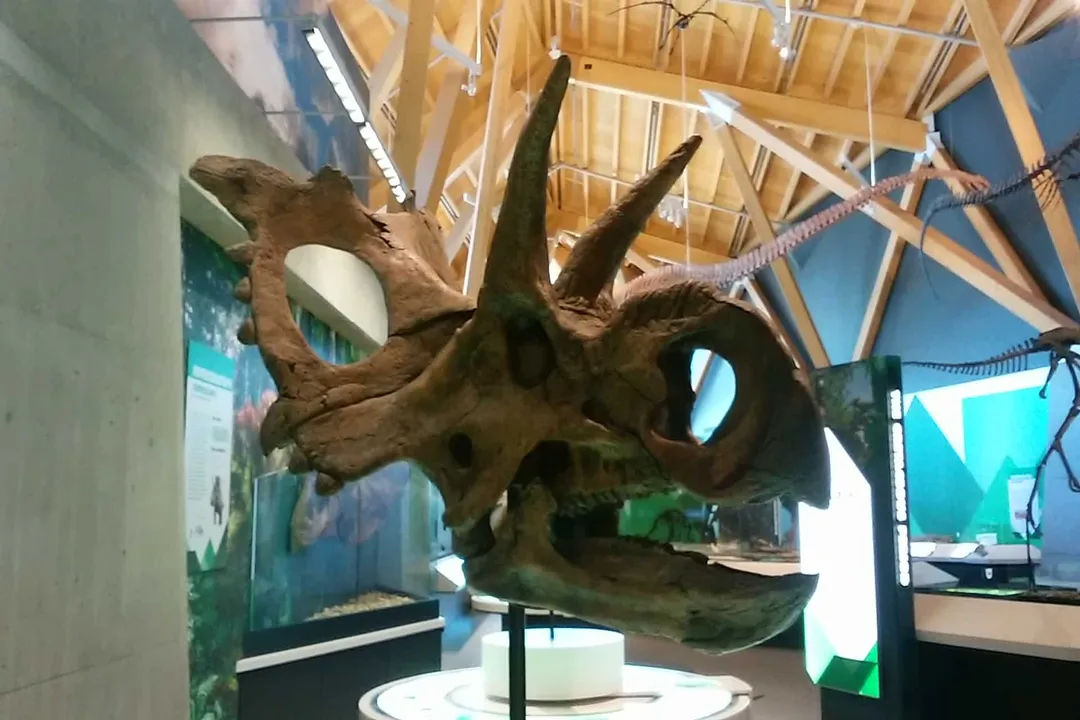
The discovery of Xenoceratops offered paleontologists a fascinating new piece in the vast puzzle of Late Cretaceous North American dinosaurs, immediately prompting questions about where this "strange horned face" actually lived. [1][7] While it shares the iconic horned, frilled head structure of later ceratopsians, its specific fossil location places it in a distinct North American ecosystem, revealing subtle evolutionary shifts just before the final age of dinosaurs. [6] Understanding the geographical coordinates and the rock strata where its bones rested is key to understanding its place in prehistory.
# Discovery Site
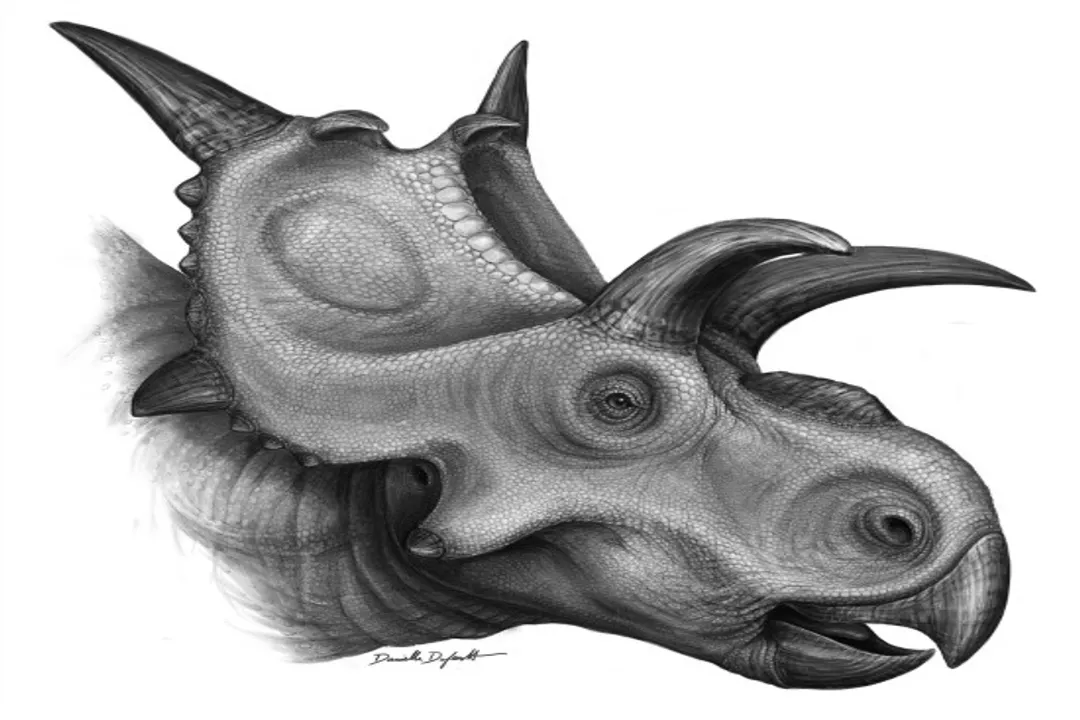
The primary and most significant location associated with Xenoceratops ornatus is firmly rooted in Canada. [4][8] Specifically, the fossil evidence that led to its official description in 2012 by Ryan Schott and Donald Brinkman was unearthed in the badlands of southern Saskatchewan. [4][7][8] This region, carved by erosion into dramatic landscapes, preserves layers of rock that date back millions of years, providing the necessary window into the ancient world this dinosaur inhabited. [8] The identification of this dinosaur came from skeletal material recovered from this Canadian locale, solidifying its status as a significant part of the country's prehistoric fauna. [4]
# Canadian Badlands
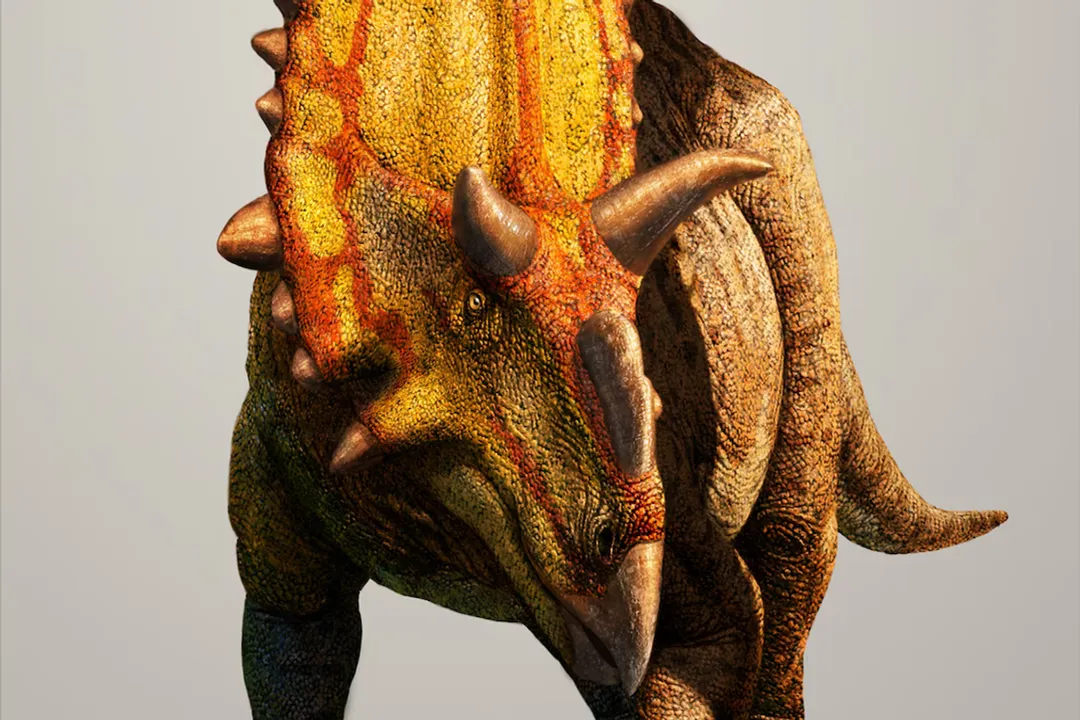
The province of Saskatchewan hosts the geological features that yield remains of Xenoceratops. This area falls within what is often generally referred to as the Canadian Badlands, a region renowned for its rich deposits from the Mesozoic Era. [8] These badlands are a product of extensive erosion over millennia, exposing sequences of sedimentary rock laid down in ancient coastal plains and river systems. [8] To narrow the focus from the entire province, the bones of Xenoceratops were traced to a very specific geological unit within this landscape, which speaks volumes about the narrow slice of time and environment represented by the find. [4][3]
# Geological Layers

The specific environment that Xenoceratops called home is defined by the rock layer it occupied. The fossils have been attributed to the Last Chance Member of the Hell Creek Formation. [4][8][3] This identification is crucial because geological formations act as time capsules; their known age limits the dinosaur's existence to a particular interval. [3] The Last Chance Member, in this context, places Xenoceratops in the Late Cretaceous period, roughly dating its life to about 78 million years ago, or perhaps slightly later, around 76 million years ago. [5][8] This time frame is significant because it predates the most famous end-Cretaceous fauna like Tyrannosaurus rex and Triceratops by several million years, even though they are associated with the general Hell Creek region. [4][6]
It is worth noting the paleontological context provided by the formations cited across various research summaries. While the Last Chance Member of the Hell Creek Formation in Canada is the confirmed discovery site for Xenoceratops, other ceratopsians from the same general time range, such as those found in the Judith River Formation of Alberta, show similarities and differences that help map out the evolutionary spread of horned dinosaurs across the continent. [3][9] This continental distribution—with some relatives in the United States and others in Canada—shows how interconnected yet geographically distinct these populations might have been during the Maastrichtian age. [9] A comparison of the environmental proxies preserved in the Last Chance Member versus the slightly older Dinosaur Park Formation, for example, can reveal whether Xenoceratops preferred wetter floodplains or drier upland environments compared to its contemporaries, even if the sources do not explicitly detail the paleoenvironment. [6] If you are examining regional maps of the Saskatchewan badlands today, recognizing that the exposed strata corresponding to the Last Chance Member represents a brief, specific chapter in the Cretaceous narrative is important; these are not necessarily the oldest or youngest dinosaur-bearing rocks in the area, but a precise middle section of the final age of the dinosaurs in that locale. [8]
| Feature | Detail | Age Approximation | Geographic Association |
|---|---|---|---|
| Formation | Hell Creek Formation (Last Chance Member) | ~78–76 Million Years Ago | Southern Saskatchewan, Canada [4][8] |
| Period | Late Cretaceous | Maastrichtian Age [3] | North America [4] |
| Significance | Fills gap between older and younger ceratopsians [6] |
# Family Placement
The location of Xenoceratops within the Hell Creek strata is what makes the discovery so valuable to understanding the evolution of the Ceratopsidae family. [6] As a member of the Ceratopsidae, it belongs to the larger group that includes the famous three-horned dinosaurs. [1] Its existence in the Last Chance Member suggests it either belongs to a distinct lineage that evolved before the lineages that culminated in Triceratops, or that it coexisted in a slightly different ecological setting within the broader region. [6] The fact that it is found in a relatively older section of the Hell Creek Group than the most commonly cited Triceratops remains implies a staggered evolutionary appearance across the continent's final millions of years. [4] This staggered appearance suggests that ecological niches were specialized and perhaps sequentially occupied by related species as conditions changed across the millennia leading up to the K-Pg extinction event. [6]
# Ancient Neighbors
The rock layers where Xenoceratops is preserved are not sterile environments; they share space with other fauna, though perhaps not the T. rex generation everyone expects. [4] Because the Last Chance Member is older than the uppermost levels of the Hell Creek Formation, the contemporary animals would be different from those found in the very latest Maastrichtian deposits. [6] Knowing the associated flora and fauna from that specific Canadian geological unit helps paint a picture of its day-to-day life. [8] While the sources confirm its status as a ceratopsian, comparing it to contemporary North American genera like Chasmosaurus or Styracosaurus, which are sometimes cited in discussions about similar formations, helps place Xenoceratops in a broader, though sometimes geographically distant, contemporary cast of characters. [9] Its location thus defines its immediate neighbors, marking it as an inhabitant of a specific, slightly earlier version of the Late Cretaceous North American ecosystem. [3]
To fully appreciate the context of the discovery, one must remember that the rocks themselves are the real location markers. [8] When paleontologists discuss the "location" of a dinosaur, they are less concerned with coordinates on a modern map than with the rock sequence that contained the bones. [4] For Xenoceratops, that sequence in Saskatchewan is a powerful marker indicating a specific moment in time before the end of the age of dinosaurs, separate from the famous latest-Cretaceous assemblages found further south or in higher strata. [6] This detail allows researchers to conduct precise comparative anatomy and biostratigraphy, essentially using the location to date and contextualize the creature’s unique morphology. [7]
Related Questions
#Citations
Xenoceratops Animal Facts - A-Z Animals
Xenoceratops Pictures & Facts - The Dinosaur Database
Xenoceratops | Dinopedia - Fandom
Two-Ton "Alien" Horned Dinosaur Found—"Different From Every ...
[PDF] Xenoceratops - Cloudfront.net
Paleontologists Welcome Xenoceratops to the Ceratopsian Family ...
Xenoceratops: the 'alien horned-face' dinosaur discovered in Canada
Canada's newest horned dinosaur: Xenoceratops | Science Wire
Xenoceratops - Prehistoric Wildlife