Xenoceratops Facts
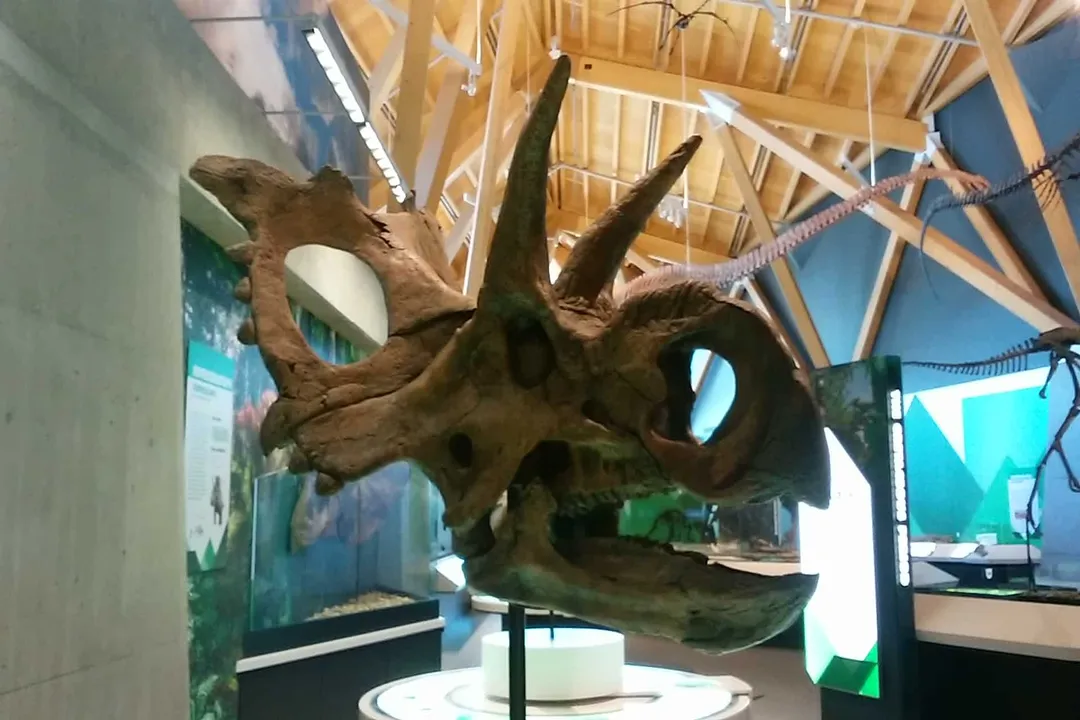
The discovery of Xenoceratops foremostensis added a truly unusual member to the family tree of horned dinosaurs, particularly within the North American fauna of the Late Cretaceous period. When paleontologists formally introduced this creature in 2012, the skull material they described presented a morphology distinct enough to warrant its own genus. The name itself speaks to its unique appearance: Xenoceratops translates roughly to "strange horned face," an apt descriptor for an animal possessing solid ornamentation where many of its relatives featured large holes in their head shields. The species name, foremostensis, honors paleontologist Dale Russell. The fossil evidence that forms the basis of our knowledge comes from the rich fossil beds of the Oldman Formation in Alberta, Canada.
# Naming And History
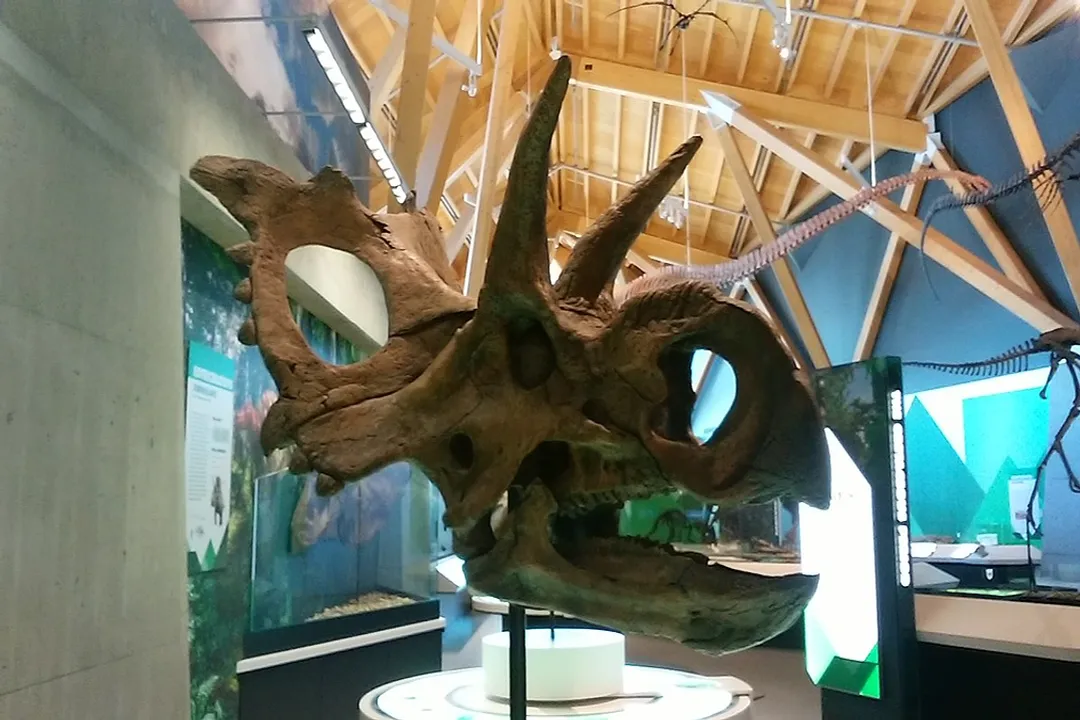
The formal description of Xenoceratops came from an analysis led by Ryan Schott. This introduction represented a significant addition to the known diversity of centrosaurine ceratopsids, the group of horned dinosaurs characterized by shorter facial horns and often elaborate frill decorations. While the fossils were unearthed earlier, the formal scientific acknowledgment and naming process took place in 2012. It is noteworthy that the specimen that defines Xenoceratops is a nearly complete skull, a rare find in paleontology that offers rich anatomical data compared to fragmented remains.
Considering its provenance from the Oldman Formation, Xenoceratops holds a unique position in the regional fossil record. This particular geological layer is known for preserving a snapshot of life just before the famous mass extinction event. The existence of Xenoceratops in this formation suggests a higher degree of localized biodiversity among the ceratopsians than previously recognized for that specific time slice in Alberta. It appears to represent one of the oldest definitive ceratopsids yet recovered from Canada. If we consider the geological timeline, placing Xenoceratops near the beginning of the known Canadian ceratopsid record, it provides a baseline against which later, perhaps more derived, forms like Pachyrhinosaurus can be compared. This specimen offers a tangible anchor point for understanding the early evolution of this successful dinosaur lineage in that northern environment.
# Unique Features
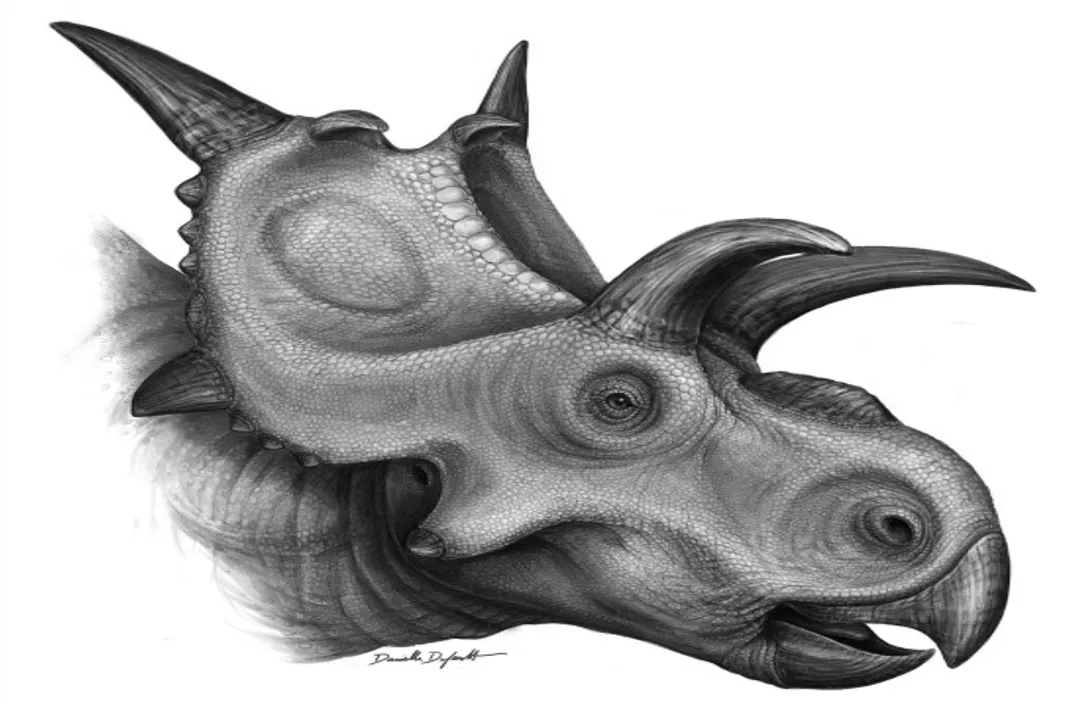
The most striking characteristic of Xenoceratops is undoubtedly the ornamentation decorating its neck frill. Unlike many of its ceratopsid cousins, which often possess large, paired openings, called fenestrae, within the parietal bones of the frill to save weight and aid muscle attachment, Xenoceratops appears to have had solid bone in this area. Instead of large holes, the posterior edge of the frill is adorned with a pair of prominent, solid bony structures. These features are often described as large, rounded bosses or lumps. This solid ornamentation is a defining trait that sets it apart from many contemporary or slightly later ceratopsians.
While the frill is unique for its solid nature and boss arrangement, the facial horns followed the general centrosaurine pattern. The brow horns, situated over the eyes, were present but perhaps not as exaggeratedly long as seen in some later relatives. The nasal horn, typically prominent in centrosaurines, was also present. These features combine to create a distinctive profile unlike, for example, the famously long-frill spikes of Styracosaurus or the large nasal boss of Pachyrhinosaurus. The combination of the heavy, solid frill bosses and the relatively shorter facial horns paints a picture of a creature built for close-quarters social displays or perhaps blunt-force defense, relying on sheer cranial mass rather than long, sharp projection. It is fascinating to consider how the bone density here relates to display mechanics; a solid, bumpy frill would certainly catch light differently and offer a different auditory profile during head-butting or intraspecific posturing than a thin, fenestrated shield.
# Classification And Relatives
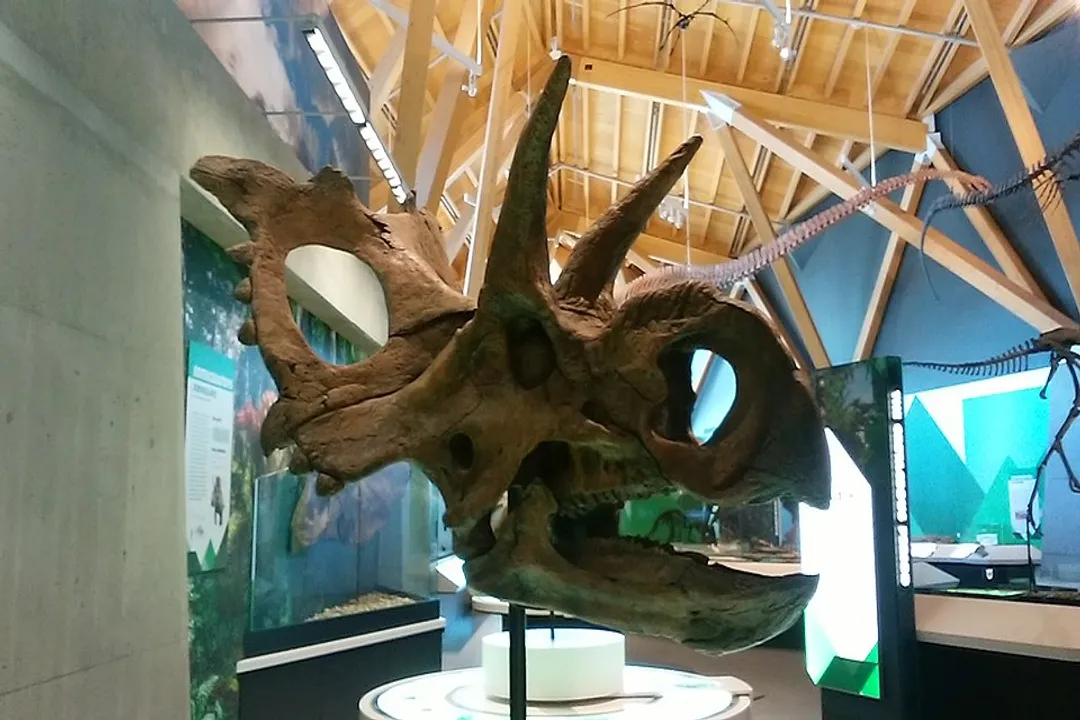
Xenoceratops is securely placed within the dinosaur family Ceratopsidae, the horned dinosaurs. Within that family, it belongs to the subfamily Centrosaurinae. This places it alongside a diverse array of dinosaurs known for their shorter snouts and often complex, backward-curving frill decorations.
Its closest relatives within the Centrosaurinae are subjects of ongoing paleontological debate, which is common as new species are integrated into existing family trees. Dinopedia suggests that Xenoceratops might be closely allied with Kosmoceratops, another centrosaurine known for its complex frill ornamentation, though Kosmoceratops is generally found in different geological formations further south. Other members of the Centrosaurinae group include well-known names such as Styracosaurus, Centrosaurus, and Pachyrhinosaurus. The presence of Xenoceratops helps researchers map the evolutionary relationships and geographical dispersal of these groups across Laramidia (the western landmass of North America during the Late Cretaceous). The unique suite of features, particularly the frill, suggests that while it shared a common ancestor with these other forms, its evolutionary path involved a distinct specialization in cranial armor development.
# Size And Ecology
While specific measurements can vary depending on the reconstruction method applied to the recovered skull, Xenoceratops is generally recognized as a large centrosaurine. It was a substantial herbivore, typical of the larger members of the ceratopsian radiation. Being roughly contemporary with other large herbivores in the region, Xenoceratops would have shared its environment with tyrannosaurids, which were the apex predators.
The ecological role of these large herbivores was centered on processing tough, fibrous vegetation. The powerful beak and dental batteries characteristic of ceratopsids were perfectly adapted for shearing and grinding plant matter. Given its size and defenses, Xenoceratops likely browsed on low-lying ferns, cycads, and other available Cretaceous flora. Its sheer bulk would have offered protection against smaller predators, while the solid, knobbed frill served as a serious deterrent or point of impact against the largest carnivores of its time, perhaps even against rivals during mating season. A crucial point for understanding the ecology of the Oldman Formation is the sheer number of ceratopsian species present; Xenoceratops had to carve out a niche alongside contemporaries, suggesting resource partitioning—perhaps favoring slightly different vegetation or browsing at different heights than coexisting species.
# Comparisons With Other Ceratopsians
To truly appreciate Xenoceratops, it helps to contrast its structure with other well-known relatives, especially those found in the same general time frame or location.
Consider the difference between Xenoceratops and its contemporary Pachyrhinosaurus. Both are centrosaurines, but Pachyrhinosaurus famously traded the nasal horn for a massive, bony boss on its nose, often theorized to be covered in keratin for impact. Xenoceratops, conversely, maintained a more traditional nasal horn structure while focusing its massive bony modifications on the posterior frill.
Another comparison can be drawn with the chasmosaurine Triceratops. Triceratops possessed enormous brow horns and a simpler, often relatively smooth, shield-like frill, which was typically thinner than that of a centrosaurine. Xenoceratops inverted this, featuring smaller brow horns and a dramatically thickened, highly ornamented frill. This divergence highlights the two major evolutionary pathways within the Ceratopsidae: the centrosaurines focusing on frill display and the chasmosaurines emphasizing massive brow weaponry. The solid bosses of Xenoceratops represent an extreme expression of the centrosaurine trend toward complex, perhaps non-fenestrated, frill termination ornamentation. This pattern of feature development across the family tree suggests that visual signaling and head-based combat were under intense selective pressure throughout the Late Cretaceous.
| Feature | Xenoceratops | Pachyrhinosaurus | Triceratops |
|---|---|---|---|
| Subfamily | Centrosaurinae | Centrosaurinae | Chasmosaurinae |
| Frill Openings (Fenestrae) | Absent (Solid bosses) | Absent (Solid nasal boss) | Present (Large) |
| Brow Horns | Present, moderate | Small or absent | Very large |
| Defining Trait | Solid, bumpy frill bosses | Massive nasal boss | Long brow horns |
| Primary Location | Oldman Formation (Canada) | Various Late Cretaceous sites | Hell Creek Formation (N. America) |
# Visualizing The Beast
While the study of fossilized bone provides the hard data, visualizing Xenoceratops in life requires integrating that data with what we know about its relatives. The available images and reconstructions naturally emphasize the distinctive frill. One can imagine this dinosaur moving through the Cretaceous landscape of Alberta, its heavy skull supported by a thick neck, contrasting with the more slender-skulled ornithomimids or smaller ornithopods sharing the habitat. The skin impressions, if they were ever found, would offer a clearer picture, but lacking those, we rely on the bone structure to imply musculature and display potential. The very structure of the frill suggests a heavy, perhaps slow-moving animal, relying on defense rather than speed. It is likely that the bosses were covered in a keratinous sheath in life, which would have increased their overall size and roundedness, adding a layer of smooth texture over the rough bone surface. This keratinous addition would further enhance their visual impact during social signaling.
# Enduring Questions
The discovery of Xenoceratops opened avenues for new questions regarding ceratopsian evolution. For example, if the frill was primarily for display, what exactly was being displayed? Were the solid bumps a sign of high social status, sexual maturity, or species identification? Since the fossils come from the Oldman Formation, understanding its precise chronological relationship with other ceratopsids in the same rock unit is key to tracing evolutionary branching patterns. Did Xenoceratops coexist with, or immediately precede, other centrosaurines in that region, suggesting rapid turnover in dominant species, or did it represent a long-lived, stable lineage? The fact that it is classified as an early ceratopsid in Canada suggests that this lineage achieved large size and significant cranial specialization relatively early in its documented history there. Research into the bone histology—the microscopic structure of the bone itself—could offer insights into the animal's growth rate and the relative speed with which that massive frill developed, information that can be inferred by comparing its bone structure to better-studied relatives like Styracosaurus. This specific morphology presents a case study in how cranial defense mechanisms diverged dramatically even within closely related groups during the late Mesozoic Era.
#Videos
Meet Xenoceratops: Canada's newest horned dinosaur - YouTube
Related Questions
#Citations
Xenoceratops Animal Facts - A-Z Animals
Xenoceratops - Wikipedia
Paleontologists Welcome Xenoceratops to the Ceratopsian Family ...
Xenoceratops Pictures & Facts - The Dinosaur Database
[PDF] Xenoceratops - Cloudfront.net
Xenoceratops Facts For Kids | AstroSafe Search - DIY.org
Xenoceratops | Dinopedia - Fandom
Xenoceratops, Canada's Oldest Ceratopsid | David Evans Lab
Meet Xenoceratops: Canada's newest horned dinosaur - YouTube