Wombat Scientific Classification
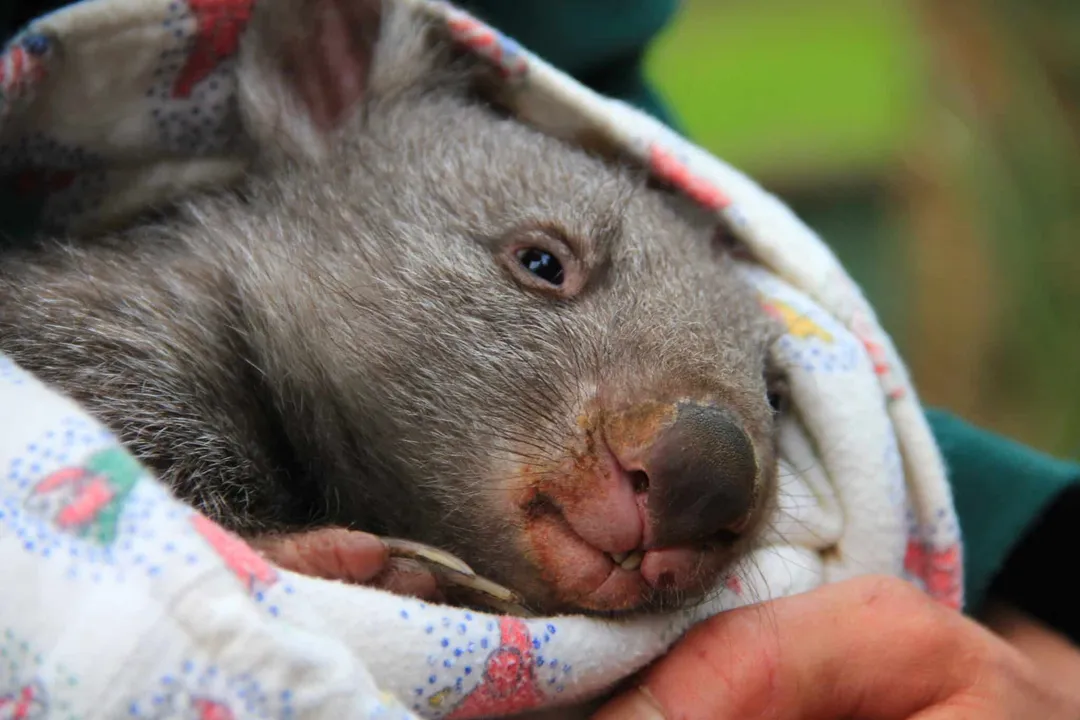
Wombats, those wonderfully sturdy creatures native to Australia, occupy a fascinating and unique niche in the animal kingdom, firmly cementing their place within the world of marsupials. When we look at their scientific classification, we trace their lineage from the broadest categories down to the specific species that currently inhabit the landscape. This rigorous naming system, established by Linnaean taxonomy, helps scientists understand their evolutionary relationships, which are perhaps more surprising than their stout, bear-like appearance might suggest. [4]
# Kingdom Animalia
At the highest level, wombats belong to the Kingdom Animalia, placing them squarely within the animal group, distinct from plants, fungi, and bacteria. [5] This is the most general classification, confirming they are multicellular, heterotrophic organisms. Continuing down this biological ladder, they fall under the Phylum Chordata, meaning they possess a notochord at some stage of their development—a feature shared with vertebrates, including fish, birds, reptiles, and us. [1][5]
# Class Mammalia
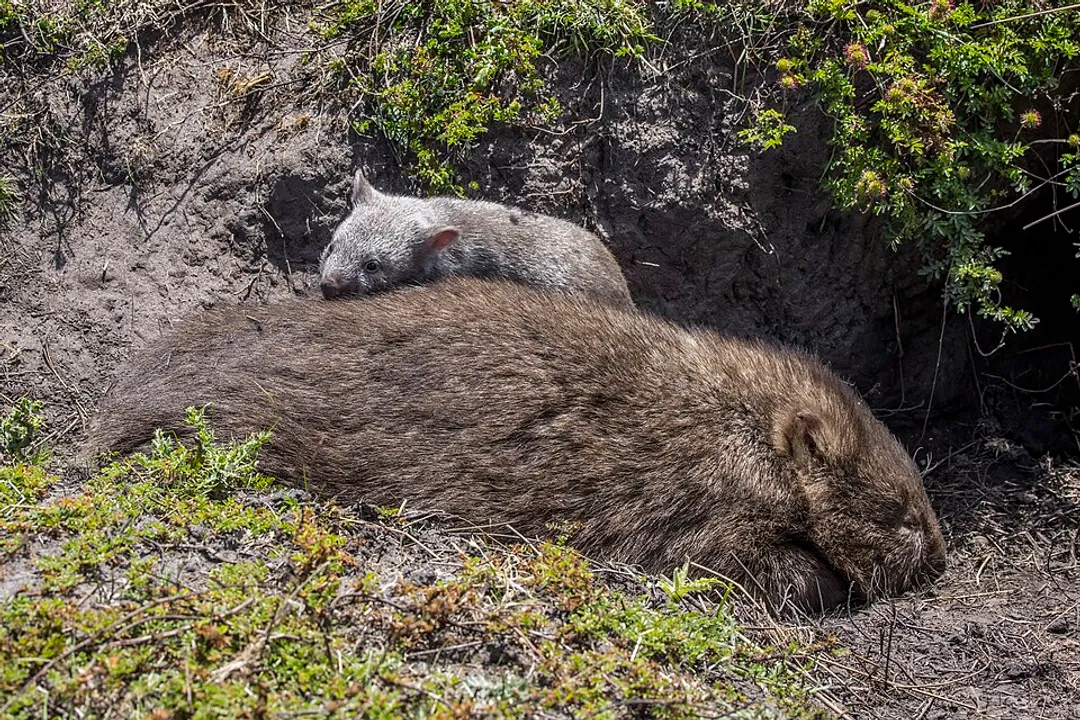
The next step defines them as mammals, Class Mammalia. [1][5] This classification carries significant implications: they are warm-blooded, breathe air using lungs, have hair or fur, and, crucially for marsupials, females possess mammary glands to nurse their young with milk. [4] While sharing this class with placental mammals like dogs or cats, their method of reproduction—raising relatively undeveloped young in a pouch—is what sets them apart within the mammalian grouping.
# Order Diprotodontia
The Order Diprotodontia is where the wombat lineage truly connects with its most famous Australian relatives. [2] This order encompasses all kangaroos, wallabies, possums, and the koala. [2] The name itself provides a clue to their shared anatomy: diprotodont literally means "two forward teeth". [2] This refers to the two prominent, large, rodent-like lower incisors that these animals possess, which they use for gnawing on tough vegetation. [2] This shared dental structure confirms their deep evolutionary connection to other Australian macropods and their relatives, setting them apart from most other world mammals.
When looking at the taxonomy, it's interesting to note that while they look superficially similar to placental burrowers like badgers or moles due to convergent evolution shaping their robust, digging bodies, their classification places them firmly within the Australasian marsupials. This divergence from placental mammals that evolved similar digging behaviors illustrates how vastly different fundamental body plans and reproductive strategies—the pouch being the most obvious structural difference dictated by their Class and Order placement—can lead to similar ecological outcomes.
# Family Vombatidae
Within Diprotodontia, wombats are distinguished by being placed in the Family Vombatidae. [1][2][10] This places them sister to the extinct Diprotodontidae and the extant Phascolarctidae (the koalas). [2] The key defining characteristic for the Vombatidae family is their highly specialized adaptation for subterranean life. [10] They are renowned for being expert diggers, possessing powerful claws and a backward-opening pouch, which prevents dirt from entering while they excavate their extensive burrow systems. [4] This physical adaptation is a direct expression of their family grouping's specialized niche.
# Genera and Species
The Family Vombatidae is currently composed of only two extant genera: Vombatus and Lasiorhinus. [2][4] This relatively small number of surviving genera highlights the specialized nature of the group, contrasting with the much wider diversity seen in other marsupial groups. [4]
Currently recognized species include:
- Vombatus ursinus: Commonly known as the Common Wombat or Bare-Nosed Wombat. [2][7] This genus contains only one species. [2] They are found across southeastern Australia, including Tasmania. [7]
- Lasiorhinus: This genus contains the Hairy-Nosed Wombats. [2]
- Lasiorhinus latifrons: The Southern Hairy-Nosed Wombat. [2] This species is noted for having a shorter, broader skull and slightly larger ears than its common cousin. [4]
- Lasiorhinus krefftii: The Northern Hairy-Nosed Wombat. [2] This species is critically endangered, making its conservation status a major focus within the classification study. [2][4]
A formal summary of the hierarchy provides a clearer picture of where the most common representative stands:
| Taxonomic Rank | Classification | Notes |
|---|---|---|
| Kingdom | Animalia | Animals [1][5] |
| Phylum | Chordata | Vertebrates [1][5] |
| Class | Mammalia | Fur, milk production [1][5] |
| Order | Diprotodontia | Two lower incisors [2] |
| Family | Vombatidae | Burrowing marsupials [10] |
| Genus | Vombatus | Bare-Nosed Wombat group [2] |
| Species | V. ursinus | Common Wombat [7] |
# Genus Differences
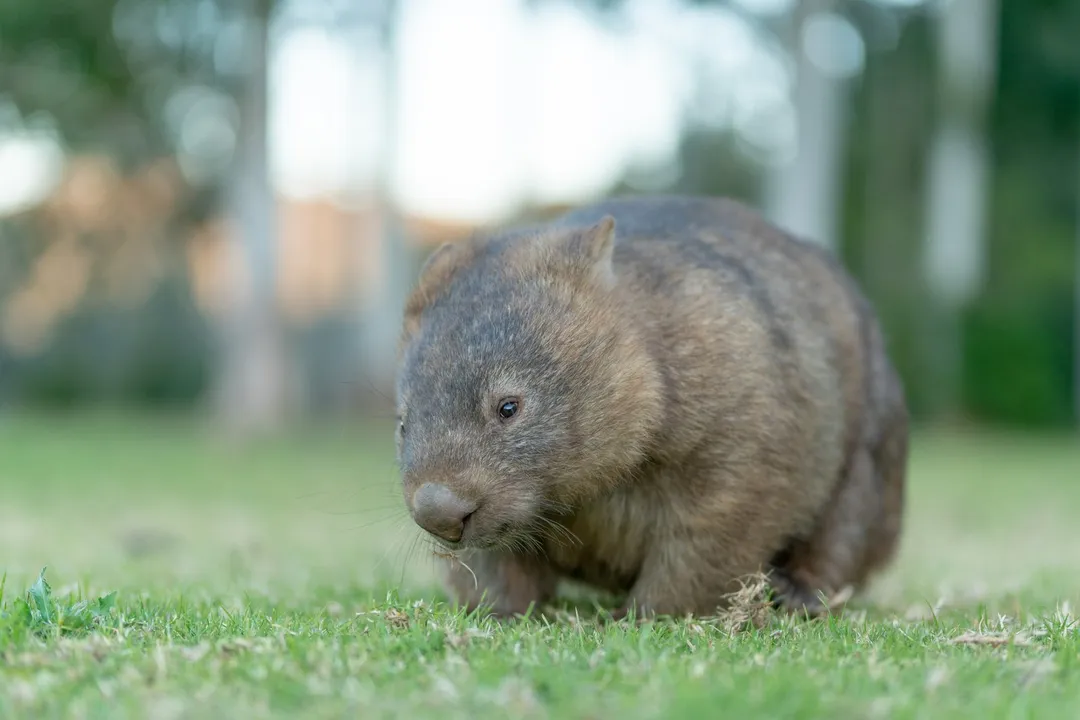
The distinction between the two genera, Vombatus and Lasiorhinus, is primarily defined by surface characteristics related to their environment. The Common Wombat (Vombatus ursinus) is distinguished by its relatively bare, cartilaginous nose pad. [7] In contrast, the Hairy-Nosed Wombats (Lasiorhinus species) possess a distinct patch of soft hair covering their noses. [4]
For anyone attempting to identify the different wombat types in the wild or managed settings, the easiest immediate identifier, even from a distance or in poor light, isn't size, but that distinctive nose shape. The Common Wombat's bare, cartilaginous nose contrasts sharply with the hairy-nosed species, serving as a quick visual key for distinguishing the Vombatus genus from the Lasiorhinus genus before one could ever examine dental structures or distribution maps.
While the Hairy-Nosed Wombats are generally described as being slightly more delicate in build than the robust Common Wombat, their adaptation to drier, often mallee or shrubland habitats—particularly the Southern Hairy-Nosed—suggests distinct physiological tolerances tied to their specific species classification. [4]
# Conservation Status and Taxonomy
The differences in scientific classification, particularly at the species level, have direct consequences for conservation efforts. For instance, the Northern Hairy-Nosed Wombat (L. krefftii) is listed as critically endangered, [4] representing a very narrow genetic pool remaining in a small area of Queensland. [2] This taxonomic designation signals an urgent need for specialized protection protocols that might differ significantly from those applied to the widespread and common Vombatus ursinus, which is listed as Least Concern. [7]
It is worth noting that some older or less precise classifications might occasionally group all three extant types under the genus Phascolomys or list them differently, but current consensus recognizes the split between Vombatus and Lasiorhinus as essential for accurately reflecting their genetic and morphological divergence. [2] Recognizing these distinct species is not merely an academic exercise; it determines which populations require specific habitat management—such as providing artificial water sources for the more drought-sensitive Hairy-Nosed species, or managing predator threats differently across their varying ranges. [2] The scientific roadmap provided by classification dictates the practical steps taken to ensure their survival.
Related Questions
#Citations
Wombat
Wombats (Vombatus and Lasiorhinus spp.) Fact Sheet
Wombat Classification & Species
Wombat Animal Facts - Vombatus Ursinus
Explore the Taxonomic Tree | FWS.gov
Bare-nosed Wombat
Wombats (Facts & Photos)
Taxon - Vombatus ursinus (common wombat) - WildNet
Vombatidae (wombats) | INFORMATION