Woma Python Scientific Classification

The designation Aspidites ramsayi immediately tells naturalists and herpetologists volumes about this particular reptile, even before they consider its common name, the Woma Python. This scientific nomenclature, derived from the Linnaean system, is a precise map of the animal’s evolutionary placement. To truly appreciate the Woma Python, one must trace its position down the taxonomic ladder, starting from the broadest kingdom and narrowing down to the unique species epithet that sets it apart from its closest relatives.
# Formal Naming
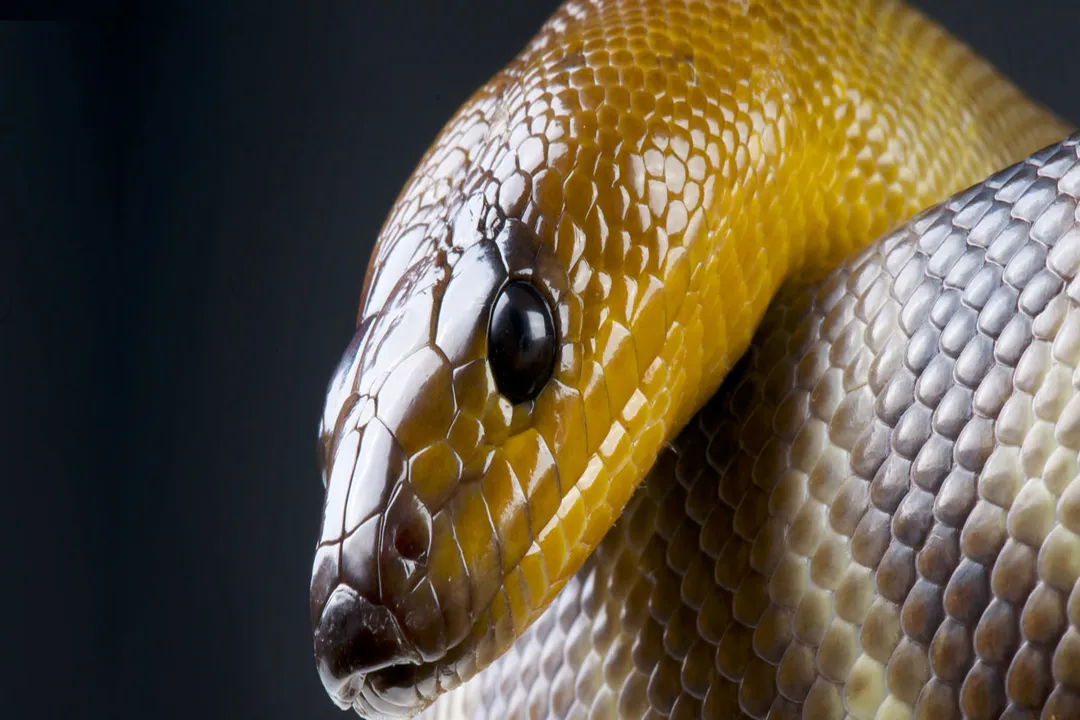
The binomial nomenclature used for this species is Aspidites ramsayi. This naming convention, established by J.E. Gray in 1842, is fundamental to biological understanding. The first part, Aspidites, denotes the genus, while ramsayi is the specific epithet. This system ensures that scientists across the globe, regardless of local language, can refer to the exact same organism. For example, while it is widely known as the Woma Python in Australia, its scientific name locks it into a specific biological relationship that common names often obscure or confuse. The fact that it shares the genus Aspidites with the Black-headed Python (Aspidites melanocephalus) immediately signals a closer evolutionary kinship between the two than either has with, say, the Carpet Python (Morelia spilota).
# Snake Order
Moving up the hierarchy, the Woma Python belongs to the Order Squamata. This is the largest order of reptiles, encompassing all snakes and lizards. Membership in Squamata signifies that the animal is a scaled reptile, possessing kinetic skulls and a fascinating dependency on external heat sources for regulating body temperature. It places the Woma squarely among the vast diversity of limbless reptiles, sharing this broad classification with creatures as different as geckos and cobras.
# Python Family
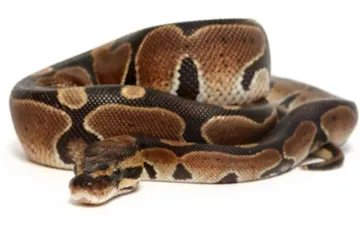
Within Squamata, the Woma Python is classified under the Family Pythonidae. This places it among the pythons, a group characterized by their method of subduing prey—constriction rather than venom—and generally possessing vestigial hind limbs known as spurs. It is interesting to note that pythons, unlike vipers or cobras, are non-venomous constrictors, a key characteristic defined by their family placement. The Aspidites genus itself is often considered somewhat specialized within this family, given that many other pythons possess more arboreal habits or different head shapes; the Woma, however, is distinctly terrestrial and adapted to dry, interior habitats. The consistency of their classification within Pythonidae suggests shared foundational characteristics, even as their ecological niches drive divergence within the genera.
# Genus Structure
The placement in the Genus Aspidites is crucial for understanding the Woma’s immediate evolutionary circle. The genus Aspidites, meaning "shield-bearer," currently comprises two recognized species: A. ramsayi (the Woma) and A. melanocephalus (the Black-headed Python). While both are pythons, the separation into Aspidites distinguishes them from genera like Morelia or Antaresia. This grouping suggests shared ancestry and morphological traits specific to these two Australian species that differentiate them from pythons found elsewhere in the world or even in other parts of Australia. For a field biologist tracking populations, recognizing the genus helps narrow down expected behaviors and physical attributes before species-level identification is confirmed.
# Species Definition
The specific epithet, ramsayi, defines the Woma Python itself. This designation separates it from its close relative, the Black-headed Python. While both inhabit the Australian mainland, A. ramsayi has a distribution heavily weighted towards the arid and semi-arid interior regions, such as central and western Queensland, South Australia, and the Northern Territory. In contrast, the Black-headed Python is generally found in the tropical northern regions. This subtle but significant geographic isolation, reinforced by minor morphological differences recognized by systematists, is what warrants the distinct species classification. The Woma is frequently described by its relatively lighter coloration, often a dull brown or olive-brown, which provides excellent camouflage in the sandy, spinifex-dotted landscapes it favors.
# Conservation Context
The importance of accurate classification extends directly into how we manage and protect these animals. Being precisely identified as Aspidites ramsayi ties this snake to specific conservation listings, which might otherwise be missed if it were lumped under a broader category. For instance, in New South Wales, A. ramsayi is listed as a Threatened Species. This official status, stemming directly from the accepted scientific classification, triggers specific legislative protections and monitoring efforts within that state’s environment laws. It highlights a practical application of the classification system: a precise label enables precise conservation action. Tracking its presence, for instance, on protected lands like Uluru (where it is found) relies on the scientific community agreeing on its taxonomic status.
# Comparison of Key Ranks
To visualize the distinct nature of this classification within the wider snake world, consider this summary of the major confirmed steps leading to the Woma Python:
| Taxonomic Rank | Classification | Defining Characteristic (General) |
|---|---|---|
| Kingdom | Animalia | Multicellular, heterotrophic organisms |
| Phylum | Chordata | Possesses a notochord (vertebrate) |
| Class | Reptilia | Scaled, ectothermic vertebrates |
| Order | Squamata | Scaled reptiles (Lizards and Snakes) |
| Family | Pythonidae | Non-venomous constrictors |
| Genus | Aspidites | Terrestrial Australian pythons sharing specific traits |
| Species | A. ramsayi | The Woma Python, distinguished from A. melanocephalus |
The fact that the Woma sits in Pythonidae and not Boidae (boas), for example, is determined by deep morphological and genetic analysis that confirms its evolutionary lineage. The split at the genus level between Aspidites and other Australian pythons demonstrates evolutionary divergence, likely driven by adaptation to the continent's increasingly arid interior over deep time—a major environmental pressure that necessitated specific adaptations reflected in its classification.
The rigid structure of scientific classification, therefore, is not merely an exercise in labeling; it is a system built upon evidence of shared ancestry and distinguishing physical characteristics. For the Woma Python, Aspidites ramsayi confirms it is an inland-adapted, non-venomous constrictor, holding a very specific place within the global reptile community, warranting the focused study and protection afforded to it across its range in inland Australia.
Related Questions
#Citations
Woma Python (Aspidites ramsayi) - iNaturalist
Woma Python - Lehigh Valley Zoo
Taxon - Aspidites ramsayi (woma) - WildNet
Woma Python - San Diego Zoo Animals & Plants
Woma Python - Naples Zoo
Woma - profile | NSW Environment, Energy and Science
Woma Python - What is It and How Big Does It Get? The Facts.
Woma python | Uluṟu-Kata Tjuṯa National Park | Parks Australia
Aspidites ramsayi - Inland Reptile