Wolffish Scientific Classification
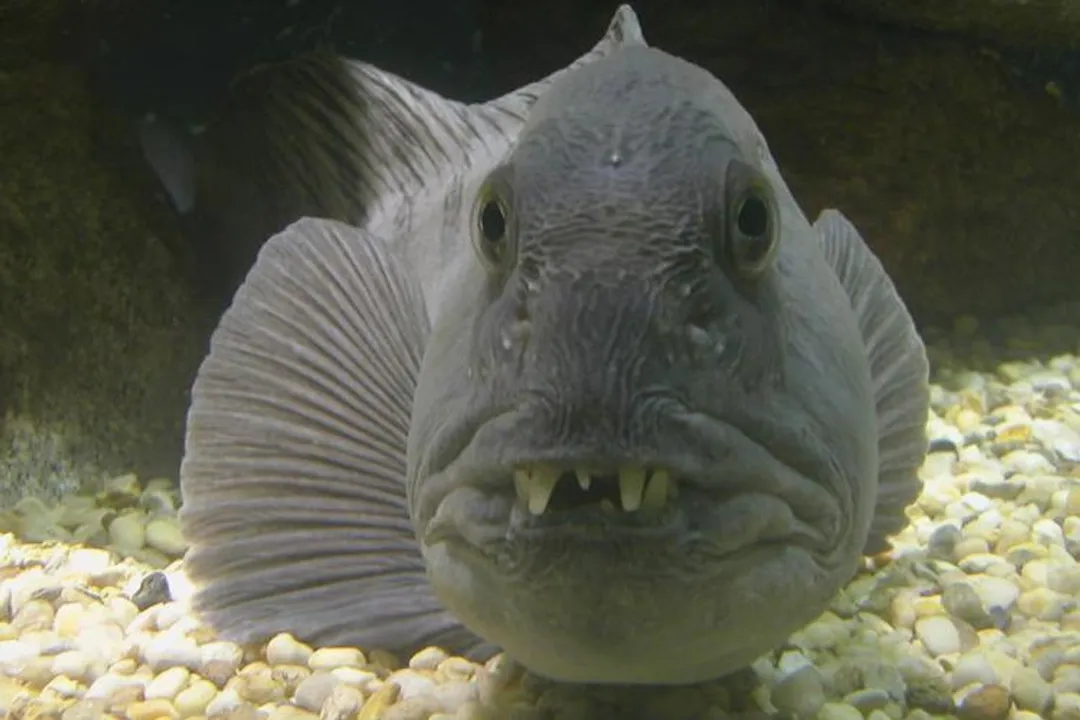
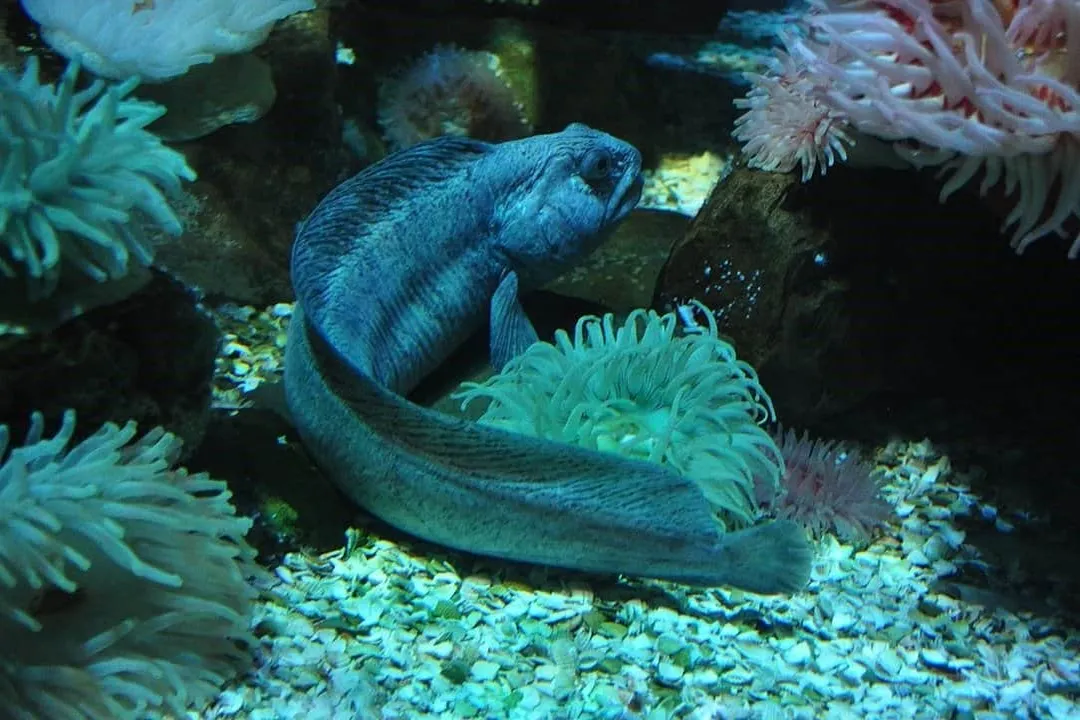
The world of marine ichthyology often requires precise language to navigate the vast diversity of ocean life, and the group commonly known as Wolffish is a fascinating case study in this need for strict scientific naming. While their appearance—featuring large, powerful jaws, prominent canine teeth, and an eel-like posterior body structure—makes them instantly recognizable, correctly placing them within the grand tree of life relies on specific nomenclature rooted in shared evolutionary history. [1][5][7] Understanding this classification, from the highest kingdom down to the species level, helps scientists track populations, assess ecological roles, and manage conservation efforts for these unique bottom-dwelling predators. [4][5]
# Kingdom Animalia
Like virtually every fish we discuss, Wolffish belong firmly within the Kingdom Animalia, representing multicellular, eukaryotic organisms that are heterotrophic, meaning they must consume other organisms for energy. [2] This placement is fundamental, separating them from plants, fungi, and bacteria. Their mobile nature and specialized sensory systems place them squarely within the complex web of animal life in the world's oceans. [2]
# Phylum Chordata
Moving down the hierarchy, Wolffish are members of the Phylum Chordata. [2] This designation is significant because it indicates the presence of, at some stage in their development, a notochord—a flexible rod providing skeletal support—a dorsal hollow nerve cord, pharyngeal slits, and a post-anal tail. [2] In the case of the Wolffish, which are bony fishes, these features are highly developed, with the notochord eventually being replaced by a segmented vertebral column, placing them within the subphylum Vertebrata. [2]
# Class Actinopterygii
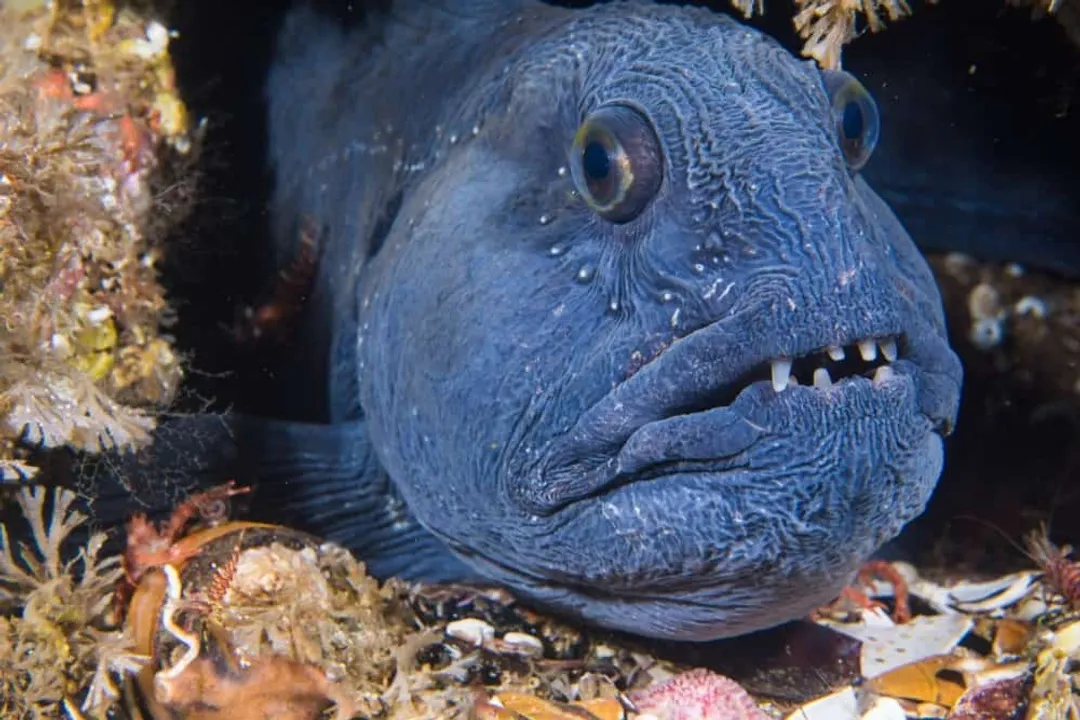
The Class Actinopterygii, commonly known as the ray-finned fishes, is where the Wolffish begin to share characteristics with the majority of extant fish species. [2] This class is defined by fins supported by bony spines or rays, rather than fleshy, lobe-like structures seen in Sarcopterygii (lobe-finned fishes, which include coelacanths and lungfish). [2] The structure of their pectoral and pelvic fins, supported by these rays, dictates much of their maneuverability on the seabed, which is crucial for a benthic hunter like the Wolffish. [7]
# Order Perciformes
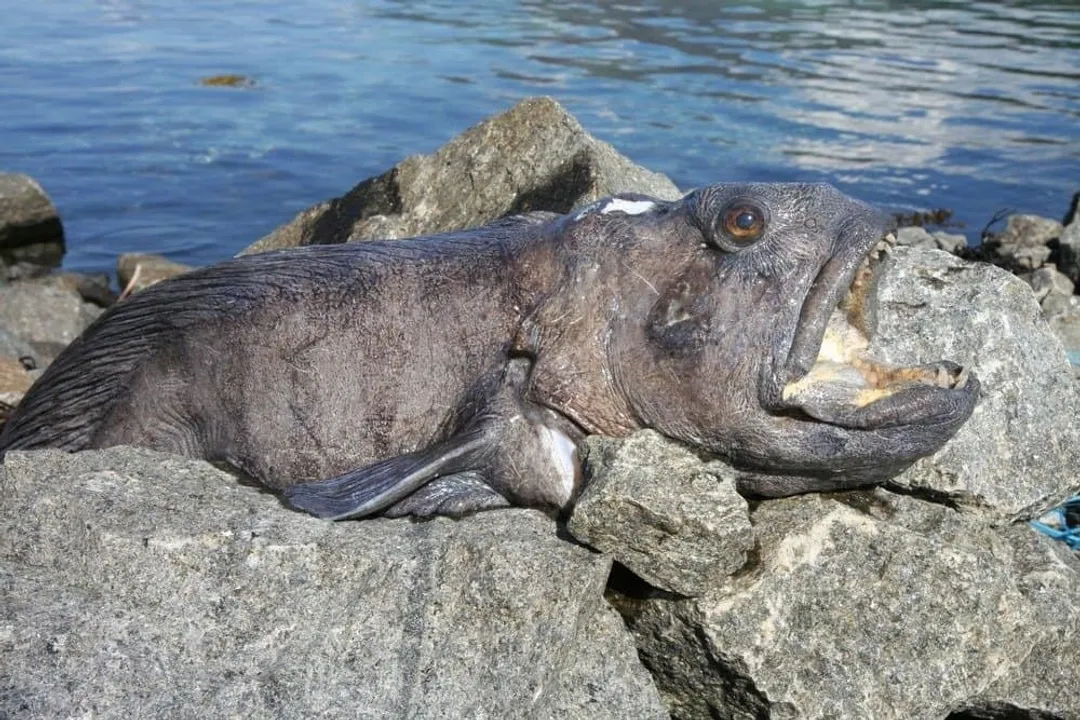
Taxonomically, the Wolffishes traditionally fall within the Order Perciformes. [2] While modern molecular studies sometimes shift specific families within this massive and historically broad order, the placement in Perciformes generally groups them with many familiar spiny-rayed fishes, suggesting common ancestry related to the development of their skeletal and muscular systems. [2] The precise arrangement within the order can sometimes vary between taxonomic authorities, reflecting ongoing research into deep evolutionary splits, but this grouping remains a stable reference point for the family’s general biological grouping. [3]
# Family Anarhichadidae
The true identity of the Wolffish family begins to crystallize at the Family level: Anarhichadidae. [2][3] This family is relatively small and easily identifiable by a suite of shared traits that distinguish them from other ray-finned fishes. [1][3] Members of Anarhichadidae are characterized by their robust, elongated bodies, scaleless or sparsely scaled skin, and most notably, their dentition. [5][6] Unlike many fish families that have varied tooth shapes, Wolffishes possess formidable, canine-like teeth arranged in strong jaws, perfectly adapted for crushing the shells of hard-bodied invertebrates like crabs, clams, and sea urchins that form the staple of their diet. [1][5][7] The family comprises several genera, but the most recognized are those within the genus Anarhichas. [3]
# Genus Anarhichas
The genus Anarhichas encompasses the most well-known species referred to globally as true Wolffishes. [3][6] This genus groups together those species that share a very close evolutionary relationship, differing primarily in details of fin ray counts, coloration patterns, and specific geographic distribution. [3] The FishBase records confirm that this genus is the primary recipient of the common "Wolffish" descriptor, showcasing the distinct morphological unity within this grouping. [3]
When we examine the composition of this genus, we see a selection of highly specialized marine predators adapted to cold, deep waters across the North Atlantic and North Pacific oceans. [1][4] A key aspect of understanding the genus is recognizing the variation between species, which is crucial for localized management. For instance, in Canadian waters, the Atlantic Wolffish (Anarhichas lupus) has received considerable attention regarding its conservation status through COSEWIC assessments. [4][6]
# Species Diversity within Anarhichas
While the genus contains several recognized members, a few species are consistently highlighted in ecological and fisheries literature, each occupying distinct niches within their cold-water habitats. [3]
| Scientific Name | Common Name | Primary Habitat Area | Key Feature Comparison |
|---|---|---|---|
| Anarhichas lupus | Atlantic Wolffish | North Atlantic | Often associated with rocky substrates; subject to significant conservation review in the US and Canada. [1][4] |
| Anarhichas orientalis | Bering Wolffish | North Pacific/Bering Sea | Found in the eastern Pacific deep waters. [3] |
| Anarhichas minor | Spotted Wolffish | North Atlantic/Arctic | Known for distinct dark spotting on the body. [3] |
The distinction between these species, even by slight variations in morphology or genetics, underscores why the scientific classification system is so important—it prevents the lumping together of distinct populations that may require different recovery strategies. [4] For instance, the conservation status of the Atlantic Wolffish in one region does not automatically apply to the Bering Wolffish in another, even though they share the Anarhichas genus. [1][4]
# Classification Context
It is interesting to note how the application of these scientific ranks directly influences regulatory action. For example, the Atlantic Wolffish (A. lupus) is listed under the U.S. Endangered Species Act, a designation applied based on its established scientific classification and population data. [1] Similarly, in Canada, the Committee on the Status of Endangered Wildlife in Canada (COSEWIC) conducts thorough assessments on this exact species, Anarhichas lupus, showing a direct application of taxonomic certainty for protection. [4][6] This consistency, from NOAA to Environment and Climate Change Canada, relies on the consensus regarding its placement within the Anarhichas genus and Anarhichadidae family.
One insight into the practical implications of this taxonomy emerges when considering the general description versus the specific need for identification. While the general term "Wolffish" implies powerful teeth and a benthic lifestyle, a fisherman or scientist needing to report a catch or assess stock health must use the binomial nomenclature—Anarhichas lupus or A. orientalis—because the ecological tolerances and life histories can differ substantially, particularly concerning water temperature and depth preferences across the genus. [7] While sources often describe their general diet as hard-shelled invertebrates, [5] the precise mix of prey can shift based on local community structure, which is only accurately monitored when species are correctly identified via their scientific classification.
The fact that sources like the FAO system, which track global aquatic species for fisheries management, assign a specific ID (aqspecies/2457/en for one species) clearly shows the necessity of this rigorous hierarchy for international data tracking, irrespective of common local names which can vary widely between ports or countries. [8] This scientific cataloging standardizes communication where local vernacular fails.
# Ecological Grouping
Though not strictly taxonomic ranks, the classification also informs ecological understanding. Being placed within the Anarhichadidae family places them in a group characterized by low fecundity (producing fewer, larger eggs) and a tendency towards long-lived benthic existence, often inhabiting rocky crevices or holes dug into soft bottoms. [1][7] This life strategy, common across the genus Anarhichas, contrasts sharply with fast-growing, pelagic (open-water) fish species that produce millions of tiny eggs. The deep-sea environment and slow-growth strategy shared by these classified relatives mean that populations, like the Atlantic Wolffish, are inherently more vulnerable to overfishing or habitat disturbance because recovery takes much longer. [4]
Another point of reflection arising from this classification is the evolutionary pressure that shaped their unique jaws. If we consider that the Perciformes order contains an incredible array of feeding strategies, the development of the massive crushing dentition seen in Anarhichas represents a highly specialized evolutionary pathway focused almost exclusively on exploiting mollusk and crustacean resources unavailable to weaker-jawed relatives. [5] This extreme specialization, fixed within the classification, means that if their primary food source declines, the Wolffish has limited ability to switch to softer prey compared to a more generalist fish.
The careful documentation of the genus Anarhichas across various scientific databases, from governmental registries to global fisheries indexes, demonstrates that while the basic Linnaean ranks provide the scaffolding, the ongoing work of marine biologists is to define the boundaries between species within that genus accurately—a continuous process vital for the stewardship of these formidable ocean dwellers. [3][8]
Related Questions
#Citations
Atlantic Wolffish | NOAA Fisheries
Wolffishes - Explore the Taxonomic Tree | FWS.gov
Species in Anarhichas - Fish Identification
Atlantic wolffish (Anarhichas lupus) COSEWIC assessment and ...
Wolffish Fish Facts - A-Z Animals
Anarhichas | Animal Database - Fandom
Wolffish | X-Ray Mag
Spotted wolffish - Aquatic species
[PDF] Atlantic Wolffish,Anarhichas lupus - Species at risk public registry