Wolffish Locations
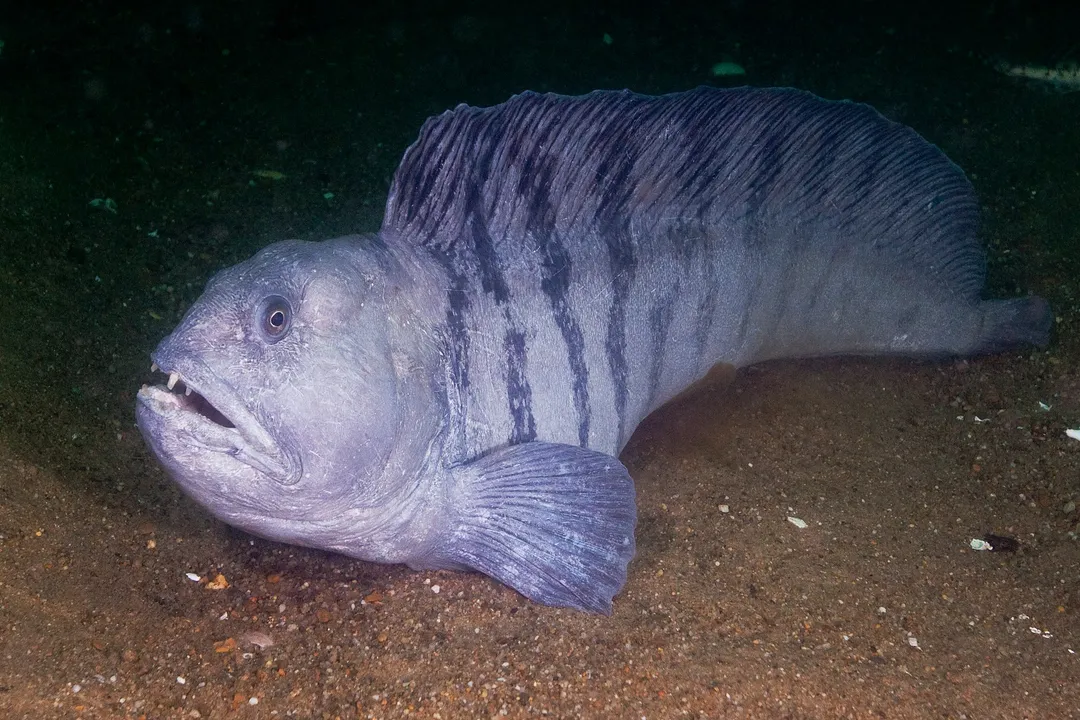
The presence of wolffish across the globe is often tied to specific, unforgiving marine environments, making their location a primary concern for researchers, conservationists, and anglers alike. These creatures, recognizable by their elongated bodies and formidable dentition, are decidedly creatures of the cold, rocky depths rather than tropical shallows. [2][3][5] Understanding where to find them requires looking past simple latitude and longitude and focusing instead on substrate, temperature, and the particular species inhabiting a region.
# Species Distribution
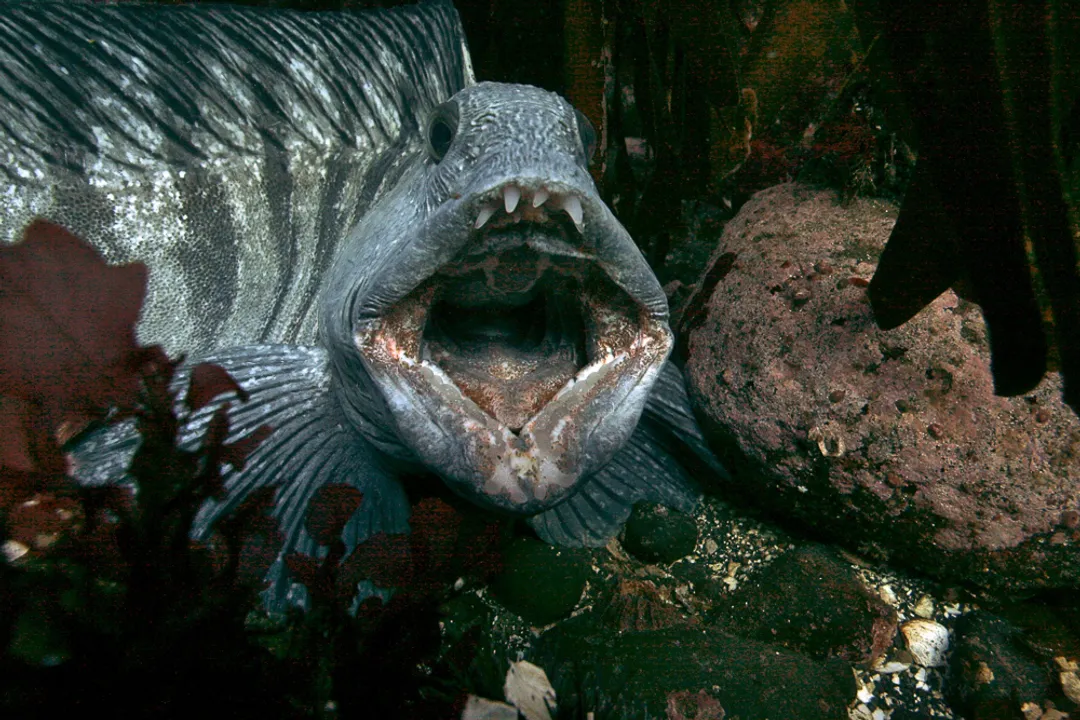
The term "wolffish" covers several distinct species within the genus Anarhichas, each with its own geographic footprint. The Northern Wolffish (Anarhichas orientalis) is known for its presence across the vast stretches of the North Pacific and North Atlantic Oceans. [2] This species is considered an inhabitant of cold marine waters generally. [2]
Contrasting this broad distribution, the Atlantic Wolffish (Anarhichas lupus) occupies a more defined corridor along the western edge of the Atlantic. Its known range extends from the waters around Labrador, moving south along the coastlines to Maine. [7] Adding another layer of complexity, the species found around Iceland are also identified as wolffishes. [3] Furthermore, a Spotted Wolffish is part of the management discussions in Canadian waters, indicating at least three species (Northern, Atlantic, and Spotted) have relevance in North American/North Atlantic contexts. [8]
Comparing the distribution highlights a shared preference for northern latitudes; however, the Northern Wolffish appears to have a wider global reach, spanning two major oceans, while the Atlantic variety seems concentrated in the western North Atlantic basin. [2][7]
# Preferred Habitat
The location of any wolffish is almost intrinsically linked to the sea floor's texture. They are specialists, not generalists, when it comes to substrate. You will generally find them clinging to rocky bottoms, areas characterized by gravel, cobbles, or larger boulders. [2][5] These sturdy, rugged terrains provide the necessary structure for their lifestyle.
Their reliance on this structure is functional; they inhabit crevices, holes, or burrows they either dig or find within the rocky landscape. [2][5] This behavior suggests that any survey looking for wolffish must prioritize areas showing complex benthic structures over smooth, sandy plains. If you imagine a map marking the ocean floor, the high-value areas for wolffish won't be the flat, featureless expanses, but rather the ridges, drop-offs, and rubble fields. [2]
This preference for hard structure extends across a remarkable range of depths. Sources indicate that wolffish can be found near the shore in shallower areas, but their habitat extends dramatically downward, reaching depths exceeding 1,500 feet, or about 450 meters. [2][5] It is fascinating to consider that the same basic habitat requirements—cold water and solid rock—support populations across such an enormous vertical gradient, from the subtidal zone to the deep shelf edge.
# Depth Correlates
While the maximum depth is listed as around 1,500 feet, [2][5] the actual depth an angler or researcher might encounter a specific species can vary based on local conditions and time of year. Since both the Northern and Atlantic species inhabit the colder waters of their respective regions, any movement they undertake is often related to tracking optimal thermal ranges or reproductive cycles, which can pull them from the deeper zones up onto shallower, but still rocky, banks during certain seasons. For instance, while deepwater trawls might reveal them at their maximum range, daytime coastal surveys might only register them closer to the 100-foot mark if the bottom composition is right. [7] A good rule of thumb, then, is to start your search where the water is cold and the bottom is visibly rough, adjusting depth only after consulting local seasonal biomass distribution data if available.
# Regulatory Attention
The very specific habitat and cold-water dependence of these species have brought them under increasing conservation scrutiny, particularly in areas where they are commercially or recreationally targeted. The Northern Wolffish, for example, has had detailed recovery strategies developed by government agencies, reflecting concerns over its population stability. [8] This signals that location is not just an ecological matter but a legal one.
For anyone interested in the species, understanding their vulnerability is key. The management plan for the Northern Wolffish in Canada, for instance, provides crucial insight into the types of threats the species faces and outlines the recovery objectives. [8] While the plan itself details the strategy, the implication for a reader is clear: if you are looking for these fish, you must be acutely aware of the local regulations, as areas identified as critical habitat might be subject to seasonal restrictions or specific gear limitations designed to protect slow-reproducing bottom dwellers. [4] The conservation status itself often dictates where one should or should not be focusing their search efforts to remain compliant and responsible. [4]
# Locations in Digital Seas
Beyond the natural world, the concept of "wolffish locations" extends into popular culture and simulation, such as in the video game Dredge. Within this context, players seek out specific species, often with unique temporal constraints. The requirement to catch a particular variety, perhaps the abyssal or crimson variant, often restricts the successful location to a specific zone and time of day. [1][6]
For example, during gameplay scenarios where a wolffish is only available at night, players have reported success in areas characterized by underwater structures or wrecks. [1] This mirrors the real-world preference for structure, even in a fictional setting. Identifying these "hotspots" in the game often involves triangulating known features—like a Wreck area—with the necessary condition—like nightfall. [1] Knowing the specific type of wolffish desired in the game, whether it is the common one or a rarer variant, dictates whether you need to search near the shallow, coastal rocks or venture out to the deeper, offshore zones indicated on the game map. [6] This virtual hunt reinforces the real-world importance of linking the species type to its specific environmental niche.
Related Questions
#Citations
Does anyone know where to find the night-only fish from the Pale ...
Northern wolffish - Wikipedia
Wolffishes - Sea Iceland
Northern Wolffish | NWT Species at Risk
Wolffish - DREDGE Wiki - Fandom
[PDF] Wolffish (Anarhichas lupus) - Maine.gov
Sea Wonder: Atlantic Wolffish | National Marine Sanctuary Foundation
Northern Wolffish and Spotted Wolffish (recovery strategy) Atlantic ...