Why shouldn't you squish a wolf spider?

The sight of a large, fast-moving spider indoors often triggers an immediate, defensive reaction, and for many people, that reaction involves reaching for the nearest heavy object. Yet, for the specific creature known as the wolf spider, deciding to squash it can lead to consequences far more unsettling than the original encounter. It is important to understand that this aversion to crushing them isn't simply about being kind to wildlife; it relates directly to the immediate, messy reality that results when a pregnant female is terminated violently.
When you encounter one of these arachnids scurrying across the floor, it is often a large, hairy specimen, which naturally causes alarm. Wolf spiders, belonging to the Lycosidae family, are ground hunters known for their speed and excellent eyesight, often running down their prey rather than trapping it in a web. [3] They are generally not aggressive toward people and will usually flee when disturbed, but a direct confrontation—the one that ends in a heavy impact—can unveil a surprising biological defense mechanism or, more accurately, a terrible outcome for household peace.
# Impact Consequences
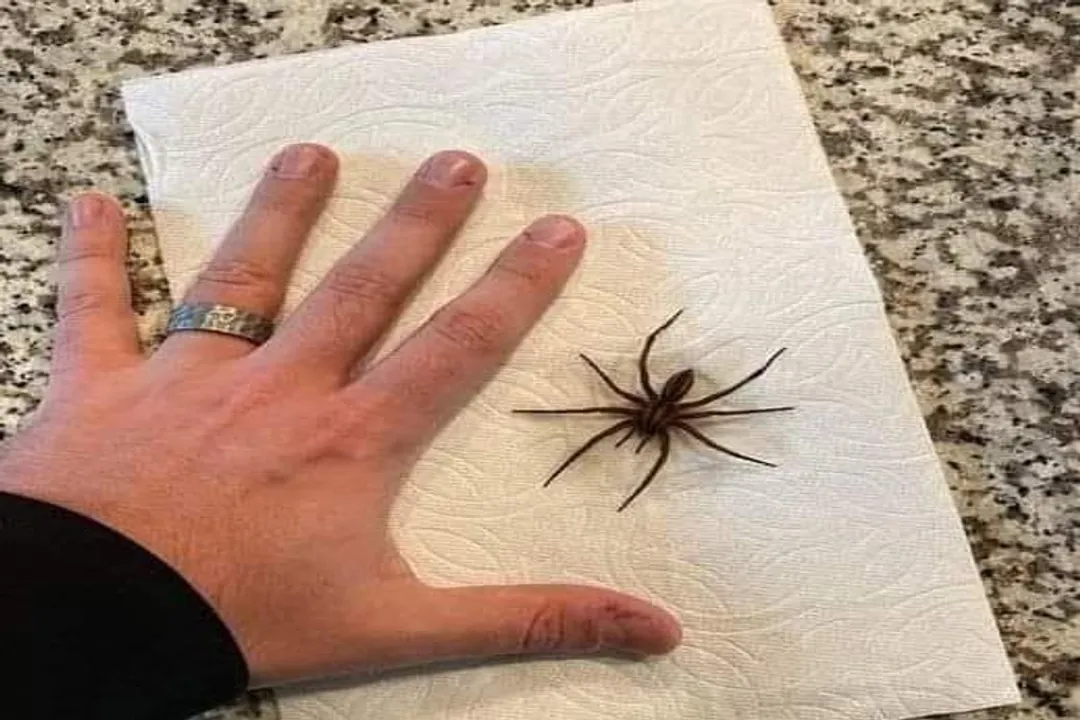
The primary reason to actively avoid squishing a wolf spider centers on the possibility that the spider is a mother carrying her young. If a female wolf spider is carrying an egg sac, crushing her essentially launches hundreds of spider babies into the immediate vicinity. [1][6] This isn't a gradual dispersal; it’s an explosion of potential offspring across whatever surface you were standing on—be it hardwood, carpet, or even your shoes. [7]
One distressing recounting mentioned that when a spider was squished, it looked like "hundreds" of babies emerged immediately. [1] This outcome means that instead of eliminating one large spider, you have instantaneously created an infestation of nearly microscopic spiders that are now scattering rapidly across the area, making capture exponentially more difficult. [5] The very act intended to solve a pest problem instantly multiplies the number of individual spiders present in the home. [7]
# Maternal Habits
Wolf spiders demonstrate a notable level of maternal care compared to many other spider species. The female wolf spider typically carries her silken egg sac attached to her spinnerets, which are the appendages located at the rear of her abdomen. [6] She transports this sac everywhere until the spiderlings hatch. Once they emerge, the tiny spiderlings climb onto the mother’s back, riding around until they are large enough to disperse and fend for themselves. [6]
If a swift, heavy blow is delivered to the abdomen, the force required to kill the mother is often sufficient to rupture the egg sac or forcefully eject the contents, releasing the underdeveloped or newly hatched young immediately upon impact. [6] It is this specific, visible release of dozens, sometimes hundreds, of tiny individuals—a scene often captured in viral videos—that turns a quick dispatch into a situation requiring a complete household vacuuming session. [7]
If you find yourself in a situation where a large wolf spider is visible, pausing to assess the creature’s behavior can save you from this chaotic outcome. For instance, if the spider seems to be walking with a noticeable protrusion or small ball attached to its rear end, you can safely assume it is carrying eggs, and immediate non-crushing relocation becomes the top priority. [6]
# Venom Concern
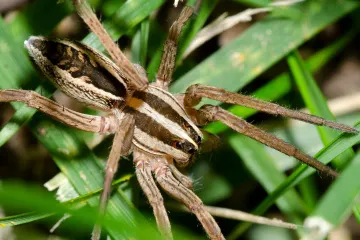
The impulse to destroy a spider often stems from a fear of being bitten, which is a valid safety concern when dealing with wildlife indoors. However, when it comes to wolf spiders, the threat level is generally lower than the panic might suggest. While wolf spiders can bite if they feel trapped, threatened, or are defending their eggs, they are not considered medically significant or highly dangerous to healthy adults. [3]
A bite from a wolf spider is generally not considered more severe than a bee or wasp sting, though reactions can vary from person to person. [3] The key is that they are reluctant to bite unless they are physically pressed against the skin or attacked directly. Squishing the spider removes this debate entirely, but the resulting release of hundreds of babies is a guaranteed consequence, whereas the bite itself is a low-probability event unless provoked. [3] When you consider the trade-off—a low-risk bite versus a near-certain dispersal of hundreds of spiderlings—the choice to avoid direct crushing becomes clearer from a purely logistical standpoint.
# Better Removal
Given the severe downside of the "squish," adopting alternative removal strategies is highly recommended for managing these ground hunters inside the home. The standard, universally accepted method remains the cup and slide technique. You need a clear container—a cup, jar, or plastic food storage container—and a stiff piece of paper or thin cardboard, like an index card or postcard. [4]
The process involves placing the open container gently over the spider, ensuring the rim traps the spider against the surface. Then, carefully slide the cardboard underneath the container’s opening, trapping the spider inside. You can then safely carry the container outside and release the spider a good distance from the house. [4]
When direct contact is truly unnerving, or when the spider is in a location where the cup-and-slide method feels too risky (like a high corner), vacuuming provides a less messy alternative to direct impact. [9] Using a vacuum cleaner hose to suck up the spider deposits it into the collection bag or canister, effectively removing it from the environment without the explosive mess associated with crushing. If using a bagless system, be sure to empty the contents outside immediately or seal the container tightly before emptying later. [9]
It's worth noting that spiders, including wolf spiders, are beneficial predators, consuming common household pests like cockroaches, flies, and mosquitoes. [4] While proximity indoors might be unwelcome, recognizing their role in natural pest control can sometimes temper the urge to eradicate them immediately. A small amount of effort in relocation yields an intact population of beneficial insect eaters outside the home, compared to the messy situation created by a swift, regretted strike.
Related Questions
#Citations
I just tried to squish a spider and it split into several thousand ...
Why You Shouldn't Squish The Wolf Spider? - YouTube
What Are Wolf Spiders & Are They Dangerous | Hawx Pest Control
Benefits of Wolf Spiders and Why They Should Not Be Squished
Should you squish spiders? - Quora
The Unsettling Reason You Should Never Squash A Spider In Your ...
Don't Squash That Wolf Spider! | Delta Pest Control Inc.
12 Species Of Spiders You Shouldn't Squish In Your Home (And ...