Wiwaxia Locations
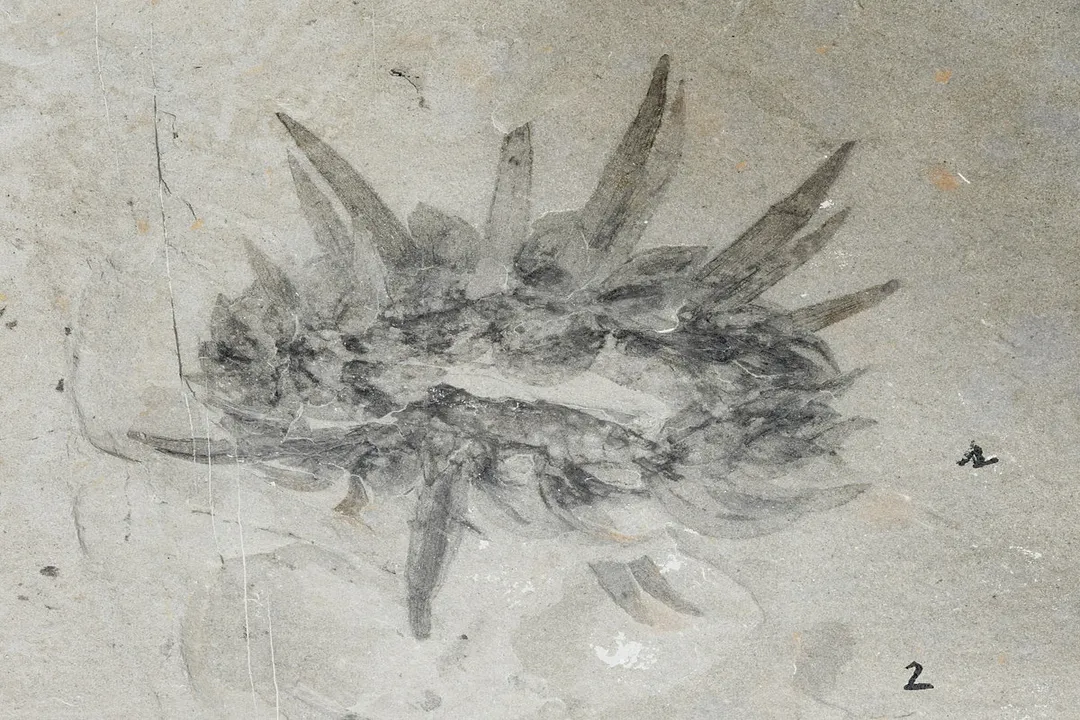
The fossilized remains of Wiwaxia paint a picture of a creature that occupied specific ecological niches across the ancient world during the Cambrian period. [2] While the early discoveries placed this enigmatic organism firmly within certain famous fossil beds, subsequent research has expanded our understanding of its geographic footprint considerably, showing it was not restricted to a single location but was part of a broader, interconnected Middle Cambrian fauna. [7]
# Time Span
Wiwaxia corrugata, the best-known species, is definitively associated with the Middle Cambrian epoch. [4][7] Pinpointing the exact age of the specimens found can sometimes distinguish between the major fossil sites. For example, the materials recovered from the Chengjiang biota in China are noted by some sources as being younger than the specimens recovered from the classic Canadian deposits. [1] This slight temporal separation across continents is fascinating for paleontologists studying the evolution of early animal life and how quickly or slowly body plans like that of Wiwaxia spread across the available habitats. [1]
# Canadian Core
The initial and arguably most famous place associated with Wiwaxia is the Burgess Shale formation. [3][5] This world-renowned site is located in the Canadian Rockies, specifically within British Columbia. [1][3][5] The discovery here established Wiwaxia as a key component of the unique Cambrian ecosystem found in these deposits. [1][5] The exceptional preservation quality often found in the Burgess Shale allows researchers to study the delicate, scale-like sclerites that covered the animal's body, a feature that helps define the genus. [1] The Canadian location serves as the type locality, meaning it is the original place where the species was formally described. [1]
# Chinese Sites
Not far behind the Burgess Shale in importance for Wiwaxia finds is the Chengjiang Biota. [1][4][8] This location, situated in Yunnan, China, provides another critical window into Middle Cambrian life. [1][6][7] While both Canadian and Chinese sites preserve soft-bodied organisms remarkably well, sometimes the specific matrix and preservation styles differ, offering complementary data on the animal's anatomy and lifestyle. [1][7] The presence of Wiwaxia in both Laurentia (North America) and the region that would become China during this period highlights an existing level of faunal interchange, even considering the continents were arranged differently than they are today. [9]
# Global Finds
For a long time, the distribution seemed relatively limited to these two major sites, but dedicated paleontological work has revealed that Wiwaxia had a wider distribution across the Middle Cambrian world. [9] This broader geographic range suggests that Wiwaxia was not an endemic specialist confined to a small region but rather a moderately successful creature capable of colonizing different shallow marine environments. [7][9]
# European Evidence
A significant addition to the known locations comes from Europe, specifically the Holy Cross Mountains in Poland. [7][9] Here, fossils attributed to Wiwaxia have been recovered from Middle Cambrian strata. [7] Finding representatives of this genus on the European plate (part of the ancient continent Baltica) confirms that Wiwaxia crossed major oceanic barriers of the time, linking the faunas of North America and Asia with those of Europe in ways that refine paleogeographic models. [7][9] This Polish material is crucial because it helps trace the dispersal patterns of these early animals across the supercontinent configuration of the time. [9]
# United States Presence
The geographic spread is further evidenced in the United States. Fossils of Wiwaxia have been identified in the Kinzers Formation in Pennsylvania. [6] This discovery, alongside the Polish findings, significantly widens the known occurrences within the paleo-continent of Laurentia, suggesting the creature was present across a large swath of ancient North America, not just confined to the western margin where the Burgess Shale lies. [6][9] The discovery in Pennsylvania indicates that the environmental conditions suitable for Wiwaxia were not exclusive to the sites yielding the most famous, exquisitely preserved specimens. [6]
| Geological Formation | Continent/Region | Notes on Occurrence |
|---|---|---|
| Burgess Shale | Laurentia (Canada) | Type locality; excellent preservation [1][3] |
| Chengjiang Biota | South China | Often slightly younger Cambrian finds [1][7] |
| Holy Cross Mountains | Baltica (Poland) | Confirms European presence [7][9] |
| Kinzers Formation | Laurentia (USA) | Indicates broader North American spread [6] |
The contrast between the preservation quality at sites like the Burgess Shale, where detailed soft-tissue impressions or scales are common, versus slightly less exceptional preservation in formations like the Kinzers or Polish finds, directly impacts what we can deduce about the animal’s life. [1][6] While the Canadian and Chinese sites give us exquisite anatomical detail, the presence in the US and Poland confirms the Wiwaxia body plan was successful enough to populate diverse environments across the globe’s emerging landmasses. [9]
# Greenland Hints
There have also been suggestions or less definitive findings pointing toward Wiwaxia in Greenland, which at the time was situated near Laurentia. [9] While the evidence from this region might be less frequently cited than the major four areas, it adds another layer to the picture of this organism existing near the northern edges of the ancient North American plate. [9]
# Habitat Context
Though the exact water depth and substrate are inferred from the surrounding rock layers, the presence of Wiwaxia in these diverse locations—from the deep-water conditions suggested by some Burgess Shale beds to potentially shallower marine settings elsewhere—implies a degree of ecological flexibility. [1][7] This adaptability, coupled with its successful dispersal across at least three major continental blocks (Laurentia, South China, and Baltica) within a relatively short geological window, is a key takeaway when examining its fossil locations. [9] It suggests that Wiwaxia occupied a relatively common ecological role, perhaps as a slow-moving scavenger or deposit feeder, that was transferable across widely separated marine basins during the Cambrian explosion. [4] The recurring pattern of finding it alongside other characteristic Cambrian fauna in these disparate locales underscores the interconnectedness of marine life during that era, despite continental drift. [7]
Related Questions
#Citations
Wiwaxia - Wikipedia
Wiwaxia corrugata - iNaturalist
Wiwaxia - Prehistoric Wildlife
Paleo Profiles: Wiwaxia - Lewis Twiby's Past and Present
Wiwaxia corrugata - A-Z Animals
Articulated Wiwaxia from the Cambrian Stage 3 Xiaoshiba Lagerstätte
[PDF] Shallow−water occurrence of Wiwaxia in the middle Cambrian of ...
Wiwaxia
Distribution of Wiwaxia . (a) Stratigraphic distribution. (b)...