Wiwaxia Facts
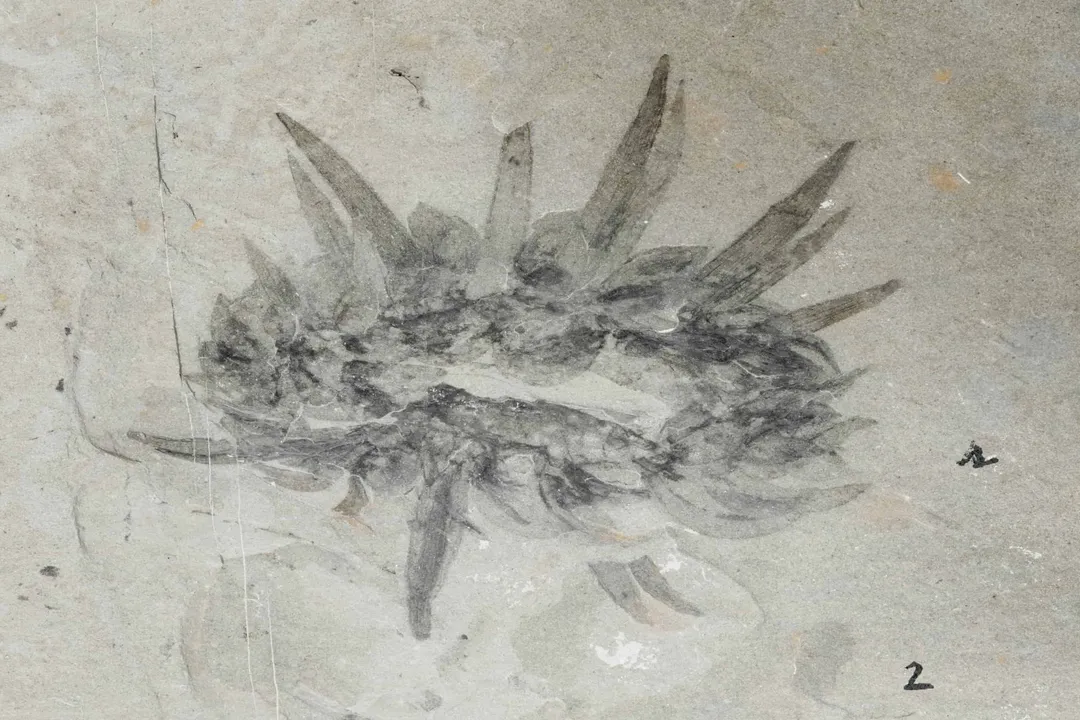
The little animal known as Wiwaxia offers a fascinating, if confusing, snapshot into the strange biodiversity of the early oceans. This creature, officially designated Wiwaxia corrugata, swam (or perhaps crawled) across the seabed roughly 505 million years ago during the famed Cambrian Explosion. [2][5][7][9] Fossils of this organism, though rare, provide invaluable data about the early diversification of animal life, particularly because its exact placement on the tree of life remains a subject of scientific debate. [2][5]
# Discovery Location
The primary window we have into the life of Wiwaxia comes from a single geological location: the Burgess Shale in the Canadian Rockies of British Columbia. [2][5] This famous deposit, first explored by Charles Doolittle Walcott, has preserved soft-bodied organisms that rarely fossilize, providing exceptional detail about creatures that otherwise would have left no trace. [5] Walcott himself first described Wiwaxia in 1911. [5] The exceptional preservation allows researchers to examine features like its scales and spines, which speak volumes about its biology, even if the overall animal was largely soft tissue. [9]
# Anatomy Details
Wiwaxia was not a giant by any measure; estimates place its length between 5 and 10 centimeters. [1][5][9] At this size, if we consider the median length around 7.5 centimeters, Wiwaxia was comparable in size to a modern large earthworm or a small freshwater shrimp. This suggests that the Cambrian seafloor supported a complex ecosystem featuring a wide range of body sizes living alongside giants like Anomalocaris. [1][5][9]
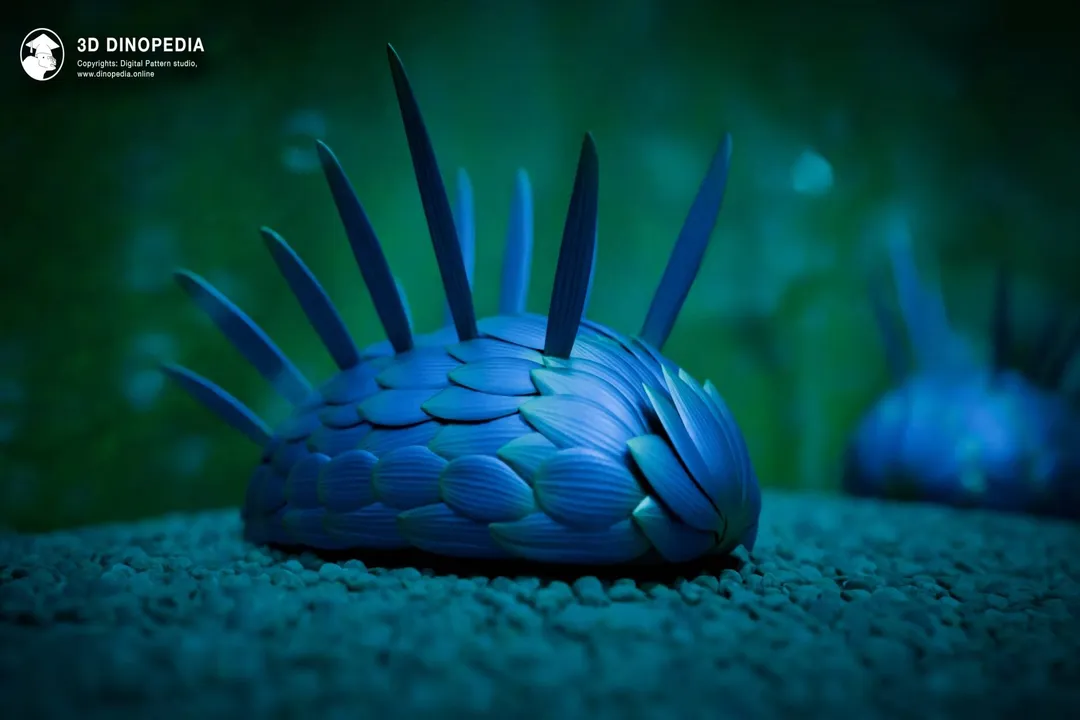
The most striking feature of Wiwaxia is its exterior armor. Its body was oval-shaped and covered in distinct, overlapping scales or plates known as sclerites. [1][2][5] These sclerites covered the main body surface, providing some form of protection. [2][5] Running along the sides of the animal were several rows of stiff, prominent spines that projected backward away from the head region. [1][2][5][9] These spines are the defining characteristic seen in almost all well-preserved specimens. [2]
The arrangement of these spines, angled sharply toward the rear of the animal, suggests a defensive purpose against the emerging predators of the Cambrian seas, or perhaps they were used to brace the creature against strong bottom currents, preventing it from being swept away. [1][2][5][9] This contrasts with structures needed for active forward propulsion, which usually involve more forward or lateral appendages. [9]
# The Mouth
The mystery deepens when we look at the front end. Wiwaxia possessed a mouth located on the underside of its body. [2][9] This structure was often described as being surrounded by distinct, fleshy lobes or tentacles. [2][9] The exact feeding mechanism remains unclear, but scientists have proposed that Wiwaxia may have used this structure to scrape microbial mats or algae off the seafloor, or possibly to filter organic matter directly from the water column. [2][9] The lack of obvious hardened jaws or specialized grasping appendages points toward a softer, more generalized method of acquiring sustenance. [2]
# Classification Status
Placing Wiwaxia accurately within the animal kingdom has proven challenging for paleontologists. [5] When first studied, its resemblance to certain features led to various hypotheses. Some early interpretations suggested it might be a primitive mollusk or perhaps related to segmented worms, known as annelids. [5] It was also considered close to other enigmatic Cambrian groups like the hyoliths. [2]
Modern analysis, however, tends to group it more broadly. Wiwaxia is now frequently classified as a stem-group Lophotrochozoan. [2] The Lophotrochozoa is a major clade that includes modern groups such as mollusks (snails, clams), annelids (segmented worms), and brachiopods. [2] This placement suggests Wiwaxia branched off early from the line that would eventually lead to these diverse modern groups. [2][5] Importantly, this classification rules out many initial ideas, confirming it was neither a true worm nor a snail in the modern sense. [9] It exists in a crucial transitional space in the fossil record. [2]
# Soft Body Preservation
A key fact about studying Wiwaxia is understanding its fundamental composition. Despite the hard-looking sclerites and spines, the main body mass of Wiwaxia was composed of soft tissue. [9] This is why its fossils are only found in rare, exceptional sites like the Burgess Shale, where rapid burial prevented scavenging and decomposition. [9] The sclerites themselves likely represent hardened cuticle or perhaps scales that provided protection to the vulnerable internal organs and musculature beneath. [2][5] While the scales offered armor, the majority of the animal was pliable, demonstrating the varied evolutionary experiments happening during the Cambrian period regarding skeletal support versus mobility. [9]
For example, consider the material science: the sclerites were likely secreted by the epidermis, similar to the shell formation in mollusks, yet they are arranged more like armor plates than a continuous shell. [5] This dual nature—a distinct, segmented outer layer covering a flexible interior—is unusual and highlights an evolutionary strategy that didn't necessarily lead to the dominant body plans we see today. [2][5]
# Cambrian Context
Wiwaxia represents the strange and wonderful fauna that defined the early diversification of complex life forms. [2] Living in the Middle Cambrian period, it inhabited a world rapidly filling with organisms possessing eyes, shells, legs, and complex digestive systems. [5] Its survival suggests that developing a protective exterior, even a partial one like its sclerites and spines, offered a strong survival advantage against the growing pressure from predators. [1][9]
While we cannot know its exact behavior with certainty, its appearance implies a slow-moving, bottom-dwelling existence. [9] It would have shared its habitat with trilobites, early arthropods, and various other bizarre, extinct forms. [5] Understanding Wiwaxia helps fill in the diversity gaps between the very earliest simple life and the later, more recognizable animal phyla that followed. [2] It reminds us that evolution took many detours before settling on the familiar animal architectures we recognize in modern seas. [2][5]
#Videos
Wiwaxia corrugata - Creature of the Cambrian Explosion ~ 505 mya
Related Questions
#Citations
Wiwaxia corrugata - A-Z Animals
Wiwaxia | Dinopedia - Fandom
Wiwaxia Facts for Kids
The Cambrian: Wiwaxia - Furman University
Wiwaxia corrugata - The Burgess Shale - Royal Ontario Museum
Wiwaxia corrugata - Creature of the Cambrian Explosion ~ 505 mya
Wiwaxia corrugata - iNaturalist
Meet the Spiny Wiwaxia: A Soft-Bodied Wonder of the Cambrian
wiwaxia | Strange Animals Podcast