What is the evolutionary history of seals?
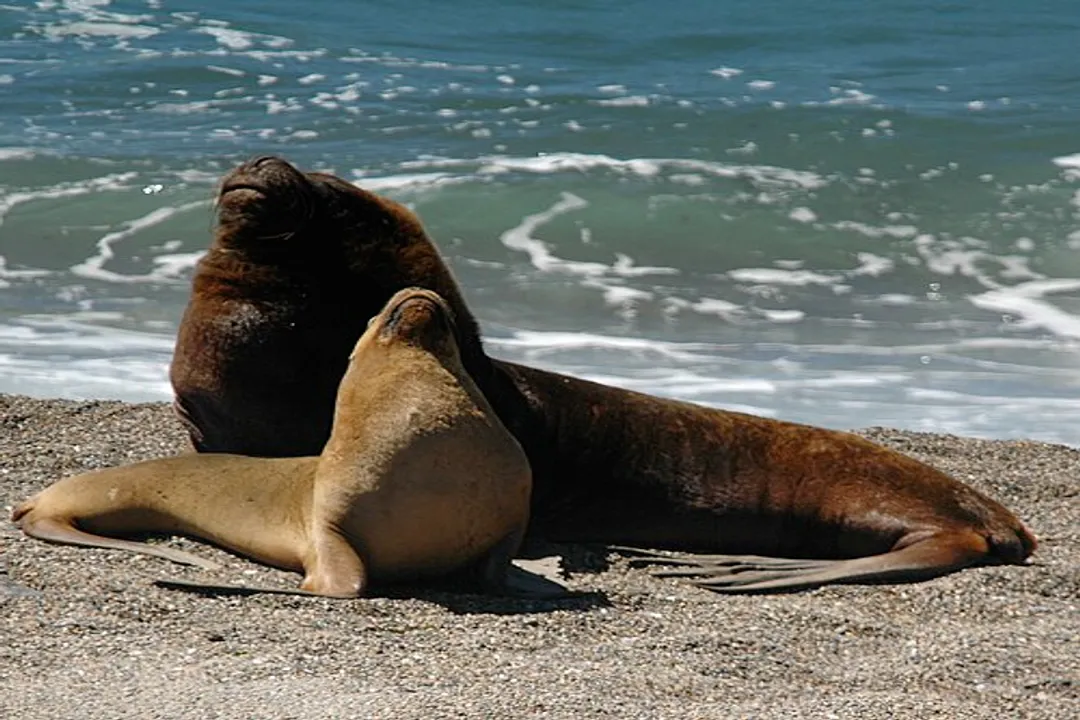
The lineage leading to modern seals, sea lions, and walruses—collectively known as Pinnipeds—is a fascinating chapter in mammalian evolution, detailing a spectacular return to aquatic life after terrestrial origins. [2] These marine mammals are not a single, uniform group but rather a diverse collection belonging to the infraorder Pinnipedia, which comprises three main families: the Otariidae (eared seals and sea lions), the Phocidae (true seals), and the Odobenidae (walruses). [2] Understanding their history requires looking back to the land-dwelling mammals that first ventured into the ocean millions of years ago. [9]
# First Steps
The evolutionary journey of pinnipeds began in the Eocene epoch, approximately 50 million years ago. [2] Their ancestors were four-legged, otter-like carnivores that walked on land. [4] The transition from a fully terrestrial existence to one dominated by the sea involved significant anatomical changes, a clear example of adaptation to a new environment. [4] The fossil record reveals a gradual change, showcasing species that spent more time in the water while retaining features suited for movement on land. [9]
The initial evolutionary trajectory involved the development of adaptations for an aquatic lifestyle, such as larger bodies, changes in limb structure, and insulation suited for colder waters. [4] While the exact sister group relationship to other carnivores is debated, genetic studies suggest that seals share a common ancestor with bears and mustelids (weasels, otters). [1] This places them within the larger group of Ferae. [1]
# Puijila Fossil
A critical piece of evidence in tracing this transition is the fossil discovery of Puijila darwini. [9] This animal is often cited as a beautiful transitional fossil because it exhibits a mix of primitive terrestrial features and early adaptations for swimming. [9] Dating back about 20 to 25 million years, Puijila had a body shape somewhat similar to modern otters, but its skeletal features—particularly the structure of its limbs—show it was already specialized for life in the water. [9] Crucially, Puijila is believed to be more closely related to modern seals and walruses (the Pinnipeds) than to other carnivores, firmly placing it on the evolutionary path toward the modern group. [9]
While Puijila demonstrates the path toward aquatic life, it's important to note that modern seals, as extant species, are not "intermediate" in the sense of being stuck between land and sea; rather, they are the highly specialized descendants of those intermediates, optimized for marine existence. [5] They represent the successful endpoint of that aquatic transition.
# Major Branches
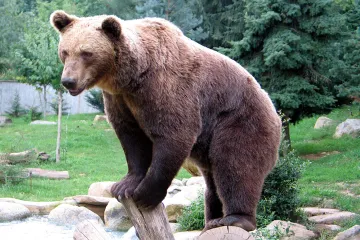
The deep evolutionary history of the pinnipeds has been clarified through recent comprehensive studies that analyze genetic data alongside the fossil record. [1] These analyses help to structure the relationships between the three main modern families. The split between the ancestors of the eared seals (Otariidae) and the ancestors of the true seals and walruses (Phocidae and Odobenidae) happened early in their divergence. [1]
The most recent and detailed studies of the seal family tree suggest that the lineage that eventually led to walruses (Odobenidae) separated from the line that produced true seals (Phocidae) relatively late in evolutionary time. [1] This finding contrasts with some older views and points toward a later, independent specialization for the walrus morphology and diet. [1]
To give a clearer picture of the relationships as currently understood, we can summarize the three branches:
| Family | Common Name(s) | Key Locomotion Feature | Estimated Divergence Context |
|---|---|---|---|
| Otariidae | Eared Seals, Sea Lions | Can rotate hind flippers forward to "walk" on land. [2] | Split early from the Phocoid line. [1] |
| Phocidae | True Seals | Hind flippers point backward; move on land by wriggling or "galumphing". [2] | Split from Odobenids more recently. [1] |
| Odobenidae | Walruses | Possess prominent tusks; intermediate locomotion capabilities. [2] | Lineage separated later than the Otariid split. [1] |
One interesting aspect that separates the Otariids (sea lions and fur seals) from the Phocids (true seals) is their ability to use their hind flippers for terrestrial locomotion; Otariids can rotate their pelvis to bring their hind flippers forward, allowing them to "walk," whereas Phocids cannot and must only wriggle or haul themselves across land. [2] This difference in adaptation for terrestrial hauling versus aquatic propulsion reflects distinct evolutionary pressures acting on these diverging lines. [2]
# Walrus Story
The history of the walrus lineage (Odobenidae) is particularly illuminating regarding the evolutionary relationships within Pinnipedia. [1] A recent comprehensive analysis of the family tree suggests that walruses are more closely related to true seals than previously thought, separating from the true seal line later than the eared seals diverged from them. [1] This implies that the iconic features of the walrus, such as its massive tusks and distinct feeding habits, evolved after the initial split from the ancestors of sea lions and fur seals. [1]
Furthermore, the fossil record for fur seals and sea lions (Otariidae) shows diversification in the Miocene, around 15 million years ago, with fossil evidence supporting their early presence in the Northern Hemisphere. [8] This timeline helps anchor when the Otariid group established its distinct anatomical features, such as the ability to rotate their rear flippers forward. [8]

# Southern Expansion
The evolutionary history isn't exclusively Northern Hemisphere-focused; evidence shows significant dispersal across the globe. For instance, the discovery of fossilized remains identified as a monk seal in the Southern Hemisphere provides important context for the group's geographical spread. [6] Monk seals are part of the Phocidae family, the true seals. [6] Identifying this fossil shows that ancestors of modern monk seals were present in the Southern Hemisphere at least 6.5 million years ago. [6] This finding challenges previous assumptions about the origin and dispersal routes of monk seals and indicates that pinnipeds were distributed across both hemispheres much earlier than some models suggested. [6]
When considering this global spread, it’s interesting to consider how dispersal might have been influenced by ancient continental positions and sea ice extent. For instance, the presence of a Southern Hemisphere monk seal ancestor 6.5 million years ago suggests that the Antarctic circumpolar current and associated cold waters were already a strong selective pressure influencing lineage development there, distinct from the evolutionary pressures shaping the Arctic-dwelling walruses. [6] This highlights that the environmental stage for pinniped evolution was set globally, not just in one pole.
# Adaptations Detailed
The physical changes that allowed these mammals to conquer the oceans are profound. Limbs transformed into flippers; the hind flippers of true seals (Phocidae) became specialized for propulsion in water, trailing behind the body, which makes them less effective for moving on land. [2] Conversely, the Otariids retain more functional pelvic rotation for better terrestrial movement, which may reflect a niche where frequent hauling out on rugged coasts or islands was essential. [2]
The respiratory system also underwent major restructuring to allow for extended dives. While not explicitly detailed in all sources, the adaptation to hold breath for long periods and withstand deep-sea pressures is central to their success as marine carnivores. [4] Their diet, which shifted from primarily terrestrial prey to fish and crustaceans, drove the specific morphological adaptations seen in the modern families, particularly the specialized morphology of the walrus for benthic feeding. [1] The entire evolutionary path is a testament to how rapidly mammals can remodel their anatomy when a new, resource-rich environment—like the ocean—becomes accessible. [4]
#Videos
The Evolution of Seals, Sea Lions, and Walruses - YouTube
The Evolution of Seals - YouTube
Related Questions
#Citations
Most comprehensive seal family tree reveals the hidden history of ...
Pinniped - Wikipedia
The Evolution of Seals, Sea Lions, and Walruses - YouTube
What is the evolutionary history of seals and their ability to live on ...
Are seals actually an intermediate species ? : r/evolution - Reddit
First monk seal from the Southern Hemisphere rewrites ... - Journals
The fossil record and evolution of fur seals and sea lions (Otariidae)
Puijila, the walking seal – a beautiful transitional fossil