How are seals classified?
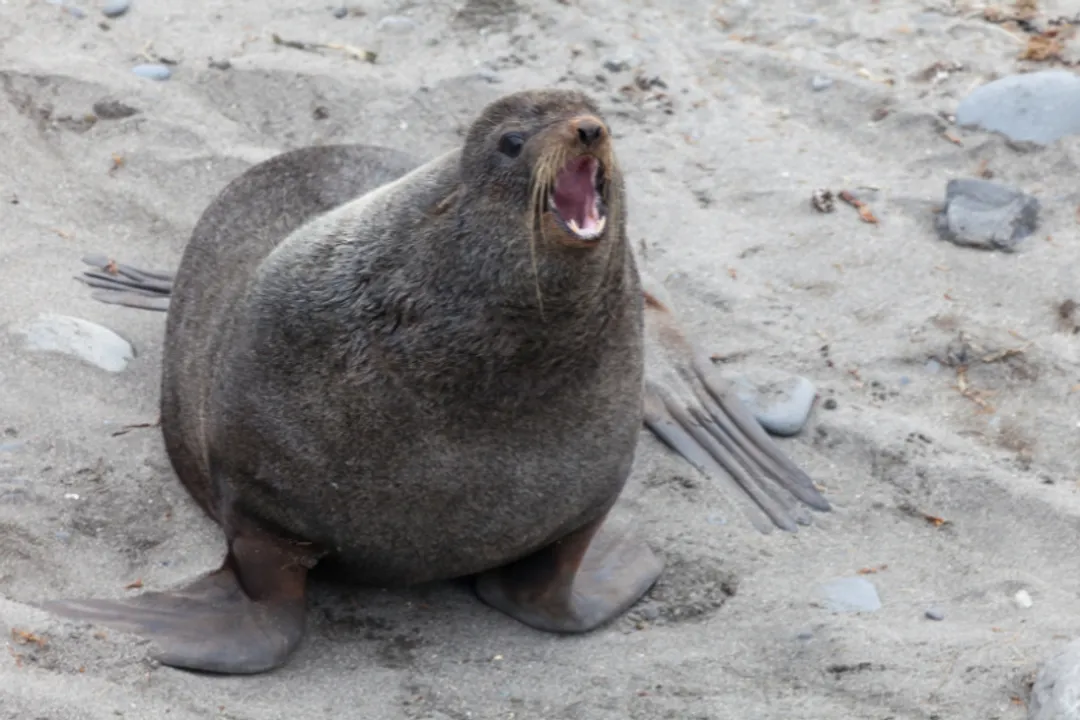
The organization of the animal kingdom, a system known as taxonomy, places every living creature into specific hierarchical groups based on shared characteristics, evolutionary history, and genetics. When we look specifically at seals, the classification process reveals that they are part of a fascinating and diverse group of marine mammals that also includes sea lions and walruses. [2][4][8] To truly understand where a seal fits, we must first recognize its place within the broader order of Carnivora before diving into the specialized infraorder to which all these flippered swimmers belong: Pinnipedia. [1][2][8]
# Taxonomic Placement
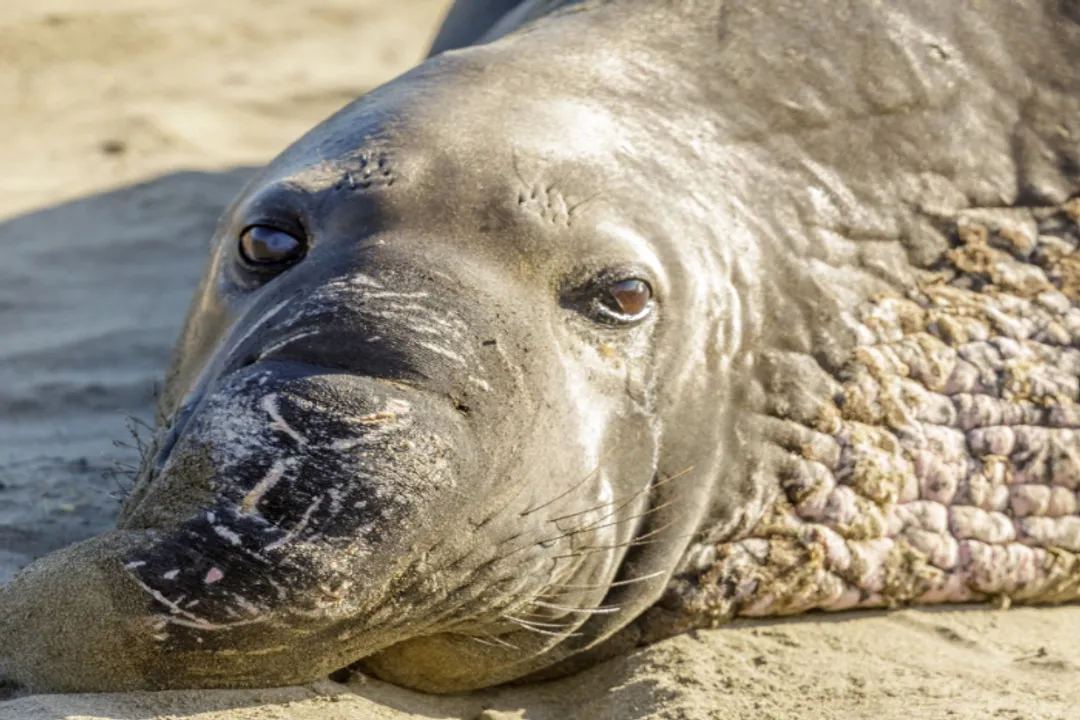
The systematic placement begins at the highest, most general levels. Seals, like humans and dogs, reside in the Kingdom Animalia and the Phylum Chordata (animals with a notochord or backbone). [1] They are members of the Class Mammalia, meaning they are warm-blooded, breathe air, possess hair or fur, and nurse their young with milk. [1][3] Their membership in the Order Carnivora is crucial, as it groups them with land-dwelling predators like bears, cats, and dogs, reflecting a shared ancestry, even though their diets and lifestyles have adapted radically for the marine environment. [2][8]
Within Carnivora, pinnipeds fall under the Suborder Caniformia (dog-like carnivores). [1] While sometimes classified simply as the Order Pinnipedia, current scientific understanding often positions Pinnipedia as an infraorder within the larger Order Carnivora, demonstrating the close evolutionary ties to land mammals. [1]
# Pinniped Grouping
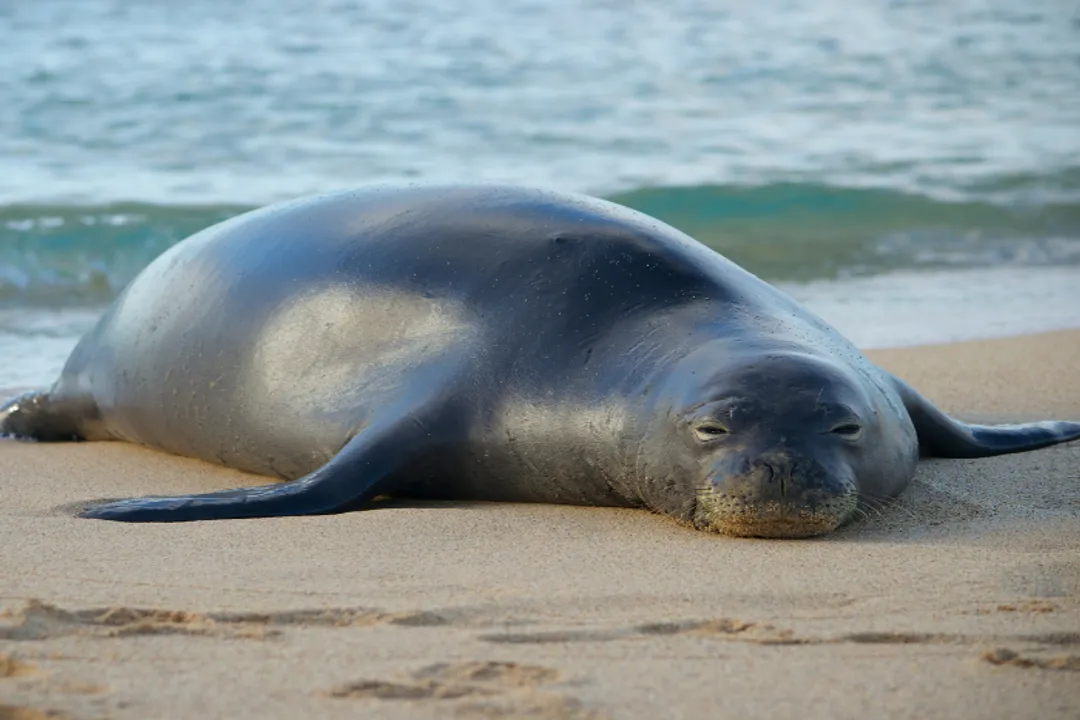
The term Pinnipedia itself provides a hint to their nature, translating roughly to "fin-footed" or "wing-footed," describing their most notable adaptation—the modification of their limbs into flippers. [2][4] This infraorder is exclusively composed of aquatic carnivorous mammals that rely on the ocean for food but must return to land or ice to rest, molt, and breed. [2][4]
The defining characteristic that sets the world of pinnipeds apart from other marine mammals, like cetaceans (whales and dolphins), is this dual reliance on aquatic and terrestrial environments, facilitated by their modified limbs. [2] The scientific classification system neatly divides this group into three distinct, modern families based on key morphological and behavioral differences in how they move and how their external anatomy is structured. [1][2][8]
| Family Name | Common Name | Ear Flaps | Hind Flippers | Land Locomotion | Propulsion in Water |
|---|---|---|---|---|---|
| Phocidae | True Seals | Absent | Cannot rotate forward | Wriggling/Hitching | Hind flippers only |
| Otariidae | Eared Seals/Sea Lions | Present | Can rotate forward | "Walk" on all four flippers | Fore flippers |
| Odobenidae | Walruses | Absent | Can rotate forward | "Walk" on all four flippers | Hind flippers |
The general public often uses the term "seal" loosely to describe any animal with flippers, which can lead to confusion when discussing taxonomy. [5] For instance, an animal commonly called a sea lion is scientifically not a true seal, though both are pinnipeds. [5][8] Understanding these three families is the key to classifying any specific flippered mammal correctly.
# True Seals Defined
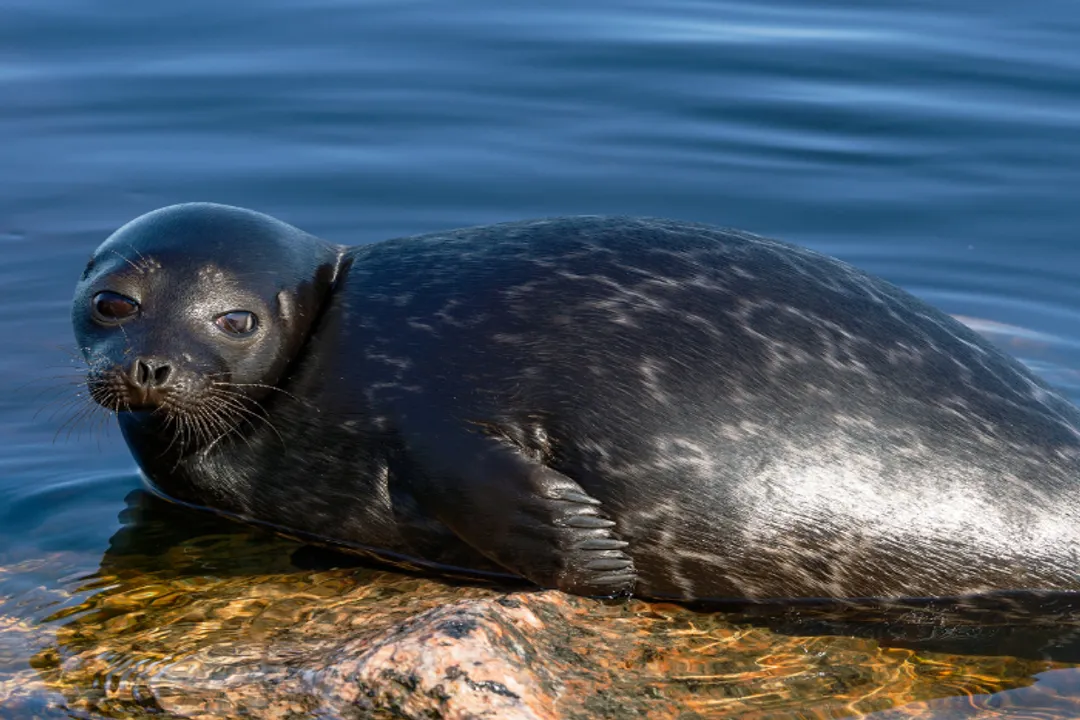
The family that contains the animals most accurately termed seals is Phocidae, often called "true seals" or "earless seals". [1][2][5] This distinction is critical because their adaptations for marine life are more specialized than those of eared seals. [2]
# External Anatomy
One of the most obvious ways to identify a true seal is by its ears. Phocids lack external ear flaps (pinnae); they only have small holes on the side of their heads to detect sound. [1][2][5][8] Contrast this with sea lions, which possess a small, visible external flap. Their hind flippers are also significantly different; they cannot rotate them forward beneath the pelvis. [1][2] This inability to turn their rear limbs makes their terrestrial movement awkward, forcing them to move across the ground by wriggling or "hitching" their bodies in a caterpillar-like motion. [1][2][5] When swimming, they use their hind flippers for propulsion, while their fore flippers are shorter and used primarily for steering. [2]
Further anatomical differences extend to their coat. True seals typically possess fur that lacks a dense undercoat layer, which is an adaptation that might relate to their greater reliance on blubber for insulation in colder waters, or perhaps is an evolutionary trade-off for greater streamlining. [1] Their claws on the fore flippers are relatively short when compared to those of eared seals. [5]
# Habitat and Species Examples
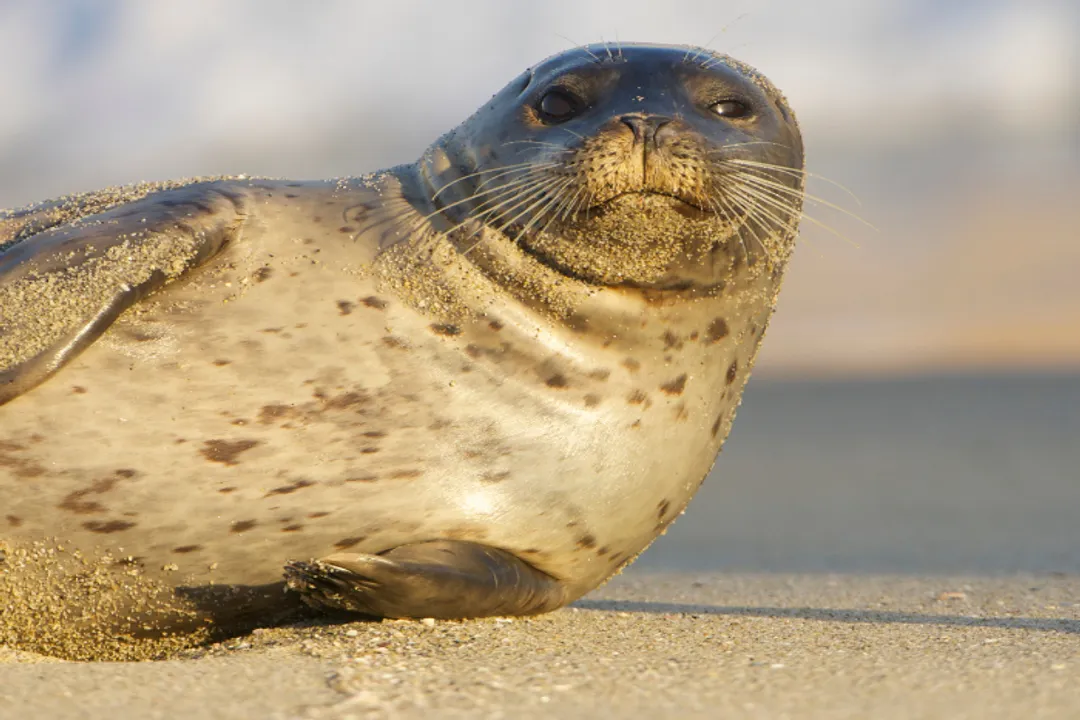
True seals are found globally, inhabiting waters from the Arctic and Antarctic to temperate and tropical regions. [5] The Harbor Seal (Phoca vitulina) is a widely recognized example within this family. [3] The diversity within Phocidae is substantial, featuring species ranging from the massive Southern Elephant Seal to the smaller Ringed Seal.
When considering their physical attributes, one realizes the profound impact of hind flipper positioning. The inability of true seals to tuck their hind flippers under their body means that their primary means of land movement requires significant energy expenditure relative to Otariids. This physical constraint suggests a greater evolutionary commitment to fully aquatic existence, where streamlined propulsion using only the rear end becomes paramount, even if it sacrifices overland agility. [1]
# Eared Seals vs. Walruses
The other two families, Otariidae (eared seals, which include sea lions and fur seals) and Odobenidae (walruses), share some similarities that distinguish them from the true seals, yet they remain distinct from each other. [2]
# Eared Seals (Otariidae)
The Otariidae family encompasses sea lions and fur seals. [1][2] As their name suggests, they do possess small, visible external ear flaps, making them easily distinguishable from Phocids. [1][2][8] Their fore flippers are long and strong, serving as their primary source of propulsion in the water—they effectively "fly" through the ocean. [2][8]
Crucially, otariids can rotate their hind flippers forward beneath their pelvis. [1][2][8] This adaptation grants them superior mobility on land, allowing them to lift their bodies and "walk" or gallop quite effectively using all four limbs. [2][8] This ability to transition rapidly between walking and swimming likely allowed them to exploit terrestrial haul-out areas that might be less stable or more sloping than those preferred by true seals. Furthermore, fur seals, a subset of otariids, possess a dense layer of underfur beneath their coarser guard hairs, allowing them better insulation compared to the fur of true seals. [1]
# The Walrus Family (Odobenidae)
The family Odobenidae is unique because it contains only a single extant species: the Walrus (Odobenus rosmarus). [1][2] Walruses share the characteristic of having external ear flaps (though small) and the ability to rotate their hind flippers forward, allowing them to walk on land like sea lions. [2] However, they possess defining features that set them apart entirely, most notably their long tusks, which are elongated canine teeth found in both males and females. [1][2]
While technically sharing locomotion traits with sea lions, the walrus's specialized adaptations—the tusks used for hauling out, defense, and foraging for benthic invertebrates, and their thick, wrinkled skin—warrant their placement in their own distinct family. [2] The walrus represents an evolutionary branch that prioritized specialized foraging tools over the streamlined form seen in true seals or the dual-propulsion system of eared seals.

# Classifying the Harbor Seal
To ground this classification in a real-world example, consider the Harbor Seal (Phoca vitulina). Its classification places it squarely within the true seals. [3]
- Class: Mammalia
- Order: Carnivora
- Family: Phocidae (True Seals) [3]
A harbor seal will lack external ear flaps, cannot turn its rear flippers forward, and moves on land by shuffling or inching forward. [3] If you encountered a pinniped on a beach and it was lumbering along on its belly while using its front flippers only for balance and directional shifts, you would know, based on its classification, that you were observing a member of the Phocidae family. This simple visual check is often the quickest way a general observer can distinguish the major pinniped groups, moving from the broader category of Pinnipedia down to the specific family identity. [5]
# Insight into Evolutionary Trade-offs
When examining the differences between Phocidae (true seals) and Otariidae (eared seals), the divergence in their locomotive methods offers a fascinating insight into evolutionary pressures. True seals are generally considered more adapted for long-distance oceanic foraging because their powerful, synchronized use of the hind flippers provides a highly efficient, streamlined propeller for continuous swimming. [2] In contrast, eared seals, while very agile, often use their fore flippers in a rowing motion, which is less energetically efficient for long, straight transoceanic travel but provides greater maneuverability in coastal environments or when navigating complex underwater terrain during feeding dives. The inability of the true seal to rotate its rear flippers forward, which handicaps it on land, seems to be an acceptable trade-off for achieving superior hydrodynamic efficiency in the water column where they spend the majority of their lives.
# The Importance of Naming Conventions
The strict adherence to these classifications—Family Phocidae, Otariidae, and Odobenidae—is more than just an academic exercise; it is essential for conservation and management. [4] When organizations like NOAA Fisheries discuss management strategies for "seals," they are often specifically referring to species within the Phocidae family (like harbor seals or elephant seals), while sea lions (Otariidae) might be managed under different regulations or fall under the purview of different departments due to their distinct ecological roles and sometimes differing population statuses. [4] Misidentifying an animal based on casual naming can lead to ineffective conservation efforts. Therefore, knowing that "seal" scientifically points toward Phocidae, while sea lions are Otariids, provides necessary context for conservation reports and wildlife advisories. For instance, understanding which family an animal belongs to influences decisions about haul-out site protection, as the terrestrial movement requirements of a sea lion family (able to walk) differ significantly from those of a true seal family (which must drag themselves) when considering human disturbance nearby. [2]
Related Questions
#Citations
Seal - Classification, True (Earless) Seals & Eared Seals | Britannica
Pinniped - Wikipedia
All About the Harbor Seal - Scientific Classification - Seaworld.org
Seals & Sea Lions | NOAA Fisheries
Facts and FAQ about seals | IFAW
Seal Fact Sheet | Blog | Nature - PBS
Guide to Seal Types | Discover Their Unique Traits - Wildlife Nomads
Friday Fact Seals and sea lions are classified as Pinnipeds from the ...
Seals and walruses | Research Starters - EBSCO