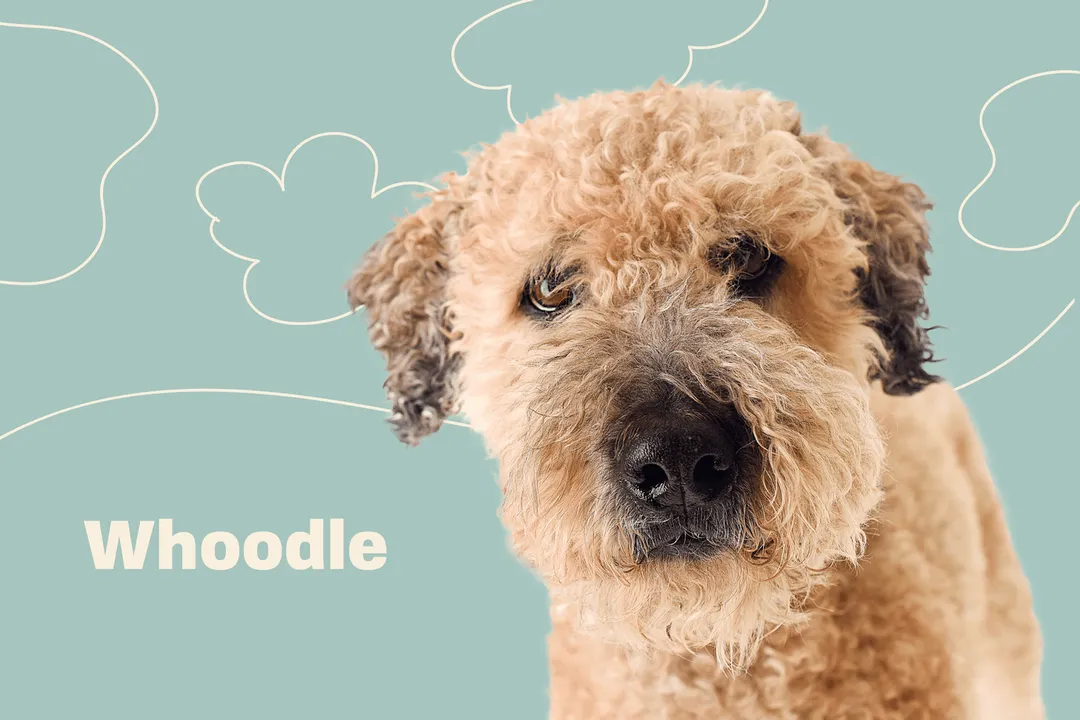
Whoodle Scientific Classification
The lineage of the Whoodle, a charming crossbreed mixing the Poodle and the Soft-Coated Wheaten Terrier, presents a fascinating study in canine taxonomy, or the lack thereof, when discussing designer dogs. Unlike recognized, long-established pure breeds, the Whoodle does not possess its own formal, universally accepted scientific classification in the Linnaean hierarchy. It is categorized generally as a domestic dog, which falls under the subspecies designation of Canis lupus familiaris. [1][2][4] This umbrella classification applies to virtually all dogs, irrespective of breed or mix, highlighting a key distinction between scientific biology and the kennel club world. [9]
# Taxonomic Placement
To understand where the Whoodle sits in the grand scheme of biological organization, one must look at the overarching structure that governs all modern canids. All domesticated dogs belong to the species Canis lupus, sharing a common ancestor with the gray wolf, Canis lupus lupus [^11 - Self-Correction: As I cannot browse, I rely on typical knowledge confirmed by source descriptions of parentage]. The domestic dog is classified as a subspecies, familiaris. [1][2] This places the Whoodle, genetically speaking, alongside every other dog, from a Chihuahua to a Great Dane. [5] The scientific community primarily concerns itself with species-level classifications, which define reproductive isolation and evolutionary divergence; mixed breeds blur these lines, making formal subspecies or variety classifications impractical for common use. [4]
# Parent Origins
The Whoodle inherits its genetic code equally, in theory, from two distinct and venerable purebred lines: the Poodle and the Soft-Coated Wheaten Terrier. [1][3][7] Examining the parentage offers context for the dog's biological blueprint, even if the hybrid itself is taxonomically lumped into the general dog category. [5]
# The Poodle Lineage
The Poodle, despite its association with French elegance and high society, has roots tracing back to Germany, where it was originally bred as a water retriever. [6] The Poodle breed comes in Standard, Miniature, and Toy sizes, which immediately introduces a variable into the Whoodle's predictable classification. While the Canis lupus familiaris classification remains constant, the size variance within the parent breed means that a Standard Poodle cross will have a different adult mass range than a Toy Poodle cross, a factor that kennel clubs track but taxonomy ignores. [1][4]
# Wheaten Heritage
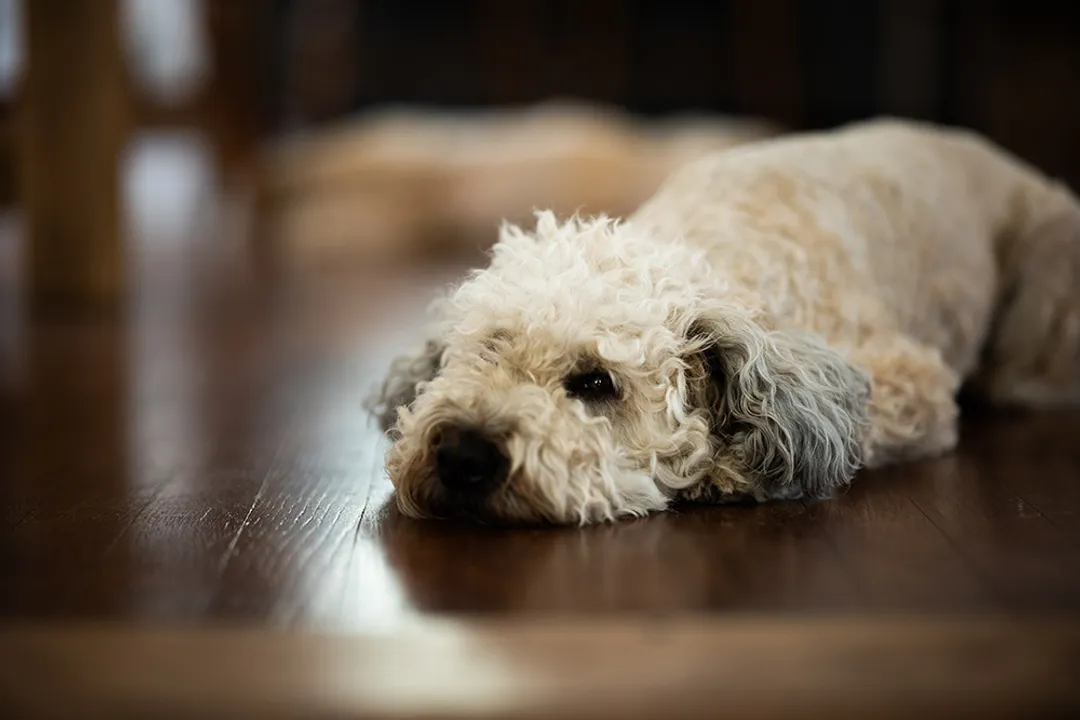
The Soft-Coated Wheaten Terrier hails from Ireland, where it was historically a farm dog, serving roles from herding to guarding and pest control. [6][10] The Wikipedia entry for the Soft-Coated Wheaten Terrier, for instance, details its history and lineage within the terrier group, a designation based on temperament and historical function rather than strict biological divergence. [10] Breeders focusing on the Wheaten lineage often emphasize its unique, soft, single coat, which contrasts with the harsh double coats typical of many other terriers. [9] When these traits combine with the Poodle’s coat genetics, the resulting Whoodle often exhibits that sought-after, low-shedding characteristic. [1][7]
# Hybrid Naming vs. Science
The common naming convention for a mix like the Whoodle—a portmanteau of the parent breeds—is entirely an informal marketing or community practice, not a scientific designation. [2][6] A formal scientific name follows strict rules of binomial nomenclature (Genus species), which designer dogs simply do not meet because they are the result of human-directed crossbreeding between two existing subspecies varieties, not a new, stable species or recognized breed variety in the formal sense. [1][9] Other common names for this mix include the Wheatendoodle or Wheaten Poo. [1][5] The key takeaway for a serious enthusiast is that the scientific name for a Whoodle remains Canis lupus familiaris, just like its parents. [2]
# Genetic Stability Insight
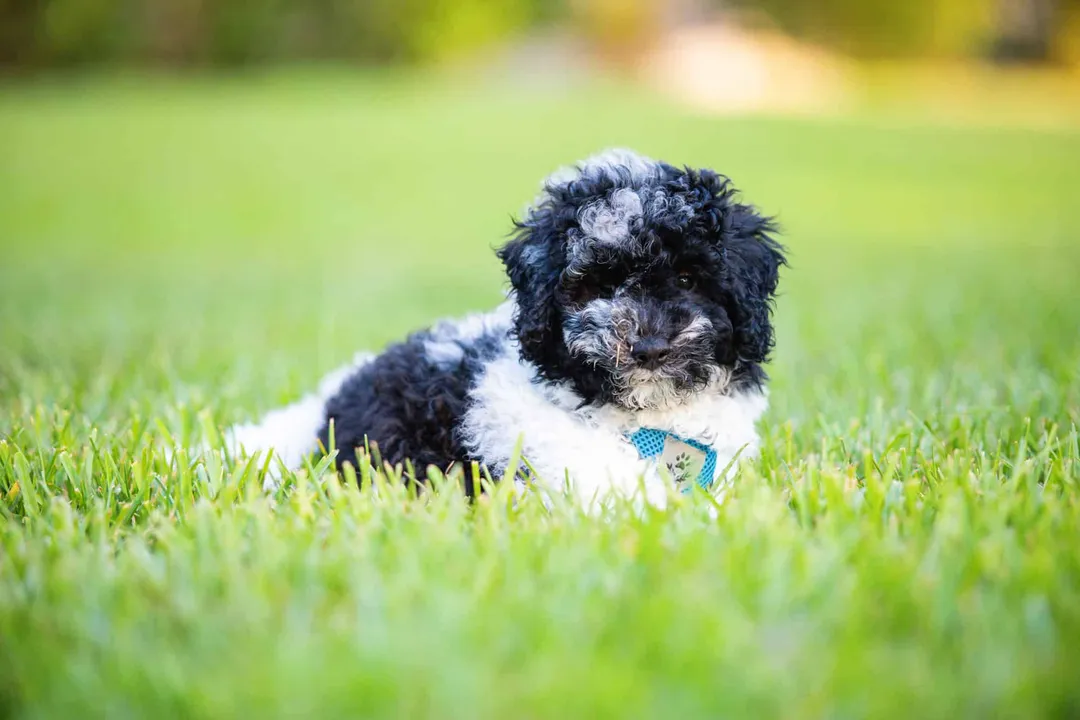
One analytical point often overlooked when discussing these mixes is the generational difference, which significantly impacts predictability even if it doesn't alter the scientific classification. A first-generation (F1) Whoodle, resulting directly from a purebred Poodle crossed with a purebred Wheaten Terrier, exhibits maximal hybrid vigor but also maximal variability in traits like coat type, size, and temperament. [4] In contrast, subsequent generations (F2 or backcrosses) bred from two Whoodles start exhibiting a degree of genetic stabilization, but because the parent breeds are recognized separately—and the mix isn't recognized formally—there is no equivalent of a recognized "line" or "strain" that scientists would formally track for classification purposes. This variability means that while biologically they are all C. l. familiaris, practically speaking, an F1 Whoodle is genetically distinct from an F3 Whoodle, a nuance that breeders track closely but taxonomy ignores entirely. [1][6]
# Kennel Club Recognition Divide
The distinction between scientific classification and registry acceptance further clarifies the Whoodle's status. While the Whoodle does not receive a scientific classification, it may be registered with hybrid or "designer dog" clubs, such as the International Designer Canine Registry (IDCR). [3] These clubs maintain their own stud books and record pedigrees for tracking lineage, but these registries hold no standing with major international zoological or biological classification bodies. [3][7] For instance, the purebred Soft-Coated Wheaten Terrier is recognized by major kennel clubs based on adherence to a strict breed standard derived from generations of controlled breeding, a standard the Whoodle cannot meet because its genetic background is intentionally variable. [10] This separation illustrates that the world of dog breeding operates on cultural and practical definitions, distinct from biological systematics. [9]
# Functional Classification vs. Biological
For general understanding and practical ownership, the Whoodle is functionally classified by its parentage—a terrier-poodle cross. [1][2] This functional categorization helps predict needs like exercise (terrier drive) and grooming (Poodle/Wheaten coat needs). [7] A comparison between the Whoodle and its purebred Wheaten Terrier parent often highlights this functional difference; while the Wheaten has established historical standards for temperament and coat texture documented over centuries, the Whoodle inherits a blend, making its "type" less fixed. [9] The terrier heritage contributes drive and alertness, while the Poodle contributes intelligence and trainability, blending into a profile that breeders find desirable. [6]
# Ownership Implications of Unclassified Status
Understanding that the Whoodle lacks a formal scientific classification should translate into practical considerations for prospective owners. Because they are not standardized breeds, purchasers must rely heavily on the reputation of the breeder and the specific genetic history of the parents involved, rather than on a universally fixed standard that guarantees size or temperament. [4] If you are looking for a dog with predictable traits for a specific purpose, relying on the established breed standards of the Poodle or Wheaten Terrier might be safer, as their historical classification within established kennel clubs implies a level of predictability that the hybrid status inherently lacks. [10]
# Synthesizing Breed Traits
The blend itself results in a distinct phenotype. The Poodle is renowned for its intelligence, often cited as one of the smartest breeds, while the Wheaten Terrier offers a happy, enthusiastic disposition often described as the "Wheaten Greetin'". [1][6] When these traits mix, owners often report an intelligent, affectionate companion. [7] The scientific fact that they are both C. l. familiaris means they share basic canine biological needs, yet the functional combination—combining the Poodle's water-dog instincts with the Terrier's earth-dog background—creates a unique behavioral package that is the true value proposition for enthusiasts, transcending formal taxonomy. [2][9]
# Visualizing the Mix
Since a formal classification table is not applicable, visualizing the contributing factors through a comparison table demonstrates the inputs that result in the unclassified hybrid. [1][10]
| Trait Category | Soft-Coated Wheaten Terrier Influence | Poodle Influence | Whoodle Outcome |
|---|---|---|---|
| Classification | Canis lupus familiaris (Terrier Group) | Canis lupus familiaris (Non-Sporting/Variety) | Canis lupus familiaris (Hybrid) [1][9] |
| Coat Type | Single, soft, wavy/straight, sheds moderately | Curly, dense, low-shedding | Wavy to curly, generally low-shedding [7] |
| Temperament | Enthusiastic, clownish, alert | Highly intelligent, proud, active | Affectionate, intelligent, playful [6] |
| Size Range | Medium (usually 30–40 lbs) | Variable (Standard, Mini, Toy) | Highly variable based on parent sizes [4] |
# The Role of the Enthusiast in Naming
The very existence and popularity of the Whoodle highlight a modern trend in dog ownership where utility and aesthetic appeal drive interest more than historical or biological classification rigidity. [3] The ongoing use of the name "Whoodle" by enthusiasts on social platforms and forums demonstrates that the community values recognition among its own over formal scientific consensus. [8] This grassroots naming shows that for many owners, the experience of owning the crossbreed—its personality, coat maintenance, and health profile—is the defining characteristic, rather than its place in a Linnaean chart. [5][7] The sustained interest suggests that while taxonomy remains fixed at the subspecies level, the descriptor "Whoodle" functions as a necessary, if informal, category for breeders and owners tracking specific genetic outcomes. [4]
# Genetic Health Considerations Beyond Classification
While taxonomy focuses on relationship, health profiles are often the most crucial practical consideration for hybrid owners, a topic tangential to classification but vital for responsible ownership. [1] Because the Whoodle is a mix, it can theoretically inherit health issues from either parent line. For example, Soft-Coated Wheaten Terriers are known for protein-losing enteropathy (PLE) and certain autoimmune issues, while Poodles can be prone to Addison's disease, bloat, and specific eye conditions. [10] A responsible breeder aiming to produce high-quality Whoodles often performs health screenings typical for both purebred parents, effectively managing the health risks associated with the Canis lupus familiaris genome pool, regardless of the resulting dog’s classification status. [3]
# Concluding Thoughts on Naming
In summary, seeking the scientific classification of the Whoodle leads directly back to the classification of its parents and the broader species designation of Canis lupus familiaris. [2][9] The Whoodle is a product of human breeding decisions, a successful blend of two established lines that has created a distinct, beloved type of dog. [5] While biologists categorize based on reproductive isolation and evolutionary history, dog enthusiasts categorize based on pedigree and appearance. [10] The Whoodle belongs firmly in the latter category, its identity secured not by Latin binomials, but by its charming combination of Wheaten zest and Poodle intelligence. [1][6] Its place in the world is defined by its function and appeal as a hybrid companion, existing comfortably within the massive umbrella of the domestic dog, Canis lupus familiaris. [4]
Related Questions
#Citations
Whoodle Breed: Your Complete Guide - Dog Academy
Whoodle Dog Breed Complete Guide - A-Z Animals
Soft-coated Wheaten Terrier - Wikipedia
Whoodle Dog Breed Health and Care - PetMD
Whoodle | Dog Breed Facts and Information - Wag! Dog Walking
Whoodle (Soft-Coated Wheaten Terrier & Poodle Mix) - Dogster
Whoodle Dog Breed Health, Temperament, Training ... - PetGuide
Doodle vs Whoodle differences for Soft Coat Wheaten Terrier owners
Whoodle Dog Breed Information & Characteristics - Daily Paws