White-Tailed Eagle Locations
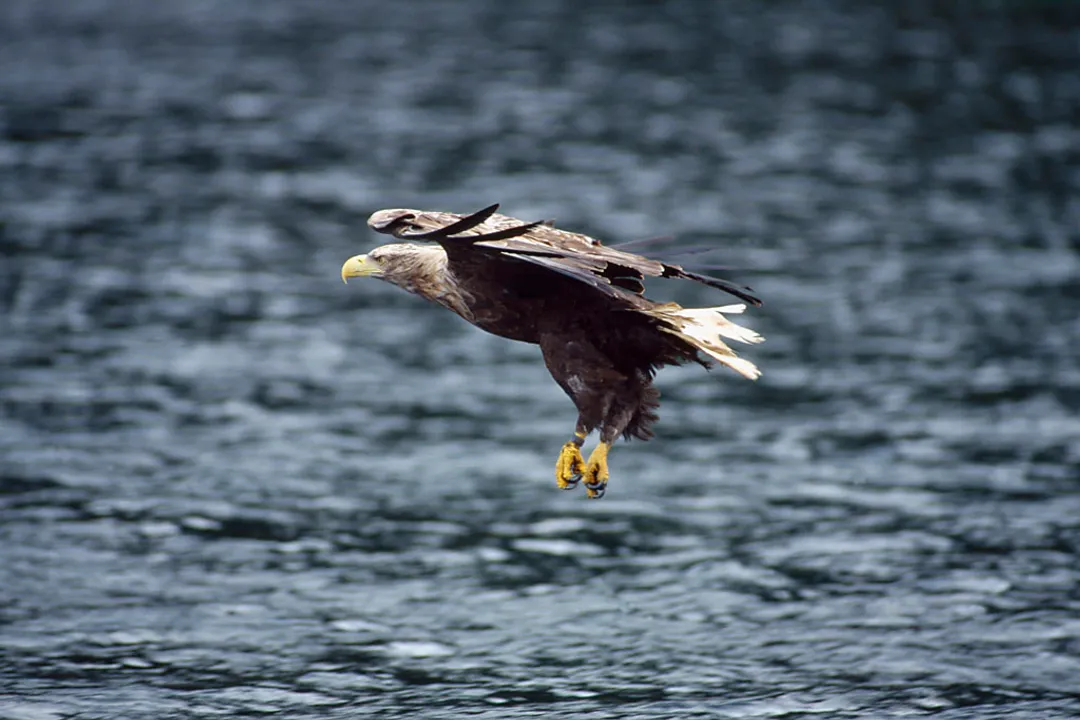
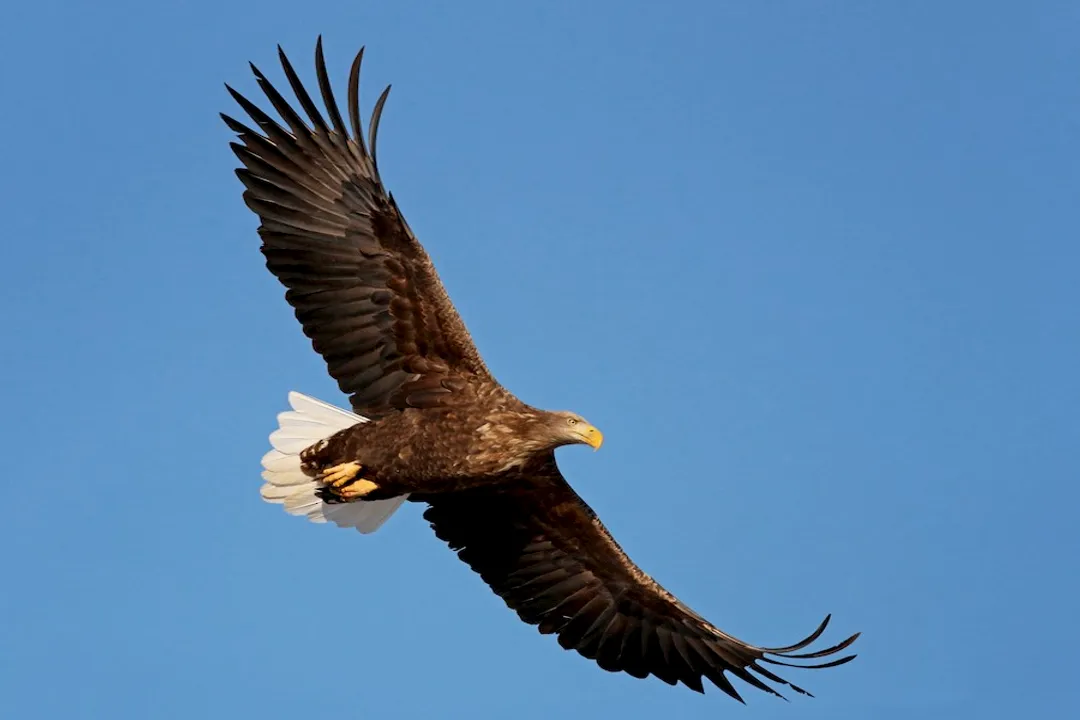
The White-tailed Eagle, or Sea Eagle, is a magnificent bird of prey whose imposing presence is tied to specific, often dramatic, landscapes across Eurasia. Its range, though fragmented today, speaks to a history as one of the continent's most widespread raptors. [1][3] Spotting one is often a matter of knowing precisely where conservation efforts have taken hold or where historical populations have managed to persist against modern pressures. [7] These birds are generally found along coasts, rocky cliffs, islands, and substantial inland waters, demanding large territories for their hunting and nesting activities. [3][4]
# Eurasian Distribution
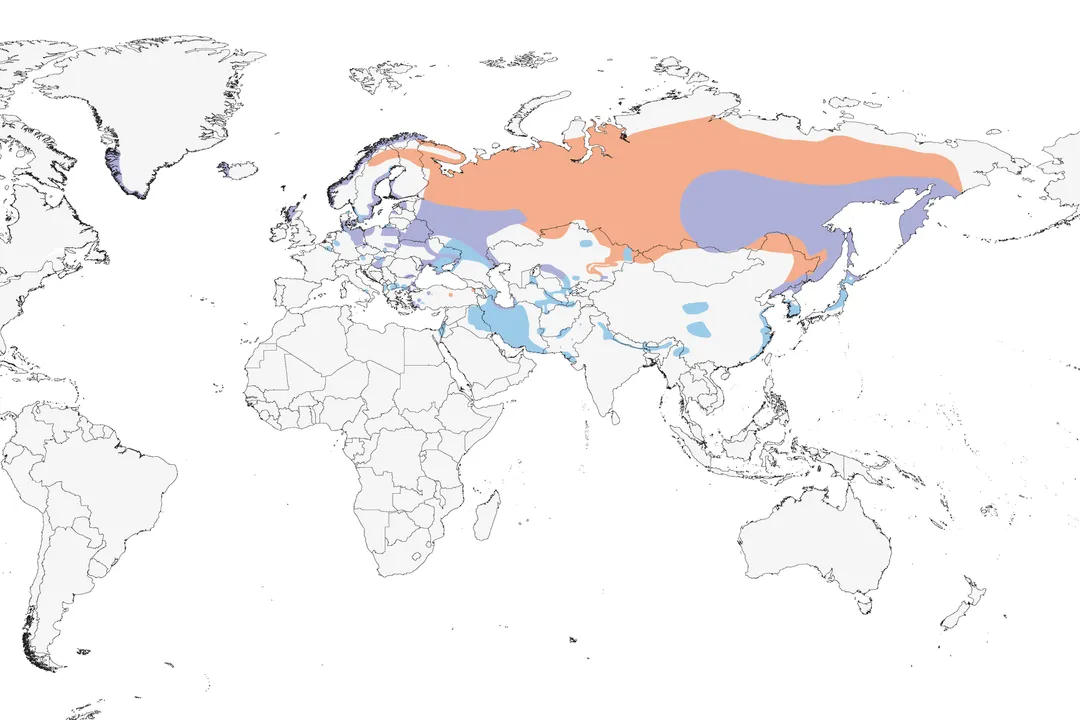
Historically, the White-tailed Eagle held an enormous range stretching across much of Europe and Asia. [1] While this distribution has seen significant contraction due to persecution, habitat loss, and changes in prey availability, substantial populations remain anchored in specific regions. [1][7]
# Eastern Populations
The largest contiguous populations of Haliaeetus albicilla are concentrated in Eurasia's northern and eastern reaches. [1] Greenland hosts a significant population, with individuals often noted across its coastlines. [1] Moving eastward, the birds are well-established across the Russian Federation. [1] Specifically, populations are concentrated along the coasts of the Bering Sea, the Sea of Okhotsk, and the Kuril Islands. [1] The presence of these eagles in these harsh, remote environments underscores their adaptability to cold climates, provided there is adequate access to fish and marine resources. [1] Comparatively, the status of this species in many parts of continental Europe has been far more precarious, often relying on sporadic sightings or limited, protected breeding zones. [3]
# Northern Atlantic
In the North Atlantic region, the key locations for observing the White-tailed Eagle are found around the Nordic countries and the British Isles. [1][4] Iceland has a breeding population that has shown resilience. [1] Norway, particularly its extensive coastline and multitude of islands, is a crucial stronghold, supporting a considerable number of these large eagles along the fjords and northern shores. [1] These northern maritime environments offer the extensive, relatively undisturbed hunting grounds that the species requires. [3]
# United Kingdom Recovery
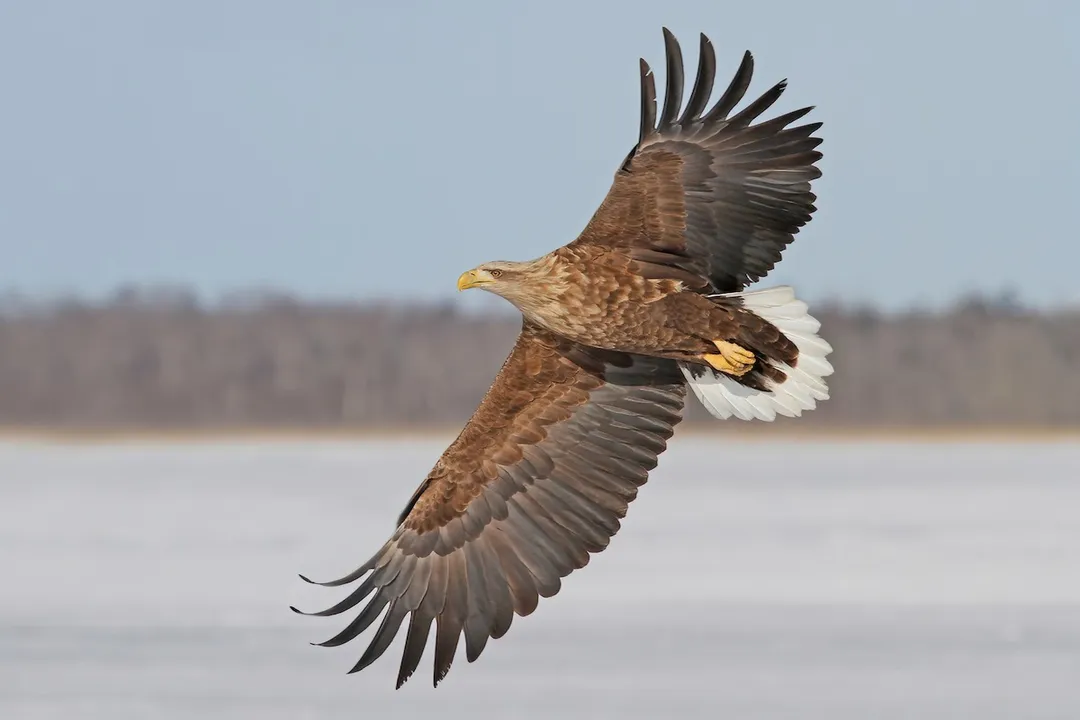
The story of the White-tailed Eagle in the United Kingdom is one defined by near extinction followed by dedicated, long-term reintroduction projects. [4][6][7] For many observers, the primary locations of interest are now centered around Scotland, where the most successful restocking efforts have taken place. [6]
# Scottish Strongholds
Scotland is the epicenter of the White-tailed Eagle's revival in the UK. [6] The initial reintroduction work, which began in the early 1970s on the Isle of Rum, has slowly expanded its reach. [7] Today, birds are most reliably seen around the Inner Hebrides and the west coast of the mainland. [6] Areas rich in sea lochs, such as those around the west coast of the Highlands, provide both nesting opportunities and reliable food sources. [6][4] Look toward islands like Rùm, Muck, Canna, and Skye for established territories, though sightings are now frequent on the mainland coasts as the population disperses. [6] The successful breeding pairs often choose remote sea cliffs or large, old trees adjacent to major bodies of water, mirroring their habitat preferences elsewhere. [3][8]
If you are attempting to photograph these magnificent birds in Scotland, remember that their historical reliance on remote cliff faces in the West Highlands means early morning light hitting those western-facing slopes can be spectacular, but patience near known sea loch roosts during winter often yields more predictable observations of foraging behavior. [6] This contrast between remote breeding sites and more accessible winter feeding grounds is key to planning a successful viewing trip in the region. [4][7]
# England and Wales
While Scotland leads the recovery, reintroduction efforts have been ongoing in other parts of Britain, though perhaps with less immediate widespread success in terms of high density. [7] In England, the Isle of Wight has been the focus of reintroduction, with birds released there aiming to establish a southern foothold. [4] These introduced birds forage over the Solent and the adjacent coastlines. [4] In Wales, sightings are less frequent, often involving dispersing individuals from Scottish populations or vagrants, rather than a fully established resident breeding colony, though the landscape offers suitable potential habitat, particularly around the rugged North Wales coast. [8]
# Irish Distribution
Ireland also shares in the narrative of reintroduction for the White-tailed Eagle, which had completely vanished from the island by the early twentieth century. [9] Significant efforts began in the early 2000s, leading to the successful establishment of birds, primarily on the west coast. [9]
The key areas to look for White-tailed Eagles in Ireland are along the western seaboard, which offers the necessary marine environment. [9] The species has been successfully reintroduced to Donegal, and birds are now observed in increasing numbers along the Atlantic edge, particularly around sea cliffs, coastal islands, and large inland cliff faces near substantial water bodies. [9] The population expansion means that while the west coast is the focus, dispersing individuals are beginning to appear further south and east, indicating a slow but steady recolonization of the island. [9]
# Habitat Requirements Overview
Whether in the fjords of Norway, the islands of Scotland, or the remote coasts of Russia, the White-tailed Eagle demonstrates a consistency in its habitat requirements, centered around abundant, accessible food and safe nesting sites. [3][4][8]
# Nesting Sites
The choice of nesting location is paramount for breeding success. [3] The preferred sites are generally remote, large, and offer excellent visibility over the surrounding territory. [8]
| Primary Nesting Substrate | Preferred Location Context | Geographic Association |
|---|---|---|
| Large Trees | Near coasts or large inland lochs | Inland Europe, some Scottish sites [3][8] |
| Sea Cliffs | Remote, inaccessible coastal areas | Scotland, Norway, Iceland [4][9] |
| Rocky Islands | Areas with minimal terrestrial disturbance | UK, Ireland reintroduction zones [6][9] |
The general rule appears to be proximity to water: they need large water bodies to hunt effectively. [3] However, the type of water body shifts based on location. In the high Arctic or remote Russian coasts, they rely on marine life; in inland areas like parts of Norway or specific Scottish lochs, they utilize large freshwater fish populations. [1][8]
# Foraging Zones
The distribution of these eagles directly correlates with where they can find significant prey, primarily fish, but also seabirds, waterfowl, and carrion. [3] The coastal fringe—where the sea meets the land—is their primary feeding ground. [4] This includes estuaries, tidal mudflats, and the surf zone. [8]
It is interesting to note the slight difference in foraging strategy between a historical population like the one in South Dakota, which, though rare and mostly historical, would have overlapped with Bald Eagles and likely focused on prairie rivers and wetlands, versus the strictly coastal/large-loch feeders in the UK today. [5] The success of the UK reintroductions stems from securing territories where marine foraging is reliably good year-round, minimizing the need for long-distance inland migration, unlike some of their eastern cousins. [7]
# North American Context
While primarily a bird of the Old World, the White-tailed Eagle’s historical range sometimes overlapped with areas now occupied by its larger, closer relative, the Bald Eagle. [5] In North America, specifically in states like South Dakota, the White-tailed Eagle is historically considered a rare or accidental visitor, or perhaps a historical vagrant from eastern Siberia or Alaska, though definitive, widespread historical residency is not documented in the same manner as the Bald Eagle. [5] For birders in the central United States, a large, pale-headed sea eagle sighting is overwhelmingly likely to be a Bald Eagle (Haliaeetus leucocephalus). A confirmed White-tailed Eagle sighting in, say, the US Midwest, would be an extremely rare event requiring thorough documentation, far removed from its established European and Asian strongholds. [5]
To the casual observer comparing the two, the White-tailed Eagle generally appears stockier, with a slightly shorter, more wedge-shaped tail that is distinctly white even in juvenile plumage, though this identification feature is more reliable in adults. [1] Understanding that the primary locations discussed here are firmly Eurasian helps observers focus their search efforts correctly.
# Tracking Modern Movement
Modern conservation and ornithological study rely heavily on recording where these recovering populations settle and how far they travel. [2] Platforms that aggregate real-time sighting data are instrumental in mapping the success of reintroduction programs. [2] For instance, monitoring systems show the dispersion patterns radiating out from the initial release sites in Scotland and Ireland, detailing how young birds disperse before settling down to breed themselves. [6][9]
The eBird platform, for example, collects vast amounts of citizen science data, helping researchers understand the contemporary distribution and movement corridors of the White-tailed Eagle across its range, from the coasts of the Atlantic to the Bering Sea. [2] This continuous stream of observation data is crucial because, unlike some resident species, the White-tailed Eagle's location is dynamic, especially during non-breeding winters when they might follow the fish runs or move from interior nesting sites to more exposed coastal areas for easier scavenging. [8]
The ability to track these movements allows conservation managers to identify potential future corridors or areas needing protection, ensuring that as the population grows, it has safe pathways to expand its territory naturally outside the core reintroduction zones. [7] The consistent documentation of these majestic birds across varied European and Asian locales paints a picture of a species slowly reclaiming its historical ecological niche, one protected coastline and sea loch at a time. [1][3]
Related Questions
#Citations
White-tailed eagle
White-tailed Eagle Haliaeetus albicilla
White-tailed Eagle Haliaeetus albicilla
White-tailed eagle
White-tailed Eagle - Haliaeetus albicilla
White-Tailed Sea Eagle in Scotland
White-tailed Eagle - Roy Dennis Wildlife ...
White-tailed Eagle
White-tailed Eagle