White Crappie Evolution
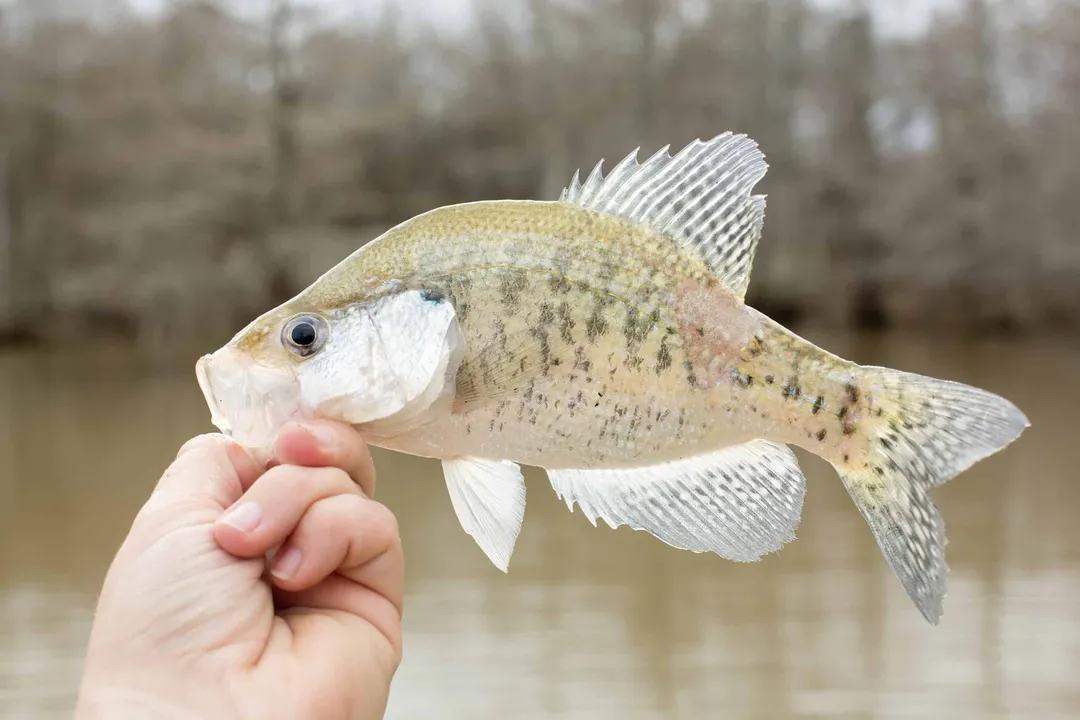
The story of the White Crappie (Pomoxis annularis) is less a tale of dramatic leaps across epochs and more an unfolding narrative of fine-tuning adaptation within established North American waters. This popular panfish, a member of the sunfish family (Centrarchidae), carries within its name the evidence of its physical differentiation, an essential clue to understanding its evolutionary path. The scientific name, Pomoxis annularis, comes from the Greek pomoxis, meaning "opercle sharp," referencing the spines on its gill cover, and the Latin annularis, translating to "having rings," a nod to the species' characteristic, though faint, vertical dark barring on its sides. [2][4][5]
# Ancient Lineage
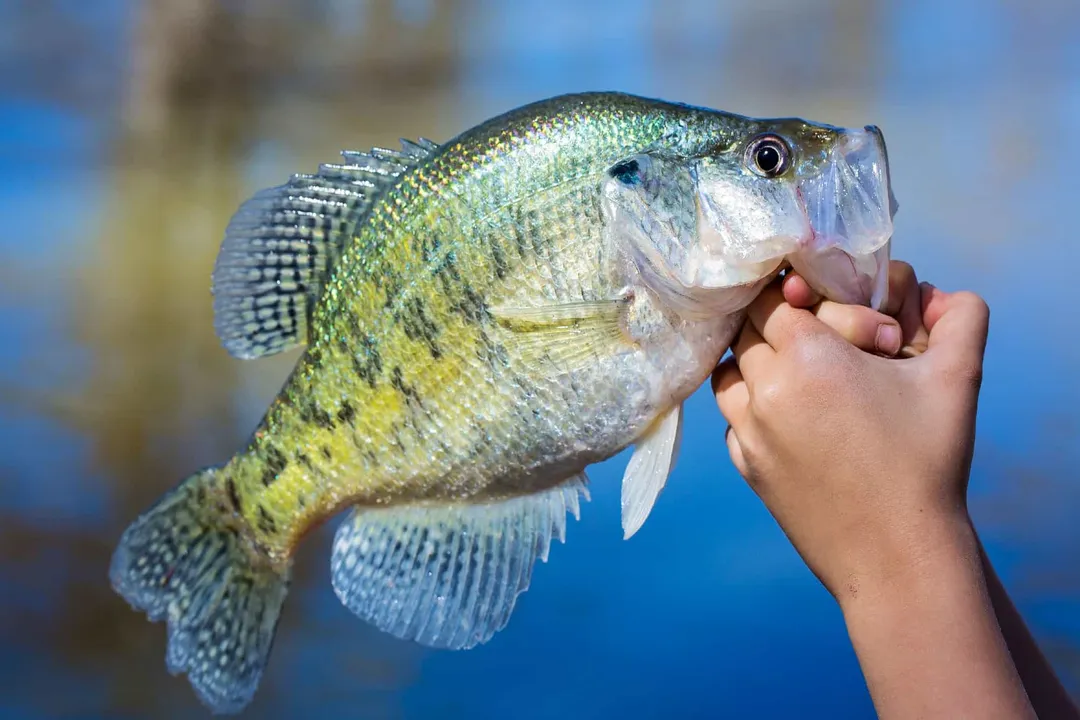
While much of the data surrounding P. annularis focuses on its current ecological role, its deep history is hinted at by its tenure in the aquatic realm. One source suggests that White Crappie have existed in some form for approximately 10 million years. [6] This longevity within the same genus as the Black Crappie (Pomoxis nigromaculatus) points to a significant period of divergence from a common ancestor, followed by adaptation into distinct niches—a classic evolutionary process. The very classification places them in the order Perciformes, among the advanced teleosts, with specialized features like ctenoid scales—scales that have tiny tooth-like projections on their exposed surfaces—indicating a sophisticated structure for maneuvering and feeding. [5]
# Species Divergence
The most compelling evidence of evolutionary separation is found when comparing the White Crappie to its close relative, the Black Crappie. [5] This comparison reveals traits that have been favored by selection, effectively splitting the Pomoxis genus into two recognizable forms.
The distinguishing characteristics are subtle but consistent:
- Dorsal Spines: White Crappie generally possess 5 to 6 dorsal fin spines, whereas the Black Crappie typically has 7 or 8. [2][5][7] This simple count is often the most reliable field identifier. [7]
- Body Pattern: The White Crappie is defined by its dark vertical bars. [5] In contrast, the Black Crappie exhibits black spots that are more irregularly scattered, making their markings look less organized. [4][5]
- Body Shape: White Crappie are described as being slightly more elongated and somewhat shallower in body depth compared to their black counterparts. [5] Furthermore, the origin of the dorsal fin is set farther back on the body in the White Crappie. [5]
These morphological differences stem from adaptation to differing environmental pressures within their shared native drainages (Mississippi and Great Lakes basins). [1][5] The persistence of these differences, despite the potential for interbreeding, highlights the strength of the selection pressures driving their separation.
# Hybrid Zones
Evolution is rarely a clean break, and the relationship between the two crappie species is complicated by their documented ability to hybridize naturally. [2][7] Natural hybridization between P. annularis and P. nigromaculatus has been observed, which can lead to intermediate forms and create confusion for field identification and management efforts concerning local species abundance. [2][4] Where these two species overlap geographically, the genetic exchange acts as a pathway for continued evolutionary flux, blending adaptive traits or, conversely, creating less fit hybrids that are quickly weeded out by selection.
A fascinating way to consider this ongoing process is through the Turbidity Gradient Hypothesis as applied to crappie ecology. The sources indicate a stark difference in habitat preference: White Crappie tolerate and often prefer warmer, turbid (murky) waters and areas with less rooted vegetation, while Black Crappie tend to favor clearer, more structured environments. [1][5][7] This suggests that within the ancient river systems of the East Central North America, one species adapted to the highly dynamic, silt-laden floodplains and backwaters (the White Crappie), while the other specialized in the clearer, more structurally complex main channels or tributary mouths (the Black Crappie). This habitat partitioning, driven by differential tolerance to suspended solids, would have strongly reinforced the reproductive isolation necessary for their status as distinct species.
# Trophic Adaptation
Evolution is also evident in the White Crappie’s progression through its life stages, particularly its diet. Like many fish, the juvenile and adult forms occupy different feeding niches, an adaptation to maximize resource gain throughout their lifespan.
Young White Crappie are primarily planktivores, efficiently straining zooplankton like copepods and cladocerans using long, fine gill rakers. [1][5] This dietary focus allows the dense populations of young fish to thrive on a plentiful, small food source that larger predators often ignore. [4] However, as the fish mature—reaching roughly 12–15 centimeters—their feeding strategy shifts dramatically. [5] Adults become primarily piscivorous/carnivorous, utilizing their large, protrusible mouths to consume small fish like shad and minnows, alongside larger invertebrates like crayfish. [1][5]
This shift is critical for survival and growth. Understanding this trophic evolution helps anglers; the bait choices that work best are directly linked to the crappie’s current life stage and local food availability. [4] For instance, knowing that juveniles rely heavily on zooplankton suggests that the earliest life stages in a new water body are adapted to microscopic prey before fish stocks become established.
Another layer of selection, perhaps unexpected, comes from human intervention itself. The widespread introduction of White Crappie throughout the US and Canada, often for sport fishing improvement, means many populations are descended from a relatively small number of founder fish stocked in the late 1800s and early 1900s. [4][5] This process of Introduction and Stocking effectively creates a form of artificial selection. If stocking programs favored traits like rapid maturity or large size in specific locales, these introduced populations might exhibit slight phenotypic differences from their native, source populations, representing a recent, human-accelerated evolutionary event. For example, in Texas, native populations are secure, but introduced populations are found nearly statewide. [2] The fish you catch today in a non-native water body may possess a unique genetic signature inherited from the original stocking batch, making their local adaptations distinct from those in the Mississippi River basin. [1]

# Habitat Constraints
The White Crappie’s successful colonization of diverse habitats demonstrates its ecological plasticity, which is the raw material for evolution. They thrive in warm, turbid reservoirs and oxbow lakes, favoring low-velocity areas. [1][2][7] While they tolerate turbidity, it is important to note that growth rates are actually better in clearer water, suggesting that turbidity is a tolerated stressor rather than an ideal condition. [1] This tolerance is a major selective advantage over the Black Crappie in muddier systems. [7] This ability to exploit turbid environments, which might exclude competitors that require higher visibility, has allowed the White Crappie to expand its range successfully, even overwintering and reproducing hundreds of miles north of its historic range in the Great Lakes region. [1]
This adaptability in habitat—from the deep, cooler waters they seek at night to the shallow, warm depressions they use for nesting—shows a spectrum of behavioral traits refined by environmental fitness over time. The male’s dedication to constructing and defending a shallow nest on hard clay or gravel bottoms, which then requires protection from predators for up to five days until hatching, demonstrates strong selective pressure on reproductive success. [2][7] The success of passing on those genes hinges on this highly attentive, paternal behavior.
# Conclusion
The White Crappie's evolutionary narrative is primarily one of niche specialization and successful range expansion, solidified by the divergence from P. nigromaculatus and maintained despite ongoing hybridization. Its key traits—tolerance for silt and turbidity, a preference for lower flow, and a dynamic trophic shift from juvenile planktivore to adult piscivore—all speak to successful adaptation to the complex, changing riverine and reservoir systems of central North America. Examining the subtle but concrete differences in spine count and body pattern, contrasted with the ongoing genetic mixing with Black Crappie, provides a living example of speciation in action, shaped by environments that push populations toward distinct solutions for survival.
Related Questions
#Citations
White Crappie Fish Facts - Pomoxis annularis - A-Z Animals
White crappie - Wikipedia
white crappie Pomoxis annularis - Texas Freshwater Fishes
The White Crappie | Critter Science
[PDF] White Crappie (Pomoxis annularis)
Age and growth of the white crappie, Pomoxis Annularis Rafinesque ...
Species Profile - Pomoxis annularis
White Crappie - Fish Species - Iowa DNR