White Catfish Locations
The pursuit of the white catfish, Ictalurus catus, often sends anglers looking far beyond the immediate local pond, as this species has established a surprisingly broad, if somewhat patchy, geographic footprint across North America. Understanding where to find them hinges not just on knowing state lines, but recognizing the specific environmental conditions this resilient species requires to thrive. They are familiar inhabitants of fresh waters across the eastern and central United States, extending down the Atlantic slope and into the Gulf coast drainages.
# Geographic Scope
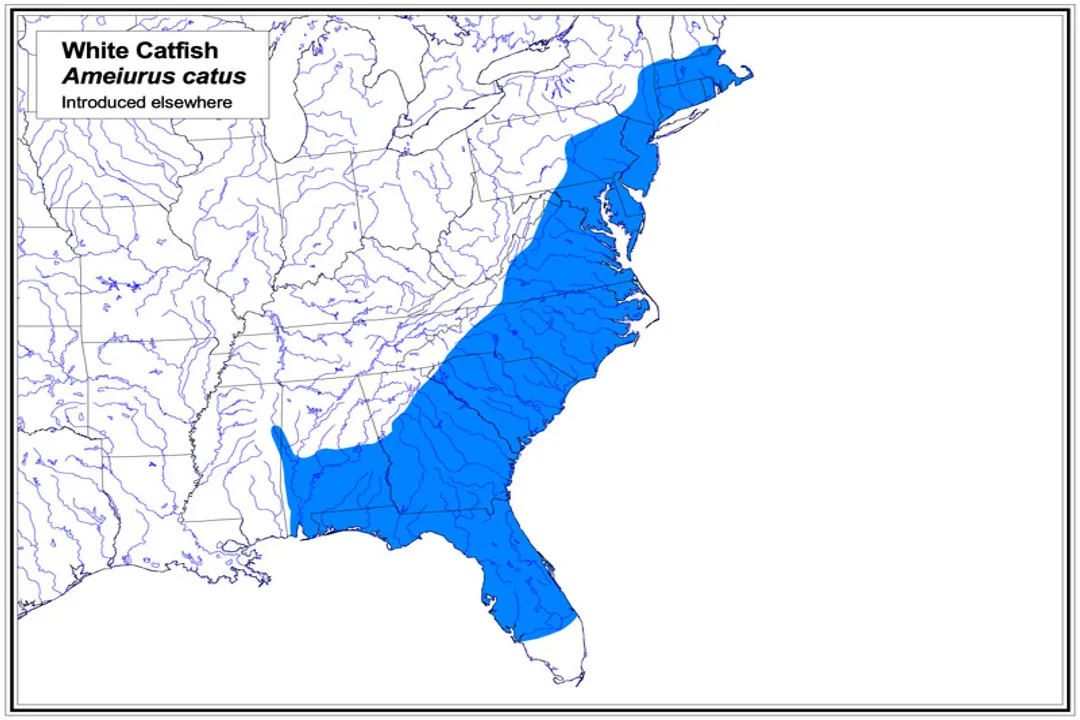
The native distribution of the white catfish centers around the Atlantic slope drainages, extending from Massachusetts south to Florida, and west into the Gulf coast drainages of Alabama and Mississippi. In North Carolina, for example, they are widely distributed across the major river systems. Their historical range suggests a strong connection to the river systems originating from the Appalachians and eastward.
However, the story of the white catfish location is incomplete without noting its introduction to other major watersheds. They were intentionally introduced to the Pacific coast, specifically in California, where they are now an established non-native component of many aquatic ecosystems. Similarly, introductions have occurred in parts of the Great Lakes drainage. The U.S. Geological Survey Nonindigenous Aquatic Species (NAS) database confirms these established introduced populations, highlighting their adaptability outside their original range. While they are common in many Eastern and Southern states, anglers seeking them out West are often targeting populations that established themselves through stocking efforts decades ago.
A comparison of their distribution reveals an interesting pattern: while their native range hugs the Eastern Seaboard and Gulf, their introduced populations in California and the Great Lakes often involve large, modified river systems or reservoirs, suggesting they easily adapt to large-scale riverine environments regardless of the initial source of water. The Ecological Risk Screening Summary indicates that white catfish have been introduced into the Great Lakes basin and the Columbia River basin.
# Water Body Types
When searching for a good white catfish spot, focus on the characteristics of the water body itself rather than just its geography. White catfish prefer slow-moving to moderately flowing waters. They are common residents of large rivers and streams, but you will also find them in reservoirs, ponds, and lakes. Their presence often correlates with less turbulent environments compared to some other catfish species.
A key environmental factor influencing where white catfish are found is substrate preference. They demonstrate a strong affinity for bottoms composed of sand, gravel, or mud. Sources often point to muddy bottoms as prime holding areas. If you are fishing a large reservoir, look for these preferred substrates in the deeper, slower sections, such as bay arms or tributary mouths where silty deposits accumulate. This preference for softer bottoms contrasts slightly with species like channel catfish, which can often tolerate or even prefer a harder bottom structure in certain situations.
Another critical element is water clarity, or lack thereof. White catfish tolerate, and sometimes seem to prefer, turbid or murky water conditions. This tolerance is a significant advantage for anglers, as locations that are too muddy or stained for sight-feeding predators often become excellent sanctuaries for the white catfish.
Considering the wide range mentioned previously, an angler in California targeting a white catfish will likely be working a deep pool in a large, slow-moving river or reservoir system, often one that receives runoff carrying fine sediments. Conversely, an angler in Florida might find them in canals or slow sections of coastal rivers where the water flow is minimal.
# Seasonal Aggregations
The location of white catfish is not static throughout the year; their movements are heavily dictated by seasonal temperature shifts and spawning cycles.
During the warmer months, particularly late spring and summer, white catfish tend to disperse more widely throughout the water body. They often move into shallower areas near drop-offs, creek channels, or along submerged structure to feed actively. If targeting them in a reservoir during the heat of the year, focusing on the break lines where shallow flats meet deeper channels is generally productive.
As water temperatures begin to drop in the fall and winter, white catfish consolidate their location. They seek out deeper holes, maintaining positions near the slackest, warmest water they can find within the system. In rivers, this means looking for the deepest permanent pools or backwater areas away from the main current. In lakes, this translates to the deepest central basins or known, thermally stable pockets that offer refuge from cold surface layers. For instance, if a river has a depth gradient, the white catfish are likely hugging the bottom structure in the deepest section of that river channel during the cold season.
A particularly important time for location change is during the spawning season, typically occurring in late spring or early summer when water temperatures are warm. During this period, they seek out sheltered areas for nesting. These sites are often underwater cavities, such as eroded banks, hollow logs, or submerged debris, usually situated in shallower water. Locating these specific cover elements in slack water areas is crucial for anglers targeting spawning aggregations.
# Interpreting Structure for Access
Anglers looking for a reliable source of white catfish should develop an eye for reading contours, especially when fishing man-made structures like reservoirs. While sources confirm their preference for mud and sand bottoms, an experienced river angler understands that these substrates are almost always associated with specific geological features. For instance, in a river flowing through a valley, the inside bends of the river channel are deposition zones—areas where current slows down enough for finer silts and sands to settle out [Editor's Insight 1]. Therefore, consistently targeting the inside curves of large, slow rivers, especially where the main channel deepens slightly, often pays off, even if the bottom is not perfectly visible.
This ties directly into their tolerance for turbidity. Because they favor these softer, often muddier bottoms, they are frequently found in sections of reservoirs or rivers that receive significant inflow, perhaps from agricultural or development runoff, which keeps the water color muted. A system that appears "too dirty" for many sport fish becomes an ideal holding area for the white catfish, giving the angler who understands this dynamic an advantage in areas others avoid.
When planning a day on a lake, instead of just looking for "deep water," it helps to visualize the substrate map. If a lake has sections dominated by sharp, rocky shorelines (common in upland reservoirs), the white catfish may be sparse there. Instead, concentrate efforts in the tributaries or arms of the reservoir where creek channels deposited their sediment loads over time, creating the preferred muddy/sandy slopes and flats[Editor's Insight 1]. If you have access to bathymetric maps, look for broad, gently sloping shelves that transition into deeper basins, rather than abrupt, rocky drop-offs [Editor's Insight 2].
# Size and Habitat Correlation
While location is primary, the size of the fish can sometimes hint at the quality of the habitat. White catfish are often associated with smaller average sizes compared to the larger channel or blue catfish, though they can certainly reach respectable weights. The smaller size class is often found utilizing cover more actively in shallower sections of rivers and ponds. Larger specimens, however, tend to gravitate toward the deeper, more stable environments of large river bottoms or the deeper areas of reservoirs, likely seeking consistent forage and protection from fluctuating surface conditions. If you are consistently catching very small specimens, you might be fishing too close to prime spawning cover or in overly shallow, temporary water; shifting to deeper edges during non-spawning times can often yield larger individuals that utilize those deeper pockets.
The species' tolerance for slight salinity variations means they can occasionally be found in brackish or estuarine waters near the coast, though they generally prefer purely fresh conditions. This slight adaptability means a location right near a river mouth, where freshwater mixes with saltwater, might still hold a population, especially during cooler periods when salinity is less of a factor.
Ultimately, success in locating the white catfish requires cross-referencing the macro-geography—knowing their general established range across the East, Gulf, and introduced West—with the micro-environment, seeking out slow currents, soft bottoms, and deep-water refuge during the cold months.

Related Questions
#Citations
White Catfish (Ameiurus catus) - Species Profile
White Catfish (Ameiurus catus)
White Catfish
White Catfish Locations and Tactics
White Catfish - California Fish Species - California Fish Website
White Catfish
White Catfish - Florida Museum of Natural History
White Catfish - Fishing Planet Wiki
Ameiurus catus