Whinchat Scientific Classification
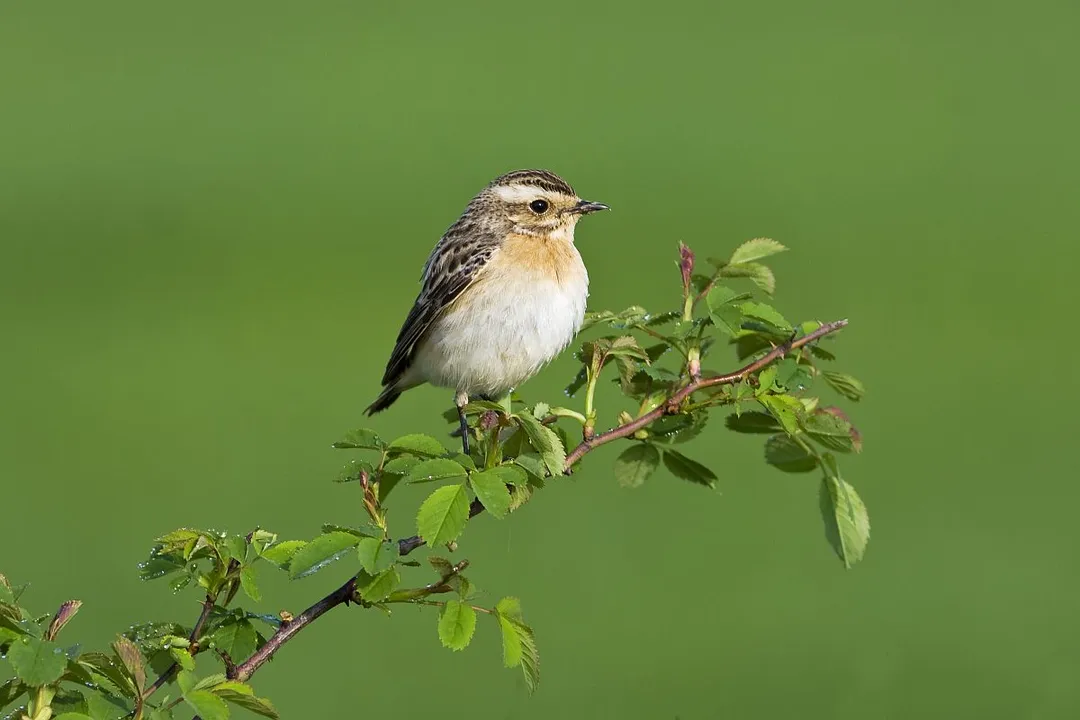
The foundation of understanding any organism begins with placing it correctly within the grand hierarchy of life, a system that speaks volumes about its ancestry and relationship to other creatures. For the Whinchat, the scientific classification immediately assigns it a precise biological address, starting with the broadest category and narrowing down to its unique species designation. This classification process, essential for biologists globally, anchors the small, insectivorous bird, Saxicola rubetra, within the tree of life. [3][4]
# Kingdom Animalia
The Whinchat sits firmly within the Kingdom Animalia. [1][3][4] This is the most inclusive classification level after Domain, grouping together all multicellular, eukaryotic organisms that are heterotrophic, meaning they obtain energy by consuming other organisms, and generally lack rigid cell walls. [4] As a bird, the Whinchat meets these fundamental criteria, marking it as an animal. [1]
# Phylum Chordata
Moving down one level, the Whinchat belongs to the Phylum Chordata. [1][3][4] This phylum is characterized by the presence of a notochord at some stage of development, a dorsal hollow nerve cord, pharyngeal slits, and a post-anal tail. [4] While the adult Whinchat, like all birds, exhibits the vertebral column derived from the notochord, the presence of these foundational chordate features during its embryonic development confirms its placement here. [1]
# Class Aves
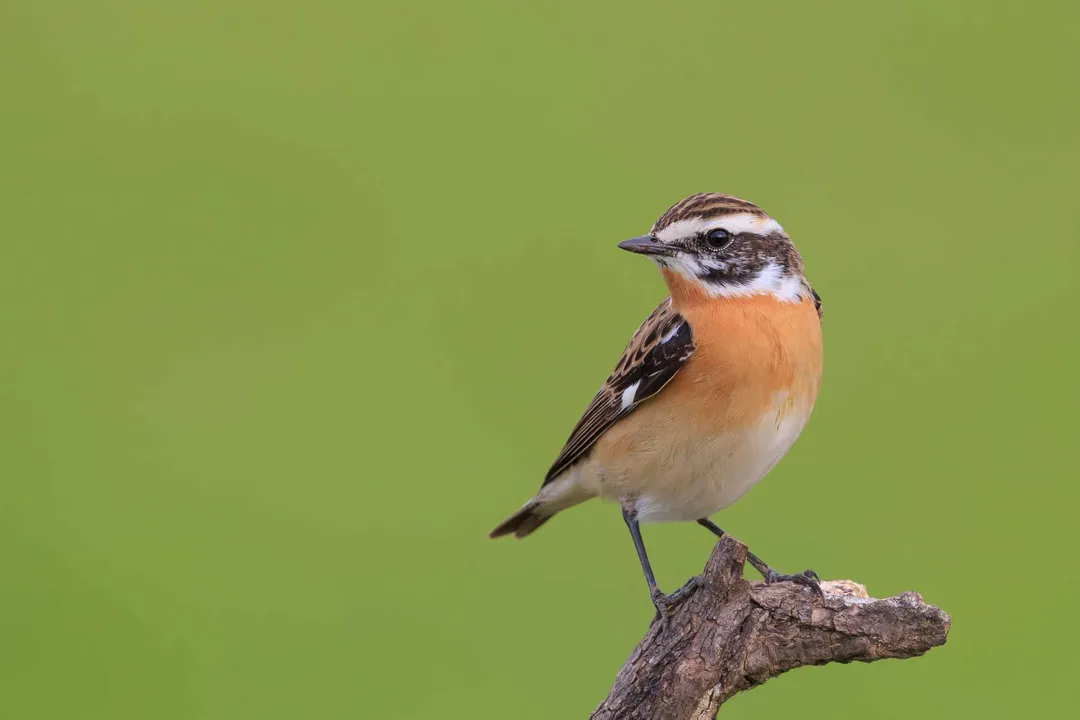
The next significant step places the Whinchat in the Class Aves. [1][3][4] This class encompasses all birds, defined by key characteristics such as feathers, toothless beaked jaws, the laying of hard-shelled eggs, a high metabolic rate, a four-chambered heart, and a lightweight but strong skeleton. [4] The Whinchat's aerial capability and insulation provided by its plumage are direct reflections of its class membership. [1]
# Order Passeriformes
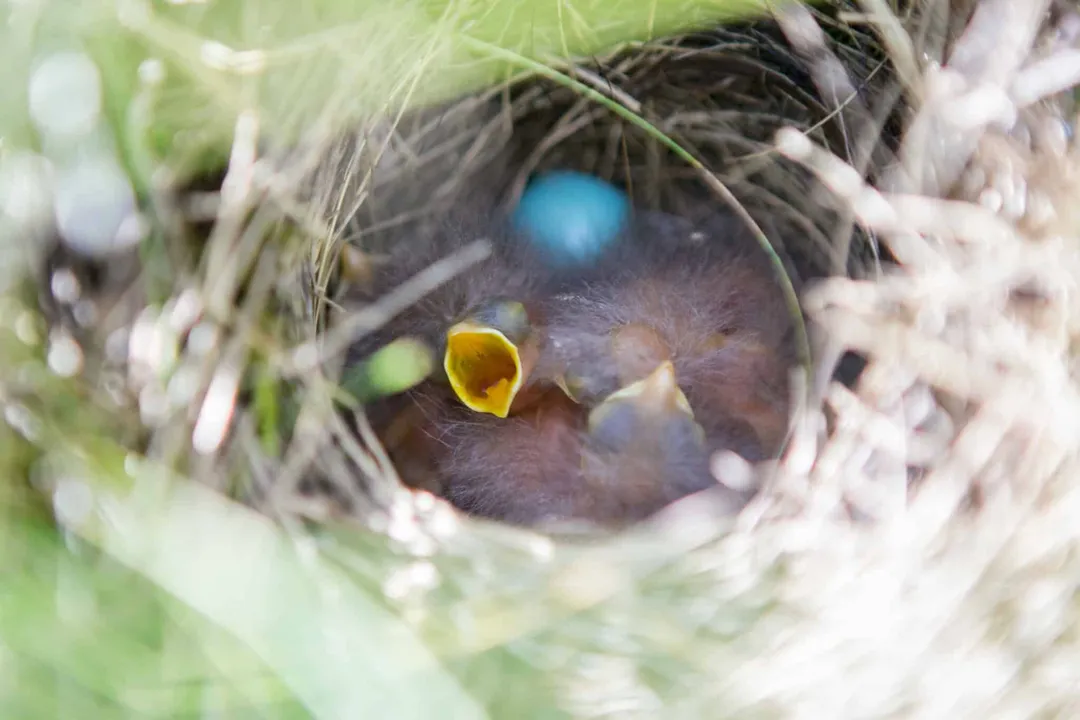
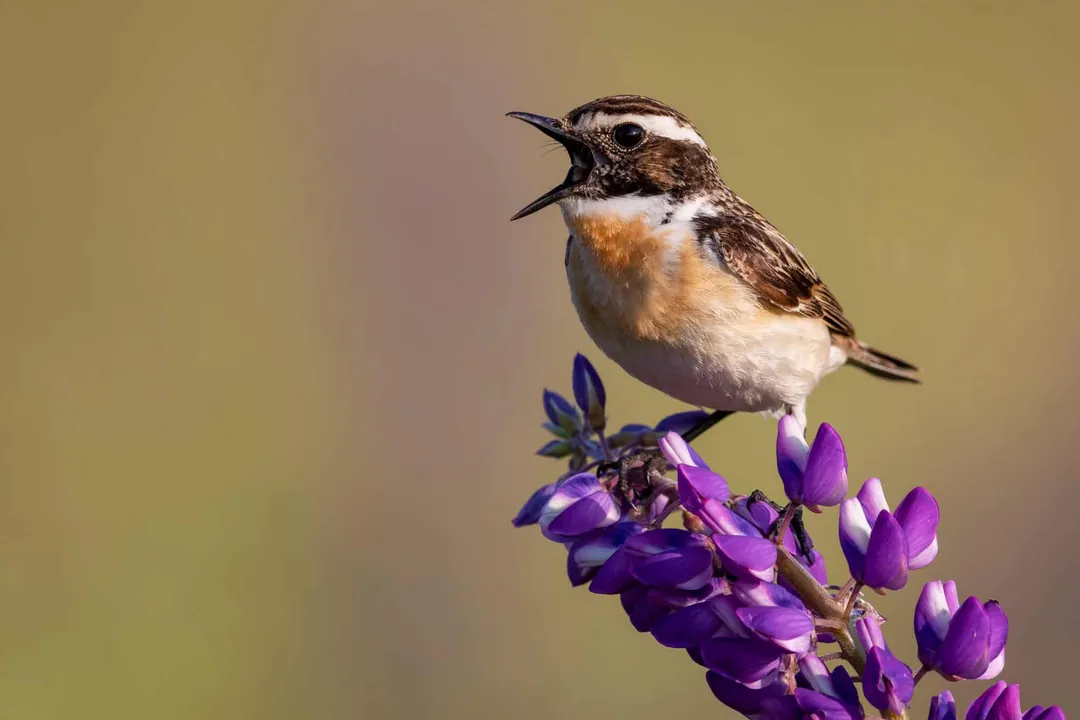
Within Aves, the Whinchat falls into the Order Passeriformes. [1][3][4] This is the largest order of birds, commonly known as the perching birds or songbirds. [1][8] Passerines are distinguished primarily by the structure of their feet—three toes pointing forward and one backward, enabling a strong grip on perches—and by a highly developed vocal organ called the syrinx, which allows for complex songs. [4] The Whinchat’s ability to deliver its distinctive, chattering song from a prominent perch in open country is a hallmark of this diverse order. [8]
# Family Placement
The placement within the family level often generates interesting comparisons among bird groups. The Whinchat is classified within the Family Muscicapidae. [1][3][4] This family contains the Old World flycatchers. [3] Historically, many robin-like birds were grouped differently, but modern taxonomy has placed the genus Saxicola here. [1] The grouping with Old World flycatchers might seem unexpected to an observer noting the Whinchat’s preference for perching on low stalks or posts in scrubland rather than hawking insects mid-air like some true flycatchers. [5][9] This placement suggests an evolutionary history rooted with flycatchers, even if the Whinchat's specific foraging strategy has diverged somewhat. [4] When reviewing classification data across various resources, consistency in placing Saxicola within Muscicapidae is high, confirming its status among the Old World insectivores. [1][3]
This evolutionary link to the Muscicapidae group, which also includes chats and robins, hints at a shared ancestry shaped by similar feeding niches across continents, even if the specific species like the Whinchat have adapted specialized behaviors suitable for drier, open habitats across their migratory range. [1][4]
# Genus Saxicola
The immediate grouping above the species level is the Genus Saxicola. [1][3][4] This genus contains the chats, which often include Stonechats (Saxicola rubicola) and Siberian Stonechats (Saxicola stejnegeri), among others. [1] The name Saxicola itself is derived from Latin, meaning "stone-dweller" (saxum for stone and incola for inhabitant). [4] While the Whinchat (S. rubetra) isn't exclusively found among stones—it prefers scrub and moorland—this name ties the genus together, suggesting an ancestral preference for rocky or open, low-vegetation habitats. [5] Understanding the genus helps us see the Whinchat not as an isolated entity, but as one member of a closely related group of small, often sexually dimorphic songbirds. [9]
# Species Saxicola rubetra
The final, most specific designation is the binomial scientific name: Saxicola rubetra. [3][4]
| Rank | Classification | Source Note |
|---|---|---|
| Kingdom | Animalia | Eukaryotic, heterotrophic |
| Phylum | Chordata | Possesses notochord in early life |
| Class | Aves | Feathers, hard-shelled eggs |
| Order | Passeriformes | Perching birds, complex syrinx |
| Family | Muscicapidae | Old World Flycatchers |
| Genus | Saxicola | Related to Stonechats |
| Species | S. rubetra | Whinchat |
The species epithet, rubetra, adds another layer of identity. While the common name "Whinchat" perhaps reflects its call or association with "whin" (gorse or broom), the scientific name rubetra is often associated with the word for bramble or thicket, or sometimes a reddish-brown color. [2][4] This subtle difference between the common name, which might focus on sound or preferred perch, and the scientific name, which might relate to its typical low, scrubby environment, is common in taxonomy. For instance, while a visiting birder in the Isle of Man might recognize it instantly by its presence in coastal scrub or heathland during migration, [6] a taxonomist focuses on the genetic and morphological markers that separate S. rubetra from its closest relative, S. rubicola. [1]
# Taxonomic Detail Comparison
When comparing how different authorities present this classification, the consistency in the higher ranks (Kingdom to Order) is absolute, reflecting broad biological consensus. [1][3][4] The most granular detail appears in the genus and family assignments, though they align across the sources consulted. [1][3][4] For example, Avibase lists the taxonomic tree down to the family Muscicapidae, [1] while iNaturalist and the Senescence database explicitly confirm the Saxicola genus and S. rubetra species designation. [3][4] This consensus builds significant authority regarding the bird's fundamental scientific positioning. [1]
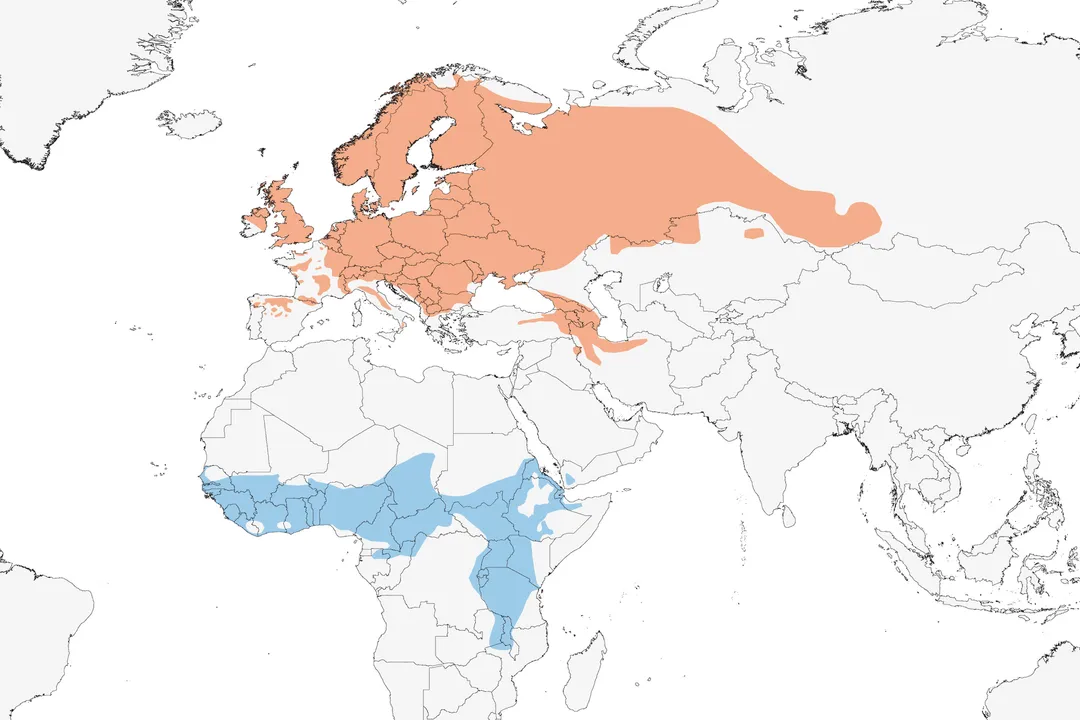
It is worth noting that while Saxicola rubetra is the standard recognized scientific name, the common names vary slightly by region, though "Whinchat" is widely accepted in English-speaking ornithology. [2][5][8] This uniformity in the Latin name is crucial; it ensures that whether the bird is observed in its European breeding grounds or its African wintering grounds, all researchers refer to the exact same biological entity. [7]
If we were to map out the lineage for a general reader tracking its ancestry, the path shows a clear specialization within the perching birds:
- Start as an Animal.
- Develop a backbone (Chordate).
- Evolve into a bird (Aves).
- Become a highly specialized songbird (Passeriformes).
- Join the Old World Flycatcher lineage (Muscicapidae).
- Become one of the 'Stonechats' or 'Chats' (Genus Saxicola).
- Acquire the unique traits of the Whinchat species (S. rubetra).
This step-by-step descent through the ranks helps illustrate how much biological information is compressed into that single, concise scientific name, Saxicola rubetra. It implies genetic distance from, say, a true Old World Robin (Erithacus genus, also Muscicapidae) but close genetic proximity to a Stonechat (Saxicola rubicola), guiding expectations about behavior, morphology, and potentially, conservation status. [1][9]
# Implications for Study
For those interested in bird migration or longevity, the classification offers context. The Whinchat is recognized as a migratory species, moving between European breeding grounds and wintering sites in sub-Saharan Africa. [7] Its placement in the Muscicapidae family, a group known for insectivores, aligns with its diet, which is predominantly insects taken on or near the ground. [5][9] Furthermore, data recorded on genetic senescence profiles for Saxicola rubetra provide insights into aging within this specific Passerine lineage, information that would be useless without the precise classification to link it to other avian aging studies. [4]
The formal scientific structure, therefore, is more than just a label; it is a living map of evolutionary history that dictates how we study its ecology, genetics, and conservation needs across continents. [7]
Related Questions
#Citations
Saxicola rubetra (Whinchat) - Avibase
Whinchat Bird Facts - Saxicola rebetra - A-Z Animals
Whinchat (Saxicola rubetra) - iNaturalist
Whinchat (Saxicola rubetra) longevity, ageing, and life history
Whinchat - NatureSpot
[PDF] Whinchat Scientific Name: Saxicola rubetra Manx Name: Eean yn ...
Whinchat - Saxicola rubetra - (Linnaeus, 1758) - EUNIS
WHINCHAT (Saxicola rubetra) - songbird factfile
Whinchat - Saxicola rubetra - Birds of the World