Which country has the most sea otters?
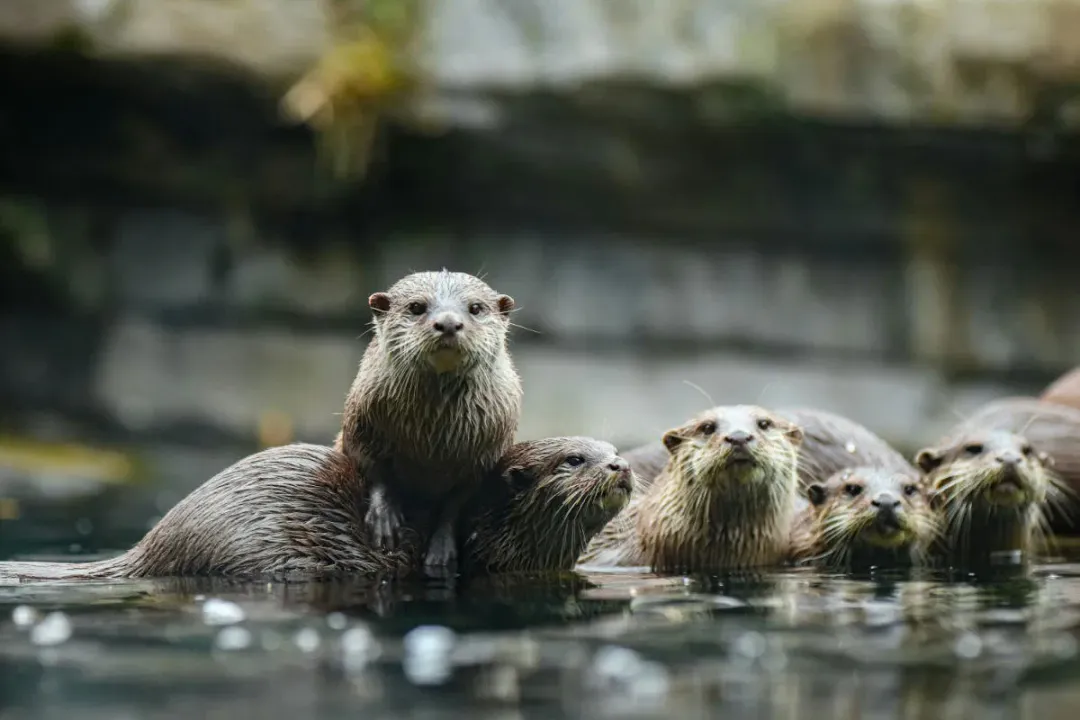
The sea otter, Enhydra lutris, is arguably one of the ocean’s most endearing residents, instantly recognizable by its plush, dense fur and habit of floating upside down on its back. This marine mammal, the heaviest member of the weasel family, holds a unique place in the cold waters of the North Pacific Ocean. Unlike most marine mammals that rely on a thick layer of blubber, the sea otter maintains warmth using its coat, which is the densest in the entire animal kingdom, packing up to 160,000 hairs per square centimeter. This remarkable adaptation, coupled with their tendency to use rocks to crack open shellfish—a behavior that classifies them as tool users—makes them fascinating subjects of study. But while their global range once swept across the North Pacific rim, from Japan to Mexico, where do the majority of these creatures live today?
# Population Leader

When examining current distributions, the country hosting the largest population of sea otters is unequivocally the United States. The sheer scale of the US population is overwhelmingly anchored in Alaska, which serves as the central area for the species' range. Estimates suggest that between 100,000 and 150,000 animals reside in Alaskan waters. This figure dwarfs the populations found in other countries where sea otters—primarily the Northern subspecies, E. l. kenyoni—occur.
While Alaska is the stronghold, the United States supports other significant groups. The Southern sea otter subspecies, E. l. nereis, is found in Central and Southern California, where their numbers have recovered to nearly 3,000 individuals from a low point of just 50 survivors discovered in 1938. When combining the estimates for Alaska and the Southern USA, the total US count is by far the largest concentration globally, though these numbers are subject to fluctuation based on regional disasters and monitoring efforts.
# Range Distribution

The sea otter’s historical range spanned a vast arc across the North Pacific, but today, the surviving populations are fragmented across just a few nations. Beyond the United States, Russia and Canada host the other major extant populations.
In Russia, the Asian sea otter (E. l. lutris) is found along the Far East coastline, particularly near the Kuril Islands, Kamchatka, and the Commander Islands. Before the intense fur trade, Russia likely hosted tens of thousands of otters. Current estimates place Russia's total population somewhere between 18,000 and 20,000 individuals. However, it is important to note that recent surveys in the Russian Far East have indicated steep, concerning declines across the Kuril Islands and Commander Islands in the years leading up to 2024, suggesting this population is under significant stress, potentially due to poaching.
Canada, specifically British Columbia, hosts a smaller but recovering population, estimated at around 8,000 individuals. The current British Columbia populations are the result of reintroduction efforts in the late 1960s and early 1970s, as the native stock was wiped out.
A comparison of the main North Pacific strongholds illustrates the current distribution hierarchy:
| Country | Primary Subspecies | Estimated Population Range (Approximate) | Status Trend Note |
|---|---|---|---|
| United States | Northern (kenyoni) & Southern (nereis) | $102,400 – 152,400$ | Central to the species' survival; fluctuating health in specific areas |
| Russia | Asian (lutris) | $18,000 – 20,000$ | Experiencing recent, severe population declines |
| Canada (BC) | Northern (kenyoni) | Reintroduced population with strong growth rates in specific areas |
This concentration of the vast majority of the world’s sea otters in US waters—particularly Alaska—places a heavy stewardship burden on that nation. While conservation success stories exist, the fate of the entire species is considerably dependent on the stability of a single geographic area, making regional environmental shocks exceptionally perilous.
# Southern Struggle
The Southern sea otter (E. l. nereis) population in California represents a different conservation narrative. After surviving near extinction, this group’s recovery has been slower and more precarious than the robust Northern populations. The California population’s steady climb stalled for several years around the 3,000 mark, hovering just below the threshold required for the US Fish and Wildlife Service to consider removing them from the Endangered Species Act list.
This recovery slowdown has been linked to several factors, including an increase in lethal shark bites and exposure to environmental contaminants. Specifically, the presence of the parasite Toxoplasma gondii, washed into the ocean from land-based cat feces via runoff, has been identified as a major source of mortality in California otters. The fact that the Russian populations, which are primarily the Asian subspecies, have shown recent sharp drops while the Californian Southern otters have struggled to gain ground suggests that even within the same species, localized threats can dictate population success or failure in ways that are not always globally comparable.
# Ecosystem Importance

The sea otter's role in its marine environment is so influential that it is considered a keystone species. This status arises from its primary diet: marine invertebrates, especially sea urchins. Urchins, if left unchecked, graze voraciously on kelp, stripping the stalks and causing the entire forest to die off, turning the productive underwater ecosystem into what is known as an "urchin barren". Kelp forests are themselves vital; they sequester carbon dioxide and provide habitat for countless other species, including commercially important fish. By controlling the urchin population, sea otters directly safeguard the kelp forest structure. Furthermore, their foraging activities—digging for clams in sediment—can actually stimulate seagrass growth and increase the genetic diversity of eelgrass meadows, which helps protect coastlines from storm surges. When sea otter populations decline, the cascading negative effects on coastal health are profound and widespread.
# Thermal Reliance
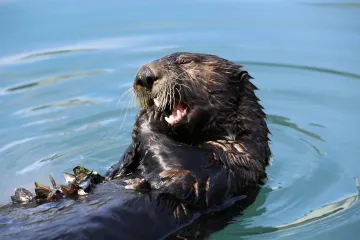
Understanding the sea otter's biology offers insight into why they are so vulnerable to specific threats, which, in turn, informs conservation strategy across all ranges. Their reliance on fur means that anything compromising that insulation is life-threatening. Oil spills, for instance, are catastrophic because oil mats the fur, preventing it from trapping the insulating layer of air next to the skin, leading rapidly to fatal hypothermia. The Exxon Valdez spill in 1989 remains a grim reminder of this vulnerability, killing thousands of otters in Prince William Sound, Alaska.
This dependence on fur, rather than blubber, is an evolutionary marker. Sea otters only returned to the marine environment relatively recently, making them an evolutionary snapshot of mammals adapting to the sea. As they continue to spend more time in the water, there is an evolutionary push toward blubber, which is more efficient for deep, prolonged dives where fur insulation degrades as the air layer compresses. Yet, for now, the constant grooming they undertake is not about vanity; it is a critical, high-energy survival task required to maintain the integrity of their living coat.
# Local Threats
Beyond large-scale pollution events, localized threats present ongoing challenges to recovery efforts in different regions. In California, the fight is often against microscopic organisms. The threat from Toxoplasma gondii is a stark example of how terrestrial activities—like wastewater runoff from suburban areas—can directly impact a marine apex predator, an impact that appears disproportionately felt by the Southern population compared to the Northern ones.
Conversely, in the sparsely populated Aleutian Islands of Alaska, a massive population drop, from potentially 100,000 down to around 6,000, has been suspected to be caused by an increase in predation, primarily by orcas, though direct proof remains elusive. The fact that the leading predator for Alaskan populations is a marine mammal, while the leading disease threat for Californian populations is land-based, highlights that a unified international recovery plan must address wildly divergent local ecological pressures.
# Recovery Context
It is easy to forget just how close the species came to total annihilation. Before the massive decline caused by the maritime fur trade that peaked in the 18th and 19th centuries, global numbers were likely between 150,000 and 300,000. By the time the 1911 international ban on hunting took effect, perhaps only 1,000 to 2,000 sea otters remained globally.
The subsequent rebound in about two-thirds of their historic range is indeed heralded as a major success in marine conservation. However, the recovery is fundamentally incomplete due to the species being listed as Endangered by the IUCN. Genetic research suggests that these catastrophic historical bottlenecks, which cut populations down to tiny, isolated remnants, left the species with significantly low genetic diversity. This lack of diversity can hinder long-term adaptation and growth, meaning that while we celebrate the successful return from near-zero, the populations are still genetically fragile compared to their pre-exploitation state. Conservation efforts involving captive breeding programs and, potentially, introducing genetic material from healthier groups remain essential tools for securing the species' future across all the countries that share stewardship of this unique marine mammal.
Related Questions
#Citations
Otter Population by Country 2025
Sea otter