What countries have mambas?
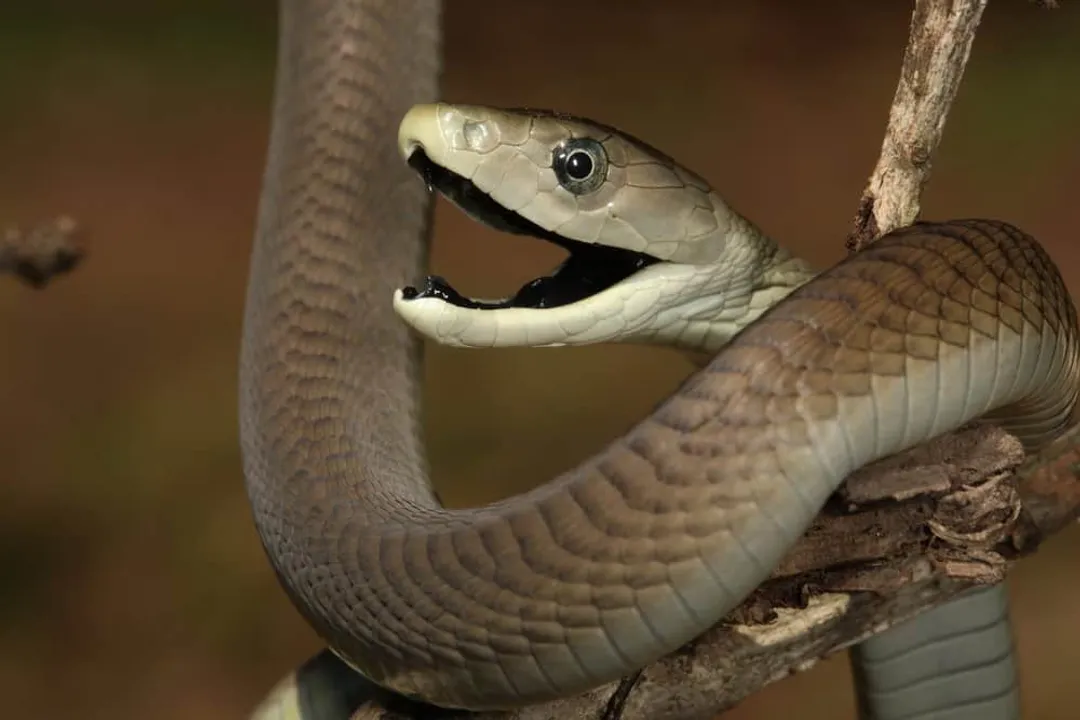
The mamba, a group of highly venomous elapid snakes belonging to the genus Dendroaspis, is exclusively found in Africa. [1] These snakes are notorious for their speed and potent neurotoxic venom, making any encounter a serious event. [2] While the general location is clear—the continent of Africa—pinpointing the exact countries requires looking closely at the preferred environments of the distinct species within the genus, primarily splitting between the widely recognized Black Mamba and the various arboreal Green Mambas. [1]
# Continent Focus
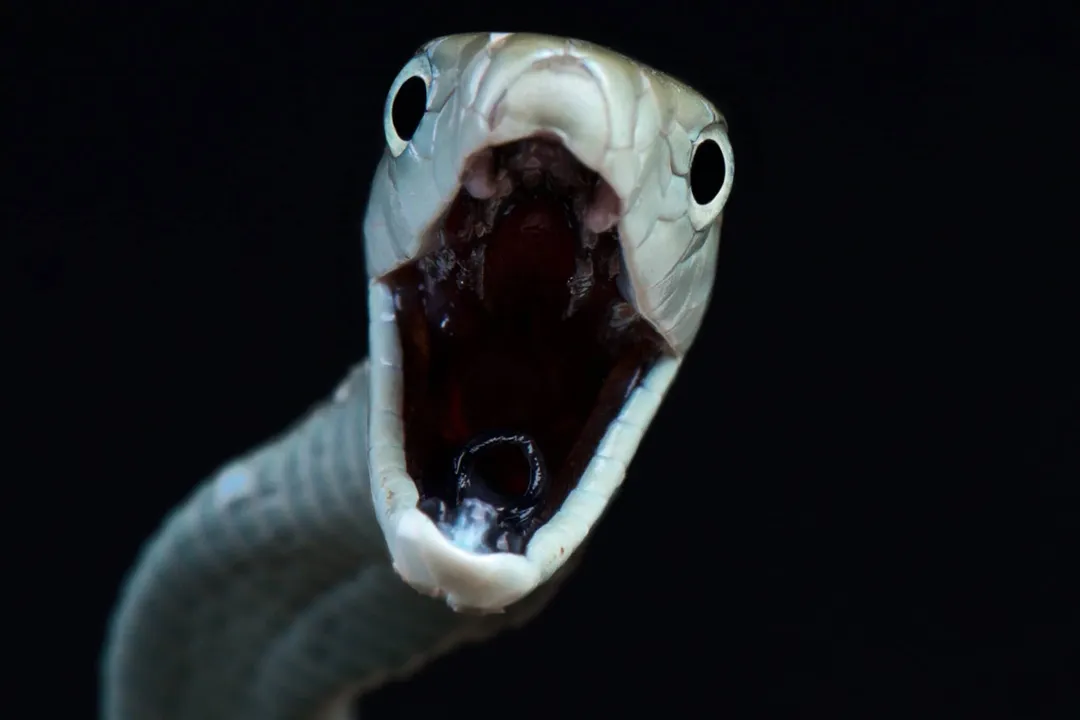
The entire natural range for all mamba species is restricted to the African continent. [1] Specifically, the habitat for the most famous of the group, the Black Mamba (Dendroaspis polylepis), is broadly characterized as sub-Saharan Africa. [2][4][6] This broad regional designation covers a huge geographical area spanning East, Central, and Southern Africa. [5] Understanding distribution, however, goes beyond simply naming the continent; it demands an appreciation for the specific ecological niches each species has adopted. [2]
# Black Snake Range
The Black Mamba is perhaps the most geographically widespread of the group, inhabiting a large swath of the African continent south of the Sahara Desert. [2][6] Its preference is for drier environments such as savannas, rocky hills, and open woodlands. [2][5] This contrasts somewhat with the perception of snakes always being restricted to deep jungle; the Black Mamba thrives where cover is interspersed with open ground, allowing for its characteristic fast movement on the ground. [2] While precise country-by-country distribution maps are complex due to varied reporting and population densities, areas like East Africa and Southern Africa are repeatedly cited as key strongholds, with explicit local mentions often pointing toward South Africa. [5] It is worth noting that despite their fearsome reputation, Black Mambas are not necessarily rare across their range; rather, their presence is heavily dependent on the availability of their preferred, specific habitat types. [4]
# Forest Dwellers
In contrast to the ground-oriented, savanna-dwelling Black Mamba, the various Green Mamba species—including the Eastern Green Mamba, Western Green Mamba, and Jameson's Mamba—are almost entirely arboreal, meaning they spend the vast majority of their lives in trees. [1][2] Consequently, their presence is intrinsically linked to dense, forested areas within tropical Africa. [2] While the Black Mamba might frequent woodland margins, Green Mambas require established canopy cover, leading them to occupy different sets of countries or different parts of countries also inhabited by their black-scaled relatives. For instance, a mountainous, heavily forested region within a nation that also has vast dry plains will host different mamba species in those distinct ecosystems. [2] The presence of specific arboreal species, such as the Green Mamba, is often noted by facilities like zoos, which keep them for educational purposes. [3]
# Habitat Specificity
The simple question of "what countries have mambas" yields a nuanced answer when considering ecological separation. One original observation arising from comparing the species' preferences is that the political boundary of a country is less important to a mamba than the biome it supports. A nation like the Democratic Republic of Congo, for example, likely hosts multiple species across its diverse geography—Green Mambas in the central rainforest belt and potentially Black Mambas in its drier, peripheral savannas. [2] Conversely, a nation composed almost entirely of high-altitude desert or dense, temperate forest might host no mambas, even if it is geographically adjacent to a mamba-rich nation. This tight coupling between species and microclimate means that mapping their distribution is effectively mapping the distribution of their preferred African biomes: savanna/woodland for D. polylepis and moist, closed-canopy forest for the Green species. [2]
# Field Reports
While scientific literature establishes broad distribution patterns, the real-world confirmation often comes from local reports, which can sometimes highlight surprising proximity to human settlements. Analyzing social media reports, for example, reveals anecdotal evidence of encounters that confirm population persistence in certain regions. [5] A local sighting, such as one noted by snake enthusiasts in South Africa, provides a crucial, granular data point that verifies the snake’s presence within a specific town or reserve, acting as a real-time ground-truthing mechanism for broader geographical data. [5] These reports underscore an important takeaway: where mambas exist, human-snake interaction is a constant factor, reinforcing the critical need for local knowledge regarding identification and safety, especially given the danger posed by their venom. [2]
# Species Comparison
To better understand the geographic variation, it is useful to briefly compare the key species. The Black Mamba is known for its size, speed, and dark interior mouth coloration, making it stand out visually when agitated, even though its external skin color is usually olive to gray. [6] The Green Mambas, however, are characterized by their bright green coloration, an adaptation that provides excellent camouflage in their forest homes. [2]
| Feature | Black Mamba (D. polylepis) | Green Mambas (Dendroaspis spp.) |
|---|---|---|
| Primary Habitat | Savannas, rocky hills, open woodlands [2] | Dense forests, high canopy [2] |
| Locomotion | Primarily terrestrial (ground-dwelling) [2] | Strictly arboreal (tree-dwelling) [2] |
| Coloration | Gray, olive, or brown; dark mouth interior [6] | Bright green [2] |
| General Range | Broad sub-Saharan distribution [2][6] | More restricted to forested tracts [2] |
An often-overlooked point when discussing these snakes is the concept of perceived rarity versus actual rarity. If a country has a large percentage of the Black Mamba’s preferred arid savanna, sightings might still be infrequent because the snake is highly efficient at avoiding detection in its natural, open habitat. [4] This contrasts with a Green Mamba in a small, dense patch of forest, where due to limited vertical space, encounters might be statistically more likely for someone working within that specific patch of trees, even if the country overall has fewer Green Mambas than the Black Mamba population present in its broader savanna regions.
Related Questions
#Citations
Mamba - Wikipedia
Mamba Animal Facts - Dendroaspis spp.
Are there five different species of mambas? - Facebook
Where are Black Mambas found? Why are they so rare? - Quora
GREEN MAMBA – National Zoological Garden, Pretoria
Dendroaspis polylepis (Black Mamba) - Animal Diversity Web
Where can I see the Black Mamba in the wild - Geeky Planet
mamba - Students | Britannica Kids | Homework Help