Where did the Nile crocodile come from?
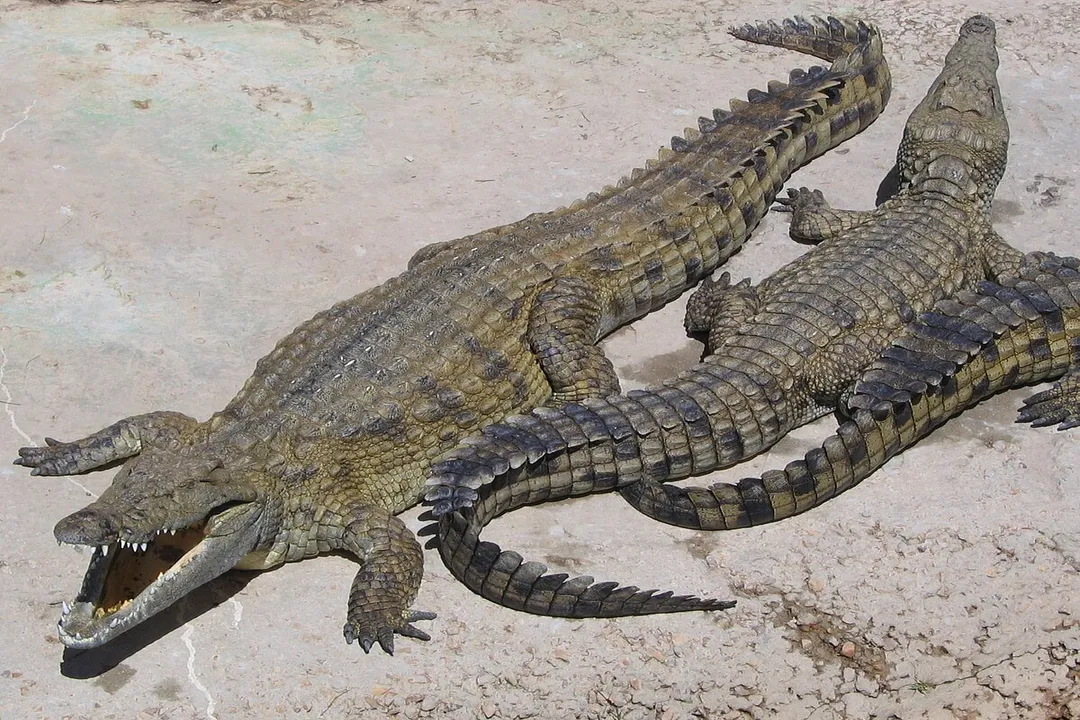
The Nile crocodile () is arguably one of Africa’s most potent symbols, an apex predator whose imposing presence commands respect from the Zambezi down to the southern reaches of the continent. Yet, tracing its lineage—answering precisely where this formidable reptile "came from"—reveals a story far more complex than a simple association with the famous river that lends it its name. The narrative of its origin stretches back millions of years through the African fossil record and involves significant taxonomic revisions based on modern genetic analysis.
# Naming Lineage
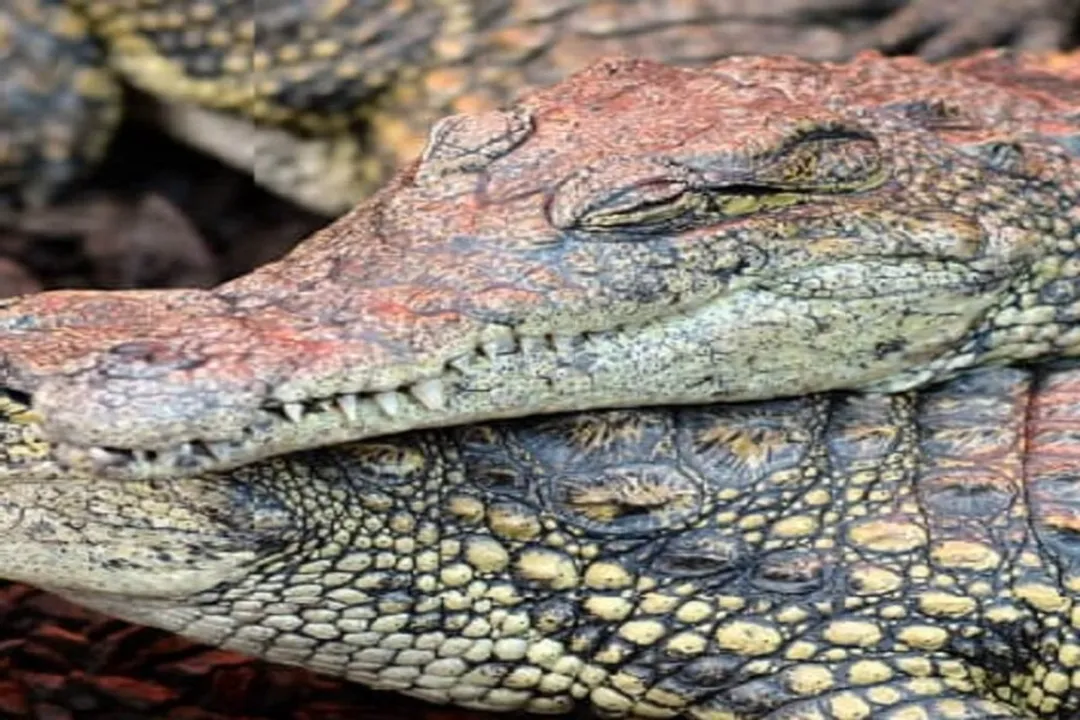
The animal is known formally as , a binomial name derived from the Greek words kroke (meaning "pebble") and drilos (meaning "worm"), which describes its rough, pebbly skin, combined with niloticus, meaning "from the Nile River". This naming firmly anchored the species geographically, yet this association belies a much wider evolutionary and ancestral home. While it is often referred to simply as the African crocodile or the common crocodile, its history shows it was not always confined to the Nile basin as its name implies. The scope of its former territory suggests that the modern understanding of the species is, in many ways, a story of contraction from a previously much larger dominion.
# Deep African Origins
The true chronological origin of the animal we currently classify as the extant Nile crocodile is pinned down by paleontological evidence found in East Africa. Fossil remains recovered from Kenya place the first appearance of in the geological era spanning the Late Miocene to the Early Pliocene. These fossils are dated to approximately 7 to 5 million years ago (Ma), establishing a deep heritage rooted firmly within the African continent. This places the species as an ancient inhabitant, one that evolved long before recorded history and shared its environment with other, now-extinct relatives.

# Ancient Relatives
The early evolutionary context of the Nile crocodile involves several fascinating, if now vanished, contemporaries. One of the closest relatives identified in the same strata of ancient Kenyan rock was , a species sharing similar physical characteristics and size with modern Nile crocodiles. Furthermore, the fossil record includes other African members of the Crocodylus genus that were even more massive, such as and from the Plio-Pleistocene deposits of Tanzania and Kenya, respectively. These extinct relatives were projected to reach total lengths of up to 7.5 or 7.6 meters. Interestingly, these ancient forms, along with the even larger , possessed relatively broad snouts, suggesting a specialization in tackling very large prey, such as substantial freshwater turtles or early large mammals. Subsequent research has indicated that , despite its imposing size, is actually more closely related to the modern dwarf crocodile (), suggesting that the lineage leading directly to the Nile crocodile diverged and specialized in a slightly different ecological niche than previously assumed.
# Range Contraction
Historically, the domain of the Nile crocodile was significantly more expansive than its current borders suggest. Its range once stretched northward, encompassing the entire Nile River basin, reaching as far as the Nile Delta. Its historical footprint extended across the Red Sea into the Palestine region and Syria, and fossils have been recorded from locations as far west as Israel and Tunisia. The famed Greek historian Herodotus even sighted the animal in Lake Moeris in Egypt. In the island world, small populations were historically noted in the Seychelles and Comoros, though they are now thought to be extinct in those locations.
The retraction of this vast historical range is a defining feature of the Nile crocodile's modern geography. In the northern extremes, local extinctions, or extirpations, have occurred in regions like the Maghreb. Ecologists link this shrinking territory to habitat loss, pollution, and, in the case of the Levant and Tunisia, possibly environmental factors related to global warming that have severely altered wetlands.
# A Tale of Two Crocodiles
While habitat loss explains the northern retreat, a major shift in understanding the species’ true identity originated from genetic mapping. For a long time, populations across West and Central Africa were lumped under . However, in 2011, genetic studies utilizing DNA sequencing revealed that the crocodile populations inhabiting West and Northwest Africa are sufficiently distinct to be recognized as a separate species: the West African crocodile, . This revelation has profound implications for the origin story of . It suggests that the species we call the Nile crocodile is actually the eastern and southern African branch of a larger, ancient African group.
The morphological variation seen across the species' range was a major clue leading to this split. For instance, crocodiles in Lake Turkana, Kenya, possess more osteoderms (bony plates) on their ventral surfaces than other known populations. This variation, seen across different localities, suggests a long period of geographic isolation among various African river systems, allowing regional adaptations to take hold long before scientists formalized the distinction between and . The modern Nile crocodile, in this context, originates from the populations that remained genetically cohesive enough to maintain the designation, having separated from the West African lineage.
To fully appreciate the implication of this taxonomic separation, consider this: while the saltwater crocodile () is the world’s largest, genetic analysis shows that the Nile crocodile () is actually more closely related to the crocodiles of the Americas—such as the American, Cuban, and Orinoco crocodiles—than it is to its recently recognized West African cousin, . This suggests that the ancestral stock that populated the Nile region may have dispersed westward across a connected landscape, leading to the separation event that ultimately isolated in the west and left to dominate the east and south.
# Island Arrival Madagascar
A particularly intriguing chapter in the Nile crocodile’s dispersal history involves its presence on Madagascar. An isolated population exists in the western and southern parts of the island. This colonization is relatively recent, likely occurring within the last 2000 years. Crucially, this arrival followed the extinction of Madagascar's endemic crocodile species, . Archaeological dating of a Crocodylus skull found on the island suggests it is around 7,500 years old, implying that the native persisted for some time after Nile crocodiles may have first reached the island. The survival of this remnant population, which has even adapted to living within caves in some areas, speaks to the adaptability of the species once dispersal routes—perhaps temporary land bridges or overland travel during wetter climatic periods—allowed for the crossing.
# Defining the Current Extent
Today, the established native range of the Nile crocodile () is characterized as a patchwork across sub-Saharan Africa, predominantly in the central, eastern, and southern regions. It occurs in a wide variety of aquatic environments, from rivers and lakes to freshwater swamps, and occasionally brackish water or estuaries. The species dominates the waters of 26 countries.
The current distribution is best described as the result of evolutionary divergence followed by historical retraction due to ecological pressure and human influence.
| Region | Historical Inclusion | Current Status (Approximate) | Influencing Factor |
|---|---|---|---|
| Nile Delta/North Africa | Yes (Stretched to Mediterranean coast) | Largely extirpated; locally re-established near Aswan Dam | Habitat change, irrigation, pollution |
| Levant (Israel/Syria) | Yes | Extinct | Wetland retraction |
| West/Northwest Africa | Yes | Now recognized as separate species () | Genetic divergence |
| Madagascar | No (Colonized post- extinction) | Isolated, stable population | Geographic dispersal/isolation |
Observing the current distribution map, it becomes clear that the term "Nile crocodile" now describes a species complex that has been fragmented by geological time and, more acutely, by modern human development. While the evolutionary origin lies deep in the Miocene/Pliocene, the origin of the local populations seen today is dictated by factors as recent as 20th-century leather hunting and 21st-century agricultural runoff impacting specific rivers like the Olifants. For example, a population in a well-managed protected area may have a very different age structure and genetic flow than one clinging to existence near an intensively farmed delta, even if both are technically . Understanding this fragmented modern origin is essential for targeted conservation, recognizing that simply protecting a wide swath of territory is not enough if localized populations have already been ecologically isolated or severely bottlenecked by human activity.
The story of where the Nile crocodile came from is thus a multi-layered answer: it originated in East Africa millions of years ago as part of a widespread group, evolved its distinct morphology across the continent, retreated from its northernmost historical limits, and subsequently redefined its species boundaries when its western relatives were formally recognized as separate, emphasizing that its current distribution is a reduced echo of its ancient homeland.
Related Questions
#Citations
Nile crocodile
Nile Crocodile
Nile Crocodile (Crocodylus niloticus) - Species Profile
Nile crocodile | Size, Taxonomy, Conservation, & Facts
Nile Crocodile | Creatures of the World Wikia - Fandom
The ancient Nile Crocodile