Is Smilosuchus related to modern crocodiles?
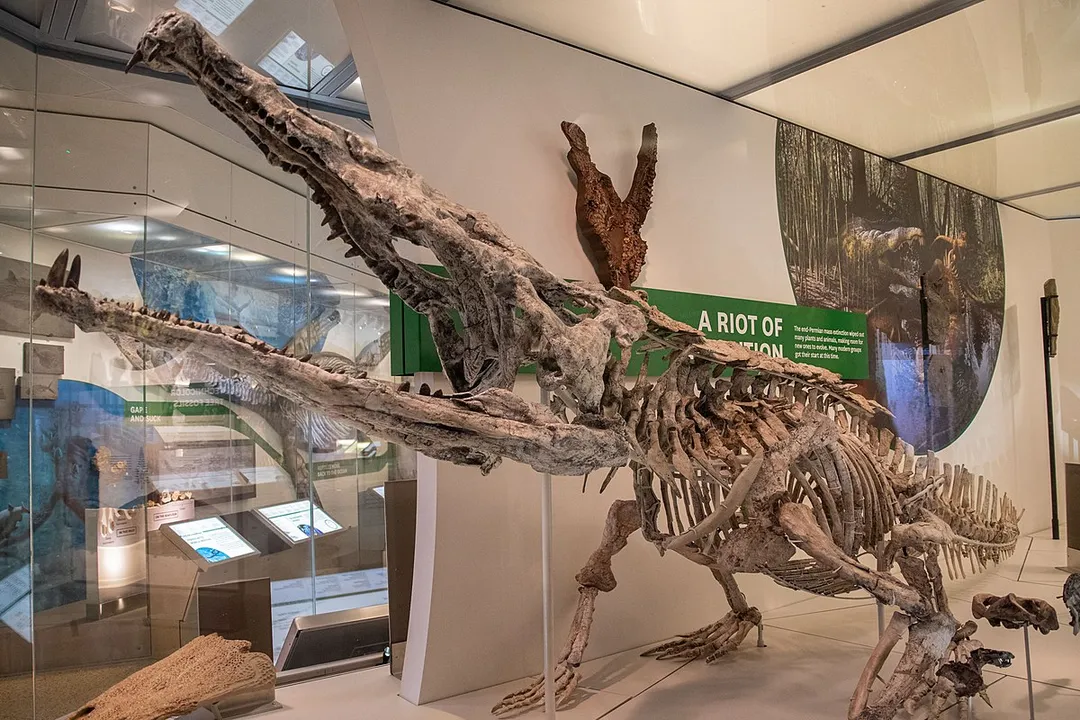
The creature known as Smilosuchus certainly gives the impression of being an enormous Triassic crocodile, an ancient apex predator that ruled waterways millions of years ago. [5][7] If you saw a fossil of its skull, you might immediately place it alongside modern Crocodylus or Alligator. However, appearances in paleontology can be deeply deceiving. While it shared a similar ecological role and general body plan—a long snout, powerful jaws, and an armored hide—Smilosuchus was not, strictly speaking, a crocodile at all. [5] It belonged to an entirely different, extinct lineage of reptiles known as the phytosaurs. [5]
# Shared Ancestry
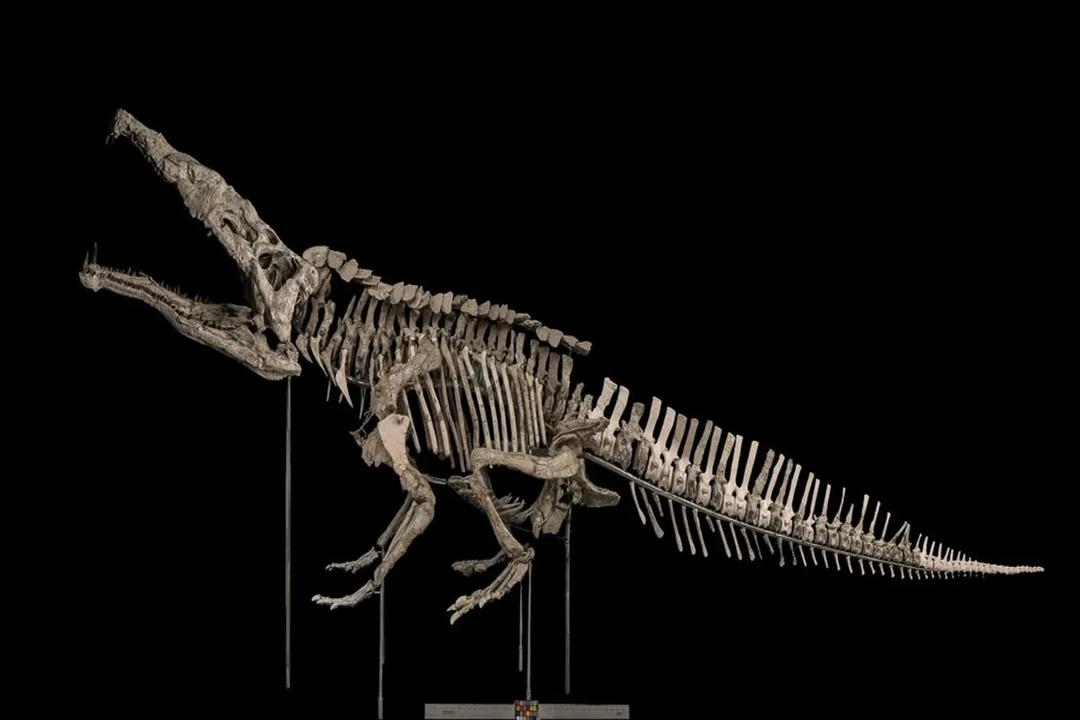
To understand Smilosuchus’s placement, we need to look back into the deep history of archosaurs, the group that includes dinosaurs, birds, and modern crocodilians. [1] Both phytosaurs and true crocodiles fall under the broader category called Crurotarsi (or Pseudosuchia). [1][4] Think of Crurotarsi as a massive family tree branch. Modern crocodiles belong to the group Crocodylomorpha. [1] Phytosaurs, like Smilosuchus, branched off much earlier from that line. [1] This means that while they are related, sharing a common archosaur ancestor from deep in the past, they are more like very distant evolutionary cousins than close siblings. [4]
It is fascinating that two distinct groups of reptiles evolved strikingly similar features to dominate similar aquatic predator niches. [1] This phenomenon, known as convergent evolution, demonstrates how environmental pressures can shape body plans toward the most efficient design for a specific lifestyle—in this case, ambushing prey from the water. [1][5] This shared ecological success across two separate lines makes studying phytosaurs essential for understanding the ancient reptile world. [4] The existence of massive, crocodile-like predators like Smilosuchus during the Late Triassic period shows that the ecological role now filled almost exclusively by crocodilians was once shared by several different groups. [7]
# Telling Features
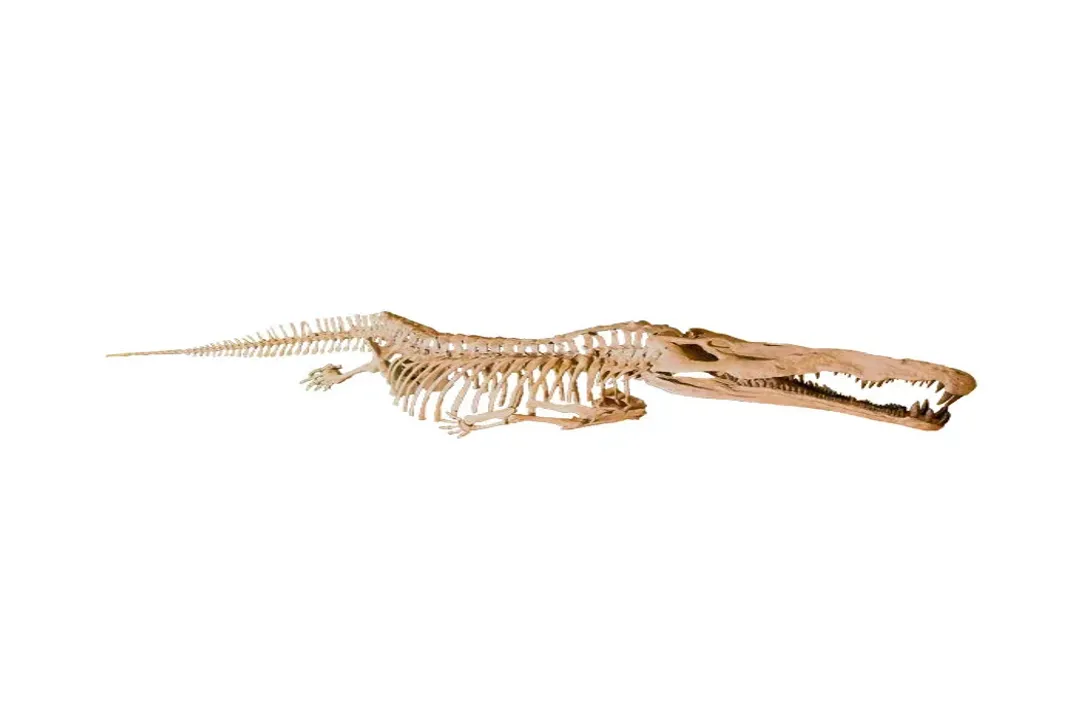
The way that Smilosuchus and its phytosaur relatives evolved their predatory features serves as a classic textbook example for paleontologists looking to differentiate these groups. [1] While the overall shape is similar, looking closely at the skull reveals definitive separation points from true crocodiles. [5][6]
The most telling difference lies in the placement of the nostrils, or nares. In modern crocodiles, the nostrils are located right at the tip of the snout, allowing them to breathe while keeping the rest of the body submerged. [1][6] Conversely, in phytosaurs like Smilosuchus, the nasal openings were situated far back on the skull roof, positioned much closer to the eyes. [1][5][6] This high placement suggests that phytosaurs likely kept their eyes and nostrils above the water line while resting or stalking, perhaps even more specialized for remaining motionless than their later crocodylian counterparts. [6]
Another notable distinction lies in the dentition—the arrangement and structure of the teeth. [1] Crocodiles typically exhibit teeth that fit into sockets carved into the opposing jawbone, similar to how a peg fits into a hole. Phytosaur teeth, including those of Smilosuchus, were generally conical and interlocked, fitting between the teeth of the opposite jaw rather than sitting neatly in dedicated sockets. [1] While this might seem like a minor detail, these structural differences are robust indicators used by scientists to separate the two major groups in the fossil record. [1]
| Feature | Smilosuchus (Phytosaur) | Modern Crocodiles (Crocodylomorpha) |
|---|---|---|
| Nostril Location | Far back, near the eyes on the skull roof [6] | At the very tip of the snout [1] |
| Teeth Structure | Conical and interlocking [1] | Fit into sockets in the opposing jaw [1] |
| Evolutionary Group | Phytosauria (Extinct lineage) [5] | Crocodylomorpha (Living lineage) [1] |
| Time Period | Late Triassic [7] | Triassic onward to present [1] |
# Triassic Titans
Smilosuchus gregorii was an impressive resident of the Late Triassic landscape. [7] While precise metrics can vary based on fossil completeness, this animal was built for mass and power. [7] It reached sizes comparable to some of the largest modern crocodiles, establishing itself firmly as an apex predator in its ecosystem. [7] Imagine an environment where the top aquatic hunter was not a crocodile, but a phytosaur, demonstrating that this evolutionary path was immensely successful for a significant stretch of geological time. [7]
When considering the Triassic period, we are looking at an era before the rise of the massive dinosaurs, a time when these crurotarsans—the crocodile-line reptiles—were still dominating many terrestrial and semi-aquatic niches. [4] The fact that Smilosuchus achieved such large dimensions highlights the competitive pressure and rich resources available in its world. [7] It wasn't just an early, smaller cousin; it was a fully developed, specialized killer. [7]
# The Croc Mimicry
The most enduring aspect of the Smilosuchus story is its powerful resemblance to true crocodiles. [5] This similarity is the strongest evidence of the phenomenon of convergence. [1] If we were to hypothetically place a living Smilosuchus next to a living gharial or a saltwater crocodile, their lifestyles—lying submerged, waiting for unwary terrestrial animals to approach the water’s edge—would look functionally identical. [1]
However, this shared look obscures a significant gap in evolutionary time. Modern crocodiles have persisted, with modifications, for hundreds of millions of years, surviving mass extinctions that wiped out their phytosaur cousins. [1] The phytosaur lineage simply disappeared, leaving the crocodilian lineage to inherit the specialized aquatic apex predator role entirely. [4] It is insightful to note that the Triassic had a highly competitive reptilian world where multiple successful templates existed for the same job, a diversity that later periods lacked after certain groups were eliminated. [1][7] While Smilosuchus certainly acted like a croc, its skull architecture tells an independent story of how life solved the problem of being a large, semi-aquatic ambush hunter in the world before the dinosaurs truly took over. [5]
#Videos
Smilosuchus: One Of The Largest Amphibious Predators ...
Related Questions
#Citations
smilosuchus: looks like a croc,acts like a croc, butto say its ...
Smilosuchus
Smilosuchus Animal Facts
Smilosuchus - VS Battles Wiki - Fandom
Smilosuchus looks like an enormous Triassic crocodile, but ...
Smilosuchus: One Of The Largest Amphibious Predators ...
Smilosuchus gregorii
Smilosuchus
Smilosuchus