Where did the goby fish come from?
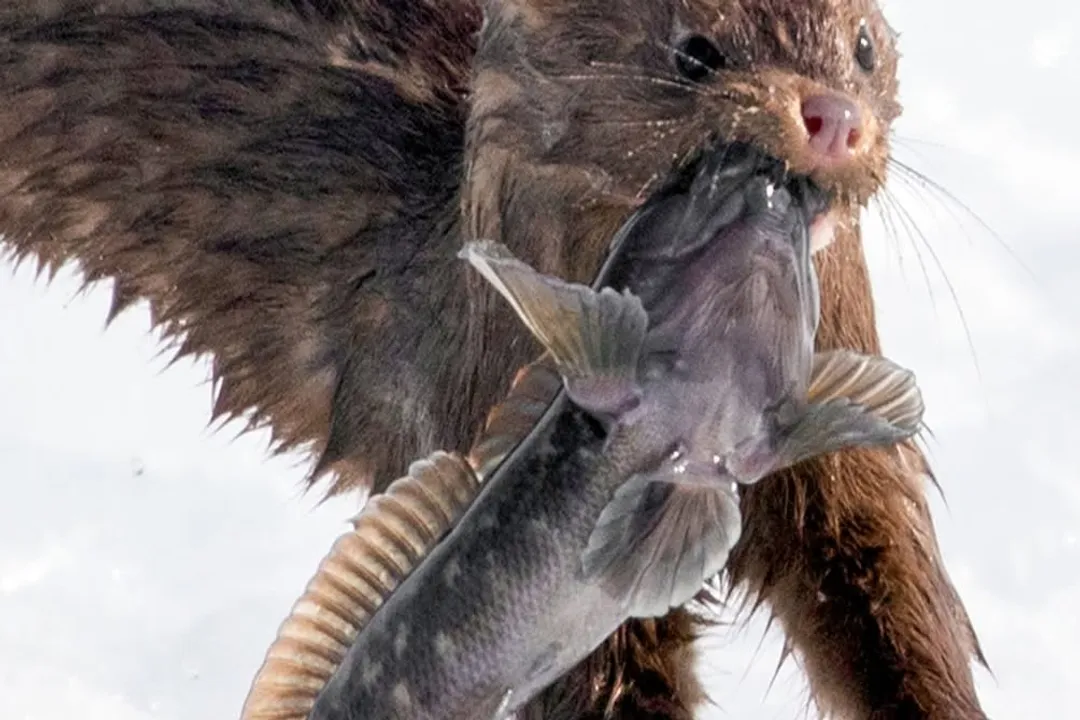
The story of where the goby fish, particularly the widely known Round Goby, truly originated is less a tale of ancient evolutionary roots and more a modern chronicle of global aquatic migration, driven by human commerce. This small, bottom-dwelling fish is now a familiar, and often problematic, sight in North American waters, but its historical home lies thousands of miles away in the seas of Eurasia. Understanding this journey helps explain the ecological shifts currently observed in places like the Great Lakes.
# Native Habitat
The native range of the Round Goby (Neogobius melanostomus) is concentrated around the Black, Caspian, and Azov Seas. This area, spanning parts of Eastern Europe and Western Asia, represents the ecosystem where this species evolved its particular set of adaptations over millennia. It is a fish perfectly suited to the benthic, or bottom, environment of these large, brackish to freshwater seas. When scientists trace the species back to its geological origins, this region is consistently identified as the starting point before its dramatic expansion across continents.
# Vessel Transport
The movement of the Round Goby from its ancient home to new, distant continents was not achieved through natural swimming or migration; it was entirely dependent on international shipping. The specific mechanism responsible for this global dispersal is ballast water. Large cargo ships traveling across the oceans take on water in a port to maintain stability when they are not fully loaded with cargo. This water, potentially containing the eggs, larvae, or even adult gobies from the ship’s departure point, is then discharged when the vessel loads up at its destination port.
It is quite remarkable that small fish, having survived the stresses of ocean transport—which involves changes in salinity, pressure, and temperature, alongside the physical stress of pumping—can successfully colonize an entirely new, large freshwater system. This phenomenon suggests that the Round Goby possesses a significant physiological tolerance, allowing individuals capable of surviving the trip to successfully establish breeding populations immediately upon release. This highlights ballast water as an incredibly efficient, albeit accidental, vector for species exchange globally.
# Great Lakes Entry
The moment the Round Goby officially established itself in the Western Hemisphere is well-documented by environmental monitoring programs. The fish was first detected in the North American Great Lakes system in 1990. Specifically, the initial discovery point was near the city of Detroit, Michigan. This single point of entry quickly became the epicenter from which the invasion spread across the entire Great Lakes basin. Before 1990, the species was unknown in these waters, making its arrival a clear indicator of a recent, human-mediated introduction.
# Rapid Expansion
Once introduced into the Great Lakes, the Round Goby demonstrated an astonishing capacity for rapid colonization. Within a few short years, populations exploded and spread throughout Lake Erie, Lake Huron, Lake Michigan, and Lake Superior, connecting to the Atlantic via the St. Lawrence Seaway. They are adapted to inhabit rocky, shallow areas but can be found at depths exceeding 100 meters.
Their success is partly attributed to a key anatomical feature: a fused pelvic fin that forms a suction-cup-like disc. This adaptation allows the Round Goby to firmly attach itself to various substrates, which is particularly advantageous in the wave-swept, turbulent environments common along the lake shores. While their initial establishment was in the Great Lakes, their presence has been confirmed in connecting and downstream systems, such as parts of the St. Lawrence River and Lake Champlain basin in New York State. Furthermore, established populations have been noted further inland or connected systems in states like Minnesota and Kansas, demonstrating their ability to move beyond the initial invasion front through various means, including secondary transport or through connected river systems.
Considering the vastness of the Great Lakes and the diverse habitats they contain—from soft sediments to stony shallows—the establishment of a single species across nearly all benthic zones within a decade is a testament to its behavioral plasticity. For instance, while they thrive in areas similar to their native habitat, their ability to rapidly exploit new ecological niches, such as scavenging on zebra mussel beds or nesting under artificial structures, makes them a significant competitor to native bottom-dwelling fish species. Monitoring their spread reveals not just their movement, but also the interconnectedness of North American waterways, which sadly acts as a conduit for such introductions.

# Ecological Factors
The presence of the Round Goby has fundamentally altered the ecological dynamics of the regions it invades, particularly the Great Lakes. As a new benthic occupant, it competes directly with native species for food and space. Its diet is broad, including small invertebrates and the eggs and young of native fishes, such as lake trout and smallmouth bass. A key point for resource managers is that the Goby is highly resilient to cold temperatures, allowing it to remain active and feed even when many native species are less active during the winter months. This year-round feeding capability gives them a distinct advantage, particularly during vulnerable early spring periods for native fry.
# Management Implications
Because the Round Goby arrived via ballast water—a mechanism that is difficult to completely eliminate given the sheer volume of global trade—managing its spread once established is exceedingly difficult. Unlike species introduced via bait buckets or aquarium dumping, which might be localized, a ballast-borne invasion affects major international waterways simultaneously. For instance, an angler unknowingly moving a bucket of water from Lake Michigan to a local reservoir in Kansas might facilitate a new, isolated establishment, which then needs different management strategies than the massive, interconnected Great Lakes population.
For those managing fisheries, understanding the Goby’s origin helps predict its behavior. Since they evolved in the highly variable environments of the Black and Caspian Seas, they are inherently adaptable. When anglers or researchers encounter them in new river systems in the Midwest, it is wise to anticipate their ability to quickly utilize available food sources, often outcompeting native darters or sculpins that may not have evolved the same level of adaptability to constant environmental pressure. The focus shifts from stopping the invasion—which has largely succeeded in its initial stage—to mitigating its impacts on native sport and forage fish populations.
Related Questions
#Citations
Round Goby - NYSDEC
Round goby - Wikipedia
Round Goby - Cornell Cooperative Extension
Get to know the invasive... - U.S. Fish and Wildlife Service - Facebook
Round Goby - Cornell Cooperative Extension Chautauqua County
Round goby (Neogobius melanostomus) | Minnesota DNR
Round Goby - Oneida Lake Education Initiative
Round Goby - Aquatic Invasive Species List - KDWP
Round Goby - NYIS - New York Invasive Species