What morphs make a panda pied ball in python?
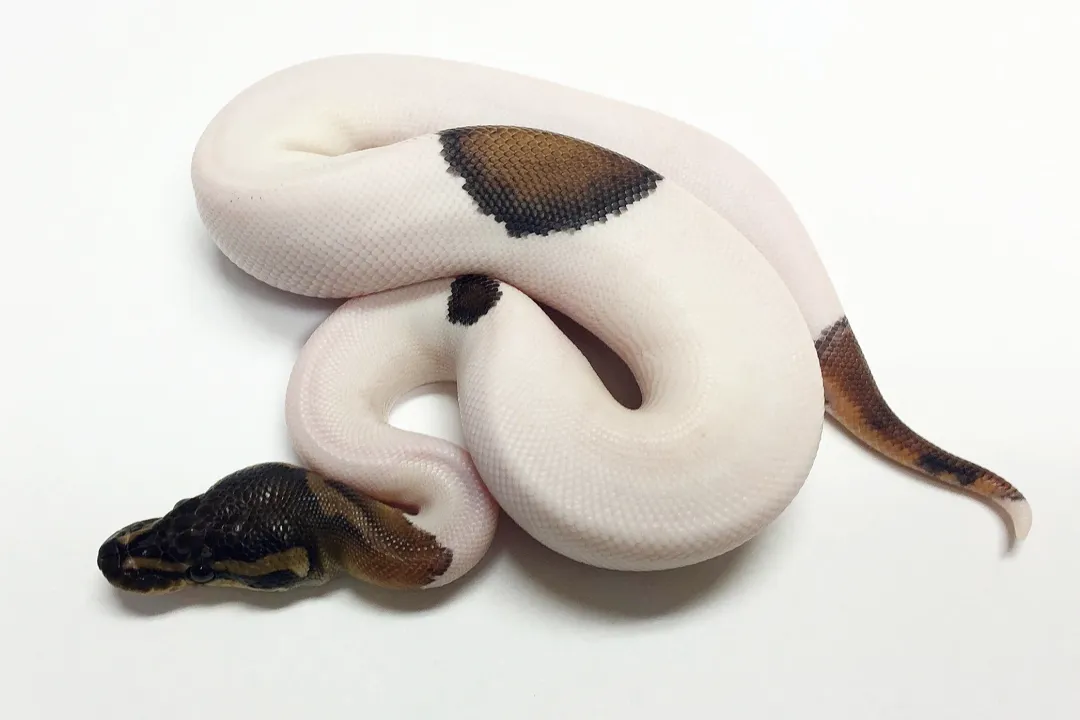
The Panda Pied ball python represents a highly sought-after expression within the world of pattern-altering mutations, instantly recognizable by its dramatic reduction of dark pigment in favor of stark, clean white areas. [1][4] To truly understand what morphs make a Panda Pied, one must first grasp the foundation upon which this stunning variation is built: the Piebald gene itself. [4]
# Piebald Gene
The Piebald, often shortened to "Pied," is the genetic cornerstone of the Panda Pied. [1][4] This trait is a recessive mutation, meaning that a snake must inherit a copy of the altered gene from both parents to visually express the pattern change. [4][9] If a ball python inherits only one copy (a carrier, or "het Pied"), it will look like a normal, wild-type ball python but can pass the gene to its offspring. [7] When two het Pieds are bred, there is a 25% chance of producing a visual Pied in the resulting clutch. [3]
Visually, the standard Piebald morph is characterized by a significant disruption of the snake's natural pattern, resulting in patches of white skin where the normal dark markings should be. [1][4] This white can range from small, isolated patches to large sections covering most of the body, depending on the specific expression of the gene. [1]
# Panda Expression
The Panda designation is not a separate, distinct gene added to the Pied gene; rather, it describes an extreme or high-white manifestation of the Piebald mutation. [1][4] Think of Piebald as a spectrum of white coverage, and the Panda represents the far end of that spectrum. [1] Breeders often use the term to describe a visual Pied that has exceptionally high white patterning, often with a very clean separation between the white areas and the remaining dark color, sometimes concentrating the dark pigment into distinct "islands" or saddle shapes that mimic the markings of a giant panda. [4][9]
This high level of white expression is what commands premium pricing and breeder interest. [3][7] While all Panda Pieds are visual Piebalds, not all visual Piebalds qualify as Pandas. The distinction lies in the quality and quantity of the white. [1] A snake might be 70% white but still look "busy" or "blotchy," whereas a true Panda might be 60% white but have large, clean white flanks and a very defined dark dorsal stripe or saddle patches, giving it that iconic, high-contrast look. [4] Some breeders suggest that specific line breeding within the Pied morph has isolated individuals whose Pied gene expresses more dramatically than others. [9]
# Breeding for Extremes
The morphs that make a Panda Pied are, fundamentally, the Piebald gene interacting with the snake's underlying base color, but the specific look is achieved through selection and line breeding. [3][9] Since the base trait is a recessive gene, the initial step to producing any visual Pied is pairing two snakes that carry the gene. [4][7]
To reliably produce high-white expressions like the Panda, breeders often focus on pairing known high-white visual Pieds together, or pairing a high-white visual Pied with a het Pied that carries other genes that might influence pattern clarity, although the primary driver remains the expression intensity of the Piebald gene itself. [3] When two visual Pieds are bred, the resulting offspring will always be visual Pieds—there is no "het" status for a visual recessive trait. [9] However, the visual outcome can vary wildly, from a low-white Pied (sometimes called a "high-white het" visually, even though genetically it is homozygous for the recessive gene) to a near-total white snake. [1]
Consider this hypothetical breeding scenario that breeders work toward:
| Parent 1 Status | Parent 2 Status | Offspring Probability | Visual Result Expectation |
|---|---|---|---|
| Het Pied / Het Pied | Het Pied / Het Pied | 25% Visual Pied | Variable Pied expression |
| Visual Pied (High White) | Het Pied | 50% Visual Pied | Mix of high/low white expression |
| Visual Pied (High White) | Visual Pied (High White) | 100% Visual Pied | Highest chance of producing Panda expressions [3] |
If a breeder is aiming for the Panda look, breeding two snakes that already exhibit very high white patterns is the most direct, though not foolproof, method for concentrating that extreme expression in the offspring. [7] It requires patience because the trait's intensity is highly variable even among siblings. [3]
# Genetics and Lineage
The Piebald gene causes a failure of melanocytes (pigment cells) to migrate correctly during embryonic development, leading to the lack of dark pigment in certain areas. [4] While the Panda is the result of this mechanism, understanding the base animal's color morph matters for the final aesthetic. A Panda Pied based on a Pastel gene will look different from a Panda Pied based on a Banana gene, even if both have 90% white coverage, because the remaining color is different. [1]
The true Piebald gene is sometimes colloquially referred to as the Piedbald gene. [4] It is important to note that the term "Panda" is a descriptive term based on phenotype (appearance), not a distinct co-dominant or recessive allele separate from the Piebald trait itself in the way that Pastel or Albino are distinct genes. [1][9] Breeders are selecting for the most extreme phenotype of the Piebald gene. [4]
In reviewing breeder discussions, there is a subtle but important distinction: some snakes labeled "Panda" might be the result of pairing a very high-white Pied with another visual Pied, while others might be the result of a Pied interacting with a second pattern-reducing gene, though the dominant consensus points toward the Panda being an intense Piebald expression itself. [7][9] For instance, pairing a Pied with a Spider or a Mojave might yield interesting pattern breaks, but those resulting snakes are designated by the combination (e.g., Spider Pied), whereas a Panda is generally understood to be a specific type of Piebald. [1] The core "morph" creating the Panda Pied is therefore the Piebald gene. [4]

# Health Considerations
Since the Panda Pied is fundamentally an extreme Piebald, the associated health concerns often stem from the high degree of depigmentation. [5] Any reptile with extensive white spotting, regardless of the specific mutation causing it (like Piebald, Hypo, or Snow), carries a risk profile different from a normally patterned animal. [5]
A significant point of discussion among keepers relates to vision and immune function in these high-white animals. [5] Because pigment cells are involved in various bodily functions, massive disruption can sometimes lead to secondary issues. Some keepers report anecdotal evidence of increased sensitivity to light, sometimes referred to as "sun sensitivity," in extreme Pieds. [5] While not all high-white snakes exhibit this, it is a factor hobbyists should monitor.
Furthermore, a major consideration for any Piebald, especially those with high white coverage, concerns the spinal column and the potential for kinked tails or vertebrae misalignment. [5] This is a known potential expression linked to the gene, and careful observation during the early life of a Panda Pied is necessary. When purchasing an animal, especially one at the extreme end of the spectrum like a Panda, inspecting the tail base and back for any irregularities is standard practice. [5] If you acquire a snake that shows a significant kink early on, it's wise to consult an experienced keeper or vet, as severe kinks can sometimes impact mobility or quality of life, though many mild kinks are purely cosmetic. [5]
It is a common observation that the more white a snake possesses, the higher the chance these structural issues could manifest, though there is no universal guarantee that every high-white snake will have problems. [5] Breeders working on Panda lines are consciously trying to select for healthy, well-formed animals while pushing the white pattern limits. This balancing act between aesthetics and health is a constant ethical consideration in morph development.
# Visual Differences
To better appreciate what makes a Panda Pied special, comparing it to a less-expressed Piebald is useful. Imagine two snakes, both carrying the recessive Piebald gene:
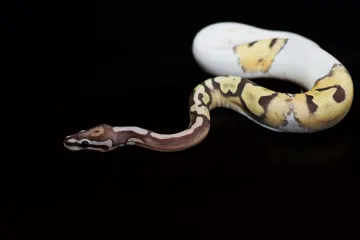
- Standard Pied: Might have dark brown to black markings interspersed with white blotches, often retaining significant areas of the normal dorsal stripe and side pattern, perhaps with white interrupting the pattern more than replacing it. [1]
- Panda Pied: Features dramatically reduced dark pigment. The remaining dark color is often consolidated into a thick, clean dorsal line or distinct, high-contrast saddle patches against a vast white background. [4] The white is often very clean, meaning it lacks the "speckling" or "dirty" look sometimes seen in lower-white expressions. [9]
When viewing examples online, you might notice that the "Panda" look often involves the white taking over the sides almost entirely, leaving the dark markings restricted almost exclusively to the top third of the body. [1] This concentration of color contrasts sharply with a "normal" Pied where the white might break up the pattern across the entire flank area more randomly. [4] This visual differentiation is why breeders strive to maintain and purify the Panda lines.
# Breeder Insight on Color Combination
When selecting a base color to combine with the Piebald gene, the outcome drastically alters the visual impact of the resulting Panda. For example, a Blue Eyed Leucistic (BEL) complex snake bred to a Pied results in a Blue Eyed Leucistic Pied. While this is genetically distinct from the Panda (as BEL is dominant/incomplete dominant), it shares the characteristic of massive white reduction. [1]
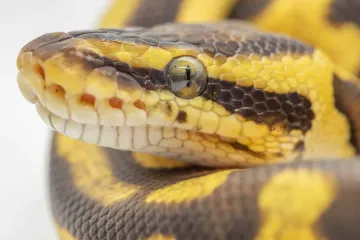
However, staying strictly within the Panda Pied designation, which relies solely on the recessive Piebald gene expression, the interaction with other morphs determines the final color of the non-white areas. A Yellow Belly Panda Pied will have those residual dark markings colored with the yellowish hue associated with the Yellow Belly gene, making the dark areas appear richer or warmer than the standard black/brown of a normal Pied. [7] If a breeder is trying to achieve the cleanest possible Panda expression, they sometimes look towards morphs that inherently produce a very clean, high-contrast look on their own, like certain forms of the Clown gene (though Clown is a separate recessive trait) or morphs that reduce pattern "noise," hoping that the Piebald gene will amplify the existing reduction into the Panda phenotype when both genes are present. [7] The challenge here, as noted by hobbyists, is that combining multiple recessive genes can often lead to unpredictable expression, so focusing on pure, high-white Pied lines often yields the most consistent "Panda" results. [3]
This preference for simplicity—just focusing on maximizing the Piebald expression without muddying the waters with other pattern-altering genes—is a common strategy when the goal is a specific aesthetic endpoint like the Panda look. Introducing too many other recessive genes increases the genetic load and variability in the offspring, making the precise, high-white pattern harder to isolate consistently across multiple clutches. [7]
# Maintaining Quality
For keepers interested in this morph, whether as a pet or for breeding, understanding the lineage is key. Because the term "Panda" is descriptive, it can sometimes be applied loosely by sellers to any high-white Pied that might not meet strict enthusiast standards. [1] An experienced buyer will look beyond the label and assess the actual white coverage and pattern quality against established examples. [4]
For prospective breeders focusing on Pandas, treating the high-white expression like a "super form" of pattern reduction, even though it is not genetically a super form, can guide selection. [9] By only pairing the whitest individuals together, you increase the statistical likelihood of continuing that extreme trait expression, similar to how one breeds for intensity in color morphs. However, because the visual expression is so variable, a breeder might produce ten high-white snakes, only for one or two to truly achieve the clean "Panda" standard. [3] This means the "cost" of a true Panda often reflects the accumulated failures and time spent narrowing down the line to those few exceptional animals. [7]
Ultimately, the morph that makes a Panda Pied is the Piebald gene. [4] The "Panda" part is the breeder's successful selection for the most dramatic and aesthetically pleasing visual outcome that gene can produce—a high-white ball python where the remaining dark pigment is artfully arranged against a near-blank canvas. [1][9] Achieving this look requires a deep understanding of recessive inheritance and a commitment to selective breeding over multiple generations. [3]
#Videos
The Amazing 'Panda Pied' Ball Python! - YouTube
PANDA PIED PYTHON GENETICS! 4-16-21 - YouTube
Related Questions
#Citations
Panda Pied - Morph List - World of Ball Pythons
The Amazing 'Panda Pied' Ball Python! - YouTube
Panda breeding - Ball Pythons - MorphMarket Reptile Community
Panda Ball Pythons - Professional Breeders
What health issues do panda pieds deal with? : r/ballpython - Reddit
Breeding Tips for First-Timer with Panda Pied Male - Facebook
panda pied project info needed - Ball-Pythons.net
Panda Pied Ball Python Genetics | Reptile Forums