What are the facts about banana ball pythons?
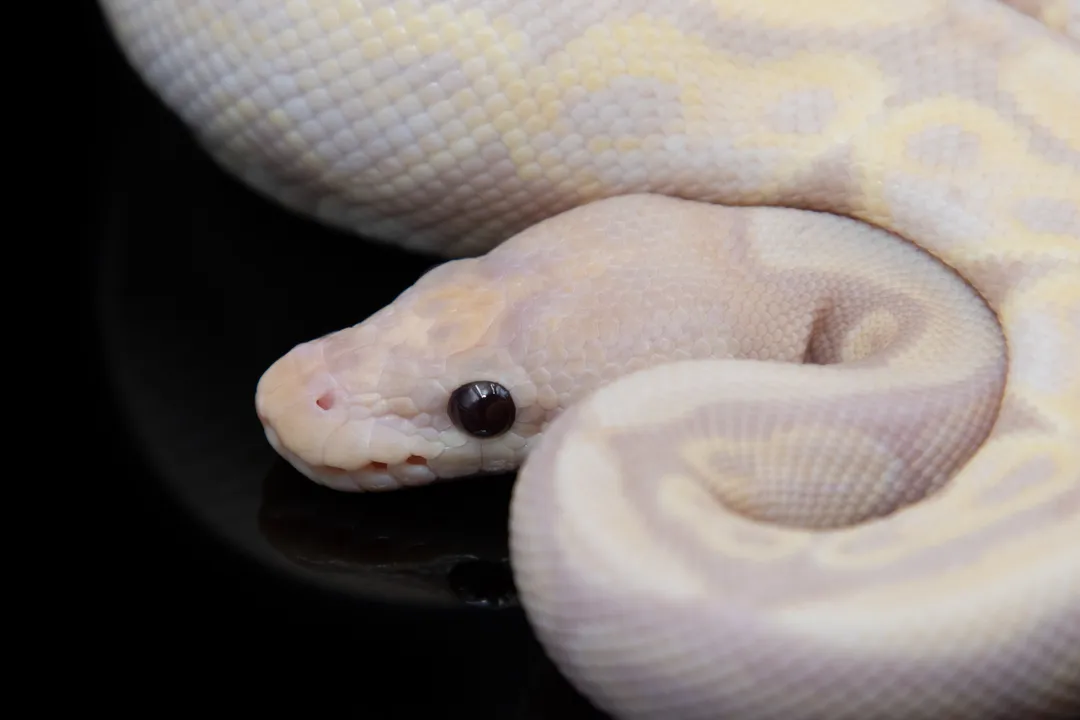
The Banana ball python stands out immediately among the thousands of available color mutations in the world of captive-bred Python regius. It is a visually stunning morph that shifts the typical black and brown camouflage of its wild counterparts into striking hues of yellow, lavender, and orange blush. [8][3] Often, the names Banana and Coral Glow are used synonymously by keepers and breeders, a consensus reached after extensive breeding efforts confirmed they share the same genetic marker, though the term Whitesmoke has also been associated with its early history. [3][8]
# Species Context
Before delving into this specific mutation, it is helpful to remember the host species. The Ball Python, or Royal Python (Python regius), originates from the savanna grasslands and open forests of West and Central Africa. [6] These nonvenomous constrictors are known for their defensive behavior of curling into a tight ball with their head tucked safely inside—a trait that earned them their common name. [6] In captivity, with proper care, these snakes are known to have long lifespans, often exceeding 20 years. [6] They are generally regarded as heavy-bodied, terrestrial animals that prefer to ambush prey rather than actively hunt. [6]
# Genetic Inheritance
The Banana trait falls under the category of co-dominant inheritance, sometimes referred to as incomplete dominant. [8][3] This means that only one copy of the gene is needed to cause a visible change in appearance, and it is easily passed on to offspring. [8]
When breeders combine this gene, predictable outcomes arise:
- Breeding a visual Banana to a snake without the gene typically results in a 50% chance of producing a Banana offspring and a 50% chance of producing a normal-looking snake. [8]
- Breeding two visual Bananas together introduces the possibility of a Super Banana (homozygous form), resulting in a clutch mix of 25% Super Banana, 50% Banana, and 25% normal. [8]
- If a Super Banana is bred to a normal snake, the entire clutch will express the Banana coloration, yielding 100% visual Bananas. [8]
# Visual Traits
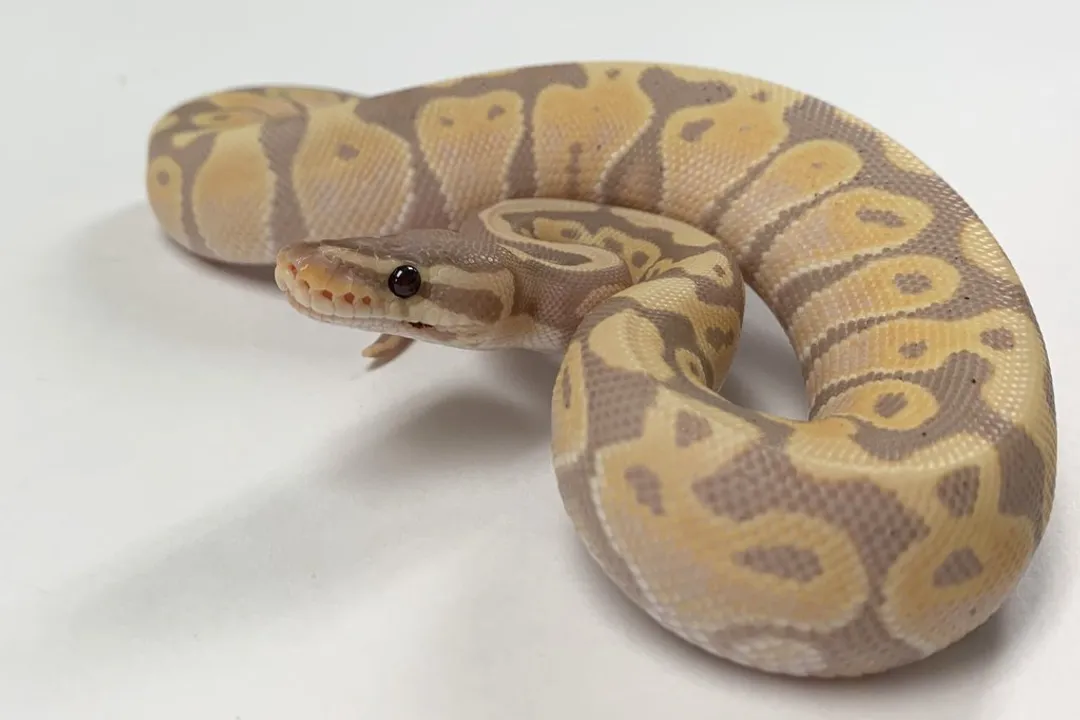
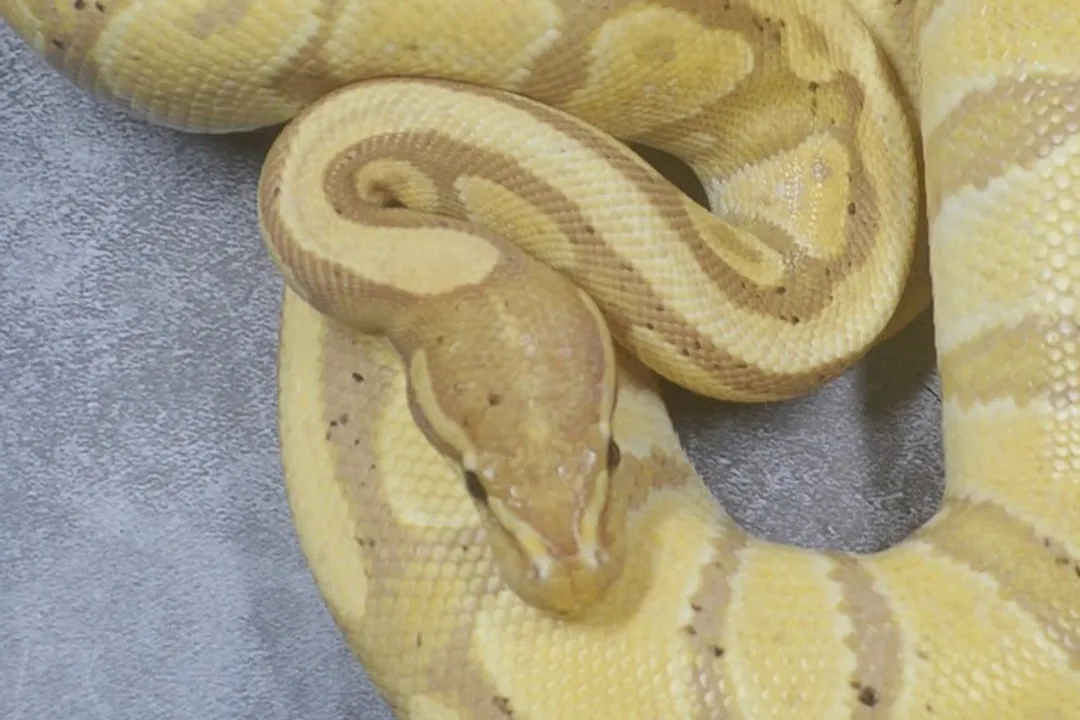
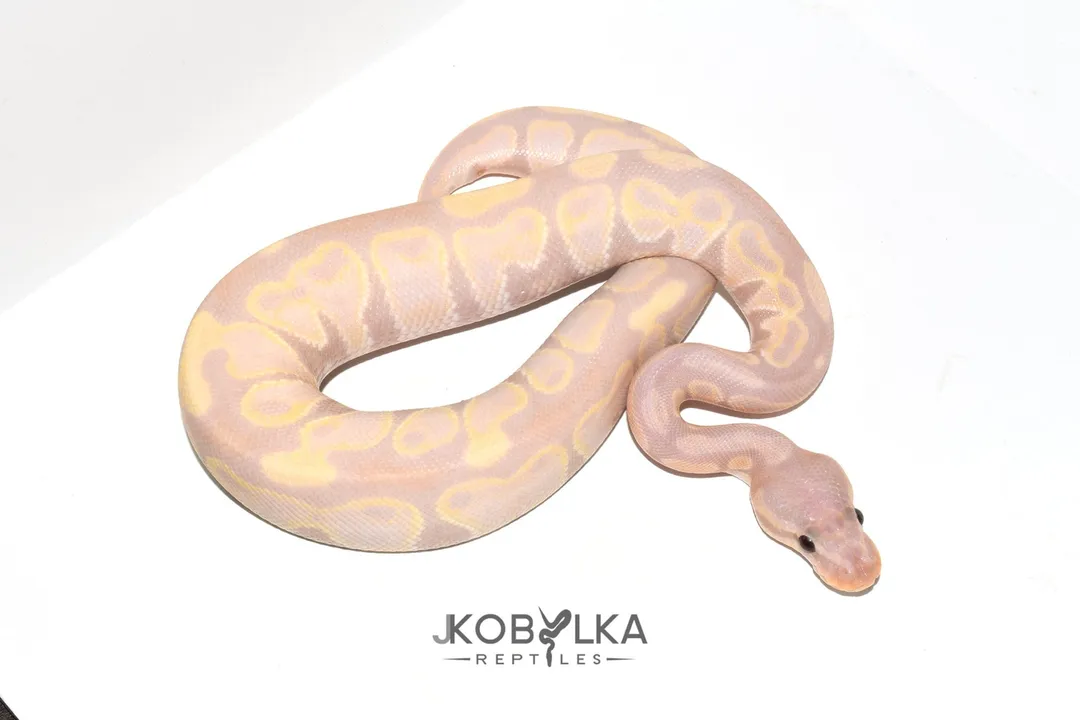
The aesthetic appeal of the Banana morph lies in its drastically altered palette. The black areas of the pattern are replaced by bright yellow, orange, or even deep lilac tones, punctuated by bright blushing between the standard 'alien head' shapes. [3] The head typically displays a light tanned orange coloring, often with minimal or asymmetrical head stamping. [3]
One feature that draws the attention of keepers is the presence of random spotting. [3] These spots, which are clusters of black pigmentation, tend to appear in the darker areas of the pattern but can manifest across the entire body. [3] The belly usually features a crisp, faded yellow center bordered by heavy patterning. [3]
# Progression and Color Change
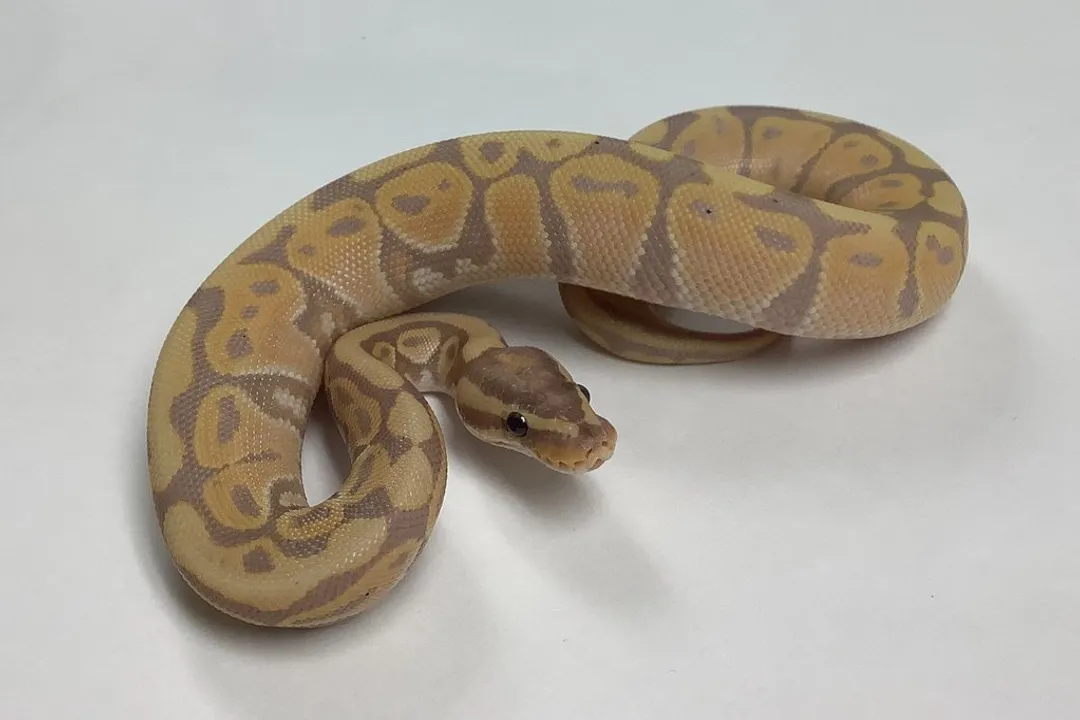
While the base facts about genetics are well-documented, the visual manifestation of the Banana gene often evolves over time. A snake that hatches with relatively minimal spotting may develop significantly more of that dark pigmentation as it matures. [3][4] This tendency for increased speckling to appear years after hatching is a key characteristic that influences long-term ownership expectations. When evaluating a young Banana, a prospective owner should anticipate that the clean, bright yellow appearance of a juvenile might transition into a much more freckled or speckled look by adulthood, making the final adult expression slightly unpredictable based solely on hatchling photos. [3]
# The Sex Link Anomaly
Perhaps the most fascinating—and sometimes complicated—fact about the Banana gene is its apparent relationship with sex determination. [8][3] The gene is thought to reside primarily on the X chromosome, a characteristic that has led to the description of male Bananas having the ability to influence the sex ratio of their co-dominant offspring—a concept referred to as being a "Female Maker" or "Male Maker". [3][8] This complex inheritance pattern is something rarely seen in other color morphs. [8]
This sex-linked behavior is dependent on which parent the male Banana inherited the gene from:
- Female Maker: A male Banana whose parent was a visual female Banana will produce clutches where the Banana offspring are predominantly female, while the non-Banana siblings skew toward being male. [8]
- Male Maker: Conversely, a male Banana whose parent was a visual male Banana will produce clutches where the Banana offspring are predominantly male, while the non-Banana siblings skew toward being female. [8]
Statistically, exceptions to these ratios occur, estimated to be around 3% of the time, meaning a breeder cannot be 100% certain of the sex outcome without test breeding or observing offspring from previous clutches. [3] If you were planning a breeding project using a male Banana, the lineage becomes paramount; crossing a normal female with a Male Maker might give you a 50% chance of producing a Banana, but the resulting Banana offspring has a significantly higher likelihood of being male. [8] This unique mechanism sets the Banana apart from most monogenic traits in the hobby. [8]
# Health Considerations
When discussing any non-wild-type reptile, ethical concerns surrounding associated health defects often arise. For Ball Pythons, the primary genetic concern often mentioned by keepers is "head wobble," a neurological condition involving tremors and lack of coordination. [7]
It is a critical point of fact that the Banana gene, on its own, is considered an ethical morph, meaning it is not genetically linked to the neurological wobble syndrome. [7] Wobble is most famously associated with the Spider morph, and also linked to traits like Champagne or Hidden Gene Woma. [7] The risk arises when the Banana gene is combined with one of these known "wobble genes," such as in a Banana Spider (often called a Banana Bee). [3][7] Prospective owners seeking a visually striking snake without this neurological risk should specifically seek out a "pure" Banana without these additional linked traits. [7]
However, as one commentator noted, no animal is truly issue-free. [7] If a Banana exhibits wobbling behavior but does not possess the Spider gene, the cause is likely external to the Banana mutation—such as a past injury, incubation error, or a separate underlying illness—rather than the gene itself. [7] Responsible ownership always involves ensuring the husbandry is perfect to mitigate these environmental risks. [6][7]
# Historical Context and Popularity
The Banana gene was first produced in captivity around 2003. [3] While it was initially rare and commanded very high prices, the gene has since stabilized and is now considered a Common morph available widely in the trade. [3][8] Breeders have successfully combined the Banana gene with nearly every other pattern and color gene available, creating thousands of "combos" that exhibit its yellow base color alongside traits like Clown, Pied, or Enchi. [8][3] The morph's lasting appeal, despite its initial high cost, demonstrates its visual impact on the reptile community. [5][8]
# Essential Husbandry Overview
Since the Banana is genetically a Python regius, its husbandry requirements mirror the wild-type snake. They require secure enclosures that maintain proper thermal gradients and humidity levels appropriate for their West African habitat. [6] Ball Pythons are sensitive to their environment, and good husbandry, quarantine protocols, and veterinary oversight are always emphasized to prevent disease outbreaks, which can affect entire collections. [6] Monitoring temperature and humidity is non-negotiable for the continued health of any Ball Python morph, including the vibrant Banana. [6]
# Key Facts Summary
To summarize the essential information regarding this popular animal:
| Trait | Detail | Source(s) |
|---|---|---|
| Gene Type | Co-dominant (Incomplete Dominant) | [3][8] |
| Aliases | Coral Glow, Whitesmoke | [3] |
| First Produced | Circa 2003 | [3] |
| Appearance | Yellow/lavender base with random black spotting | [3] |
| Primary Concern | Sex ratio skewing in male offspring (Male/Female Maker) | [3][8] |
| Health Link | No inherent neurological issues (unlike Spider morph) | [7] |
The Banana morph remains a cornerstone of modern color morph collecting, valued not only for its striking appearance but also for the unique genetic puzzle presented by its sex-linked tendencies in breeding projects. : [8][1] Python Addiction. (n.d.). Banana Ball Python Genetics Explained: What You Need to Know! [Video]. YouTube.: [2] N/A (TikTok link inaccessible).: [3] MorphMarket. (n.d.). Banana - Ball Python Traits - Morphpedia.: [4] ReptileHQ. (n.d.). 8 Fascinating Banana Ball Python Facts. [Video]. YouTube.: [5] Olympus Reptiles. (n.d.). All about BANANA BALL PYTHONS 🍌. What does it do in combos? $10,000 banana? Same as CORAL GLOW? [Video]. YouTube.: [6] Animal Diversity Web. (n.d.). Python regius (Ball Python, Royal Python).: [7] Frosty-Drummer-9983. (2021, October 10). Are banana Ball Pythons Issue free?. Reddit.: [8] Dynasty Reptiles. (n.d.). Banana Ball Pythons: A Look Back At The Morph.: Wikipedia. (n.d.). Ball python.
#Videos
8 Fascinating Banana Ball Python Facts - YouTube
All about BANANA BALL PYTHONS . What does it do in ... - YouTube
Banana Ball Python Genetics Explained: What You Need to Know!
Related Questions
#Citations
8 Fascinating Banana Ball Python Facts - YouTube
Banana - Ball Python Traits - Morphpedia - MorphMarket
Banana Ball Pythons: A Look Back At The Morph - Dynasty Reptiles
Are banana Ball Pythons Issue free? : r/ballpython - Reddit
Python regius - Animal Diversity Web
Ball python - Wikipedia