What is unique about horned grebes?
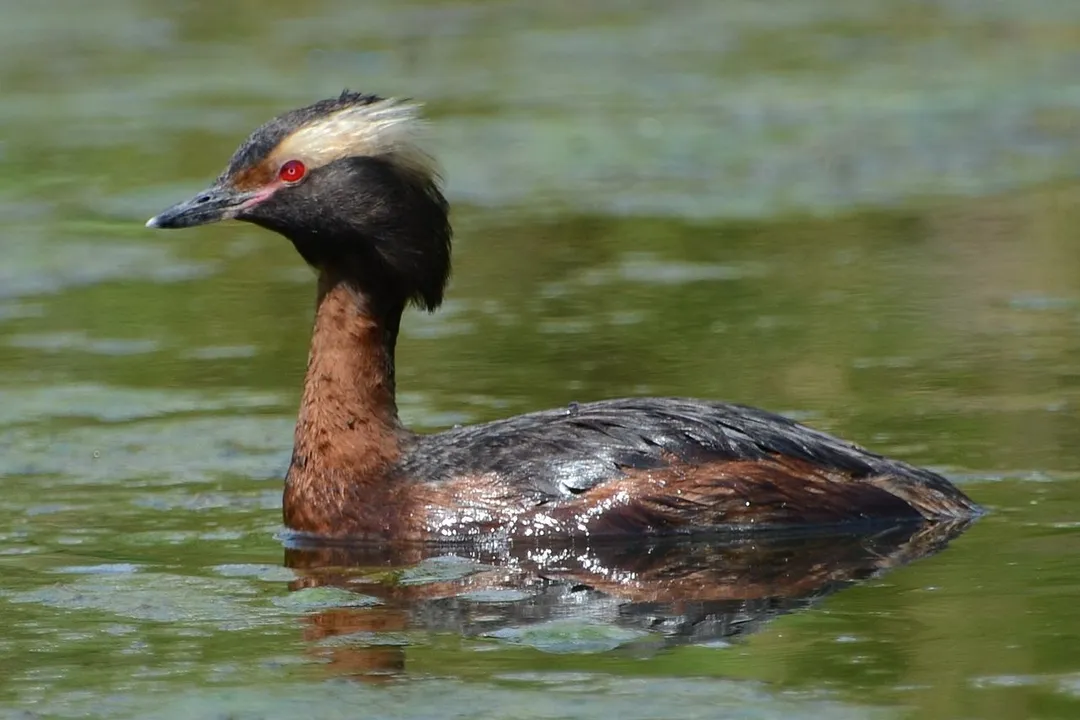
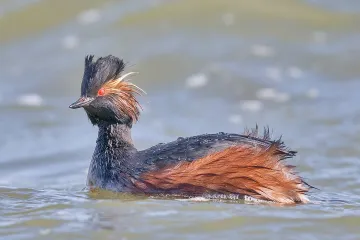
The Horned Grebe, often known as the Red-necked Grebe in Eurasia, presents a study in dramatic seasonal transformation, making it a truly unique subject among North American waterfowl lookalikes. What immediately sets this species apart is the breathtaking contrast between its breeding and non-breeding appearances. During the nesting season, the bird is crowned with a striking, dark cap that sweeps back into distinctive, pointed tufts—the namesake "horns"—that frame a rich, rusty-red neck and face. [1][4] This vibrant summer attire is functional, likely playing a major role in courtship displays, but it also makes them one of the most visually arresting waterbirds you can encounter on their inland breeding grounds. [6]
# Plumage Shift
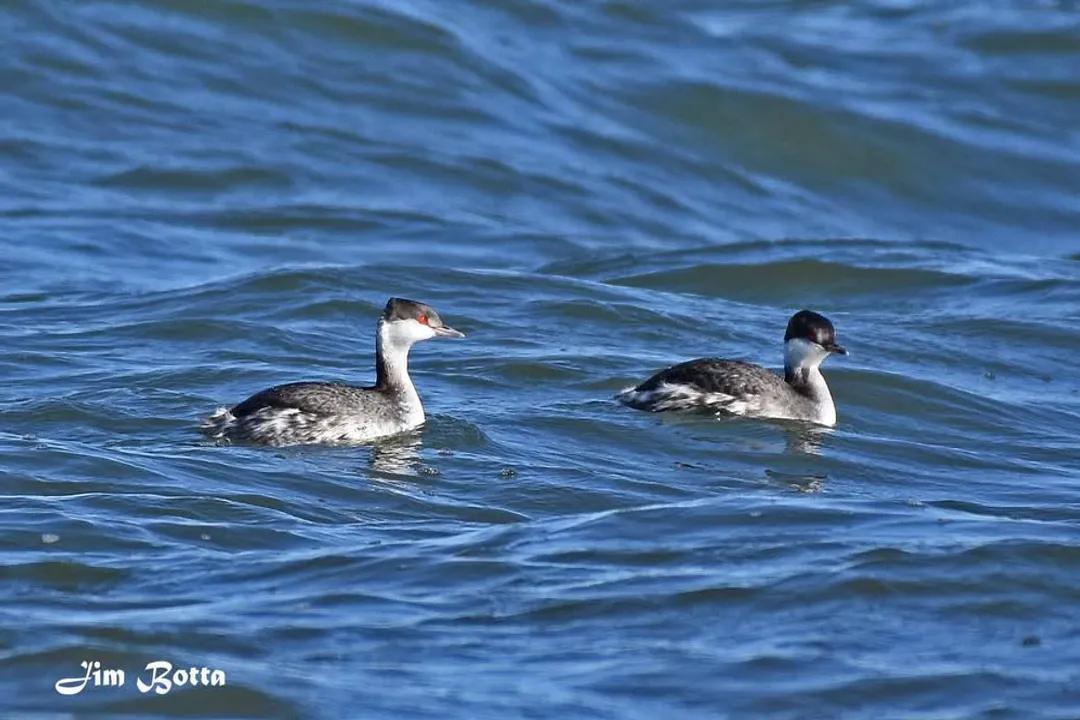
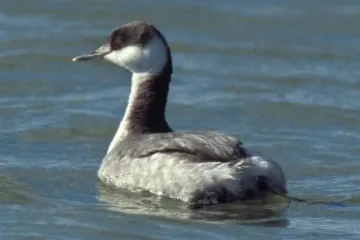
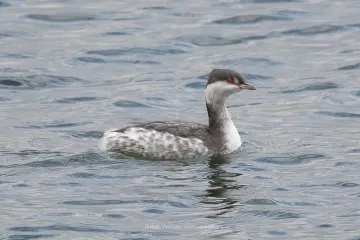
The seasonal wardrobe change is drastic, a necessary adaptation for survival across wildly different habitats. When the breeding plumage is shed, the Horned Grebe transforms into a much more subdued creature. [1] In winter, they are predominantly black and white, presenting a neat, compact profile. [4][5] The head is mostly white, often with a dark cap extending to the eye, and the back remains dark. [5] This muted appearance is perfectly suited for blending in with the whitecaps and gray waters of their wintering grounds, which frequently include the open ocean far from shore. [1] It’s fascinating to consider that the same bird that flashes fiery russet tones on a clear boreal lake in July is hunkered down as a monochrome silhouette against the winter sea in January. [2] This extreme dimorphism is less common among grebes, often making identification a challenge for casual observers who only see them outside the breeding season. [4]
# Display Behavior
The courtship ritual of the Horned Grebe is as energetic as their summer plumage is colorful. Males and females engage in synchronized, head-shaking displays, often accompanied by bubbling or rattling calls. [6] A particularly famous part of their bonding behavior involves a ritualistic dance where the pair dives and resurfaces in tandem. [6] Another notable element is the "weed dance," where the birds repeatedly dive, then rise while holding up bundles of weeds, a behavior that seems to cement their pair bond before nest construction begins. [6]
# Nesting Architecture
Horned Grebes are masters of constructing floating platforms for their young. The nest is typically built low on the water, anchored to emergent vegetation such as reeds or cattails in shallow freshwater areas. [6][8] The structure is made of accumulated aquatic plants, creating a sodden, surprisingly sturdy base for incubating their clutches of pale blue or white eggs. [6] A key habit associated with their nesting is the constant maintenance required to keep the nest afloat and dry, especially in fluctuating water levels common to northern marshes. [6] If a predator approaches or the water rises unexpectedly, the parent grebes are adept at abandoning the nest or even sinking it slightly to hide it, demonstrating remarkable flexibility in their nesting strategy. [6]
One observation often noted by those who spend time near northern breeding lakes is how often the parents appear to be too busy. Unlike some water birds that leave their young unattended for stretches, Horned Grebe parents are almost constantly shuttling chicks, feeding them, or adjusting the nest. [6] This intense involvement suggests that the immediate post-hatching period is highly vulnerable, requiring near-constant parental vigilance to ensure the small, downy chicks survive the cold water and avoid aquatic predators like large fish or snapping turtles.
# Aquatic Acrobats
The uniqueness of the Horned Grebe extends deep beneath the surface. Like all grebes, they are fundamentally aquatic birds, with legs set far back on their bodies, making them excellent swimmers and divers but awkward walkers on land. [5] They propel themselves almost entirely with their powerful, webbed feet, using their wings only for balance underwater. [5] Their dives are frequently prolonged, as they pursue their diet, which shifts dramatically depending on the season. [6]
In the summer, feeding is focused on freshwater resources. They consume aquatic insects, small crustaceans, and small fish found in the vegetated shallows of lakes and ponds. [5] However, their winter diet, often hunted in the offshore marine environment, shifts toward small schooling fish and marine invertebrates. [1]
The skill required to sustain themselves in the open ocean during winter is considerable. While they are capable of diving to significant depths—sometimes over 30 feet—the energy expenditure on the turbulent ocean surface is high. [6] Their streamlined bodies and powerful legs allow them to escape diving birds of prey like falcons, but staying warm and finding enough prey in those cold, vast expanses requires a level of aquatic specialization that few other birds possess.
# Geographic Range and Migration
Horned Grebes breed across the boreal regions of North America and Eurasia, favoring tundra ponds and northern lakes. [8] Their migratory routes are extensive. In North America, birds breeding in Alaska and Canada move south to spend the non-breeding season along both the Atlantic and Pacific coasts, often venturing far offshore into the ocean. [1] This extensive movement between the remote, often inaccessible boreal forest and the harsh coastal environment means they utilize two entirely different ecological niches throughout the year.
It's worth noting that the population dynamics can be hard to track precisely because of this migratory pattern. A sudden drop in sightings in one inland location might not signify a population decline, but rather a slight shift in the timing of ice-off, which dictates when they can establish territories. [8] If the ice stays longer, breeding might be delayed, pushing the peak visibility period for birders later into the summer when observations might be less common.
Here is a quick comparison of their seasonal characteristics, illustrating the extremes they navigate:
| Feature | Breeding Season (Summer) | Non-Breeding Season (Winter) |
|---|---|---|
| Plumage | Rich rusty-red neck, black cap, prominent horns [1][4] | Mostly black and white, subdued appearance [4][5] |
| Habitat | Boreal freshwater lakes, ponds, marshes [8] | Open ocean, large coastal bays, large inland lakes [1] |
| Diet Focus | Aquatic insects, small freshwater fish [5] | Small schooling fish, marine invertebrates [1] |
| Visibility | High, conspicuous on calmer water | Low, blending with ocean spray and waves [2] |
# Survival Adaptation Insight
This dual life, moving from sheltered freshwater breeding grounds to the rough, exposed marine environment, reveals a significant evolutionary success story. Many birds are adapted strongly to one environment or the other, but the Horned Grebe seems engineered for transitional competence. Their physical structure—the tight feathering, the leg placement—is the ultimate compromise: good enough for nesting near shorelines, yet efficient enough for deep, sustained dives in salt water when food is scarce inland or when ice forces them south. If they were slightly heavier, they’d be poor flyers; if their legs were positioned more centrally (like a duck's), they would struggle to dive effectively for deep-water prey. Their survival hinges on maintaining this physical balance between air travel, land awkwardness, and diving prowess. [5]
# Identification Details
Beyond the famous summer plumage, other subtle features distinguish them. The bill, for instance, is straight and sharp, an efficient tool for catching slippery prey. [4] In summer, the eye is a striking reddish or orange-red. [4] While the "horns" are the key identifier, birders should also look at the throat patch; in breeding birds, there is often a small white patch contrasting near the base of the bill. [1] In winter, they can sometimes be confused with Eared Grebes, but the Horned Grebe generally maintains a cleaner, more distinct line between the dark cap and the white cheeks. [4] If you are observing a grebe far offshore, and it has a dark cap that seems to meet the eye without much white on the face, it leans toward Podiceps auritus over some other small grebes. [5]
# Land Posture
A final, often overlooked unique aspect relates to their time on land. While they prefer to avoid it, if a Horned Grebe is forced onto land, perhaps due to injury or severe weather grounding them, their posture is telling. [5] They are almost entirely unable to walk upright like ducks or gulls. Instead, they must push themselves along on their bellies, using their feet only to shuffle or push backward. [5] This vulnerability on land reinforces their complete dedication to an aquatic existence, making their return to water—whether a small pond or the vast ocean—a non-negotiable necessity for safety and sustenance. [5] They are truly birds designed to live and die on the water's surface or beneath it.
Related Questions
#Citations
Horned Grebe Overview, All About Birds, Cornell Lab of Ornithology
Horned grebe - Wikipedia
Interesting facts about Horned Grebes - Facebook
Horned Grebe | Audubon Field Guide
Podiceps auritus (horned grebe) - Animal Diversity Web
All About Horned Grebes | Bird Watcher's General Store
Horned Grebe - Maryland DNR
Horned Grebe "Podiceps auritus" - Boreal Songbird Initiative