How rare are horned grebes?
The question of a Horned Grebe’s commonness is entirely dependent on where and when you are looking. For a birder standing on the shores of a northern boreal lake in the summer months, this species, known formally as Podiceps auritus, can seem quite abundant, a regular feature of the summer waterfowl community. [1][3] However, shift that perspective to the central United States in January, and the bird transforms into a much scarcer, perhaps even accidental, sight, making the very definition of its rarity context-specific. [5][8] They are not inherently rare across their entire range, but their concentrated movements and distinct seasonal appearances mean they are often locally common and widely rare.
# Plumage Contrast
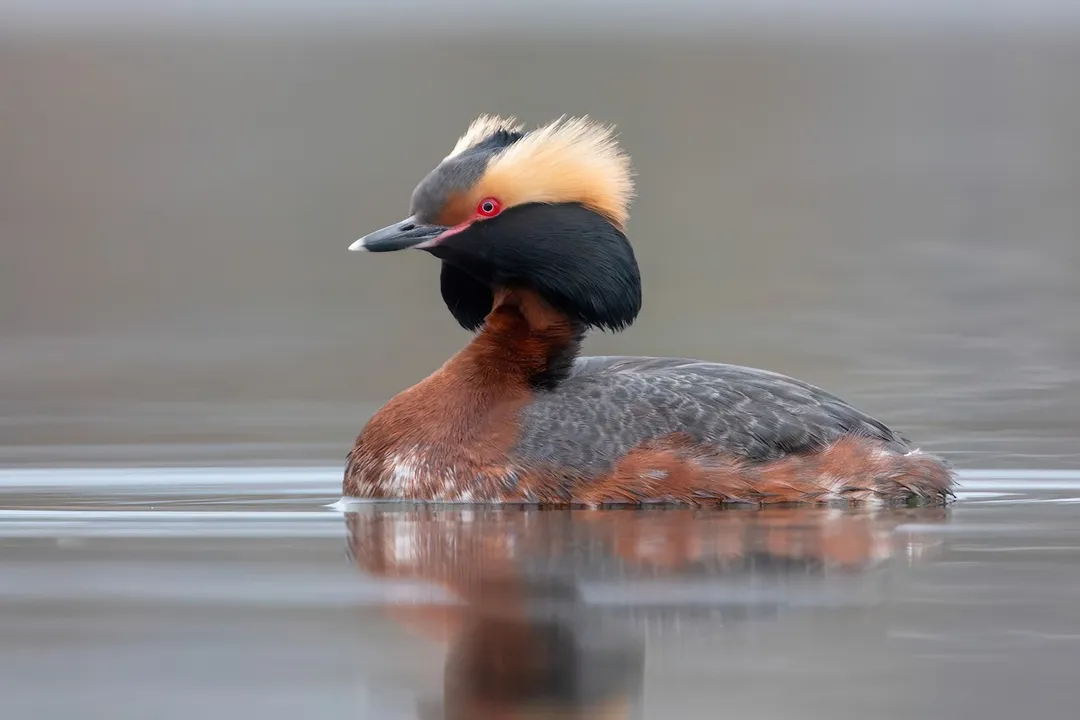
Understanding the Horned Grebe’s shifting appearance is key to appreciating sighting records. This bird undergoes one of the more dramatic seasonal transformations in the avian world. During the breeding season, the grebe is a striking figure, often nicknamed the "Black-necked Grebe" in some regions, although that name is more formally applied to its close relative. [2] The breeding male sports a rich, velvety black neck and back, contrasting sharply with the deep, rusty-red or rufous flanks and the glorious, golden-buff ear tufts that fan out from behind its eyes—hence the common name, Horned Grebe. [2][7] This display plumage is essential for courtship rituals conducted on their freshwater breeding ponds. [3]
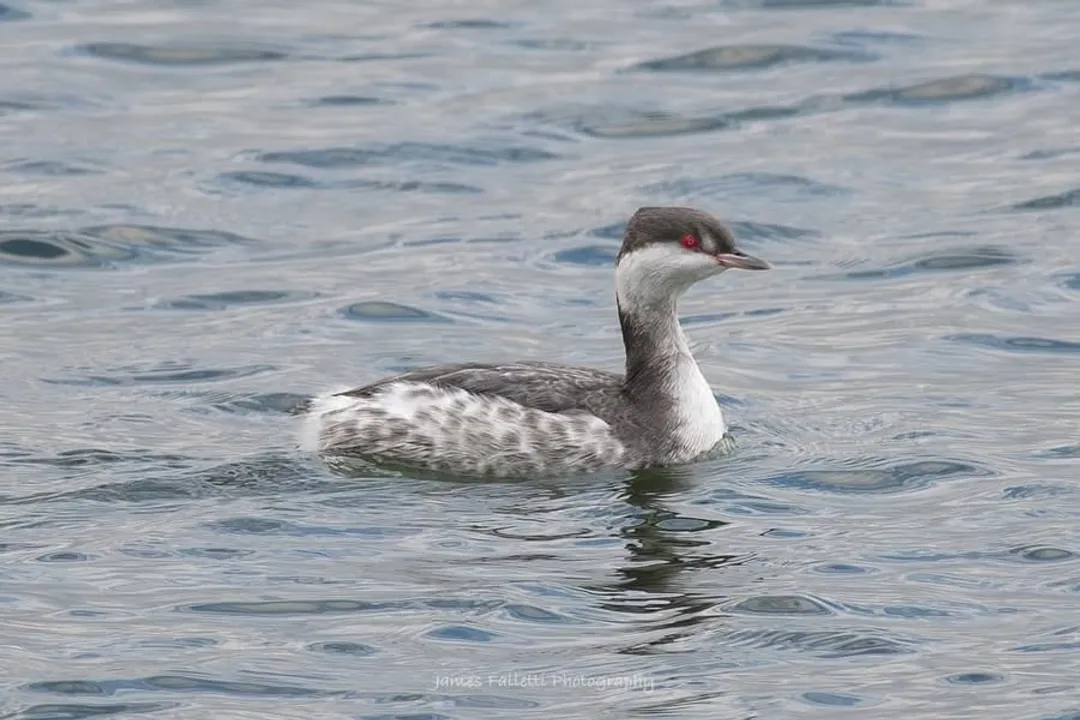
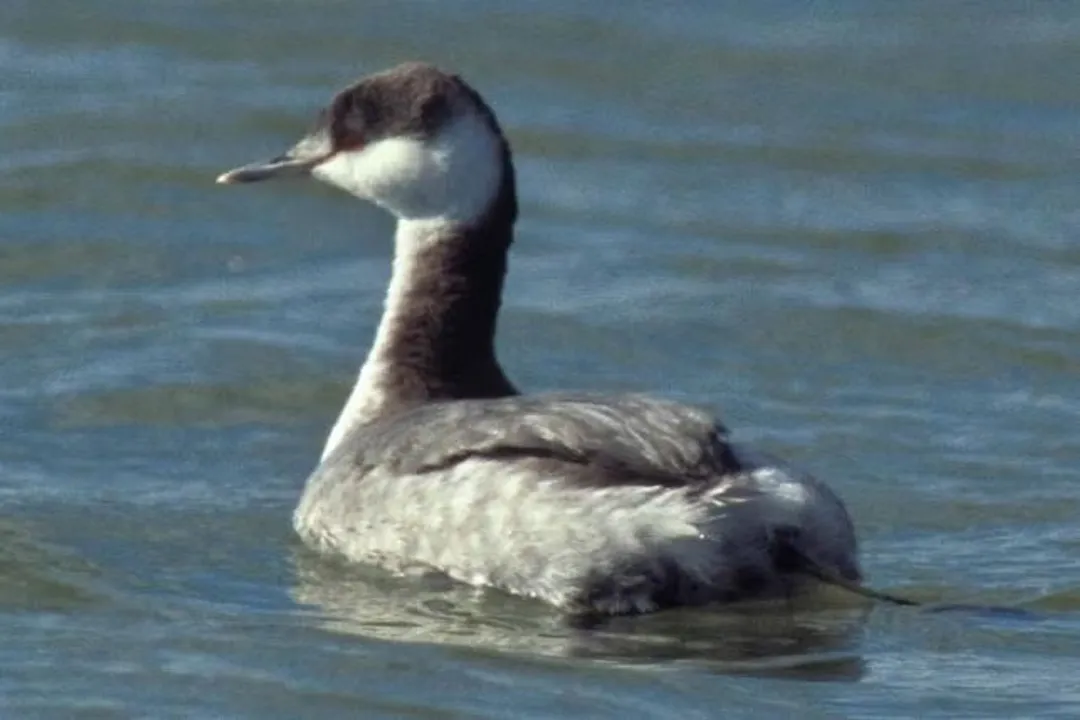
When migration begins and winter sets in, this flamboyant costume is replaced by something far more subdued. The rich colors vanish, and the bird adopts a drab, silvery-white and gray appearance. [2] The dark coloration recedes to just the crown and a small patch on the back, while the entire face and underside become pale. [5] In this winter dress, they can be easily confused with other small grebes or diving birds, which certainly contributes to under-reporting or misidentification when they are not expected. [9] The shift from a vibrant breeding bird to a pale winter visitor means that reports of "Horned Grebes" during migration might actually represent birds transitioning plumage, or they might be mistaken for Eared Grebes in their drab winter phase. [2]
# Range Dynamics
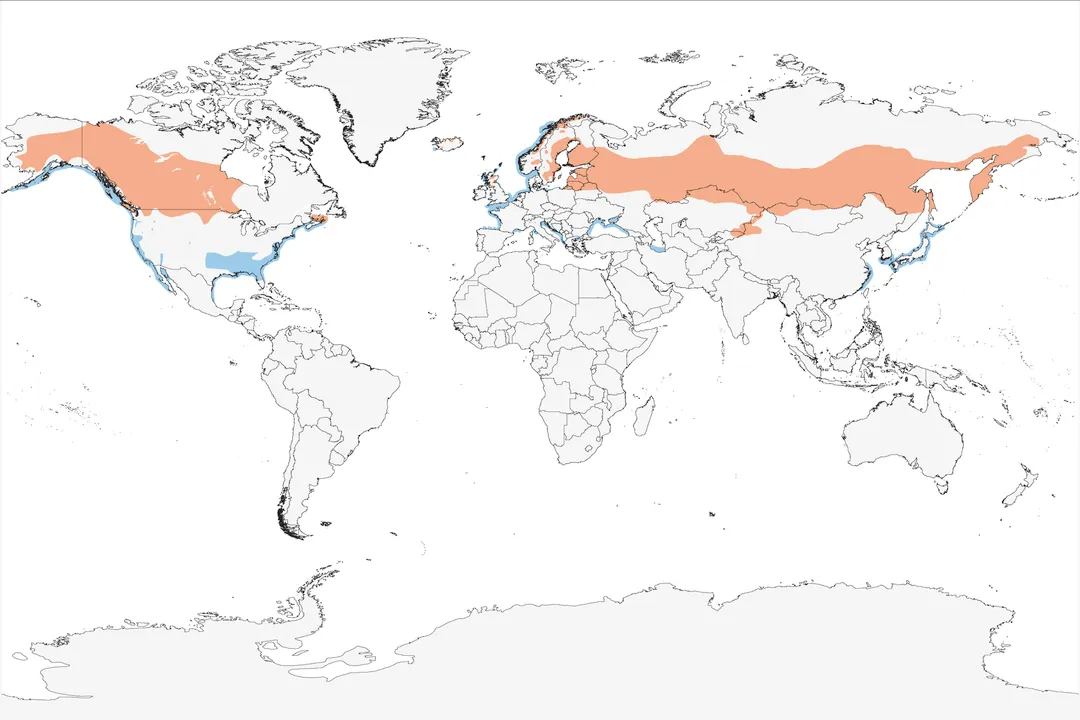
The distribution pattern of the Horned Grebe clearly illustrates why its rarity is so variable. Their breeding grounds are primarily situated across the boreal forest regions of North America, extending across Canada and into Alaska. [2][3] In states like Minnesota, they are noted as breeders on small, clear, fish-free lakes within the forested area of the state. [1] North Dakota also hosts breeding populations within its prairie-parkland and forest transitions. [3] If you are actively birding these northern territories during late spring through summer, the species is a known, expected resident, though perhaps not numerically dominant. [1]
The story changes dramatically once you move south or west of the core breeding zones. During migration and winter, the population largely shifts toward marine environments, favoring ocean coasts, large open lakes, and reservoirs. [2][5] For states like Nebraska, the Horned Grebe is principally a migrant, seen passing through during spring and fall, with some lingering into winter on suitable open water. [5] In Missouri, they are considered uncommon to rare away from the major reservoirs during migration and winter. [8] Montana notes they are breeders in the west and migrants across the state, generally seen on larger bodies of water when moving. [7] The species is absent entirely as a breeder in many central states, making any summer sighting there highly unusual and newsworthy. [5][8] This geographic segregation—a strong preference for northern freshwater in summer and coastal/large open water in winter—is the primary driver of how often the average birder encounters them. [2]

# Population Assessment
Determining just how rare they are requires looking at continental population estimates, though precise, up-to-the-minute counts are difficult for migratory species. [6] Data suggests that while Horned Grebes are generally widespread across their range, population trends have been a source of concern in several regions, indicating they are not secure everywhere. [2] Some sources categorize the species as "common" within their breeding habitats, while others suggest a moderate abundance during migration periods in specific flyways. [3][9]
When analyzing long-term monitoring data, the North American Breeding Bird Survey (BBS) and similar programs often reveal a continental population that shows evidence of decline over recent decades, although the rate and significance of this decline can vary by region. [6] For instance, while they might be breeding reliably in parts of Canada, observers in southern or eastern parts of their historical range may report fewer birds annually, leading to a perception of increased rarity over time. [2][6]
Consider this: If a population has a total of, say, 500,000 individuals, and 90% of them winter exclusively on the Pacific Ocean coast where monitoring is difficult, the few hundred individuals that pass through inland states like Missouri or Nebraska during migration will statistically register as "rare" locally, even if the species is doing reasonably well overall in Alaska and Canada. [6] This discrepancy between continental health and local visibility underscores the challenge in labeling them simply as "rare" or "common" without qualification. [5]
# Seasonal Sightings
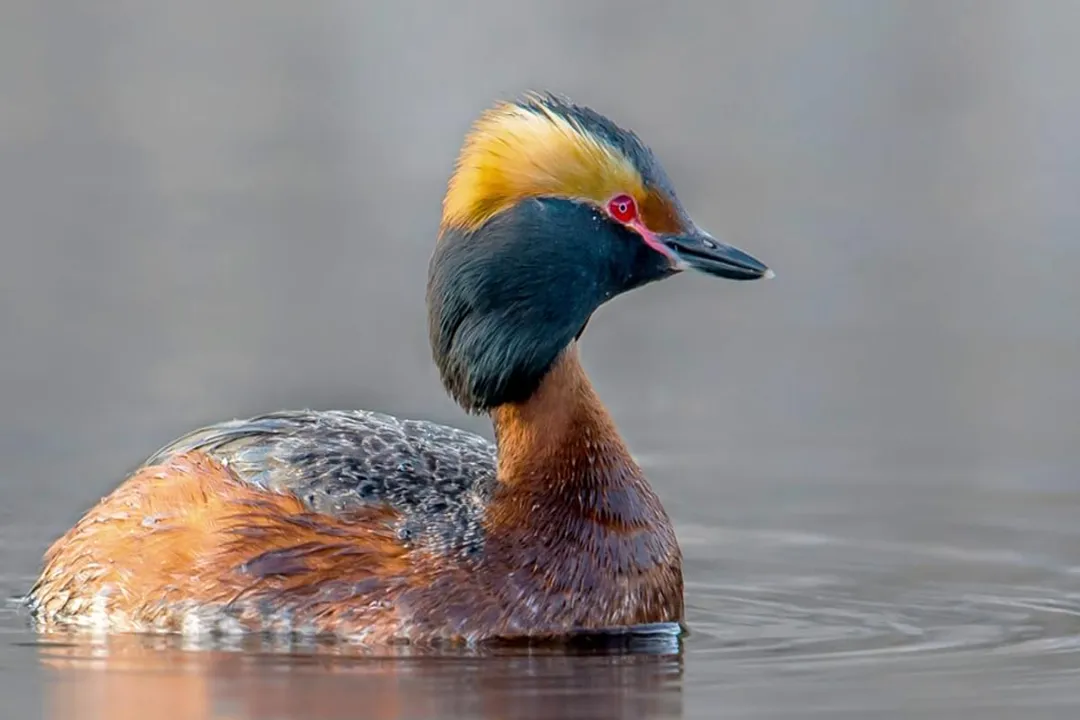
The timing of observation dictates the expectation of encountering a Horned Grebe. Spring migration generally occurs from March through May, with the birds moving north to establish breeding territories. [1][7] If you are seeing them during this period, particularly on inland lakes or reservoirs in the transition zones, they are likely in their nearly complete or fully developed breeding plumage, making them visually spectacular. [8]
Fall migration, conversely, is a longer affair, often starting in August and sometimes extending into November or even December, depending on how quickly freeze-up occurs on northern waters. [2][3] Birds moving south in the autumn are often still in their transitional or full winter plumage, offering few of the diagnostic field marks of their summer appearance. [5] For observers in areas like Wisconsin, finding them on large, deep water bodies during the shoulder seasons is the most likely scenario, as they avoid small, shallow ponds in winter. [9] The arrival of ice cover in the north acts as the primary trigger forcing these birds south and west toward ice-free water, concentrating them into smaller areas for the winter months. [1][3]
If you are a dedicated birder spending time near the Great Lakes or the Atlantic/Pacific coasts during the winter months, the Horned Grebe might transition from a "rare migrant" to a "regular winter visitor," though often still outnumbered by Red-necked Grebes or other diving birds. [2]

# Observer Context
The perceived rarity is heavily influenced by observer effort and habitat preference. A birder familiar with the coastal wintering grounds of the Pacific Northwest will have a fundamentally different experience than an inland birder focusing on prairie lakes. [7] In areas where they only pass through, seeing one is an event that requires attention to migratory timing and habitat selection during those narrow windows. [5]
For instance, if a birder is scanning the breeding grounds in Minnesota, they are looking for a specific pond type—often one with emergent vegetation and relative seclusion. [1] If they are looking for them in central Nebraska, they are focused on the largest, deepest, ice-free water areas in the dead of winter, where the birds might congregate in small rafts. [5] The bird that is rare in a given location simply means the necessary environmental conditions—whether breeding habitat or ice-free wintering water—are not present or accessible to the bird for most of the year. [8]
It is interesting to consider the difference in reporting frequency on platforms like eBird or state rare bird alert systems. A sighting of a Horned Grebe in deep summer in southern Missouri or Kansas would trigger an immediate alert, marking it as exceedingly rare due to being far outside the known breeding range. [5][8] Conversely, seeing one in late October on Lake Michigan off the Wisconsin shore, while still migratory, is a far more common and expected occurrence for that time of year. [9] The system flags the anomaly, not the seasonal norm.
One way to analyze this localized rarity is to consider the sheer distance these birds travel. An individual hatched in northern Quebec might winter off the coast of North Carolina. [2] The fact that this small bird successfully navigates such vast distances, often over open ocean, and then shows up consistently year after year, speaks less to its rarity and more to the effectiveness of its navigational instincts, making the successful completion of the migration itself an impressive feat, regardless of local abundance. [6]
# Finding the Hidden Traveler
For those wanting to move the Horned Grebe from the "rare" column to the "seen" column, knowing their specific needs is critical. During migration, they utilize large water bodies, often associating with rafts of other diving birds like scaup or even loons. [9] Look for them where there is deep, open water, especially in fall, as they quickly vacate smaller wetlands once water temperatures drop. [1]
When they are in breeding finery, the ear tufts are the primary identifier, but in winter, the clean, sharp delineation between the dark cap and the white neck/face is the best marker, especially if you can get a glimpse of the dark webbing on their feet or their posture on the water. [2][7] Remember that they are highly aquatic, performing almost all activities—feeding, preening, and courtship—on the water, rarely coming to land except to nest. [3]
A practical approach involves cross-referencing state wildlife reports that indicate seasonal probability. If a source indicates they are "uncommon" during migration, that suggests that for every ten birding outings during the peak migration window, you might expect to find one, provided you are looking in the right habitat. [5] If a source lists them as "accidental" or "vagrant," the expectation drops to perhaps one sighting in a decade or less. [8]
The very nature of their preferred non-breeding habitat—the open ocean—introduces an element of observer bias contributing to perceived rarity. A birder focused on terrestrial habitats or near-shore waters will naturally miss the majority of the population that spends the non-breeding season far from land, further skewing perceptions toward them being a bird of the northern summer only. [2][6]
# A Matter of Perspective
Ultimately, the rarity of the Horned Grebe is a function of observer geography and seasonal timing. They are locally rare for most of the southern and central United States throughout the year, only appearing briefly during migratory pulses or on very specific wintering locales. [5][8] They are locally common for a select group of birders situated near the boreal forest in the late spring and summer months. [1][3]
If one were to create a hypothetical map showing all active Horned Grebes on a single day in January, that map would show tight clusters along ice-free coastlines and major southern reservoirs, with massive empty stretches across the continent's interior. [2] This spatial clustering during the non-breeding season effectively renders them rare across most of their continental breadth for half the year. [6] The species thrives where conditions meet its specialized needs—clear, fish-bearing northern ponds in summer, and sheltered, fish-filled marine or large lake environments in winter—and that specialized nature inherently limits their widespread visibility year-round. [9] They are a testament to how migratory specialization dictates not just where a bird lives, but how often we get to see it.
Related Questions
#Citations
Podiceps auritus : Horned Grebe | Rare Species Guide - MN DNR
Horned Grebe Overview, All About Birds, Cornell Lab of Ornithology
Horned Grebe | North Dakota Game and Fish
Horned Grebe populations have fallen dramatically - Facebook
HORNED GREBE - Birds of Nebraska – Online
Demography and Populations - Horned Grebe - Podiceps auritus
Horned Grebe - Montana Field Guide
Horned Grebe - Missouri Department of Conservation
Horned Grebe - Wisconsin All-Bird Conservation Plan