What is unique about eared grebes?
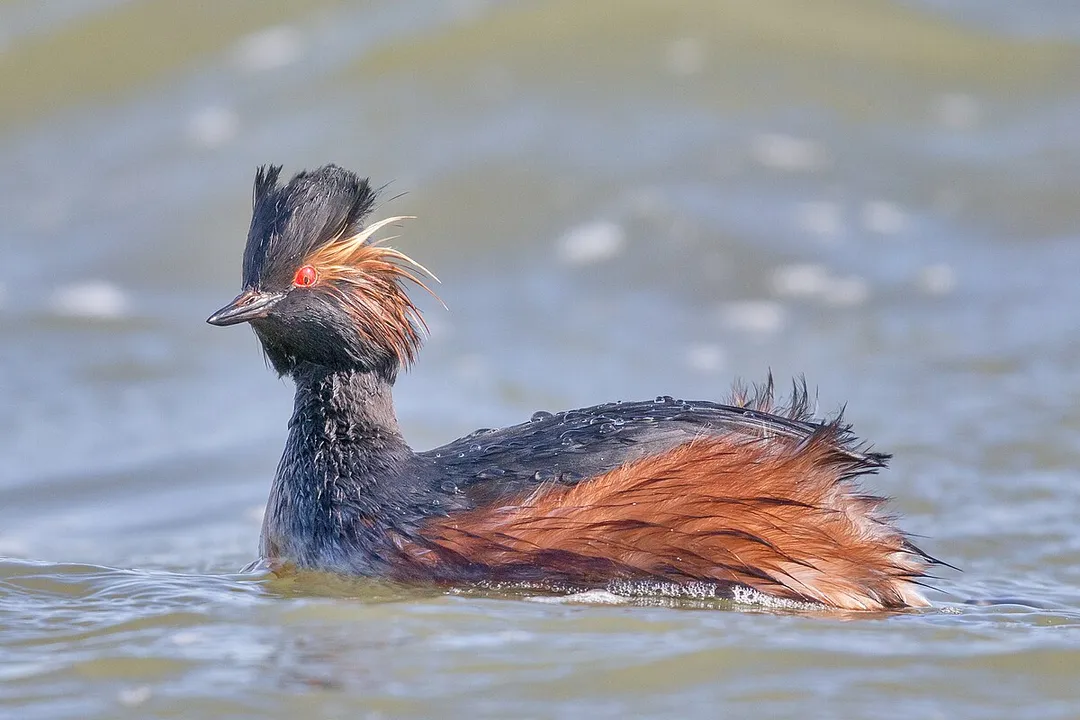
The Eared Grebe, which shares the scientific name Podiceps nigricollis with the Black-necked Grebe, [2] stands out among aquatic birds for a collection of truly remarkable survival adaptations. This small waterbird is distinguished by its striking appearance during the breeding season, sporting sleek black plumage, cinnamon-red flanks, and most notably, distinctive golden plumes that fan out from behind its bright red eye. [3][9] Interestingly, while North Americans use the name "eared grebe," derived from these plumes, the species is known in the British Isles as the Black-necked Grebe, referencing the Latin nigricollis ("black neck") in its scientific classification. [2][8]
# Gregarious Life
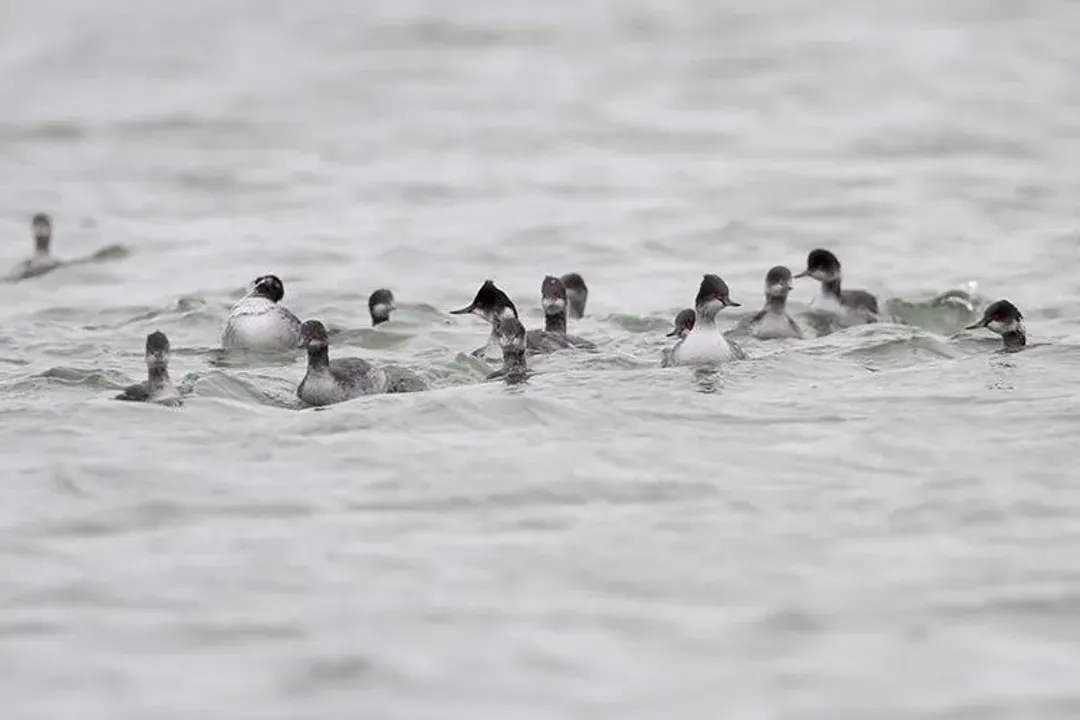
Eared Grebes are intensely social creatures, a trait that remains consistent year-round. [1][4] They establish large breeding colonies, sometimes involving thousands of birds. [1] When they are not nesting, they congregate into large, loose flocks. [2][4][7] This gregarious nature is perhaps most famously displayed during their migration and winter staging periods, where they can amass in numbers reaching the hundreds of thousands, or even over a million individuals at key locations. [3][6][8]
Their physical form reflects their aquatic specialization. Like other grebes, they possess lobed toes rather than fully webbed feet, providing propulsion and steering underwater, similar to a coot. [8][9] Their legs are set extremely far back on their bodies, which is excellent for diving but makes walking on land awkward and requires them to take off and land directly from the water. [8] When swimming on the surface, the body sits relatively high, and they often hold their neck straight up. [2] On cold, sunny mornings, they exhibit sunbathing behavior—facing away from the sun and raising their rump to expose dark underlying skin to the warming light, sometimes giving them a distinctive "high-stern" profile. [3][8]
# Migration Feasts
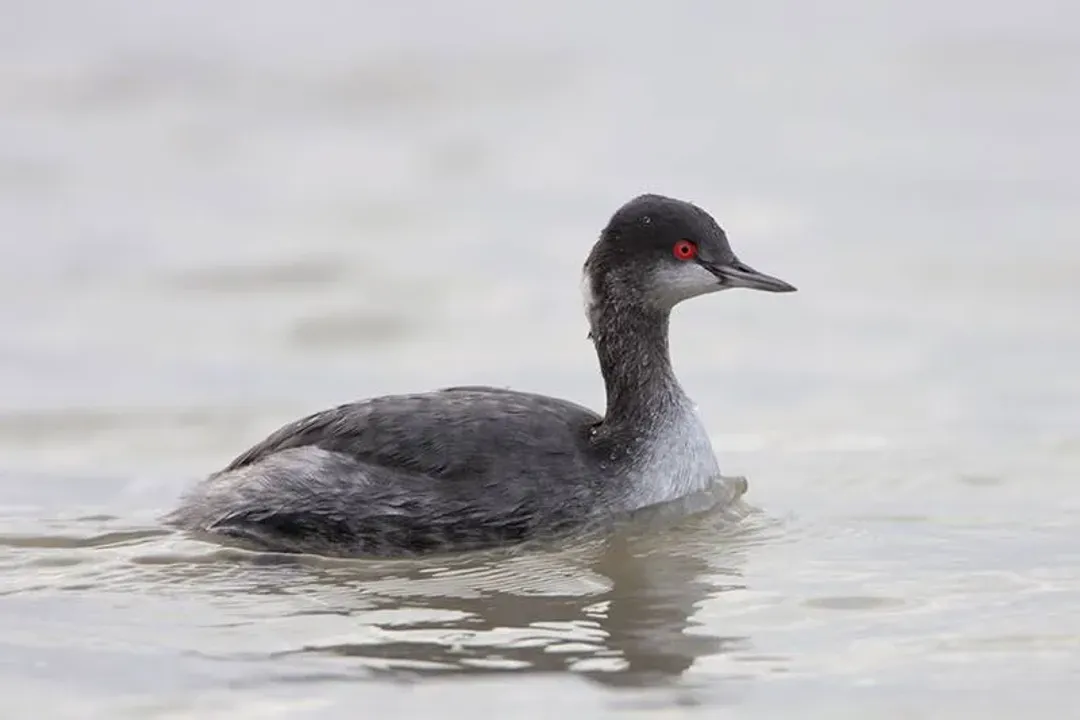
A major component of the Eared Grebe’s uniqueness lies in its demanding annual migration schedule, which sees the entire North American population utilize only a couple of vital hypersaline staging areas in the fall. [3][7][8] The primary stopovers are Mono Lake in California and the Great Salt Lake in Utah. [1][3][6][7] Here, they feast heavily on brine shrimp and alkali flies—a diet that constitutes up to 90% of their intake at Mono Lake. [1][8]
The water chemistry of these lakes is critical; the high salinity is tolerated by the grebes and supports the high density of their preferred invertebrate prey. [1][6][8] The brine shrimp are so vital that they also appear to supply the birds with the fresh water they need, as researchers suggest the grebes use their large, fleshy tongue to crush the brine shrimp against the palate, an action likened to how baleen whales strain plankton to squeeze out excess water. [3][6][8] This heavy reliance on just a few specialized aquatic environments makes the species highly sensitive to local water management and drought. [5][6]
# Body Reorganization
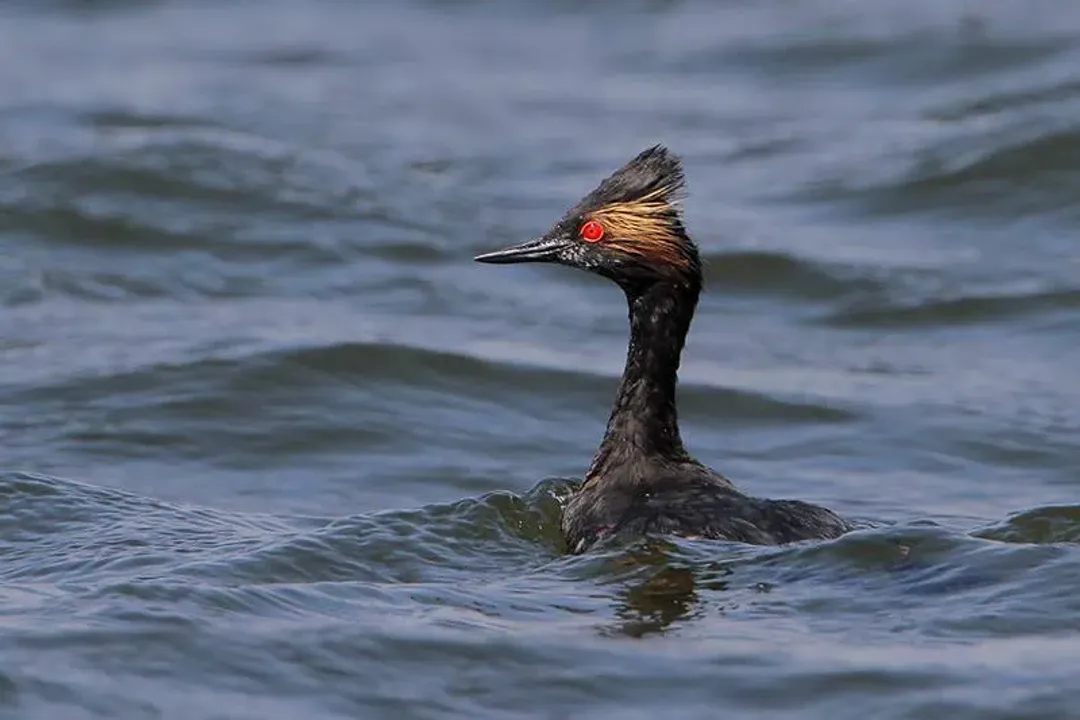
The most bizarre and fascinating element of Eared Grebe biology is the physiological restructuring that occurs during these fall staging periods, essentially allowing them to "power down" their flight apparatus to focus entirely on fuel storage. [6] When they arrive at the saline lakes, they begin consuming vast quantities of food, rapidly increasing their body weight, sometimes more than doubling it from an average of about 260 grams to over 600 grams. [6][8] This gain is not just simple fat accumulation; the bird undergoes profound internal reorganization. [6] Their digestive organs grow substantially, while, critically, their pectoral (flight) muscles atrophy, shrinking by roughly 50% to the point where the bird becomes entirely flightless. [3][6][8]
This flightless period, averaged at 3 to 4 months in the fall, is the longest known for any bird species that is otherwise capable of flight, potentially totaling up to nine or ten months over the course of a year as they cycle between staging and movement. [6][8] The Eared Grebe is so reluctant to fly that it reserves long-distance movement solely for migration, generally traveling only at night. [2][8]
When it is time to continue the migration south, the cycle reverses completely. [6] The birds fast for several weeks, causing the digestive organs to shrink drastically—down to about one-fourth of their peak size—while the heart and pectoral muscles rapidly grow and hypertrophy to support the necessary long-distance flight. [3][6][8] This constant cycle of atrophy and hypertrophy, which can occur three to six times annually, is an extreme specialization in avian physiology. [6]
It is worth noting that this massive metabolic reorganization appears to be a calculated risk. For a species that is inherently an inefficient flier, dedicating months to rebuilding flight capability is an enormous energy investment, suggesting that maximizing caloric intake in these food-rich, low-predation environments is a necessity that outweighs the cost of extended flightlessness. [2] When observing these birds on staging lakes, one must remember that any grebe found grounded on a nearby road or parking lot—a frequent occurrence—is likely suffering from this necessary flightlessness, having misjudged a landing or taken off in an area where it could not gain sufficient speed; they often need human intervention, being brought to rehabilitation centers for care until they can safely regain flight strength. [5]
# Nesting Strategy
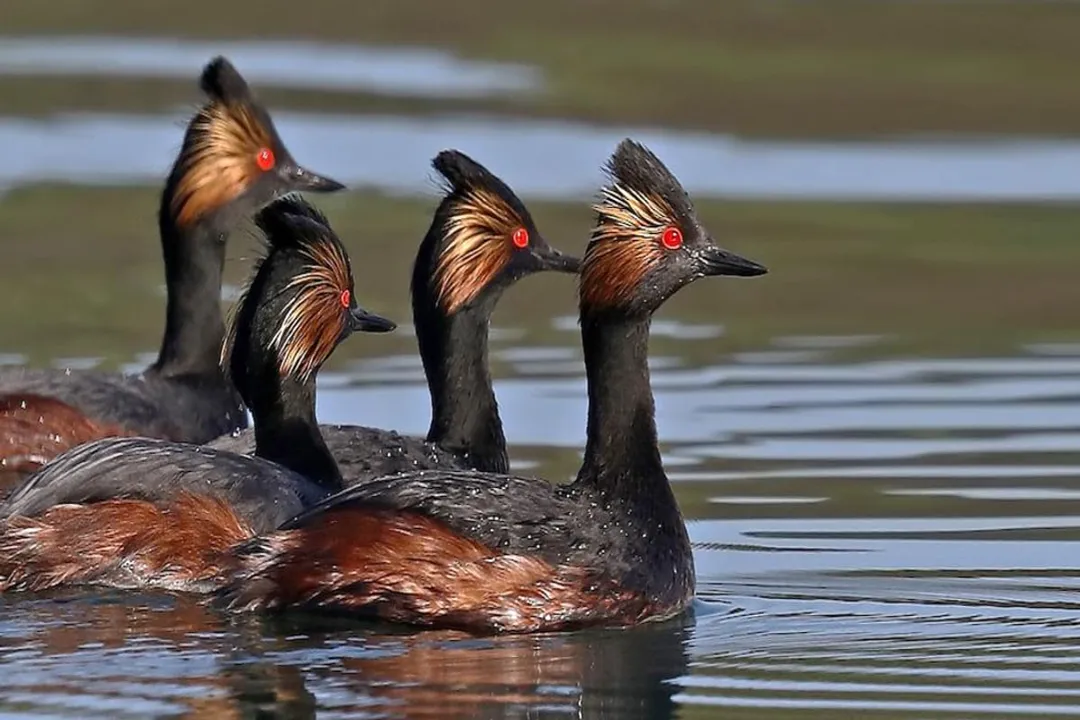
The Eared Grebe's approach to reproduction is also notable for its high level of social interaction and, potentially, its loose commitment to shared parenting duties. [2] They construct a floating platform nest made of aquatic vegetation, anchored to emergent plants in shallow water. [1][7][9] Both parents are involved in building the nest and incubating the clutch of typically three to four chalky, greenish-blue eggs. [1][2][8]
However, the breeding strategy features a common deviation: conspecific brood parasitism, or "dump nesting," where a female lays eggs in the nests of other Eared Grebes. [2][8] This behavior is reported to be common, with nearly 40% of nests sometimes receiving extra eggs. [2] Furthermore, the post-hatching parental care demonstrates a pragmatic division of labor: after the first week when the young ride on their backs, the parents divide the brood, with each adult taking about half of the chicks. [1][2][8] Following this split, the young become independent relatively quickly, fledging in about three weeks. [1][2] This division contrasts with the continuous care seen in many other bird species, suggesting an adaptation to a demanding breeding environment where independence must be achieved swiftly. [1][8]
# Habitat Flexibility
While the birds are known for their critical reliance on highly saline lakes during staging and winter, their breeding habitat shows significant flexibility, an adaptation likely tied to surviving in the arid West. [8] During the breeding season, they favor shallow ponds and lakes, particularly those with extensive marshy borders or abundant aquatic vegetation. [1][4][7] They are also quick to take advantage of temporary or newly created bodies of water, showing an opportunistic nature in finding suitable breeding sites. [4] In Utah, for instance, breeding colony locations can shift from year to year based on water availability. [1]
Despite the massive die-offs recorded due to disease outbreaks like avian cholera or West Nile Virus, especially at large staging sites like the Salton Sea, the species is still classified as Least Concern globally due to its sheer abundance, estimated in the millions. [2][5] The species' long flightless period and reliance on a few massive, often ephemeral, hypersaline ecosystems present a significant, localized threat that conservationists must monitor closely, as the loss of one major staging lake could severely impact the entire continental population. [6][7] For birdwatchers, knowing that they usually migrate only at night also means that their southward fall migration is the latest scheduled departure of any bird species in North America. [8] This combination of extreme biological specialization and high congregation density makes the Eared Grebe a bird defined by its unique, high-stakes life history strategy. [6]
Related Questions
#Citations
Eared Grebe Overview, All About Birds, Cornell Lab of Ornithology
Eared Grebe | Audubon Field Guide
Black-necked grebe - Wikipedia
Podiceps nigricollis - Eared Grebe - Utah Field Guides
Eared Grebe - International Bird Rescue
The Bizarre Biology Of The Eared Grebe - Feathered Photography
Eared Grebe | Bird Gallery - Houston Audubon Society
[PDF] EARED GREBE (Podiceps nigricollis)