What is unique about a babirusa?

The babirusa is perhaps one of the most visually arresting members of the pig family, often earning nicknames that try, and often fail, to capture its sheer oddity. Its very name, derived from the Malay language, means “pig deer” ([4]), a clear nod to the striking, antler-like appearance of its upper tusks. [4] Found exclusively in the Indonesian islands of Sulawesi, Togian, Sula, and Buru, [3] this wild swine is a creature of specialized evolution, making its unique attributes far more than just a cosmetic curiosity. It is an animal whose biology raises questions about function, purpose, and survival in a highly specific tropical environment. [3]
# Pig Deer Name
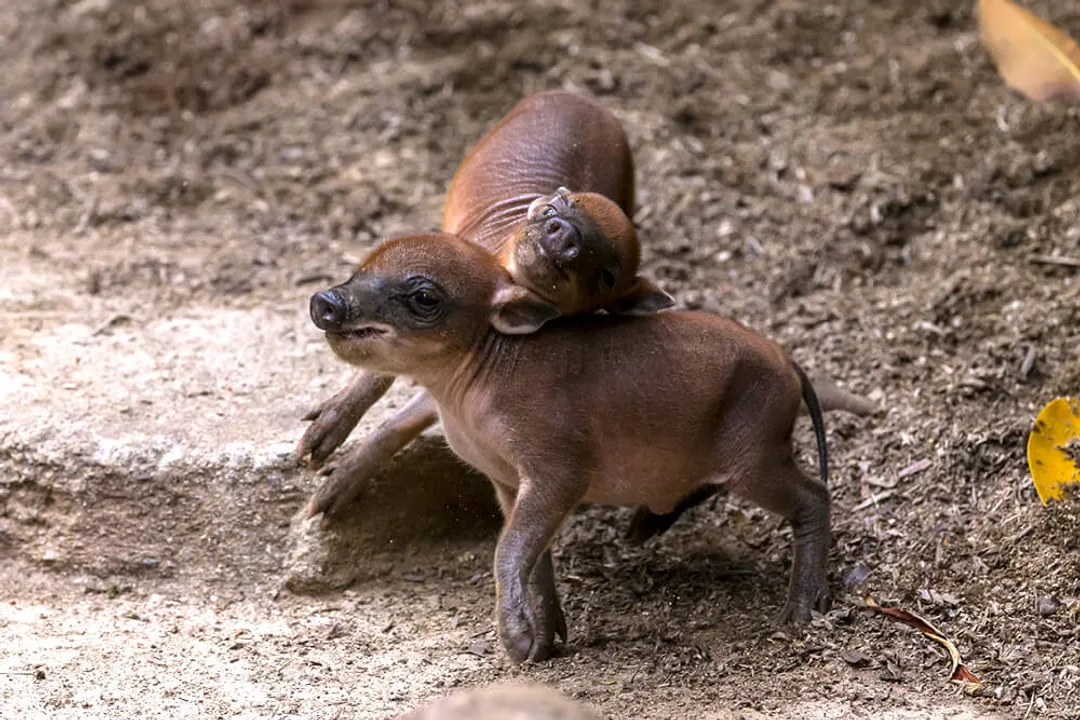
The translation of the name babi rusa as "pig deer" perfectly encapsulates the duality of the animal’s form. [4] While undeniably swine-like in its stocky, round body and bristly skin, the males possess dental hardware that seems borrowed from a completely different evolutionary lineage. [4] The babirusa belongs to the genus Babyrousa, a lineage sometimes considered distinct enough to sit in its own subfamily, Babyrousinae, suggesting a long, separate evolutionary history within the broader Suidae family. [3] This separation is significant, as they are considered by many scientists to be among the oldest living members of the pig family, having diverged from other suids between 10 and 19 million years ago. This deep history hints that their unique features evolved in isolation within their island homes. [3]
# Tusk Anatomy
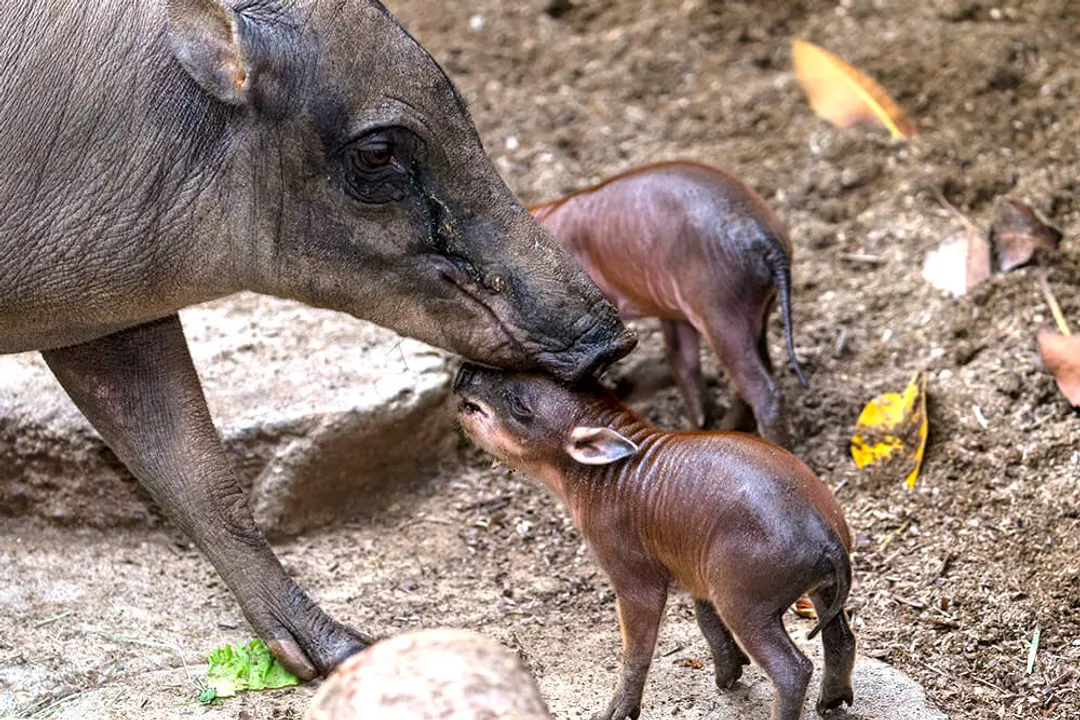
The defining feature of the babirusa is undoubtedly the tusks of the male. [4] Unlike the lower canines common to many pigs, the babirusa boasts four distinct tusks in adults. [1] The lower canines grow upward from the jaw, a characteristic shared by both sexes. [4] However, the upper canines are where the true uniqueness lies: these teeth emerge from the upper jaw, pierce directly through the flesh of the snout, and then curve backward toward the animal’s forehead. [1][3][4] In the North Sulawesi species, the best-known type, these tusks grow vertically and do not necessarily cross paths with the lower ones. [3]
These upper tusks are not static structures; they continue growing as long as the blood supply remains intact, much like human fingernails. [4] If the animal is lucky enough to survive to old age, or if activity doesn't keep them worn down, they can grow immensely long—reaching up to 12 inches—and can even penetrate the skull itself. [4] Female babirusas, in contrast, have canines that are either significantly reduced or entirely absent. [1][3] The specific morphology of these tusks actually helps differentiate the several recognized species within the genus, with variations in the length, thickness, and convergence of the upper canines observed between the North Sulawesi, Buru (B. babyrussa), and Togian species. [3] The golden babirusa, for example, has shorter, slender upper canines that do rotate forward to allow the lower tusks to cross in the lateral view. [3]
# Tusk Function Mystery
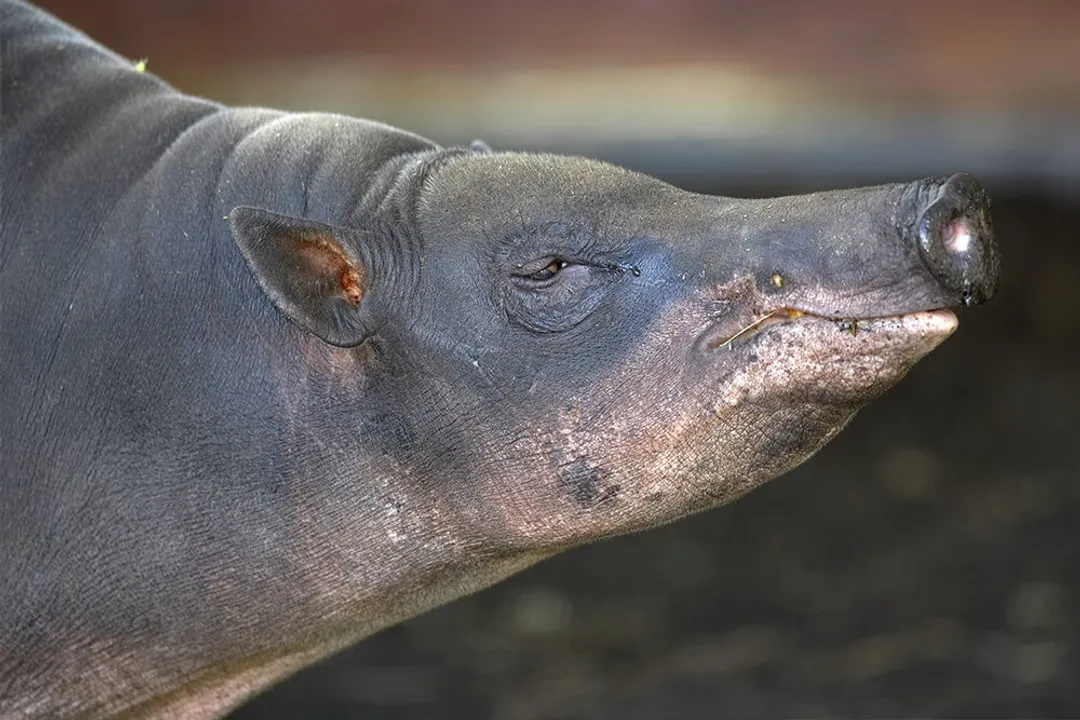
For an appendage that grows so long, pierces flesh, and poses a genuine physical risk to the animal by potentially growing into its own skull, one would assume its function in combat would be clear. [4] The initial hypothesis was that these upper tusks served as weapons in male-on-male fights over mates. [4] Yet, observations of the species in action reveal a fascinating contradiction. When male babirusas spar, they typically rise up on their hind legs and engage in what is described as "boxing" using their front hooves. [1][4] They seem to actively avoid tangling their formidable upper tusks. [4] Furthermore, the tusks are known to be fragile and break easily, making them poor defensive weapons against heavy impact. [4]
This behavioral evidence strongly suggests the tusks are not primarily tools for combat. If they are not for fighting, what purpose do they serve? One prevailing modern theory, which remains untested, posits that the tusks function as an elaborate display mechanism. [4] Much like the showy tail of a peacock, the size and shape of the tusks could signal superior genetic fitness to discerning females during mate selection, thereby driving the evolutionary pressure for their continuous growth. [4] It is also speculated that they may offer some defense or protection to the face and eyes from the opponent's lower, upward-pointing tusks during the boxing matches. [3][4] The very existence of such a prominent, high-maintenance, and self-threatening feature strongly points toward sexual selection being the main driver, rather than practical utility. This suggests an evolutionary trajectory where the cost of maintaining the tusks is outweighed by the reproductive benefit they provide in attracting a mate. In an environment where physical defense against predators is less critical (as discussed later), the currency of fitness shifts toward these extravagant, albeit fragile, ornaments. [4]
# Island Habitat
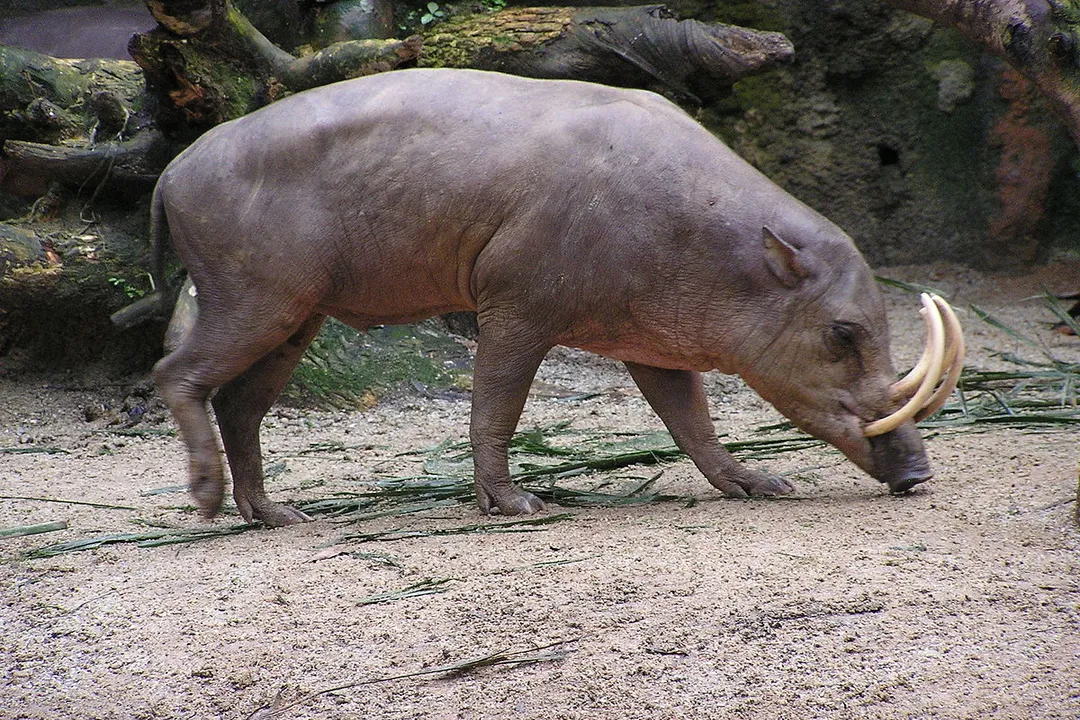
The babirusa is a true island endemic, restricted geographically to a few specific Indonesian islands: Sulawesi, Togian, Sula, and Buru. [3][4] This extremely narrow native range makes any threat to these specific ecosystems immediately critical to the species' survival. [4] Their preferred environment is the tropical rainforest, particularly areas near river banks, wetlands, and lowland forests. [3][4] Historically, they may have inhabited lower coastal areas, but they appear currently confined to the higher grounds in the interior. [3] The hypothesis that they were transported by humans long ago as royal gifts might explain why they are found on Sulawesi and the Sula Islands but are absent from the intervening Banggai Archipelago. [3] This specific habitat dependency, requiring wet, forested environments, creates a biological constraint that limits their ability to adapt if their narrow geographical confines are disturbed.
# Dietary Niche
Babirusas are classified as omnivores, displaying a diet as varied as their appearance. [1][4] Their intestinal tract resembles that of domestic pigs. [3] They consume a wide array of forest materials, including leaves, fruits, berries, nuts, bark, and roots. [1][4] They are also known to supplement their diet with animal matter, such as insects and small mammals. [1][4] Their jaws are powerful enough to easily crack hard nuts. [3]
Interestingly, their adaptation to foraging shows another divergence from typical pigs. Unlike many swine that use their snouts to root deeply into hard ground for food, the babirusa lacks a rostral bone in its nose. [3] This structural absence means they are largely unable to dig vigorously into firm soil. [3][4] Instead, they are adapted to forage in soft substrates; they use their specialized hooves to dig for larvae in mud and swampy grounds. [3] They also exhibit a surprising vertical reach, often seen standing on their hind legs to browse on tasty leaves high up in trees, a behavior reminiscent of African browsers like the gerenuk. [1][4]
One of their most unusual behaviors is a specialized method of scent-marking. Primarily males will kneel onto their chest in soft sand, vocalizing while producing foamy saliva, and push their heads forward through the substrate in a motion described as "ploughing". [1][4] While they appear to be ingesting the sand during this process, the consensus is that this is a deliberate action to mark their area with scent. [1][4]
# Social Structure
The social lives of babirusas tend to separate by sex. Adult males generally prefer a solitary existence or may form small bachelor groups of just two or three individuals. [3][4] Adult females, however, are more communal, forming groups that can include young and occasionally numbering up to eighty-four individuals, though these large aggregations rarely contain more than three adult females at one time. [3][4] Little is known about the daily routines of these shy forest dwellers, but they appear to be mostly diurnal, active during the day and resting or wallowing in the mud during the hottest parts of the day. [3][4] Mating is preceded by fights between rivals, and the gestation period lasts roughly 155 to 158 days, resulting in a small litter of only one or two piglets—a small number often attributed to the relative safety of their predator-free environment. [4]
# Ancient Art
The babirusa’s striking appearance has long captured the human imagination on its home islands. [4] Evidence suggests a long cultural connection, as prehistoric paintings of the babirusa have been discovered in caves on Sulawesi dating back at least 35,400 years to the Pleistocene epoch. [3] Researchers noted that these wild animals were clearly of particular interest to the ancient artists. [3] In later history, the animal’s demonic-like features inspired masks in Indonesia. [3] Furthermore, the grotesque depictions of babirusa, known as raksasa, can be seen painted on the ceilings of the Court of Justice pavilion and the "floating pavilion" ruins in Klungkung, Bali. [3]
# Threatened Status
Despite their cultural history and unique biology, babirusas face severe modern threats, leading to their classification as Vulnerable or Endangered on the IUCN Red List. [3][4] The estimated wild population is worryingly low, with figures suggesting fewer than 10,000 individuals remain. [4] The two primary threats driving this decline are poaching/hunting and habitat loss. [4] Commercial logging operations are severely reducing the lowland forest habitat they rely upon, sometimes by over 75%. [4] This loss of cover not only destroys their home but also makes them more visible and accessible to hunters. [4] While the species is legally protected in Indonesia, illegal hunting remains a persistent problem. [4] The specialized nature of the babirusa—its unique diet, specialized snout use, and habitat preference—means that disruption to the delicate balance of the island rainforests poses an existential risk far greater than for more adaptable suids. [3] A creature so specialized for a specific ecosystem cannot easily migrate or adjust when that ecosystem is fragmented or destroyed by logging, turning its unique adaptations into liabilities in the face of rapid environmental change. [3][4]
#Videos
All about the Babirusa - YouTube
Related Questions
#Citations
Babirusa | San Diego Zoo Animals & Plants
Babirusa - Wikipedia
Babirusa | London Zoo
All about the Babirusa - YouTube
Babirusa | San Diego Zoo Wildlife Explorers
Meet the Babirusa, a Wild Pig with Massive Teeth | World Wildlife Fund