What is the taxonomy of the oleander hawk moth?
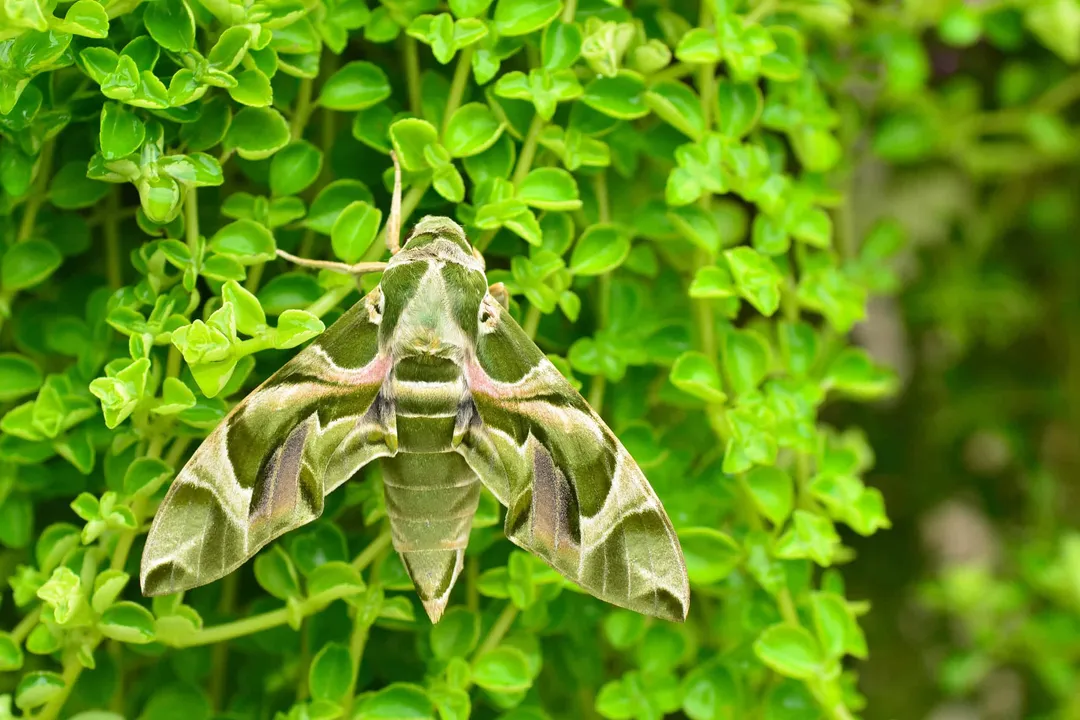
The classification of any creature, from the smallest insect to the largest whale, begins with establishing its position within the grand hierarchy of life, a system known as taxonomy. For the striking Oleander Hawk Moth, scientifically cataloged as Daphnis nerii, understanding this structure reveals much about its evolutionary relationships and ecological niche. This particular moth is instantly recognizable, often noted for its remarkable camouflage and the toxic nature of its primary food source, the Oleander plant. To truly appreciate this species, we must peel back the layers of its Linnaean assignment, starting from the broadest categories down to the specific epithet that defines it.
# Kingdom Animalia
At the very top of the biological sorting system is the Kingdom, and Daphnis nerii falls squarely within Animalia. This membership signifies that the organism is multicellular, heterotrophic—meaning it obtains energy by consuming other organisms—and typically develops from a blastula stage during embryonic development. Within Animalia, the Oleander Hawk Moth shares its domain with everything from sponges to humans, establishing its fundamental status as a mobile, complex life form.
# Phylum Arthropoda
Moving down one level, the moth belongs to the Phylum Arthropoda. This is one of the largest phyla in the entire animal kingdom, encompassing insects, spiders, crustaceans, and their relatives. The defining characteristics of an arthropod are its segmented body, a hard exoskeleton made of chitin, and jointed appendages. For the Daphnis nerii, this translates to the insect body plan: a head, thorax, and abdomen, along with three pairs of jointed legs attached to the thorax—traits shared with nearly a million other described species.
# Class Insecta
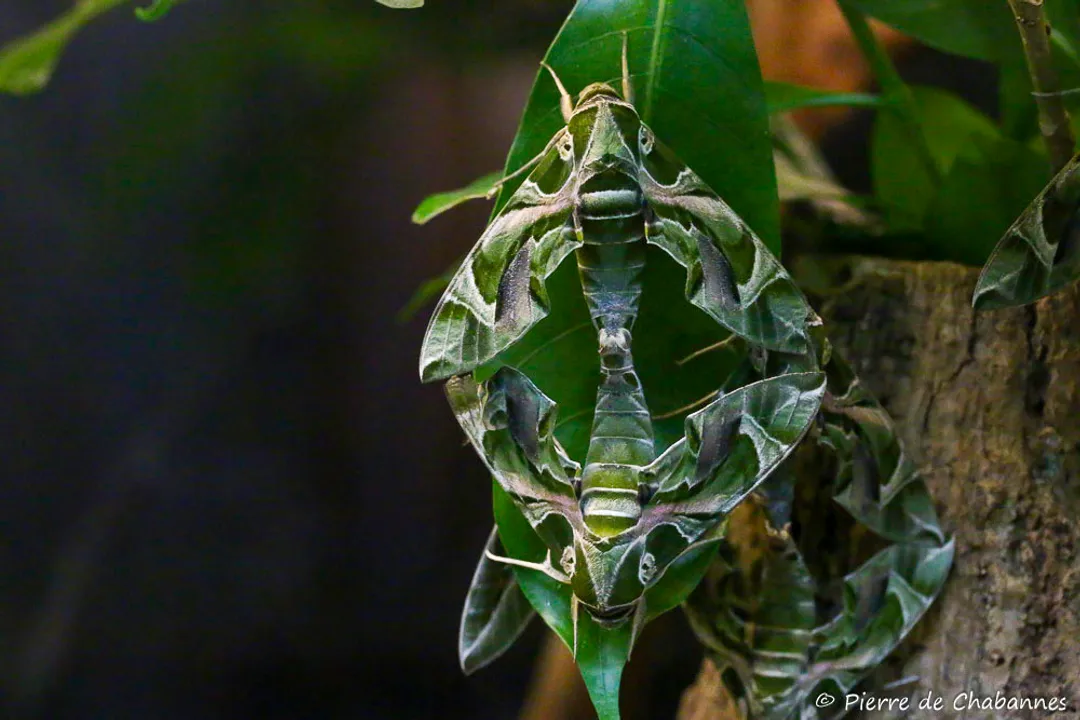
The next step down narrows the field considerably to the Class Insecta. Insects are distinguished from other arthropods, such as arachnids or myriapods, primarily by having a body divided into three distinct sections and possessing three pairs of legs. Furthermore, nearly all adult insects have one pair of antennae and, often, two pairs of wings. The Oleander Hawk Moth exhibits these core insect characteristics, placing it alongside beetles, butterflies, and bees. This class represents an astonishing diversity of form and function, dominating terrestrial ecosystems globally.
# Order Lepidoptera
Within the Class Insecta, Daphnis nerii is placed in the Order Lepidoptera. This order comprises the moths and butterflies, a group instantly recognized by the scales that cover their wings and bodies, giving them a dusty or velvety appearance. While many people focus on the diurnal (day-flying) butterflies, the vast majority of Lepidoptera are nocturnal or crepuscular moths, which includes the Oleander Hawk Moth. The larval stage, or caterpillar, of any lepidopteran is specialized for feeding, often exhibiting significant growth before undergoing complete metamorphosis.
# Family Sphingidae
The classification continues to refine itself as we reach the Family Sphingidae, commonly known as the Hawk Moths or Sphinx Moths. This family is renowned for producing some of the fastest and most powerful fliers in the insect world. Hawk moths are generally characterized by their stout, streamlined bodies and long, narrow wings, features that allow for remarkable speed and hovering capabilities, often mimicking hummingbirds in flight. A notable trait of many sphinx moths, which informs their common name, is their ability to hover in front of flowers to feed with their long proboscis, much like a hawk hovering before striking prey. Daphnis nerii fits this mold, being a large, robust moth. It's interesting to note that within this family, larval feeding specialization is extremely common; the Oleander Hawk Moth’s reliance on Nerium oleander makes it a classic example of this family trait.
# Genus Daphnis
The next level of classification is the Genus, which groups together species that share a closer evolutionary history. Daphnis nerii belongs to the genus Daphnis. This genus is part of the tribe Dilophonotini within the subfamily Macroglossinae. While the genus Daphnis might not be as widely represented as some other moth genera, its members typically share the large size and streamlined build characteristic of Sphingidae. The genus name itself often provides a subtle clue or connection to mythological figures or features, though its strict biological definition groups organisms based on shared morphological characteristics that distinguish them from related genera. A point of interest for naturalists comparing members of this genus is the subtle variation in wing patterns that separate Daphnis species, even though the general body shape remains consistent with the family standard.

# Species Daphnis nerii
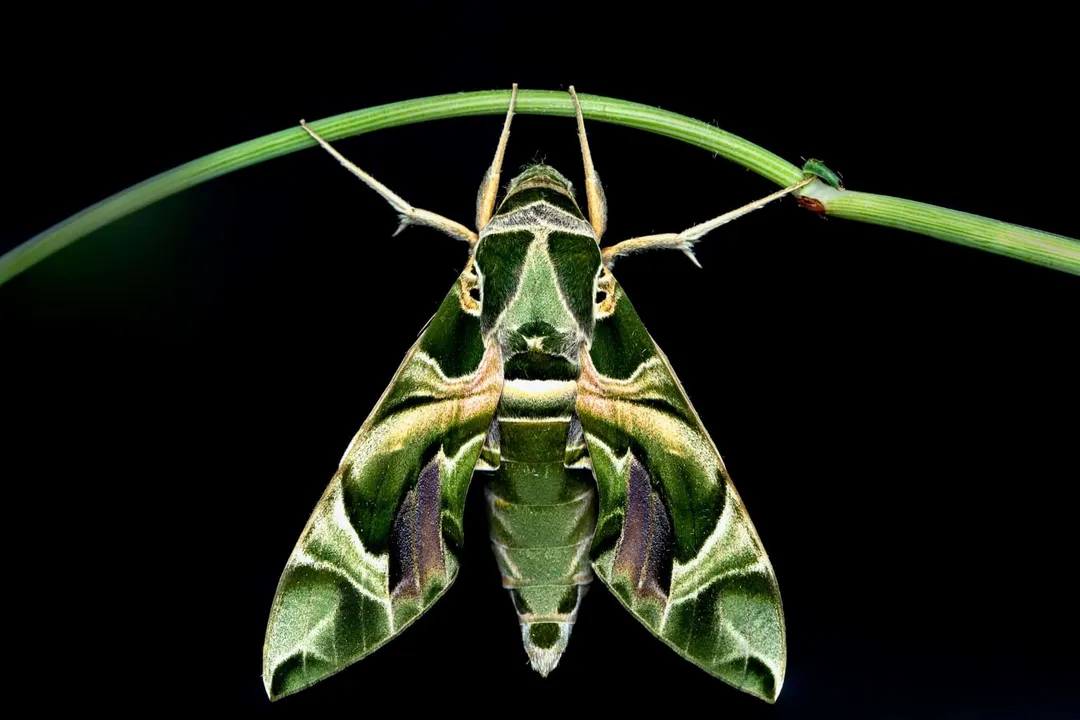
Finally, we arrive at the species level: Daphnis nerii. The specific name nerii is a direct nod to its larval host plant, Nerium oleander. This moth has a wide distribution across Africa, Asia, and parts of Europe, suggesting it has been ecologically successful wherever its toxic food source is present. The adult moth is quite large, with a wingspan that can reach up to 12 centimeters. Its appearance is one of its most celebrated features; the forewings are painted in complex, irregular patterns of black, brown, pink, and olive-green, providing superb camouflage against bark or foliage. This intricate pattern helps break up the moth’s outline, making it difficult for predators to spot when resting during the day. The hindwings are often less patterned, providing a surprising flash of color when the moth takes flight.
# Taxonomic Summary Table
To clearly see where Daphnis nerii sits in the biological organization, we can summarize its placement across the major ranks identified in the literature.
| Rank | Classification |
|---|---|
| Kingdom | Animalia |
| Phylum | Arthropoda |
| Class | Insecta |
| Order | Lepidoptera |
| Family | Sphingidae |
| Genus | Daphnis |
| Species | Daphnis nerii |
This table encapsulates the consensus view of its relationship to other life forms, based on global biological databases.
# Distribution and Host Plant Link
The successful taxonomy of an organism is often intrinsically linked to its geographic range and diet, which are areas where Daphnis nerii presents a fascinating case study. The species shows a broad, somewhat discontinuous distribution across the Old World tropics and subtropics, noted from regions in Africa and across Asia into Australia. Its presence is highly dependent on the availability of Nerium oleander, a common ornamental shrub that is unfortunately highly poisonous to most other animals.
The larvae ingest the oleander's toxic cardiac glycosides, sequestering these poisons within their bodies. This defense mechanism is a classic example of aposematism in nature—warning signals—though the Oleander Hawk Moth caterpillar actually employs camouflage rather than bright warning colors. This strategy suggests that for the caterpillar, blending into the background provides a better defense than advertising its toxicity, perhaps because predators in its native range are less inclined to test camouflaged prey. The fact that the moth is listed across various observation platforms confirms its established presence in many locales, showing a clear pattern of reliance on this specific toxic food source wherever it occurs.
One observation worth noting is how the moth’s apparent success across such a wide and varied Old World geography implies a long co-evolutionary history with Nerium oleander, which itself has a substantial native range spanning from the Mediterranean to Southeast Asia. The moth's wide dispersal suggests either ancient origins preceding the modern fragmentation of land masses, or a highly efficient long-distance dispersal mechanism for the adult stage, allowing it to colonize new areas where oleander has been introduced. The adult moth is not solely reliant on nectar from other sources, but the larval requirement acts as a strong biogeographical anchor.
# Life Cycle Features
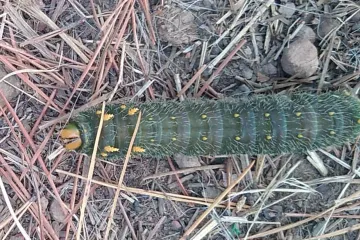
Understanding the full taxonomic picture involves considering the creature across its entire life cycle, as the immature stages (larva and pupa) often look nothing like the imago (adult). The caterpillar stage of the Oleander Hawk Moth is visually arresting in its own right. It grows quite large, reaching up to 10 centimeters in length, and features a prominent, curved posterior horn, a characteristic feature in many Sphingidae. Its coloration, much like the adult, aids in camouflage, often mimicking the color of the oleander leaves or stems it feeds upon.
After a period of intense feeding, the mature larva seeks a place to pupate, often burying itself just beneath the soil surface. The pupa is usually found slightly below ground, where it spends the non-feeding stage transforming into the winged adult. This transition, known as complete metamorphosis, is fundamental to the Class Insecta and Order Lepidoptera. The adult moth emerges, ready to feed on nectar and reproduce, beginning the cycle anew.
For those interested in observing this species, knowing that its activity peaks during the warmer months across its range is an important piece of practical knowledge, aligning its life cycle timing with favorable environmental conditions, particularly the growth spurt of its larval host plant. If you are looking for the caterpillar, focus your search on Nerium oleander plants in late spring through early autumn, paying close attention to leaf stems where they might rest between feeding bouts. The presence of the adult moth flying at dusk or night is also a clue that a suitable breeding habitat, including the host plant, is nearby.
# Artistic Interpretation of Form
While taxonomy focuses on biological relationships, the physical form of Daphnis nerii often inspires artistic representation, which can sometimes hint at the moth’s structural adaptations. The intricate, almost abstract patterns on its wings are sometimes compared to sacred geometry or complex mosaics. This artistic appreciation stems from the moth’s precise scaling and coloration, which are not random but serve specific evolutionary functions like crypsis. The way the lines and spots break up the outline of the wing makes the overall shape of the insect difficult for a visual predator to resolve, turning what is physically a large target into a series of confusing, disconnected visual stimuli. The olive-green and pinkish-brown mottling seen in many specimens found across its broader range is a testament to natural selection favoring cryptic patterns over conspicuous ones in its daytime resting environment.
# Final Thoughts on Classification
The formal taxonomy of the Oleander Hawk Moth—Animalia, Arthropoda, Insecta, Lepidoptera, Sphingidae, Daphnis, nerii—provides an ordered map of its descent and relationship to all other life. It tells us that it is a complex animal, an invertebrate with an exoskeleton, a scaled-wing insect, a powerful flyer in the hawk moth family, and a specific species linked intrinsically to the oleander plant. This hierarchical placement confirms its evolutionary proximity to other hawk moths while separating it from the butterflies or less specialized moths, grounding its remarkable appearance and poisonous diet within a globally accepted scientific context.
Related Questions
#Citations
Oleander Hawkmoth (Daphnis nerii) - iNaturalist
Daphnis nerii - NatureServe Explorer
Oleander Hawk Moth Insect Facts - Daphnis nerii - A-Z Animals
Oleander Hawk Moth - Insect Identification
Daphnis nerii - Pierre Wildlife
Daphnis nerii Linnaeus, 1758 - GBIF
Oleander Hawk-moth Daphnis nerii (Linnaeus, 1758)
Oleander Hawk-moth - Daphnis nerii - Observation.org
Daphnis nerii, the “Oleander hawk-moth” or “Army green moth”